Your shopping cart is empty!
Welcome visitor you can login or create an account.
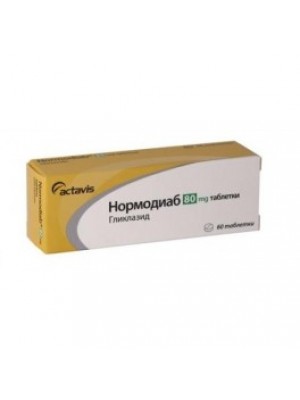
NORMODIAB 80 mg. 60 tablets
Product Code: NORMODIAB 80 mg. 60 tablets
Availability: In Stock

Product viewed: 1137


NORMODIAB 80 mg. 60 tablets
INGREDIENTS:
Active substance: Gliclazide 80 mg of
Excipients: lactose monohydrate, colloidal anhydrous pregelatinised maize starch, talc, magnesium stearate, water, silicon,
PHARMACEUTICAL FORM AND PACKAGING
Normodiab tablets 10 pcs. in blister PVC / A1 foil, 6 blister pack
ACTION
Normodiab enhances insulin secretion by the pancreas, increases the sensitivity of peripheral tissues to insulin. The product reduces the time from taking food to the beginning of insulin secretion; lowers elevated blood sugar levels after meals; It improves blood circulation in small vessels.
Normodiab slows the formation of parietal thrombus and strengthens vascular walls. Reduces the sensitivity of vessels to adrenaline. Slowing the progression of vascular changes in the retina and available kidney damage amid the prolonged intake decreases the excretion of urine proteins. Normodiab does not increase body weight.
INDICATIONS
Diabetes mellitus type II (monotherapy and combination therapy with insulin or other oral hypoglycaemic agents) when the plasma concentration of glucose can not be controlled by diet alone.
INFORMATION. REQUIRED BEFORE USE PRODUCT
CONTRAINDICATIONS
• Hypersensitivity to sulfanilamide products and sulphonylurea;
• juvenile diabetes (diabetes mellitus type I);
• Diabetic ketoacidosis, diabetic pre-coma and coma;
• Severe disturbances in the function of the liver and kidneys;
• Severe burns, trauma and infections.
SPECIAL PRECAUTIONS FOR USE
The product is used with caution in patients with severe microangiopathy and infectious diseases.
Treatment with Normodiab is held in conjunction with a reduced calorie diet low in carbohydrates.
During treatment monitor regularly the blood glucose level in the fasting state and after a meal.
In cases of severe trauma, infectious diseases and surgical intervention is necessary to take into account the possibility of administration of insulin. Hypoglycemia can occur in an unjustified use of Normodiab in diabetics, which can be controlled by diet alone; Accidental overdose especially in the elderly; insufficient and unbalanced intake of carbohydrates; proven renal and / or renal failure. In order to prevent hypoglycemia is recommended to start treatment with hipovaglehidratna and / or hypocaloric diet to achieve glycemic control fasting and after meals. The application of the product must be gradual and carefully - in the early days of treatment should be monitored serum glucose after an overnight fast and after meals and 24-hour amount of glucose and urine.
The dose should be changes in the physical and emotional strain and a change in diet. In the case of fasting, drinking or taking aspirin risk of hypoglycemia increases.
DRUG AND OTHER INTERACTIONS
contraindicated
Azole antifungal products - Co-administration of miconazole increases the hypoglycaemic effect of sulphonylureas. Combinations requiring attention
Beta-blockers - can reduce glucose tolerance, suppress insulin secretion and cause hypotension, mask the symptoms of hypoglycaemia. The combination discuss blood sugar control.
Cimetidine, ranitidine - with concomitant use of H2 receptor antagonist by an increase concentration of sulfonylurea product, causing hypoglycemia.
Other antidiabetic agents (insulin-acarbose, biguanides) - the combination results in lowering the blood glucose concentration and increases the potential of the hypoglycaemic sulphonylureas. ACE inhibitors - may increase the hypoglycaemic effect of antidiabetic products.
Sulfonamides - strengthens the hypoglycaemic effect of Normodiab. Anticoagulant therapy - to potentiate the anticoagulant effect lri co-administration.
Combinations that have to be taken into account
NSAIDs, aspirin and salicylates - have little effect on plasma levels and hypoglycaemic effect of Normodiab.
Thiazide diuretics - show diabetogenic effect that antagonozira effect of hypoglycaemic agents. Can be monitored and hyponatremia. Food - after application of 30 minutes after the feeding time to reach peak plasma concentration is delayed.
Ethanol - antabuse effect is observed much less frequently than in the preparations of the first generation. It should avoid excessive alcohol intake in diabetics due to hypoglycaemic action.
SPECIAL WARNINGS FOR USE IN SPECIFIC PATIENT GROUPS
Caution product is administered to patients with pituitary-adrenal insufficiency, thyroid disease (in violation of function), chronic pyelonephritis, alcoholism, old age.
ADMINISTRATION DURING PREGNANCY AND BREAST-FEEDING
Normodiab not be used during pregnancy and during breastfeeding.
EFFECTS ON THE ABILITY TO DRIVE AND USE MACHINES
The product does not affect the ability to drive and use machines.
DATA ON OTHER INGREDIENTS
The product contains lactose as an excipient. It is inappropriate in people with lactase deficiency, galactosemia or glucose / galactose malabsorption syndrome.
INFORMATION FOR PROPER USE
DOSAGE AND METHOD OF ADMINISTRATION
Normodiab is administered orally.
Normodiab dose is determined individually depending on the patient's age, clinical manifestations and the level of fasting glucose 2 hours after a meal. The initial daily dose is 80 mg, the mean - 160 mg, the maximum - 320 mg. A single dose should not exceed 160 mg.
The product is taken 2 times a day (morning and evening) half an hour before meals. Pagrlenti obese
Apply 2 tablets per day in two doses. Where Normodiab replaces another product, you must first halt in December prior treatment and then apply Normodiab.
The product shall be appointed after determining the dietary regimen. In most cases, the 2 tablets per day in two doses. The dose may be changed depending on each case 1, 2 or 3 tablets per day. Patients with advanced age
The product is effective and well tolerated. The dose should be changed in case of aging-related risk of hypoglycaemia.
OVERDOSE
Overdose develops hypoglycemia - pale skin and mucous membranes, tachycardia, hunger, increased sweating, in severe cases - a violation of consciousness and coma.
If the patient is conscious appointed glucose and sugar solution; loss of consciousness is administered parenterally to 40% solution of glucose or subcutaneous, intramuscular or intravenous glucagon. After regaining consciousness to avoid recurrence of hypoglycemia patients should be given a diet rich in carbohydrates.
SIDE EFFECTS
• Allergic reactions - skin rash, urticaria;
• Gastrointestinal - lack of appetite, nausea, vomiting, diarrhea, and weight-sided abdominal pain, liver failure, hepatitis and jaundice, increased liver enzymes;
• On the part of blood - decrease the number of platelets, red and white blood cells.
STORAGE
Storage - at temperatures below 25 C.
Keep out of reach of children!
EXPIRY DATE
Three (3) years from date of manufacture.
The product should not be used after the expiration date printed on the package.
Write a review
Your Name:Your Review: Note: HTML is not translated!
Rating: Bad Good
Enter the code in the box below:
Related Products