Your shopping cart is empty!
Welcome visitor you can login or create an account.
NORMODIAB 60 mg. 30 tablets
Product Code: NORMODIAB 60 mg. 30 tablets
Availability: In Stock

Product viewed: 1511


NORMODIAB 60 mg. 30 tablets
What is Normodiab MR and what it is used
Normodiab MR is a medicine that lowers blood sugar levels (oral antidiabetic medicine belonging to the sulfonylurea drugs).
Normodiab MR is used in certain forms of diabetes (type 2 diabetes mellitus) in adults, when diet, exercise and weight reduction are not efficient enough to maintain normal blood glucose.
2. What you need to know before taking Normodiab MR
Do not take Normodiab MR:
if you are allergic to gliclazide or any of the other ingredients of this medicine (listed in Section 6) or to other drugs in the same group (sulfonylureas), or other similar medicines (hypoglycaemic sulfonamides);
if you have insulin-dependent diabetes (type 1);
if you have ketone bodies and sugar in your urine (this may mean you have diabetic ketoacidosis), diabetic pre-coma or coma;
if you have severe kidney or liver disease;
if you are taking medicines to treat fungal infections (miconazole, see section "Other medicines and Normodiab MR");
are breast-feeding (see "Pregnancy and breastfeeding").
Warnings and Precautions
Talk to your doctor or pharmacist before taking Normodiab MR.
You must follow prescribed by your doctor treatment to allow blood glucose to be the norm. This means that besides regularly taking the tablets to follow a diet to maintain physical activity and if necessary to lose weight.
During treatment with gliclazide need regular monitoring of blood glucose (and possibly sugar in the urine) and glycated hemoglobin (HbA1c). It is useful to track your blood glucose values, even if you follow your doctor's instructions.
During the first weeks of treatment the risk of reduction in blood sugar levels (hypoglycaemia) may be increased, thus requiring close monitoring by a doctor.
Low blood sugar (hypoglycemia) can occur:
If you eat irregularly or skip meals;
if hungry
if you are malnourished;
if you change your diet;
if you increase your physical activity and the amount of intake of carbohydrates you do not correspond to this increase;
if you drink alcohol, especially in combination with skipped meals;
if at the same time taking other medications or natural remedies;
if you take too high doses of gliclazide;
if you suffer from particular hormone-dependent diseases (impaired function of the thyroid, pituitary gland or adrenal cortex);
if the function of the kidneys and liver you is greatly reduced;
If you have recently discontinued the use of corticosteroids (medicines that reduce inflammation) after prolonged use and / or use high doses;
if you have severely impaired circulation, such as ischemic heart disease, severe damage to the carotid artery or diffuse vascular disease.
If you have low blood sugar, you may experience the following symptoms: headache, intense hunger, nausea, vomiting, fatigue, sleep disorders, agitation, aggressiveness, reduced concentration, reduced alertness and slowed reactions, depression, confusion, impairment of vision or speech , tremors, abnormal sensitivity, dizziness, feeling of powerlessness.
May occur following signs and symptoms: sweating, clammy skin, anxiety, fast or irregular heartbeat, high blood pressure, sudden severe chest pain that may spread to neighboring areas (angina).
If your blood sugar continued to decline, you may find yourself in a state of severe confusion (delirium), get convulsions, lose self control, your breathing may be shallow and your heart beat to slow down, may become unconscious .
In most cases the symptoms of low blood sugar vanish very quickly when you take sugar in some form, such as glucose tablets, sugar cubes, sweet juice, sweetened tea. For this reason, you should always carry with you some form of sugar (glucose tablets, sugar cubes). Remember that artificial sweeteners are not effective.
Please contact your doctor or the nearest hospital if taking sugar does not help or if the symptoms return.
It is possible that symptoms of low blood sugar are absent, be less pronounced or may not be aware in time that your blood sugar dropped. This can happen if you are an elderly patient and taking certain medications (such as those that act on the central nervous system and beta blockers).
If you are in a state of stress (eg, accidents, surgery, infections accompanied by fever, etc.). Your doctor may temporarily switch you to insulin therapy.
Symptoms of high blood sugar (hyperglycaemia) may occur if gliclazide is not reduced still enough blood sugar if you have not complied with the treatment plan prescribed by your doctor or in specific stressful situations. They can be: thirst, frequent urination, dry mouth, dry itchy skin, skin infections and reduced performance.
If these symptoms occur, you should inform your doctor or pharmacist.
If your family is or you know that you have a hereditary deficiency of glucose 6-phosphate dehydrogenase (G6PD) (disorder of red blood cells) may occur reduction of hemoglobin in the blood and decomposition of red blood cells (hemolytic anemia) . Consult your doctor before you start taking this medicine.
Children and adolescents
Normodiab MR is not recommended for use in children and adolescents due to lack of data.
Other medicines and Normodiab MR
Tell your doctor or pharmacist if you are taking, you have recently taken or might take any other medicines.
Blood glucose lowering effect of gliclazide may be strengthened and signs of low blood sugar when used any of the following medications:
other medicines used to treat high blood sugar (oral antidiabetics or insulin);
antibacterial agents (eg. sulphonamides or clarithromycin);
drugs to treat high blood pressure or heart failure (beta-blockers, ACE inhibitors, such as captopril or enalapril);
medicines to treat fungal infections (eg. miconazole, fluconazole - see. also "Do not take Normodiab MR");
drugs for the treatment of ulcers of the stomach or duodenum (H2 receptor antagonists);
drugs for the treatment of depression (monoamine oxidase inhibitors);
painkillers or anti-rheumatic drugs (phenylbutazone, ibuprofen);
medicines containing alcohol.
Blood glucose lowering effect of gliclazide may be weakened and occur high blood sugar when using one of the following:
drugs for the treatment of disorders of the central nervous system (chlorpromazine);
medicines reducing inflammation (corticosteroids or tetrakozaktrin);
drugs for the treatment of asthma, or which are used during labor activity (salbutamol, terbutaline and ritodrine, administered intravenously);
drugs for the treatment of diseases of the breast, severe menstrual bleeding and endometriosis (danazol).
Normodiab MR may increase the effects of drugs that inhibit blood clotting (eg. Warfarin).
Consult your doctor before taking other medicines. If you go into hospital, tell the medical staff that you are taking Normodiab MR.
Normodiab MR with food, drinks and alcohol
Normodiab MR can be taken with food and soft drinks.
Drinking alcohol is not recommended as it can disrupt the control of your diabetes in an unpredictable manner.
Pregnancy and lactation
pregnancy
Normodiab MR is not recommended for use during pregnancy. If you are pregnant or breast-feeding, you think you may be pregnant or planning to become pregnant, ask your doctor or pharmacist before taking this medicine.
breastfeeding
You should not take Normodiab MR, while breastfeeding.
Driving and using machines
Your ability to concentrate or react may be impaired if your blood sugar is too low (hypoglycemia) or too high (hyperglycaemia) or if you experience vision problems as a result of these conditions. Keep in mind that you could endanger yourself or others (eg. When driving or operating machinery).
Please consult with your doctor whether you can drive:
if you have frequent episodes of low blood sugar (hypoglycemia);
If symptoms of low blood sugar (hypoglycaemia) are weak or absent.
Normodiab MR contains lactose
If your doctor has told you that you have an intolerance to some sugars, contact your doctor before taking this product.
3. How to take Normodiab MR
Always take this medicine exactly as you have been told by your doctor or pharmacist. If you're not sure, ask your doctor or pharmacist.
dosage
The dose is determined by the doctor depending on your blood sugar and possibly urine sugar levels. Changes in external factors (eg. Weight reduction, change in lifestyle and stress) or improved blood sugar control may require the adjustment of doses of gliclazide.
The recommended starting dose is 30 mg.
The tablet can be divided into two equal doses. The usual dose is half to two tablets (maximum 120 mg) as a single dose during breakfast. This depends on the response to treatment.
At the start of combination therapy with metformin and Normodiab MR inhibitor of alpha-glucosidase or insulin Your doctor will determine the proper dose of each medicine individually for you.
Please consult your doctor or pharmacist if you have the impression that Normodiab MR is acting too strongly or not strongly enough.
Method of administration
Oral administration.
Swallow half tablet or whole tablet (tablets) once.
Do not be chewed or crushed.
Take the tablet (s) with a glass of water during breakfast (and preferably at the same time each day). You should always eat after taking the tablet (s).
If you take more than the amount Normodiab MR
If you take more than the required number of tablets, contact your doctor or the emergency department of the nearest hospital. Signs of overdose are those such as in lowering blood sugar (hypoglycaemia) described in Section 2. The symptoms can be controlled by taking sugar (4 to 6 lumps) or sugary drinks, followed by a snack or meal. If the patient is unconscious immediately inform a doctor and call the ambulance. The same should be done if someone, for example a child accidentally swallowed this medicine. Unconscious patients must not be given food or drink.
It should always provide enough informed person that can call a doctor in case of emergency.
If you forget to take Normodiab MR
It is important to take your medicine every day as proper treatment has a good effect.
However, if you forget to take a dose Normodiab MR, take the next dose at the usual time. Do not take a double dose to make up the missed dose.
If your doctor has switched from treatment with gliclazide 80 mg tablets or other antidiabetic agents treatment Normodiab MR
Your doctor will decide what should be your initial dose and monitor you more closely for a short period of time.
If you stop taking Normodiab MR
Since diabetes usually requires lifelong treatment, you should consult with your doctor before you stop taking this medicine. Stopping could cause high blood sugar (hyperglycemia).
If you have further questions about the use of this product, consult your doctor or pharmacist.
4. Possible side effects
Like all medicines, this medicine can cause side effects, although not everybody gets them.
The most common side effect is low blood sugar (hypoglycemia). For signs and symptoms See "Warnings and Precautions" in section 2.
If untreated, these symptoms can pass into drowsiness, loss of consciousness or possibly coma. If a hypoglycaemic episode is severe or prolonged, even if it is temporarily controlled by sugar intake, you should immediately seek medical attention.
liver disorders
Reported isolated cases of hepatic dysfunction, which can lead to yellowing of the skin and eyes. If you experience any of these side effects, you should visit your doctor immediately. They usually disappear if the drug is stopped. Your doctor will decide whether to terminate your treatment.
Skin
Reported are skin reactions such as rash, redness, itching, hives and angioedema (rapid swelling of the tissues, eyelids, face, lips, tongue or throat, which can cause shortness of breath). The rash may progress to widespread everywhere blistering or peeling of the skin.
Blood
It has been reported to reduce the number of cells in the blood (eg. Platelet, red and white blood cells), which may cause paleness, prolonged bleeding, bruising, sore throat and fever. These symptoms usually resolve upon discontinuation of therapy.
Digestive disorders
Stomach pain or discomfort, nausea, vomiting, indigestion, diarrhea and constipation. These reactions decrease when Normodiab MR is taken with a meal as recommended, see section 3 "How to take Normodiab MR".
Eye disorders
Your vision may be affected for a short time, especially in early treatment. This effect is due to changes in blood glucose levels.
The following adverse reactions have been reported with the adoption of other sulfonylureas, severe changes in the number of blood cells and allergic inflammation of the wall of blood vessels; reduction of sodium in the blood (hyponatraemia) and symptoms of liver injury (eg. jaundice), which in most cases disappeared after withdrawal of the sulphonylureas, but may lead to life-threatening liver failure in isolated cases.
Adverse event reporting
If you get any side effects, contact your doctor or pharmacist. This includes any possible effects not listed in this leaflet. You can also report side effects directly via:
Drug Agency,
str. "Damyan Gruev" № 8
1303 Sofia
tel .: 02 8903417,
website: www.bda.bg.
By reporting side effects, you can do your bit for getting more information on the safety of this medicine.
5. How to store Normodiab MR
Keep out of reach of children.
Do not store above 25 ° C.
Do not use this medicine after the expiry date stated on the packaging of tablets, carton and blister after "EXP". The expiry date refers to the last day of that month.
Do not dispose of medications in wastewater or household waste. Ask your pharmacist how to dispose of medicines no longer use. These measures will help to protect the environment.
6. Contents of the pack and other information
What Normodiab MR
The active substance is gliclazide. One tablet contains 60 mg of gliclazide in a dosage form with modified release.
The other ingredients are lactose monohydrate; hypromellose; cellulose, microcrystalline; silica colloidal anhydrous; magnesium stearate.
Normodiab MR looks like and contents of the pack
Normodiab MR Tablets 60 mg of modified release are white, oval, biconvex tablets with size 7 x 15 mm, scored on both sides, labeled "G" on one side of the line and "60" on the other side of the line.
packaging:
Blisters: 10, 14, 28, 30, 56, 60, 90, 120, 180 modified-release tablets.
Packaging for tablets: 90, 120 and 180 modified-release tablets.
Not all pack sizes may be marketed.
Write a review
Your Name:Your Review: Note: HTML is not translated!
Rating: Bad Good
Enter the code in the box below:
Related Products
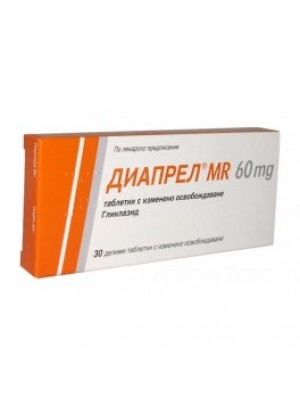
Gliclazide GAMMA. 30 mg. 60 tabletsWHAT GAMMA 30 gliclazide ..
15.00€