Your shopping cart is empty!
Welcome visitor you can login or create an account.
Mysimba 8 mg. 90 mg. 112 tablets
Product Code: Mysimba 8 mg. 90 mg. 112 tablets
Availability: In Stock

Product viewed: 2882


What Mysimba is and what it is used for
Mysimba contains 2 active substances: naltrexone hydrochloride and bupropion hydrochloride and is used in obese or overweight adults to control weight, along with a low calorie diet and exercise. This medicine acts on areas of the brain involved in the control of food intake and energy consumption.
Obesity in adults over 18 years is defined as a body mass index greater than or equal to 30, and overweight in adults over 18 years is defined as a body mass index of greater than or equal to 27 and less than 30. The index of body mass is calculated by dividing the measured body weight (kg) by the measured square height (m2).
Mysimba is authorized for use in patients with baseline body mass index of at least 30; can also be given to people with body mass index between 27 and 30 if they have other weight-related conditions such as controlled high blood pressure (hypertension), type 2 diabetes, or high levels of lipids (fats) in the blood.
The use of Mysimba may be stopped by your doctor after 16 weeks unless you have reduced your body weight by at least 5%. Your doctor may recommend stopping treatment if there is any reason to increase your blood pressure and other concerns about the safety and tolerability of this medicine.
2. What you need to know before you take Mysimba
Do not take Mysimba:
if you are allergic to naltrexone, to bupropion or any of the other ingredients of this medicine (listed in section 6);
if you have high blood pressure (hypertension) that is not controlled by a medicinal product;
if you have a condition that causes seizures (seizures) or have a history of seizures;
if you have a brain tumor;
if you usually drink too much and have just stopped using alcohol or you are about to stop while taking Mysimba;
if you have recently stopped taking sedatives or medicines to treat anxiety (especially benzodiazepines) or stop taking them while you are taking Mysimba;
if you have a bipolar disorder (sudden mood swings);
if you use other medicines that contain bupropion or naltrexone;
if you have an eating disorder or have had it in the past (for example bulimia or anorexia nervosa);
if you are dependent on opioids or opioid agonists (for example, methadone) or are in acute abstinence;
if you are taking medicines to treat depression or Parkinson's disease called monoamine oxidase inhibitors (MAOIs) or have taken them for the last 14 days;
if you have severe liver disease;
if you have severe or end-stage kidney disease.
Warnings and precautions
Talk to your doctor or pharmacist before taking Mysimba.
This is important because some conditions are more likely to experience side effects (see also section 4).
If you feel depressed, think of suicide, have a history of suicide or other mental health problems, you should tell your doctor before taking this medicine.
Seizures (seizures)
Mysimba has been shown to cause seizures (seizures) in up to 1 in 1,000 patients (see also section 4). You should tell your doctor before taking this medicine:
if you have had a serious head injury or head trauma;
if you regularly drink alcohol (see "Mysimba with alcohol");
if you regularly use medicines to sleep well (sedatives);
if you are addicted or addicted to cocaine or other stimulant products;
if you have diabetes that you use insulin or oral medicines that can lower your blood sugar (hypoglycaemia);
if you are taking medicines that could increase the risk of seizures (see "Other medicines and Mysimba").
If you experience a seizure (seizure), you should stop taking Mysimba and consult your doctor immediately.
You should immediately stop taking Mysimba and consult your doctor if you have any symptoms of an allergic reaction such as swelling of the throat, tongue, lips or face, difficulty in swallowing or breathing, dizziness, fever, rash, joint pain or in the muscles, itching or urticaria after taking this medicine (see also section 4).
You should tell your doctor, especially if:
you have high blood pressure before taking Mysimba as it may get worse. Your blood pressure and heart rate will be measured before you start taking Mysimba and while you are taking it. If your blood pressure or heart rate rises significantly, you may need to stop taking Mysimba;
have uncontrolled coronary artery disease (heart disease caused by impaired blood flow in the blood vessels of the heart) with symptoms such as angina (characterized by chest pain) or recent heart attack;
you have or have had a disease affecting the blood circulation in the brain (cerebrovascular disease);
you have any liver problems before you start taking Mysimba;
you have any kidney problems before you start taking Mysimba;
have a history of mania (a feeling of excitement or excitement that causes unusual behavior).
Elderly patients
Caution should be exercised when using Mysimba if you are 65 years of age or older. Mysimba is not recommended for patients over 75 years of age.
Children and adolescents
No studies have been conducted in children and adolescents under the age of 18 years. Therefore, Mysimba should not be used in children and adolescents under 18 years of age.
Other medicines and Mysimba
Tell your doctor or pharmacist if you are taking, have recently taken or might take any other medicines.
Do not take Mysimba with:
Monoamine oxidase inhibitors (medicines to treat depression or Parkinson's disease) such as phenelzine, selegiline or rasagiline. You must stop taking these medicines for at least 14 days before you start taking Mysimba (see "Do not take Mysimba");
Opioids and opioid-containing drugs, for example for the treatment of cough and cold (such as dextromethorphan or codeine containing mixtures), opioid dependence (such as methadone), pain (e.g., morphine and codeine), diarrhea (e.g. You should stop taking your opioid medication for at least 7-10 days before you start taking Mysimba. Your doctor may do a blood test to make sure your body has cleared these medications before starting treatment. Naltrexone blocks the effect of opioids; if you take a higher dose of opioids to overcome these effects of naltrexone, you may develop severe opioid poisoning, which can be life-threatening. After stopping treatment with Mysimba, you may be more sensitive to low doses of opioids (see "Do not take Mysimba").
Tell your doctor if you are taking any of the following medicines as your doctor will monitor you closely for side effects:
Medicines that may be taken alone or in combination with naltrexone / bupropion may increase the risk of seizures, such as:
medicines for depression and other mental problems;
steroids (except drops, eye or skin lotions or lotions or inhalers for respiratory disorders such as asthma);
medicines used to prevent malaria;
quinolones (antibiotics such as ciprofloxacin for the treatment of infections);
tramadol (opioid class painkiller);
theophylline (used to treat asthma);
antihistamines (medicines to treat hay fever, itching and other allergic reactions) that cause drowsiness (such as chlorphenamine);
blood glucose lowering drugs (such as insulin, sulfonylureas such as glyburide or glibenclamide and meglitinides such as nateglinide or repaglinide);
medicines for better sleep (sedatives such as diazepam).
Medicines to treat depression (such as desipiramine, venlafaxine, imipramine, paroxetine, citalopram) or other psychiatric problems (such as risperidone, haloperidol, thioridazine);
Some medicines used to treat high blood pressure (beta blockers such as metoprolol and clonidine, a centrally acting antihypertensive agent);
Some medicines used to treat irregular heart rhythms (such as propafenone, flecainide);
Some medicines used to treat cancer (such as cyclophosphamide, ifosfamide, tamoxifen);
Some medicines for Parkinson's disease (such as levodopa, amantadine or orfefenin);
Ticlopidine or clopidogrel, used primarily for the treatment of heart disease or stroke;
Medicines used to treat HIV infection and AIDS, such as efavirenz and ritonavir;
Medicines used to treat epilepsy such as valproate, carbamazepine, phenytoin or phenobarbital.
Your doctor will monitor you closely for side effects and may need to adjust the dose of other medicines or Mysimba.
Mysimba and alcohol
Excessive alcohol while you are being treated with Mysimba may increase the risk of seizures (convulsions), mental disorders or reduce tolerance to alcohol. Your doctor may suggest that you do not drink alcohol while taking Mysimba, or try to drink as little as possible. If you drink too much now, do not stop abruptly, as you may experience a seizure.
Pregnancy and breastfeeding
Mysimba should not be used during pregnancy or lactation.
If you are pregnant or are breast-feeding, think you may be pregnant or plan to become pregnant, ask your doctor or pharmacist for advice before taking this medicine.
Driving and using machines
Mysimba can cause dizziness to weaken your ability to concentrate or react.
If you experience dizziness, do not drive or operate machinery.
Mysimba contains lactose (a type of sugar)
If you know you have an intolerance to some sugars, talk to your doctor before taking this medicine.
3. How to take Mysimba
Always take this medicine exactly as your doctor has told you. If you are not sure, ask your doctor or pharmacist.
The starting dose is usually one tablet (8 mg naltrexone hydrochloride / 90 mg bupropion hydrochloride) once daily in the morning. The dose is gradually adjusted as follows:
Week 1: One tablet once a day in the morning;
Week 2: One tablet twice a day, one morning and one evening;
Week 3: Three tablets each day, two in the morning and one evening;
Week 4 and then: Two tablets twice a day, two in the morning and two in the evening.
The maximum recommended daily dose of Mysimba is two tablets twice a day.
After 16 weeks and every year after starting treatment, your doctor will decide whether you should continue to take Mysimba.
If you have liver or kidney problems, or if you are over 65 years of age and depending on the severity of your problems, your doctor may decide whether this medicine is suitable for you and monitor you even more severely for side effects . Your doctor may make blood tests before starting treatment with Mysimba if you have high blood sugar (diabetes) or are over 65 years of age to decide whether it is appropriate to take this medicine.
This medicine is for oral use. Swallow the tablets whole. Do not break them, do not chew them or crush them. It is preferable for the tablets to be taken with food.
If you take more than the necessary dose of Mysimba
If you take too many tablets, you may be more likely to have a fainting or other side effects similar to those described in section 4 below. Do not delay, call your doctor or nearest emergency center immediately.
If you forget to take Mysimba
Skip the missed dose and take the next dose at the usual time. Do not take a double dose to make up for the missed dose.
If you stop taking Mysimba
You may need to take Mysimba at least 16 weeks to get the full effect. Do not stop taking Mysimba without consulting your doctor.
If you have any further questions on the use of this medicine, ask your doctor or pharmacist.
4. Possible side effects
Like all medicines, this medicine can cause side effects, although not everyone gets them.
Serious side effects
Tell your doctor immediately if you notice any of the following serious side effects:
Seizures (convulsions):
Rare - may affect up to 1 in 1,000 people who take Mysimba at risk of seizure.
Symptoms of seizure include seizures and usually loss of consciousness. Someone who has had a fainting can then be confused and not remember what happened. You are more likely to have a seizure if you take too much of the medicine if you are taking any other medicine or if you have a higher than usual risk of seizures (see section 2).
Other side effects are:
Very common (may affect more than 1 in 10 people):
Nausea, vomiting;
Stomach ache;
Constipation;
Headache;
Insomnia (do not take Mysimba immediately before bedtime);
Anxiety, excitement;
Joint and muscle pain.
Common side effects (may affect up to 1 in 10 people):
Low number of certain white blood cells (reduced number of lymphocytes);
Dizziness, dizziness or vertigo (vertigo);
Tremor (tremor);
Increased energy, irritability;
Feeling of anxiety, mood swings;
Chills, fever;
Decreased appetite, diarrhea;
Change in taste (dysgeusia), dry mouth, toothache;
Difficulty concentrating;
Fatigue, drowsiness or lack of energy (lethargy);
Ringing tinnitus (tinnitus);
Accelerated or uneven heart rhythm;
Hot waves;
Wiping eyes;
Upper abdominal pain;
Delayed ejaculation;
Chest pain, change in electrocardiogram (recording of electrical activity of the heart);
Excessive sweating (hyperhidrosis);
Urticaria, rash, itching (pruritus);
Hair loss (alopecia).
Uncommon side effects (may affect up to 1 in 100 people):
Herpes of the mouth;
Itching, blisters, cracking and peeling of the skin between the toes (athlete's foot or tinea pedis);
Swollen glands on the neck, armpits and groin (lymphadenopathy);
Excessive water loss (dehydration);
Memory loss (amnesia), mental disorder;
Pre-synoptic condition;
Travel sickness;
Pain or discomfort in the ears;
Visual disturbances, blurred vision, eye irritation, pain or swelling, increased sensitivity to light (photophobia);
Nasal discomfort, nose obstruction, runny nose, sneezing, sinus infestation;
Sore throat, increased phlegm, difficulty in breathing, voice disorder, cough, yawning;
Variable or elevated blood pressure (sometimes severe);
Lower stomach pain;
Burping;
Swelling of the lips;
Separation of fresh blood through the anus, usually in or with the stools (haemathohesia);
Pouring (herniation);
Gout (flatulence), hemorrhoids, ulcer, dental caries;
Gallbladder inflammation (cholecystitis);
A problem with the spine, in which a part of the supporting disc between two vertebraes comes out (intervertebral disc prostruses);
Pain in the jaw and groin;
An abnormality characterized by sudden urination urges, altered urination frequency, painful urination;
Irregular menstrual cycle, vaginal bleeding, dryness of vulva and vagina in women;
Difficulty receiving and maintaining an erection;
Weakness, weakness (asthenia);
A thirst, a sensation of heat;
Cold limbs (palms, soles);
Elevated blood creatinine levels (indicative of loss of kidney function);
Elevated liver enzymes and bilirubin, hepatic disorders, hepatitis;
Reduced hematocrit (indicative of decreased red blood cell volume);
Acne, oily skin.
Rare side effects (may affect up to 1 in 1,000 people):
Unusual bleeding or bruising under the skin
Changes in blood sugar levels;
Irritability or hostility;
Suicidal thoughts, suicide attempts, a feeling of being on the side or a sense of unreality of the environment (depersonalisation);
Muscle rigidity, uncontrolled movements, walking or coordination problems;
Memory corruption;
Loss of consciousness;
Tingling or numbness of the palms or soles;
Expansion of blood vessels, low blood pressure when standing or lying down (postural hypotension);
Yellowish skin or whites of the eyes (jaundice);
Erythema multiforme (a severe skin disease that may affect the mouth and other parts of the body with red, often itchy marks beginning at the extremities), Stevens-Johnson syndrome (a rare skin disease with severe blisters and bleeding in the lips, eyes, mouth , nose and genitals);
Psoriasis aggravation (thick spots of reddened skin);
Muscle spasms;
Urine retention.
Very rare side effects (may affect up to 1 in 10,000 people):
Swelling of the eyelids, face, lips, tongue or throat, which can cause major breathing difficulties (angioedema), sudden life-threatening allergic reaction (anaphylactic shock);
Distorted perception of reality (delusions), aggression; Unnatural muscle breakdown, which can lead to kidney problems (rhabdomyolysis).
Undesirable effects of unknown frequency (can not be estimated from the available data):
Psychosis.
Reporting of side effects
If any of the side effects gets serious, tell your doctor or pharmacist. This includes all possible side effects not listed in this leaflet. You can also report side effects directly through the national reporting system.
As you report side effects, you can contribute to getting more information on the safety of this medicine.
5. How to store Mysimba
Keep this medicine out of the reach and sight of children.
Do not use this medicine after the expiry date which is stated on the carton after EXP. The expiry date refers to the last day of that month.
Do not store above 30 ° C.
Do not dispose of medicines in the sewage system or in the household waste container. Ask your pharmacist how to dispose of medicines you no longer use. These measures will help to protect the environment.
6. Package Contents and Additional Information
What Mysimba contains
The active substances are: naltrexone hydrochloride and bupropion hydrochloride. Each tablet contains 8 mg of naltrexone hydrochloride equivalent to 7.2 mg of naltrexone and 90 mg of bupropion hydrochloride equivalent to 78 mg of bupropion.
The other ingredients (excipients) are:
Tablet core: microcrystalline cellulose, hydroxypropylcellulose, lactose anhydrous, lactose monohydrate (see section 2 "Mysimba contains lactose"), cysteine hydrochloride, crospovidone, magnesium stearate, hypromellose, disodium edetate, colloidal silicon dioxide and indigo carmine aluminum lacquer (E132).
Film coating: polyvinyl alcohol, titanium dioxide (E171), macrogol 3350, talc and indigo carmine aluminum varnish (E132).
What Mysimba looks like and contents of the pack
Mysimba prolonged-release tablets are blue, biconvex, round tablets with debossed "NB-890"
Write a review
Your Name:Your Review: Note: HTML is not translated!
Rating: Bad Good
Enter the code in the box below:
Related Products

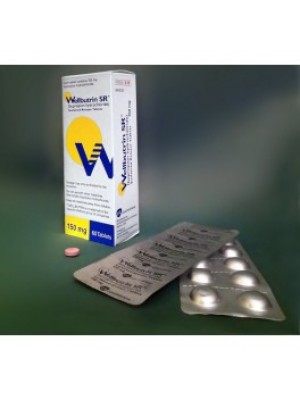
WELLBUTRIN . 150 mg. 60 tablets WHAT IS WELLBUTRIN AND WHAT ..
79.00€