Your shopping cart is empty!
Welcome visitor you can login or create an account.
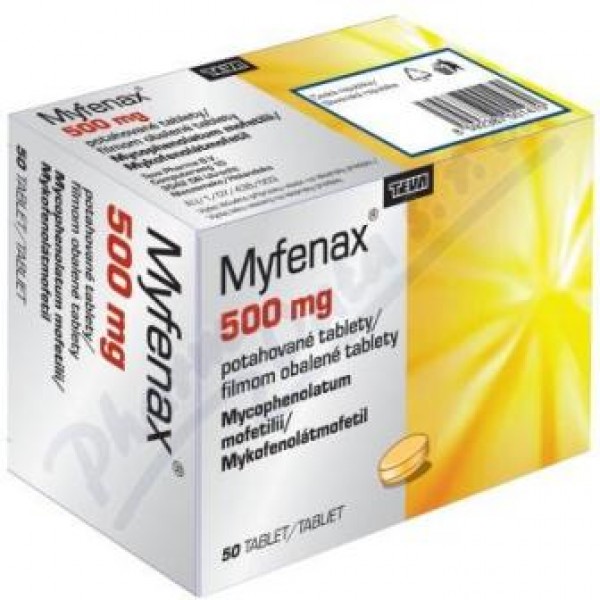
Myfenax 500mg. 50 tablets
Product viewed: 2758


WHAT MYFENAX IS AND WHAT IT IS USED FOR
Myfenax is a medicine used to suppress immune activity.
Myfenax is used to prevent rejection of your kidney, heart, or liver grafted by your body. Myfenax is used in combination with other medicines with similar functions (such as ciclosporin and corticosteroids).
2. BEFORE YOU TAKE MYFENAX
Do not take Myfenax
if you are allergic (hypersensitive) to mycophenolate mofetil, mycophenolic acid or any of the other ingredients of Myfenax;
if you are breast-feeding.
Take special care with Myfenax
Please tell your doctor immediately:
if you have symptoms of any infection (eg fever, sore throat), unexpected bruising and / or bleeding;
if you have or have ever had problems with the digestive system, stomach ulcer.
Myfenax reduces the body's protective power. Therefore, there is an increased risk of skin cancer. Therefore, you should limit exposure to sun and ultraviolet light by wearing appropriate protective clothing and using sunscreens with a high protection factor.
Taking other medicines
Please tell your doctor or pharmacist if you are taking or have recently taken any other medicines, including medicines obtained without a prescription.
If the answer to any of the following questions is yes, talk to your doctor before taking Myfenax:
Do you use any medicines that contain: azathioprine or other immunosuppressive products (sometimes given to patients after a transplant operation); cholestyramine (used to treat patients with high blood cholesterol levels); rifampicin (an antibiotic); antacids; (in chronic renal failure patients to reduce phosphate absorption) or any other medicines (including those you can buy without a prescription) that your doctor does not know about?
Do you need any vaccines (live vaccines)? Your doctor should advise what is shown to you.
Taking Myfenax with food and drink
The intake of food and drink does not affect treatment with Myfenax.
Pregnancy and breastfeeding
Do not take Myfenax if you are breast-feeding.
Your doctor should advise you on how to use birth control pills before taking Myfenax while taking Myfenax and 6 weeks after stopping taking.
Myfenax can cause problems in the development of the ears and harm your unborn baby.
Tell your doctor immediately if you are pregnant, breast-feeding, become pregnant or plan to start a family life in the near future.
Ask your doctor or pharmacist for advice before taking any medicine.
Driving and using machines
Myfenax has not been shown to impair your ability to drive or use machines.
Important information about some of the ingredients of Myfenax
The capsule shell contains sunset yellow as a colorant that can cause allergic reactions.
3. HOW TO TAKE MYFENAX
Always take Myfenax exactly as your doctor has told you. If you are not sure, ask your doctor or pharmacist. The usual way of using it is:
Kidney transplantation
Adults:
The first dose is given up to 72 hours after the transplant operation. The recommended daily dose is 4 capsules (2 g of the drug substance) divided into 2 separate intakes. This means taking 2 capsules in the morning and then 2 capsules in the evening.
Children and adolescents:
The dose varies depending on the size of the child. Your doctor will determine the most appropriate dose based on the body surface (height and weight). The recommended dose is 600 mg / m² twice a day.
Heart transplantation
Adults:
The first dose is given up to 5 days after the transplant operation. The recommended daily dose is 6 capsules (3 g of the drug substance) divided into 2 separate intakes. This means taking 3 capsules in the morning and then 3 capsules in the evening.
Children and adolescents:
There is insufficient data to recommend the use of Myfenax in children and adolescents who have received a heart transplant.
Liver transplantation
Adults:
The first oral dose of Myfenax is given at least 4 days after the transplant operation when you can take oral medicines. The recommended daily dose is 6 capsules (3 g of the drug substance) divided into 2 separate intakes. This means taking 3 capsules in the morning and then 3 capsules in the evening.
Children and adolescents:
There is insufficient data to recommend the use of Myfenax in children and adolescents who have received a heart transplant.
Method and route of administration
Swallow the capsules whole with a glass of water. Do not break them, do not crush them, and do not take capsules that are open or divided. Avoid contact with the powder spilled from damaged capsules. If the capsule accidentally opens, wash your skin with soap and water. If dust comes into your eyes and mouth, rinse thoroughly with plain fresh water.
The treatment continues until you need to
If you take more Myfenax than you should
It is important that you do not take too many capsules. Contact your nearest hospital Emergency and Emergency Medical Center or doctor to advise you on how to do it if you have taken more capsules than prescribed or if you think a child has swallowed some of the medicine.
If you forget to take Myfenax
If you ever forget to take the medicine, take it as soon as you remember, then continue taking it at your usual time.
Do not take a double dose to make up for the missed dose.
If you stop taking Myfenax
Do not stop taking Myfenax because you have felt better. It is important that you take the medicine for as long as your doctor prescribes. Stopping treatment with Myfenax may increase the risk of rejection of the transplanted organ. Do not stop taking the medicine unless your doctor prescribes it.
If you have any further questions on the use of this product, ask your doctor or pharmacist.
4. POSSIBLE SIDE EFFECTS
Like all medicines, Myfenax can cause side effects, although not everyone gets them.
Very common side effects that may affect more than 1 patient in 10:
diarrhea, vomiting, nausea;
a decrease in the number of different types of blood cells, which may lead to an increased risk of infections, bruising, bleeding, shortness of breath and tiredness;
bacterial, fungal and viral infections of the digestive tract and urinary tract, sore throat and herpes zoster.
Common side effects that may affect less than 1 patient in 10 but more than 1 in 100:
Changes in various laboratory parameters, including elevations of liver enzymes, kidney performance such as creatinine, potassium, blood sugar, blood lipids, cholesterol, phosphate, magnesium, calcium and uric acid;
Kidney problems at elevated levels of urea;
Gastrointestinal disorders such as constipation, indigestion, gas discharge, belching, inflammation of the oral cavity, esophagus, stomach, small intestine, liver or pancreas, gastrointestinal bleeding;
Seizures, increased muscle tension, trembling and muscle weakness, joint pain;
Insomnia, dizziness and headache, tingling or numbness of the limbs, changes in taste, loss of appetite, weight loss;
Inflammation and infections of the airways and gastrointestinal tract, sore throat, sinus inflammation, runny nose and itching in the nose;
Skin cancer or non-cancerous skin forms, fungal infections of the skin and vagina;
Changes in blood pressure, accelerated cardiac activity, blood vessel enlargement;
Fluid retention in the body, fever, malaise, looseness and weakness;
Inflammation of the liver, yellowing of the skin and whites of the eyes.
Uncommon side effects that may affect less than 1 patient in every 100 but more than 1 in 1,000:
Growth of lymphatic tissue, including the development of malignant tumors;
Inflammation or infections of the heart, heart valves, and the membrane that covers the brain and spinal cord.
Other side effects in which the frequency of occurrence can not be determined:
Hypersensitivity reaction (allergic reaction).
Do not stop taking the medicine unless you have already discussed this with your doctor.
If any of the side effects gets serious, or if you notice any side effects not listed in this leaflet, please tell your doctor or pharmacist.
5. HOW TO STORE MYFENAX
Keep out of the reach and sight of children.
Do not use Myfenax after the expiry date which is stated on the blister and carton. The expiry date refers to the last day of that month.
This medicine does not require any special storage conditions.
Medicines should not be disposed of via wastewater or household waste. Ask your pharmacist how to dispose of your unnecessary medicines. These measures will help to protect the environment.
MORE INFORMATION
What Myfenax contains:
The active ingredient is mycophenolate mofetil. Each capsule contains 500 mg mycophenolate mofetil.
The other ingredients are:
Capable of the capsule:
Pregelatinised corn starch;
Повкдон К-30;
Croscarmellose sodium;
Magnesium stearate.
Capsule shell:
Cap:
Indigo carmine (E132);
Titanium dioxide (E171);
Gelatin.
Body:
Erythrosine (E127);
Sunset yellow (B110);
Titanium dioxide (E171);
Gelatin;
Black ink contains: Shellac, Iron Oxide, Black (E172), Propylene Glycol, and Potassium Hydroxide.
Write a review
Your Name:Your Review: Note: HTML is not translated!
Rating: Bad Good
Enter the code in the box below:
Related Products
Sandimmun Neoral. 50 mg. 50 capsules Sandimmun Neoral WHAT ..
89.00€
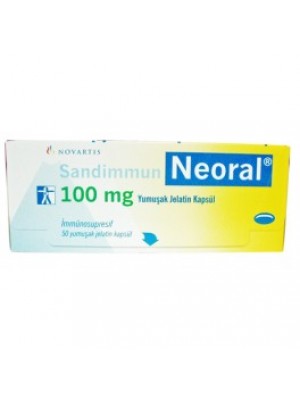
Sandimmun Neoral. 100 mg. 50 capsules Sandimmun Neoral WHAT..
189.00€