Your shopping cart is empty!
Welcome visitor you can login or create an account.
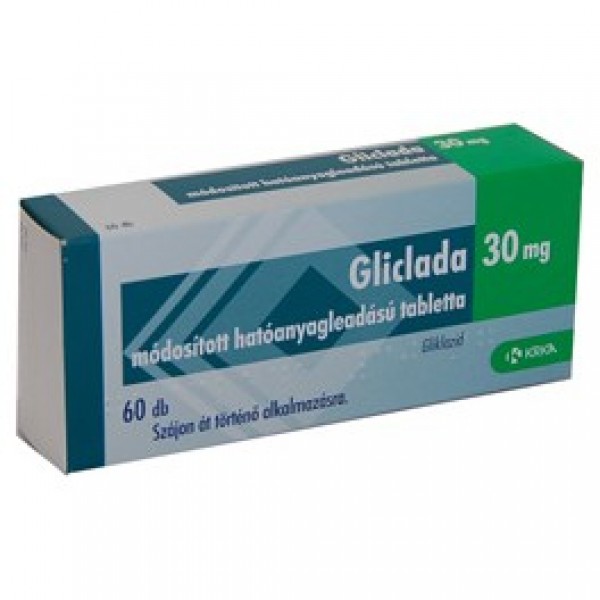
GLICLADA 30 mg. 60 tablets
Product Code: GLICLADA 30 mg. 60 tablets
Availability: In Stock
Product viewed: 1764


GLICLADA 30 mg. 60 tablets
GLICLADA WHAT IS AND WHAT IT IS USED FOR?
The name of your medicine is Gliclada. Each tablet contains 30 mg of active compound gliclazide in the prolonged release tablet. Gliclazide is a group of medicines called sulfonylureas.
Gliclada only be used in adults to keep blood sugar levels within normal limits, diabetes, when it is necessary to use insulin only when diet, exercise and weight loss are not enough to lower blood sugar (glucose). Treatment of diabetes continues throughout life.
Gliclada should not be used to treat diabetes in children.
2. BEFORE YOU TAKE GLICLADA
Do not take Gliclada
if you are allergic (hypersensitive) to Gliclazide or to any of the excipients of Gliclada,
if you have insulin-dependent diabetes (type 1)
if you have ketone bodies and sugar in your urine (this may mean you have ketoacidosis), diabetic pre-coma or coma,
if you have severe kidney or liver disease, if you are taking miconazole (medicine to treat fungal infections), if you are breastfeeding or pregnant. If you think that any of the above applies to you, talk to your doctor, nurse or pharmacist.
Take special care with Gliclada
As with any treatment of diabetes, the values of your blood sugar may become too low (a condition known as hypoglycemia) if food intake is reduced or feeding is delayed. If you develop symptoms of low blood sugar such as sweating, pallor, hunger, irregular or rapid heartbeat, eat sugar or take sugar drink (see also Possible side effects).
If you have an infection if you have surgery, or suffer from a serious injury, tell your doctor that you are taking Gliclada.
Tell your doctor if you have hormonal (eg. Disease of the pituitary gland, thyroid gland).
Tell your doctor if you are planning to become pregnant. Taking other medicines
Please tell your doctor or pharmacist if you are taking or have recently taken any other medicines, including medicines obtained without a prescription.
The effect of Gliclada may be influenced by:
- Phenylbutazone (used for the treatment of arthritis),
- Danazol (malignancy of the breast, severe menstrual bleeding and endometriosis)
- Other drugs that are used to reduce high blood sugar (eg. Insulin)
- Beta-blockers (used to treat high blood pressure), fluconazole (oral treatment of fungal infections)
- Angiotensin converting enzyme (ACE) inhibitors such as captopril or enalapril (used to treat high blood pressure and heart failure), H2 receptor antagonists to treat ulcers and dyspepsia (increased acidity in the stomach)
- Monoamine oxidase inhibitors (MAOIs) for depression, sulfonamides (an antibiotic)
- NPVLS (NSAIDs for pain relief eg., Ibuprofen),
- Chlorpromazine (used for the treatment of disorders of the central nervous system), steroids (for the treatment of a variety of conditions, including severe asthma and rheumatoid arthritis),
- Ritodrine and terbutaline (used during childbirth), intravenous salbutamol (asthma)
- Anticoagulants to control blood clotting (eg warfarin), medicines that contain alcohol. If you are going to go into hospital, tell the medical staff you are taking Gliclada.
Taking Gliclada with food and drink
Gliclada can be taken with food and soft drinks. Alcohol consumption can affect the control of diabetes. Alcohol is a risk factor for hypoglycemia.
Pregnancy and lactation
Consult your doctor or pharmacist before taking any medicine.
Gliclada not recommended to be used during pregnancy. Tell your doctor if you are planning to become pregnant or are pregnant.
Gliclada not take while breastfeeding.
Driving and using machines
Providing better control of your blood sugar Gliclada, your ability to drive or operate machinery will not be affected. However, if your blood sugar gets very low, it will affect your concentration and hence the possibility to perform these duties.
Important information about some of the ingredients of Gliclada
Gliclada contains lactose.
If your doctor has told you that you have an intolerance to some sugars, you should consult with him before you start taking this medicine.
3. HOW TO TAKE GLICLADA?
Always take Gliclada exactly as prescribed by your doctor. If you are not sure, ask your doctor or pharmacist. Swallow (f) purposes. Do not chew.
The total daily dose may vary from one to four tablets. It depends on the response to treatment. Your doctor will tell you how many tablets to take. You will need to take the tablet (f) during the breakfast (preferably at the same time each day). If you have the impression that the effect of this medicine is too strong or too weak, you should consult with your doctor or pharmacist.
If you take more dose Gliclada
You or someone else should contact your doctor or nearest emergency center. Signs of overdose are those of hypoglycemia (low blood sugar): sweating, pallor, hunger, irregular or fast heartbeat and fatigue. Symptoms responded favorably after taking sugar or sugary drinks, followed by a substantial snack or meal.
If you forget to take Gliclada
If you forget to take your tablet (is) one day, continue to take them as usual the next day.
Do not take a double dose to make up.
If you have further questions on the use of this product should check with your doctor or pharmacist.
4. POSSIBLE SIDE EFFECTS
Assessment of adverse reactions is based on their frequency.
Common (occur in less than 1 in 10 but more than 1 in 100 patients treated):
• Hypoglycaemia (low blood sugar). Symptoms include sweating, pallor, hunger, irregular or rapid heartbeat and loss of consciousness and others (see section 2 Before you take Gliclada). Symptoms can be relieved after taking glucose or sugary drinks, followed by a substantial snack or meal. If the patient does not improve after taking sugar or is not alert call immediately to the nearest emergency room. Never place anything in the mouth of someone who is unconscious!
Uncommon (occur in less than 1 in 100 but more than 1 in 1000 patients treated):
• Abdominal pain
• Nausea
• Vomiting
• Indigestion
• Diarrhea
• Constipation.
These effects are reduced when Gliclada be taken with food, according to the recommendations.
Rare (occur in less than 1 in 1,000, but more than 1 in 10,000 patients treated):
• Reduction of the number of cells in the blood, including anemia.
• Changes in blood values (which can cause paleness, prolonged bleeding, bruising, sore throat and fever), which usually disappear when treatment is interrupted.
• Skin reactions such as redness, itching and hives (rash). May appear severe skin reactions.
• Abnormal liver function tests, changes in the liver (which can cause yellowing of the skin and eyes).
• Your vision may be affected for a short time, especially in early treatment. This effect is due to changes in blood sugar levels.
They usually disappear on stopping the drug.
Severe changes in blood cell counts, allergic reactions and inflammation of the wall of blood vessels have been described very rarely for other sulphonylureas. In other sulfonylurea drugs, signs and symptoms of liver injury (eg. Jaundice) have been observed rarely in most cases they disappear after cessation of sulphonylureas, but may lead to life-threatening liver failure in isolated cases.
If any of the side effects gets serious, or if you notice any side effects not listed in this leaflet, please tell your doctor or pharmacist.
5. HOW TO STORE GLICLADA?
Keep out of reach of children.
This medicinal product does not require any special storage conditions. Expiration date
Do not use after the expiry date which is stated on the label. The expiry date refers to the last day of that month.
Medicines should not be disposed of in domestic or public waste. Consult your pharmacist what to do with the medicine that you no longer need. These measures will help to protect the environment.
6. DOPALNITELNA INFORMATION
What Gliclada
The active substance is gliclazide (gliclazide). Each prolonged-release tablet contains 30 mg of gliclazide.
Other ingredients are lactose monohydrate, hipomeloza, calcium carbonate, silica colloidal anhydrous, magnesium stearate.
Write a review
Your Name:Your Review: Note: HTML is not translated!
Rating: Bad Good
Enter the code in the box below:
Related Products
Gliclazide GAMMA. 30 mg. 60 tabletsWHAT GAMMA 30 gliclazide ..
15.00€