
Your shopping cart is empty!
Welcome visitor you can login or create an account.
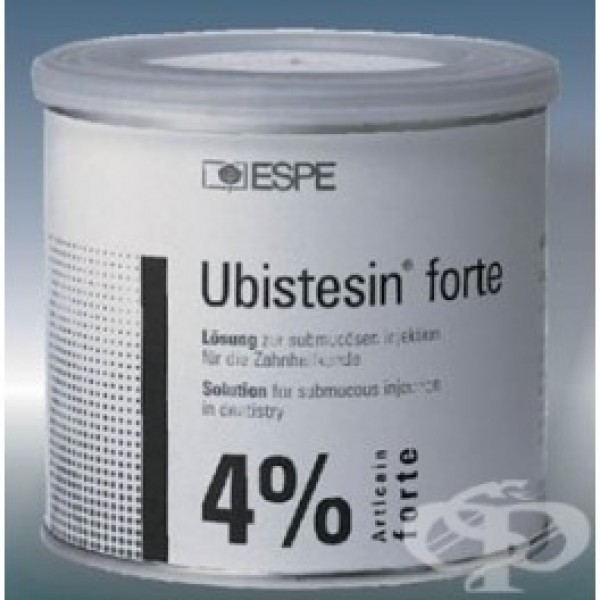
UBISTESIN Forte. 1.7 ml. 50.ampules
Product Code: UBISTESIN Forte. 1.7 ml. 50.ampules
Availability: In Stock
Product viewed: 3788


UBISTESIN Forte. 1.7 ml. 50.ampules

INGREDIENTS:
1 ml of solution for injection contains :
Active Ingredients
Articaine hydrochloride - 40 mg
Adrenaline hydrochloride - 0,012 mg
Other ingredients:
Anhydrous sodium sulphite , max. - 0.6 mg
/ equivalent to the max . 0.31 mg SO2
sodium chloride
Water for injections
Hydrochloric acid and sodium hydroxide for adjusting the pH value
therapeutic indications
Local anesthesia / infiltration and nerve / dentistry .
Ubistesin forte has specific indications in complicated interventions requiring prolonged anesthesia.
CONTRAINDICATIONS :
Do not allow the use of Ubistesin forte in the following cases :
- Children under 4 years
- Hypersensitivity to the drug or any of the excipients . Due to the local anesthetic articaine , do not allow the use of Ubistesin forte in the following cases :
- Known allergy or hypersensitivity to amide local anesthetics
- Severe impairment of excitation - conduction system of the heart
- Acute decompensated heart failure
- Severe hypotension
- Patients with evidence of activity in dehekt plazvenata cholinesterase
- Haemorrhagic diathesis
- Injection into vazlalen section
Because of adrenaline as a vasoconstrictor agent, not allowing the use of Ubistesin forte in the following cases :
- Heart diseases such as :
- Unstable angina
- Recent myocardial infarction
- Recent surgery for coronary artery bypass
- Refractory arrhythmias
- Untreated or uncontrolled severe hypertension
- Untreated or uncontrolled congestive heart failure
Concomitant treatment with monoamine oxidase inhibitors / MAO / or tricyclic antidepressants
Due to the content of sulphite as excipient not allow the use of Ubistesin forte in the following cases :
- Allergy or hypersensitivity to sulphite
- Severe bronchial asthma
Ubistesin forte can cause severe allergic reactions with anaphylactic symptoms .
Pregnancy and lactation
Clinical experience of the use in pregnant and lactating women is limited. Safe use of local anesthetics during pregnancy has not been established with respect to adverse effects on fetal development . This medicine should not be used during pregnancy only if it considers that the benefits outweigh the risks.
The excretion of articaine and its metabiliti in breast milk is unknown. Preclinical safety data suggest that the concentration of articaine in breast milk does not reach clinically relevant concentrations. Therefore, after anesthesia with articaine , nursing mothers should express and discard the first milk.
Interactions:
- The sympathomimetic effect of epinephrine may be potentiated by concomitant intake of MAO inhibitors or tricyclic antidepressants
- Adrenaline can suppress the secretion of insulin from the pancreas and reduce the effects of oral antidiabetic agents
- Concomitant administration of cardioselective beta-blockers may lead to increase in blood pressure of adrenaline in Ubistesin forte
- Some inhilatsionni anesthetics such as halothane , can sensitize the heart to catecholamines , and thereby induce arrhythmias following a Ubistesin forte
- During anticoagulant therapy increases bleeding tendency
Dosage and method of administration :
Dosage instructions :
Should be used at low volume solution that will lead to effective anesthesia .
Upon extraction of the upper teeth , 1.7 ml Ubistesin forte in most cases it is sufficient for one tooth can thus avoid painful palatal injections. Extractions of adjacent teeth , it is often possible to reduce the amount of the injected solution .
If a cut or suture of the palate is showing correlation palatal injection of about 0.1 ml per puncture .
In extractions of mandibular molars usually sufficient infiltration anesthesia with 1.7 ml Ubistesin forte tooth , in some cases requiring re- injection literally 1 - 1.7ml . In rare cases, you may need injection into the mandibular foramen .
Vestibular injection of 0.5 to 1.7 ml Ubistesin forte tooth allows taxidermy cavity and stump crowns .
Treatment of the lower molars should be used in wire anesthesia .
In general, for children weighing 20-30 kg were sufficient 0.25 to 1 ml ; in children weighing 30 - 45 kg , the dose is 0.5 to 2 ml .
In elderly patients may be observed to increase in plasma levels because of the delayed Ubistesin metabolic processes and lower volume of distribution. The risk of accumulation of Ubistesin is particularly increased after repeated administration. A similar effect can be obtained and deterioration in general condition of the patient , and in severe impairment of liver and kidney.
Therefore, in all these cases it is recommended that a lower dose
The dose should be reduced similarly in patients with some existing diseases , arteriosclerosis, angina.
Maximum recommended dose :
adults:
In healthy adults, the maximum dose articaine is 7 mg / kg b.w., equivalent to 12.5 ml Ubistesin forte.
The maximum dose is a 0,175 ml per kg .
children:
Level for injection should be determined by the age and weight of the child and the severity of the manipulation. Should not exceed the equivalent of 7 mg articaine / kg / 0,175 ml Ubistesin forte / kg / body weight .
Also available Ubistesin forte, which would be more suitable for longer treatments when there is a risk of bleeding into the operative field.
Method of administration
Injectable / oral- mucosal administration.
Only be used for anesthesia in dentistry
To avoid injection into a blood vessel , should always be carefully held aspiration control in two planes , even though negative aspiration does not rule completely unnoticed and unintentional intravascular injection .
The injection rate should not exceed 0.5 ml for 15 sec , ie 1 capsule per minute.
Major systemic reactions as a result of accidental intravascular injection can be avoided in most cases by an injection technique : first aspiration , then slowly injecting 0.1 to 0.2 mg, wait at least 20-30 seconds and slowly introducing balance.
SIDE EFFECTS
The local anesthetic articaine may cause the following side effects :
Cardiovascular disorders
Rare - slowing of the pulse, hypotension, low blood pressure , irregular heart impulni conduction , bradycardia, asystole , acute cardiovascular failure.
Disorders of the nervous system
Rare - metallic taste , ringing in the ears, dizziness , nausea, vomiting , restlessness , yawning, shaking, nervousness, nystagmus, logoreya , headache, shortness of breath . Paresthesias in the lips, tongue , or both.
In appearance , these symptoms require prompt corrective measures to prevent worsening : dizziness , confusion , tremors, muscle spasms, tonic- clonic convulsions , coma and respiratory paralysis
respiratory disorders
Rare - shortness of breath , followed by a delay, which can lead to respiratory arrest
allergic reactions
Very rare - rash, itching, swelling and redness , as well as vomiting , diarrhea , wheezing or anaphylaxis.
Cardiovascular disorders
Rare - can not exclude signs as feeling hot , sweating , fast heartbeat, migraine headaches , increased blood pressure , stenokadichni problems , tachycardia, tachyarrhythmias and cardiovascular arrest and acute edematous swelling of the thyroid gland.
The content of the sulfite as an adjuvant can lead to the following side effects:
allergic reactions
Very rare - vomiting , diarrhea , wheezing , acute asthma attack , clouding of consciousness or shock.
The combination of articaine and adrenaline may lead to the following side effects:
Nervous System Disorders
Is described later facial paralysis , occurred two weeks after administration of articaine / adrenaline still occurs six months later. Occurrence of various complications and side effects may obscure the clinical picture.
Write a review
Your Name:Your Review: Note: HTML is not translated!
Rating: Bad Good
Enter the code in the box below:
Related Products
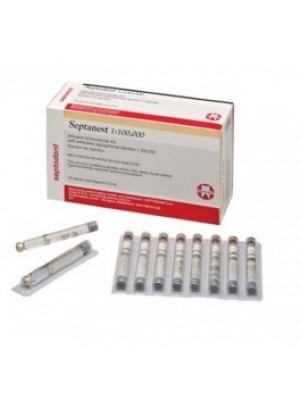
SEPTANEST adrenaline solution 68 mg. / 17 mcg. 50 pieces&n..
49.00€
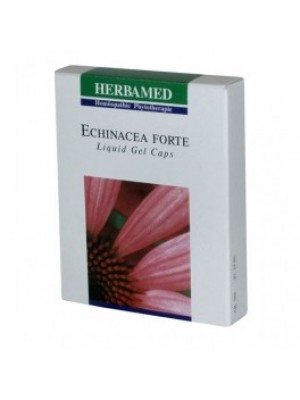
Echinacea Forte 400mg. 50 capsulesEchinacea Forte is a natur..
18.00€