
Your shopping cart is empty!
Welcome visitor you can login or create an account.
Tolterodin 2 mg.
Product Code: Tolterodin 2 mg.
Availability: In Stock

Product viewed: 1698


Tolterodin 2 mg.
WHAT Tolterodin ACCORD AND WHAT IT IS USED
The active ingredient is tolterodine. Tolterodine belongs to a class of medicines called antimuscarinic drugs.
Accord tolterodine is used to treat the symptoms of the symptoms of overactive bladder. If you have symptoms of overactive bladder, you may find that you can not control urination and experience necessary to quickly go to the bathroom without prior need and / or go to the toilet frequently.
2. BEFORE YOU TAKE Tolterodin ACCORD
Do not take Tolterodine Accord:
If you are allergic (hypersensitive) to tolterodine or any of the other ingredients of the drug;
If you are unable to urinate (urinary retention);
If you have uncontrolled narrow-angle glaucoma (high pressure and pain in the eye);
If you suffer from myasthenia gravis (a disorder of neuromuscular function);
If you have severe ulcerative colitis (ulceration and inflammation of the colon);
If you suffer from toxic megacolon (acute dilation of the colon).
Take special care with Tolterodine Accord:
If you have difficulty urinating and / or thinning of the jet;
If you suffer from gastrointestinal disease that affects the passage and / or digestion of food;
If you have kidney disease (renal failure);
If you have liver disease;
If you suffer from a neurological disorder that affects your blood pressure, bowel or sexual function (any neuropathy of the autonomic nervous system);
If you have a hiatal hernia (herniation of abdominal organs - (stomach));
If you have suffered from lazy bowel or suffer from severe constipation (slow gastrointestinal motility);
If you have heart problems such as:
violation ECG (heart recording);
have a slow heart rate (bradycardia);
suffer from heart disease, such as cardiomyopathy (heart muscle damage), myocardial ischemia (reduced blood flow and oxygen supply to the heart muscle), arrhythmia (irregular heartbeat) or heart failure;
If you have abnormally low levels of potassium (hypokalemia), calcium (hitsokaltsiemiya) or magnesium (hypomagnesemia) in the blood;
If you are taking any medicine for the treatment of arrhythmia (irregular heartbeat) (see "Taking other medicines").
Ask your doctor or pharmacist before starting treatment if you believe that any of the above things apply to you.
Taking other medicines
Tolterodine, the active substance of Tolterodine Accord may interact with other medicines.
It is not recommended to use in combination with tolterodine:
certain antibiotics (containing eg. erythromycin, clarithromycin);
drugs used for the treatment of fungal infections (e.g., containing. ketoconazole);
drugs used for the treatment of HIV.
Tolterodine should be used with caution when taken in combination with:
drugs that interfere with passage of the feed (containing eg. metoclopramide, domperidone and cisapride);
drugs for the treatment of irregular heartbeat (containing eg. amiodarone, sotalol, quinidine, procainamide) (see "Be cautious when adopting tolterodine");
other drugs with antimuscarinic (drugs with similar effect of tolterodine as amantadine, some antihistamines, phenothiazines, tricyclic antidepressants and antipsychotics) or cholinergic properties (drugs retroactively tolterodine). The reduction in gastric motility induced by antimuscarinic drugs may affect the absorption of other drugs.
Please tell your doctor if you are taking or have recently taken any other medicines, including medicines obtained without a prescription.
Taking Tolterodine Accord with food and drink
Tolterodine Accord can be taken before, during or after a meal.
Pregnancy and lactation
pregnancy
You should not use Tolterodine Accord if you are pregnant. Tell your doctor if you are pregnant, think you are pregnant or plan to become pregnant.
breastfeeding
It is not known whether tolterodine is excreted in human milk. Breastfeeding is not recommended during administration of tolterodine Accord.
Ask your pharmacist or doctor before taking any medicine.
Driving and using machines
Tolterodine Accord can make you feel dizzy, tired or affect your vision. Your ability to drive or operate machinery may be affected.
3. HOW TO TAKE Tolterodin ACCORD
dosage
Always take Tolterodine Accord exactly as you have been told by your doctor. If you are not sure, ask your doctor or pharmacist.
The usual dose is one tablet of 2 mg twice daily than in patients who have kidney or liver problems or troublesome side effects. In these cases, your doctor may reduce your dose to one tablet of 1 mg twice daily.
Tolterodine Accord is not recommended for use in children. The tablets are for oral use only and should be swallowed whole.
Duration of treatment
Your doctor will tell you how long treatment with Tolterodine Accord. Do not stop treatment early if you do not establish immediate effect. Your bladder will need some time to adapt. Finish course of tablets prescribed by your doctor. If by then you have not noticed any effect, talk to your doctor.
Benefits of treatment should be reviewed after 2 or 3 months.
Always consult your doctor if you plan to stop treatment.
If you take more than the amount of Tolterodine Accord
If you or someone else has taken more than you should, contact your doctor or pharmacist.
In case of overdose Tolterodine Accord, reported the following symptoms:
Severe central anticholinergic effects (eg hallucinations, severe excitation);
Convulsions or pronounced excitation;
Respiratory failure;
Fast heart beat (tachycardia);
Urinary retention;
Fundus (mydriasis);
ECG changes - QT prolongation.
If you forget to take Tolterodine Accord
Do not take a double dose to make up for a missed dose. If you forget to take your dose at the usual time, you can take it as soon as you remember, unless it is already time for the next dose. In this case, the usual dosing schedule.
If you stop taking Tolterodine Accord
If you have any further questions on the use of this product, ask your doctor or pharmacist.
4. POSSIBLE SIDE EFFECTS
Like all medicines, Tolterodine Accord can cause side effects, although not everybody gets them.
The following adverse reactions have been observed during treatment with tolterodine with the following frequencies.
The most commonly reported side effects are dry mouth and headache.
Common side effects (less than 1 in 10, but at least 1 in 100 patients):
bronchitis;
Dry eyes;
Sense of rotation;
Indigestion (dyspepsia);
Painful or difficult urination;
vomiting;
diarrhea;
dizziness;
Blurred vision;
palpitations;
constipation;
Weight gain;
Inability to empty the bladder;
drowsiness;
Abdominal pain;
Dry skin;
fatigue;
Chest pain;
Numbness of fingers and toes;
Excess amounts of air or gas in stomach or intestines;
Excess fluid in the body that causes swelling (eg. In the ankle).
Uncommon side effects (less than 1 in 100, but at least 1 in 1,000 patients):
Allergic reactions;
Fast heartbeat;
Memory disorders;
nervousness;
Heart failure;
Irregular heartbeat;
Heartburn.
Additional adverse reactions reported from post-marketing experience include severe allergic reactions, confusion, hallucinations (seeing, hearing, feeling, tasting or sniffing things that are not there), flushing, angioedema, and disorientation. There are reports of worsening of symptoms of dementia (dementia) in patients treated for dementia.
Should immediately contact your doctor if symptoms of angioedema, such as:
Swelling of the face, tongue or throat;
Difficulty in swallowing;
Rash and difficulty breathing.
If any of the side effects gets serious, or if you notice other effects not listed in this leaflet, please tell your doctor or pharmacist.
5. HOW TO STORE Tolterodin ACCORD
Keep out of the reach and sight of children.
Do not use Tolterodine Accord tablets after the expiry date stated on the blister and carton. The expiry date refers to the last day of that month.
This medicinal product does not require any special storage conditions.
Medicines should not be disposed of via wastewater or household waste. Ask your pharmacist how to dispose of medicines no longer required. These measures will help to protect the environment.
6. FURTHER INFORMATION
What Tolterodine Accord
The active substance is 2 mg tolterodine tartrate, equivalent to 1.37 mg of tolterodine.
Other ingredients are:
Core: cellulose microcrystalline; sodium starch glycolate (type A); magnesium stearate; silica colloidal anhydrous.
Film coating: hypromellose (E464), titanium dioxide (E171), macrogol 8000, talc (E553b)
Tolterodine Accord looks like and contents of pack
Accord tolterodine 2 mg tablets are white to off-white, oval, biconvex, film-coated tablets, debossed S042 on one side and plain on the other.
Write a review
Your Name:Your Review: Note: HTML is not translated!
Rating: Bad Good
Enter the code in the box below:
Related Products
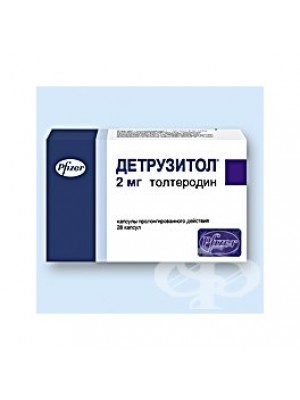
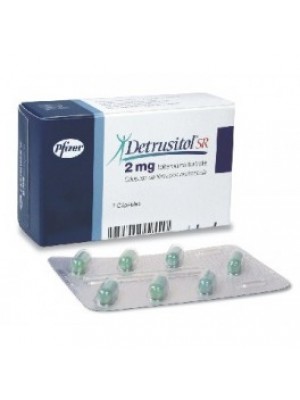
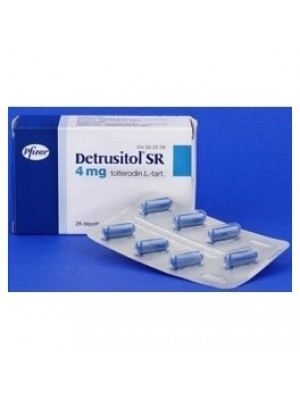
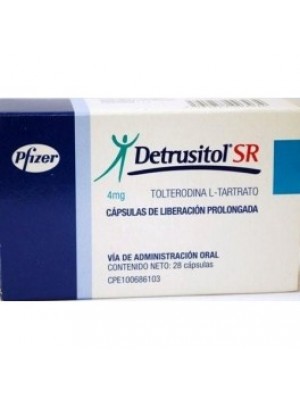
DETRUSITOL SR 4 mg. 28 capsulesWHAT DETRUSITOL SR AND WHAT I..
45.00€