Your shopping cart is empty!
Welcome visitor you can login or create an account.
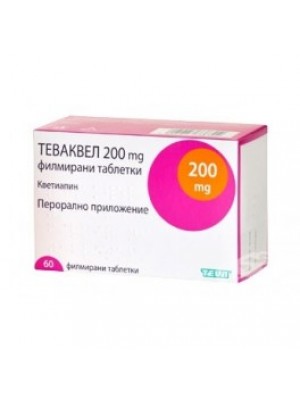
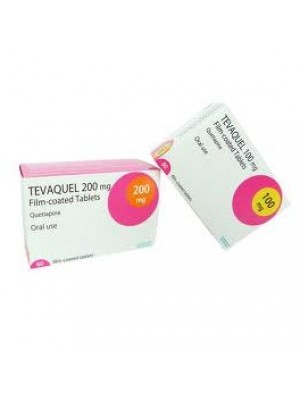
TEVAQUEL 200 mg. 60 tablets
Product Code: TEVAQUEL 200 mg. 60 tablets
Availability: In Stock

Product viewed: 1136


TEVAQUEL 200 mg. 60 tablets
What TEVAQUEL 200 mg tablets is and what it is used
TEVAQUEL 200 mg film-coated tablets containing quetiapine, which belongs to a group of medicines called antipsychotics, which help to control the symptoms of mental illness called schizophrenia in adults over the age of 18. These symptoms include delusions (have strange or unusual thoughts), hallucinations (seeing or hearing things that are not there), abnormal behavior, which can be aggressive and become closed and repressed.
Quetiapine can also be used in the treatment of moderate to severe manic episodes in patients over 18 years of age. These episodes cause periods of endless cheerfulness and increased activity. People with this condition may become unusually irritable, may need less sleep than normal and have rapidly changing thoughts. Not been proven whether quetiapine preventing recurrence of manic or depressive episodes.
2. What you need to know before taking TEVAQUEL 200 mg film-coated tablets
Do not take TEVAQUEL 200 mg film-coated tablets and tell your doctor if:
you are allergic (hypersensitive) to quetiapine or any of the other ingredients of this medicine listed in Section 6;
taking medicines to treat HIV (AIDS);
taking azole antifungal drugs like ketoconazole or itraconazole;
taking antibiotics erythromycin or clarithromycin;
taking nefazodone for depression.
Warnings and Precautions
Before taking quetiapine consult your doctor or pharmacist if:
suffer from low blood pressure;
suffer from heart disease, irregular heartbeat or heart disease, or blood vessels;
you have ever had seizures or fits;
have liver problems;
You have diabetes or are at risk to get diabetes. If so, your doctor may monitor your blood sugar while you are taking quetiapine;
ever received a stroke;
you had a low white blood cell counts;
if you or any member of your family have had a blood clot, as this drug may be linked to blood clots.
If after taking the tablets get palpitations, rapid breathing, muscle stiffness and / or fever, or involuntary movements of the face, body, arms or legs, contact your doctor immediately.
In elderly patients with dementia (loss of mental activity) when taking quetiapine and other drugs of the same type, an increased risk of death. Direct connection between quetiapine and this increased risk has not been established. Quetiapine is not approved for such use.
Suicidal thoughts or worsening of depression
If you are depressed you may sometimes have thoughts of harming or killing themselves. They may occur more frequently when starting treatment for the first time, as to manifest the effects of these drugs takes time, usually about two weeks but sometimes longer. The chance of experiencing such thoughts is greater:
if you have previously had thoughts of suicide or self-harm;
if you are a young person. Information from clinical trials has shown an increased risk of suicidal thoughts and / or attempts of suicide in young people under the age of 25 years with depression.
If at any time have thoughts of harming or suicide, immediately call your doctor or go to hospital.
It may be helpful to let your relative or friend that you are depressed and ask them to read this leaflet. It might ask them to tell you if they think your depression is getting worse, or worry about changes in your behavior.
At the beginning of treatment with quetiapine may feel sleepy or dizzy, especially after standing up and this can cause you to fall or have an accident. Be careful while know how you react to quetiapine.
Quetiapine can cause unpleasant or worrying anxiety, need to move often or inability to stay a long time in a sitting or standing position (this condition is called akathisia). More likely is this to occur during the first few weeks of treatment. If you get it, talk to your doctor.
Quetiapine may be a cause of severe stomach pain that reaches back; this may be an inflammation of the pancreas. If this happens, call your doctor immediately.
Children and adolescents
Quetiapine is not recommended for use in children and adolescents under 18 years of age due to a lack of data to support its use in this age group.
Other medicines and quetiapine
Please tell your doctor or pharmacist if you are taking or have recently taken or might take any other medicines, including herbal products, natural products and medicines obtained without a prescription.
Do NOT take TEVAQUEL 200 mg tablets if you are taking:
drugs for the treatment of HIV (AIDS);
azole antifungals such as ketoconazole or itraconazole;
antibiotics erythromycin or clarithromycin;
nefazodone for depression.
Tell your doctor if you are already taking:
other medications for mental illness such as thioridazine;
carbamazepine or phenytoin for epilepsy;
barbiturates such as phenobarbital (for epilepsy) or amobarbital (for insomnia);
medicines for cardiac arrhythmia;
drugs that can alter the level of salts (potassium, magnesium) in your blood;
antituberculosis drug rifampicin.
Some medicines can cause faster removal of quetiapine from your body than normal, so it is possible your treatment is not effective.
Quetiapine may give false-positive results of some laboratory tests (tests for the presence of methadone and antidepressants in some types of blood).
Taking TEVAKVEL 200 mg film-coated tablets with food and alcohol
Do not drink grapefruit juice while taking this medicine.
While taking TEVAKVEL 200 mg tablets careful with alcohol intake. This medicine may be taken with or without food.
Pregnancy and lactation
Safety when taking quetiapine during pregnancy or lactation has not been confirmed. Do not take quetiapine before checking with your doctor if you are pregnant or trying to become pregnant.
The following symptoms may occur in newborns when mothers used TEVAQUEL 200 mg film-coated tablets in the last trimester (last three months of pregnancy): shaking, numbness and / or weakness, sleepiness, agitation, breathing problems, and difficulty in feeding. If your baby develops any of these symptoms, it may need to contact your doctor.
You should not breast-feed during treatment with quetiapine.
If you are pregnant or breast-feeding, you think you may be pregnant or planning to become pregnant, talk to your doctor or pharmacist before taking this medicine.
Driving and using machines
The use of quetiapine can lead to lethargy. Do not drive or operate machinery until you know how this medication affects you.
TEVAQUEL 200 mg film-coated tablets contain lactose
This product contains a small amount of lactose. If your doctor has told you that you have an intolerance to some sugars, consult him before taking this medicine.
TEVAQUEL 200 mg film-coated tablets contain sodium
This medicinal product contains less than 23 mg sodium per tablet in practice it does not contain sodium.
3. How to take TEVAQUEL 200 mg film-coated tablets
Always take TEVAQUEL 200 mg tablets exactly as your doctor has told you. If you're not sure, ask your doctor or pharmacist.
Mature
Schizophrenia
The usual starting dose is 50 mg. During the first four days of treatment will take increasing number of tablets. After the fourth day, the dose can be further increased depending on the response to the treatment. Your doctor will tell you how many tablets you should take each day. The maximum daily dose is 750 mg.
Manic episodes associated with bipolar disorder
The usual starting dose is 100 mg. After the fourth day, the dose may be increased further depending on how you respond to treatment. Your doctor will tell you how many tablets you should take each day. The maximum daily dose is 800 mg.
Method of administration
Half the daily dose should be taken in the morning and half in the evening. The tablets should be swallowed with water and may be taken with or without food.
Liver disease
Your doctor may give you a lower dose if you have liver disease.
Elderly
If you are elderly, your doctor may prescribe a lower dose.
Children and adolescents
TEVAQUEL 200 mg film-coated tablets are not recommended for use in children and adolescents.
If you take more dose TEVAQUEL 200 mg film-coated tablets required
Signs and symptoms of overdose include dizziness and sedation, fast heartbeat, low blood pressure, seizures (seizure), destruction of muscles, who leads to kidney damage (rhabdomyolysis), water retention, respiratory arrest, status of confusion, agitation, delirium.
Immediately call your doctor or the nearest emergency center. Take the pack and remaining tablets with you.
If you forget to take TEVAQUEL 200 mg film-coated tablets
If you forget to take a dose, take it as soon as you remember unless it is almost time for your next dose. Do not take a double dozayu to make up the missed dose.
If you stop taking TEVAQUEL 200 mg film-coated tablets
Do not suddenly stop taking this medicine before consulting your doctor, as you may get withdrawal symptoms such as nausea, vomiting and insomnia.
It recommended a gradual withdrawal of the drug.
If you have any further questions on the use of this product, ask your doctor or pharmacist.
4. Possible side effects
Like all medicines, Quetiapine can cause side effects, although not everybody gets them.
Stop taking quetiapine and call your doctor or go to the nearest hospital immediately if:
Some people (may affect up to 1 in 10,000 people) can get a severe allergic reaction called anaphylactic shock. This is a rare but very serious side effects. If any of these side effects, call your doctor immediately: swelling of the face, hands, lips, feet, tongue or throat, difficulty swallowing or breathing;
Do you have muscle weakness, tenderness, or pain, malaise or fever. It can have rare but serious disease that can be life-threatening, called rhabdomyolysis. This may affect up to 1 in 10 000;
You have a high fever, sweating, muscle cramps, rapid heartbeat, rapid breathing and drowsiness or feel confused. Furthermore, it may get difficulty in gait, staggering or have abnormal muscle movements that you can not control. In rare cases can occur eye movement. That could be signs of a serious condition called neuroleptic malignant syndrome. It can affect up to 1 in 1000 people;
Notice yellowing of the skin or eyes, and darken your urine, you may also have a fever, feel tired, lose your appetite, have abdominal pain or nausea. That could be signs of liver problems such as jaundice or hepatitis. May affect up to 1 in 1000 people;
You have seizures (convulsions). They may affect up to 1 in 100 people;
If you notice clots in the veins especially in the legs (symptoms include swelling, pain and redness in the leg), which can move through blood vessels to the lungs, causing chest pain and difficulty breathing. This is called thromboembolism and may affect up to 1 in 1000 people;
You have severe pain in the abdomen that reaches back to back; this may be a manifestation of pancreatitis and affects up to 1 in 1000 people;
Symptoms of the disease called diabetes mellitus and may affect up to 1 in 100 people;
Some people may experience life-threatening skin disease (syndrome Stevens-Johnson, which affects up to 1 in 10,000 people and toxic epidermal necrolysis, whose frequency can not be estimated from the available data). These are very severe side effects. If any of these effects, tell your doctor or nurse:
- Peeling of the skin;
- Inflammation of the mucous membranes;
- Skin rash;
If have itchy spots, which begin to appear on the feet and hands. These may be symptoms of a skin condition called erythema multiforme. The incidence of this condition can not be estimated from the available data;
Get swelling of the face (eyelids, lips), tongue, hands and feet. Furthermore, it may occur difficulty in breathing. This condition is called angioedema and may affect up to 1 in 10 000;
If you have difficulty speaking or swallowing, loss of balance, lack of facial expression, uncertain gait, stiff shoulders and legs, trembling or shaking of hands or fingers. They are called extrapyramidal symptoms and may affect up to 1 in 10 people;
You notice that more often than usual get infections or bruising. These may be symptoms of a serious condition called agranulocytosis (decrease in blood cells);
Get constant painful erection of the penis that does not go away (priapism) - this side effect is rare;
Feel uneven and accelerated heartbeat. This can be a symptom of a condition called prolongation of the QT-interval which was observed in a study called ECG. May affect up to 1 in 100 people;
You have a very high temperature;
Reports have suggested that some antipsychotic drugs can cause abnormal heart rhythms, heart attack or sudden unexplained death. If you suffer from chest pain, palpitations or irregular heart beat, immediately contact your doctor.
Other side effects are:
Very common (affect more than 1 in 10 people):
dizziness;
drowsiness;
headache;
dry mouth;
weight gain;
elevated levels of cholesterol;
symptoms of withdrawal (symptoms which occur when you stop taking quetiapine) include inability to sleep (insomnia), nausea, headache, diarrhea, vomiting, dizziness and irritability. Usually disappear about 1 seven after the last dose;
Some side effects are identified only in blood tests. These include reduction of the molecule called hemoglobin in the blood.
Common (may affect up to 1 in 10 people):
loss of consciousness;
fast or irregular heartbeat;
indigestion;
weakness;
Some side effects are identified only in blood tests. These are:
- Reduction of the number of certain types of blood cells (eosinophils);
- Increased amount of the hormone prolactin in the blood (hyperprolactinemia) .Povishenieto prolactin in the blood can cause for:
1. Men and women get breast swelling and unexplained secretion of milk;
2. Women do not have a monthly cycle or cycle to their irregular;
- Increase of certain enzymes in the blood (ALT, AST, GGT);
- High blood sugar levels;
- Reducing the amount of certain hormones in the blood (CA, T4);
- Changes in the number of white blood cells (which can cause a fever and serious deterioration of your general condition or fever with signs of local infection as a permanent sore throat, mouth ulcers or problems with urination);
swelling of hands or feet;
constipation;
vomiting;
blurred vision;
rhinitis (itchy or stuffy nose);
dyspnea (shortness of breath);
low blood pressure when standing up, which can cause dizziness;
abnormal dreams and nightmares;
abnormal muscle movements;
speech disorders, or tongue;
constant feeling of hunger.
Uncommon (may affect up to 1 in 100 people):
restless leg syndrome;
difficulty swallowing;
sexual offenses;
Some side effects are identified only in blood tests. These include:
- Reduction in red blood cells (anemia), which is the cause of fatigue, tiredness and lack of energy;
- Reducing the electrolytes in the blood called sodium (a condition called hyponatremia);
impaired function of the thyroid (hypothyroidism), leading to fatigue, drowsiness, constipation, obesity.
Rare (may affect up to 1 in 1,000 people):
swelling of breasts and unexpected separation of milk (galactorrhoea);
metabolic syndrome (a group of conditions that put you at risk of heart disease and diabetes, these conditions are: high blood pressure, high blood sugar, high levels of triglycerides (a type of blood fat), low HDL (the levels of good cholesterol in the blood), accumulation of fat around the waist);
walking in a dream, sleep talking, sleep eating;
low body temperature;
irregular menstruation;
Some side effects are identified only when performing blood tests. They include reducing enzyme in the blood called creatine phosphokinase (CPK).
Write a review
Your Name:Your Review: Note: HTML is not translated!
Rating: Bad Good
Enter the code in the box below:
Related Products