Your shopping cart is empty!
Welcome visitor you can login or create an account.
STAZEPINE 200 mg. 50 tablets
Product Code: STAZEPINE 200 mg. 50 tablets
Availability: In Stock
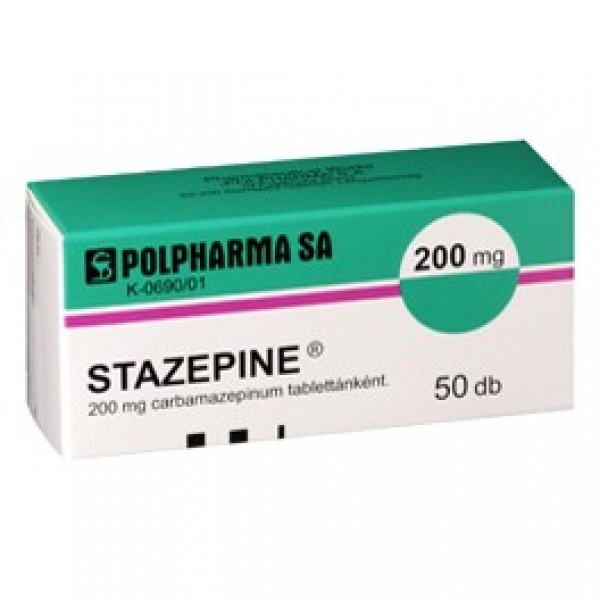
Product viewed: 1032


STAZEPINE 200 mg. 50 tablets
What is STAZEPINE
STAZEPINE be used to treat various types of epileptic seizures (generalized, partial and mixed). Used to treat facial pain (trigeminal neuralgia). It is prescribed for patients with bipolar disorder unresponsive to treatment with lithium.
Before taking STAZEPINE must answer the following questions
If you answer YES to any of these questions, do not take this medicine before you are advised again with your doctor:
- Have you ever had a rash, itching or allergy to carbamazepine or to any of the drugs from the group of tricyclic antidepressants (eg, amitriptyline or imipramine?
Or any of the inactive ingredients in STAZEPINE (see. What STAZEPINE)?
* - Do you suffer from any heart disease or blood disease?
- Are you taking or have recently taken (within the last 14 days) monoamine oxidase inhibitors (MAOIs) such as phenelzine, isocarboxazid, or for the treatment of depression?
- Do you suffer from any mental illness?
- Do you suffer from blood disorder called porphyria?
- Do you suffer you ever had a reaction to any medicine related to reducing the number of leukocytes in the blood (leukopenia)?
- Are you pregnant? Are you trying to get pregnant? Breast-feeding you?
If you answer YES to any of these questions, you should tell your doctor:
- Do you suffer from any liver or kidney disease?
- Do you suffer from glaucoma (increased eye pressure)?
- Are you taking any of the following medications:
Oral contraceptives (birth control pills). STAZEPINE may reduce their effectiveness and may appear low monthly bleeding between cycles. STAZEPINE may reduce their effectiveness and lead to unwanted pregnancy. Ask your doctor and probably he will recommend alternative methods to prevent pregnancy;
Medicines for depression or anxiety, especially lithium, alprazolam, haloperidol, viloxazine, fluoxetine, fluvoxamine, thioridazine, nefazodone or tricyclic antidepressants (imipramine, clomipramine, amitriptyline, nortripti lin);
Corticosteroids such as hydrocortisone, fludrocortisone, prednisone or dexamethasone;
Anticoagulants (eg, warfarin).
Antibiotics, especially erythromycin, clarithromycin, rifampicin, isoniazid or doxycycline;
Antifungals such as itraconazole, ketoconazole, fluconazole;
Painkillers containing dextropropoxyphene, methadone or tramadol;
Other anticonvulsants, particularly carbamazepine, phenytoin or phenobarbital, but also clonazepam, clobazam, ethosuximide, primidone, valproic acid, progabide, lamotrigine, tiagabine, topiramate;
Medicines to treat high blood pressure or heart problems, such as verapamil, diltiazem, digoxin, felodipine, isradipine and other known as dihydropyridines;
Antihistamines (medicines for allergy), such as terfenadine and loratadine;
Diuretics such as furosemide or hydrochlorothiazide;
Cimetidine (an anti-ulcer drug)
Isotretinoin (a medicine for the treatment of acne)
Metoclopramide (a medicine to treat vomiting)
Acetazolamide (for the treatment of glaucoma - increased intraocular pressure)
Danazol or gestrinone (for the treatment of endometriosis);
Theophylline (for asthma)
Cyclosporin (an immunosuppressant, a drug that is used in organ transplantation, but also for the treatment of arthritis or psoriasis);
Clozapine, olanzapine and risperidone (schizophrenia);
Cisplatin, doxorubicin or toremifene (to treat cancer);
Mefloquine (for the treatment of malaria)
Indinavir, saquinavir or ritonavir (for HIV);
Levothyroxine (to treat underactive thyroid gland);
Tibolone (for the treatment of postmenopausal symptoms);
Any other medicine that you are taking, but your doctor knows, including vitamin C;
The herb St. John's wort (Hypericum perforatum) should not be taken at the same time with STAZEPINE. If you are already taking St. John's wort, consult your doctor.
Special warnings
Before you start taking STAZEPINE and during treatment with it, your doctor may ask you to do a number of tests of blood and urine. These tests should be performed regularly as directed by your doctor and not to worry about it.
If you feel drowsy or dizzy at the beginning of treatment, you should avoid driving or operating machinery until these effects disappear.
Do not drink alcohol during treatment with STAZEPINE not you tell your doctor.
If you have an operation (even at the dentist) you should tell your doctor that you are taking STAZEPINE.
How is the STAZEPINE?
STAZEPINE should be taken exactly as your doctor has prescribed. Follow your doctor's instructions and never change the dose. Most likely your doctor will prescribe you start treatment at a low dose and gradually will be increased according to your individual needs. STAZEPINE 2-3-4 is usually taken twice a day. STAZEPINE dosing is individual.
Daily doses of STAZEPINE are:
Epilepsy
Grown Ups
800 -1200 mg daily (4-6 tablets per day).
Children
6-10 years: 400-600 mg daily (2-3 tablets a day) 11-15 years: 600-1000 mg daily (3-5 tablets daily)
Adults over 65 years
Older people often take more than one medicine, so your doctor will determine the dose and will regularly monitor your condition.
Trigeminal neuralgia
600-800 mg a day (3-4 tablets per day).
STAZEPINE dose for the treatment of trigeminal neuralgia varies greatly between patients. Your doctor will tell you how many tablets to take and when. Once the pain disappears, your doctor may reduce the dose of STAZEPINE and if you continue to have no pain, treatment STAZEPINE can be stopped completely. Always follow the advice of your doctor or change the dose of STAZEPINE unless he has advised you to do so.
Prophylaxis of bipolar disorder in patients unresponsive to therapy with lithium 400-600 mg daily (2-3 tablets daily)
Do not stop taking STAZEPINE sharply. Discontinuation should be done slowly and gradually. Always ask your doctor.
Overdose
If you accidentally take too many tablets STAZEPINE, immediately contact your doctor or go to the nearest hospital. Wear drug pli its container with you.
Missed dose
If you have forgotten or for some reason you did not receive the prescribed dose at the appointed time, take it as soon as you remember. But if it is almost time for your next dose, continue in a normal mode. Forget about the missed dose and not take 2 doses at once.
Once you take STAZEPINE
STAZEPINEE usually does not cause problems. Like any drug, however, can sometimes cause side effects in some patients.
If you notice any of the following symptoms:
- Itching and flaking of the skin, mouth ulceration or unexplained bleeding;
- Constant sore throat or fever, or both;
- Yellowing of the whites of the eyes or skin;
- Swelling of the joints, or legs;
- Symptoms of nervous disease or confusion;
- A combination of these symptoms, such as pain in joints and muscles, itching around the nose and cheeks, breathing problems may mean that you develop a rare reaction called lupus erythematosus;
- Rarely observed adverse events of several bodies expressed in fever, skin rashes, joint pain, abnormal liver tests and blood;
- Pain in the stomach; Stop taking STAZEPINE And tell your doctor immediately.
Like any medicine STAZEPINE may cause other side effects. They occur very rarely, but if you happen to notice any of these effects, tell your doctor:
- Tremors or abnormal muscle movements, tics or twitches of facial muscles;
- Anxiety or agitation
- Decreased coordination of movements
- Dizziness, fatigue, drowsiness, headache;
- Slurred speech or difficulty pronouncing words;
- Dry mouth;
- Double or blurred vision;
- Numbness in the hands or feet;
- Cramps;
- Muscle weakness;
- Hallucinations;
- Changes in mood;
- Confusion or aggression;
- Loss of appetite or weight gain;
- Increase or reduction in the severity of the hearing;
- Increased sensitivity of the skin to sunlight;
- Changes in skin pigmentation;
- Itchy skin;
- Acne;
- Increased sweating;
- Increased hair growth or hair loss;
- Diarrhea or constipation; nausea or vomiting;
- Stomach pain;
- Inflammation of the tongue;
- Headache associated with bright light and stiff neck;
- Changes in heart rate;
- High blood pressure (which can make you feel dizzy, flushed face, headache, fatigue and nervousness);
- Low blood pressure (symptoms are fatigue, dizziness, confusion, blurred vision);
- Edema (swelling usually in the legs);
- Diseases of the lymph glands; increased blood clotting (or called deep vein thrombosis), whose symptoms may include pain, swelling, warmth, discoloration of skin and bulging veins;
- Reducing sodium in the blood (which is expressed in irritability, dizziness or seizures with or without headache or shortness heartbeat in right standing;
- Swelling of the breast with or without separation of the milk (can be seen in both female and male);
- Sexual changes, including reduced fertility in men, decreased libido or impotence;
- No normal thyroid function tests;
- Osteomalacia (can be expressed in pain when walking and distortion of the long bones of the legs);
- Increased cholesterol;
- Difficulty or frequent urination;
- Blood in the urine
- Change in taste;
- Conjunctivitis (burning pain in the eyes with discharge and sometimes swelling of the eyelids);
- Advanced pupils;
- Tinnitus;
- Muscle or joint pain;
- Difficulty breathing;
- Syndrome Stevens-Johnson (red or purple-red spots on the skin, conjunctivitis, fever, mouth ulcers, sores in the nose, ulceration in the genitals or anus);
- Severe hepatic impairment.
Do not be intimidated by this long list. Most people STAZEPINE® without any problems.
If you noticed any symptom not listed in this leaflet, please tell your doctor or pharmacist.
How to store STAZEPINE
STAZEPINE Keep dry and protected from light at a temperature below 25 ° C).
Keep STAZEPINE of the reach of children.
The expiry date is printed on the carton.
Do not use STAZEPINE after passing the expiry date.
Write a review
Your Name:Your Review: Note: HTML is not translated!
Rating: Bad Good
Enter the code in the box below:
Related Products