Your shopping cart is empty!
Welcome visitor you can login or create an account.
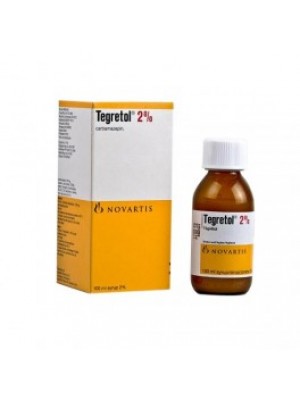
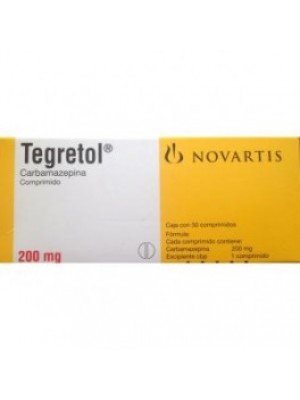
Tegretol 200 mg. 50 tablets
Product Code: Tegretol 200 mg. 50 tablets
Availability: In Stock

Product viewed: 1616


Tegretol 200 mg. 50 tablets
WHAT Tegretol AND WHAT IT IS USED FOR?
The name of your medicine is Tegretol. It contains the active substance carbamazepine (carbamazepine).
Tegretol belongs to the group of medicines called anti-epileptics (medicines for the treatment of epileptic seizures), but due to its mechanism of action could be used for other diseases.
Tegretol is used to treat certain types of seizures (epilepsy). It is used to treat some neurological diseases (eg pain in the front area known as "trigeminal neuralgia"), and certain psychiatric conditions (a condition known as episodes of mania in bipolar affective disorders and some types of depression). Tegretol should not be used to treat pain in general.
Epilepsy is a disorder characterized by two or more seizures (fits). Seizures occur when impulses from the brain to the muscles are not properly passed along nerve pathways. Tegretol helps to control the transmission of these impulses. It regulates and nerve functions for the other diseases mentioned above.
2. BEFORE YOU TAKE Tegretol
You can take Tegretol only after a thorough medical examination.
Do not take Tegretol
• if you are allergic / a (hypersensitive / s) to carbamazepine or any of the other ingredients of Tegretol listed in this leaflet;
• if you have severe heart disease;
• if you have had a serious blood disorder;
• if you have a disturbance in the production of porphyrin, a pigment important for liver function and blood formation (also called 'hepatic porphyria');
• if you are taking other medicines known as monoamine oxidase inhibitors (MAOIs).
If you have any of these conditions, tell your doctor before taking Tegretol. If you think you may be allergic / on, talk to your doctor.
Take special care with Tegretol
• if you suffer from blood disorders (including those caused by other medicines);
• if you have ever had an unusual sensitivity (rash or other signs of allergy) to oxcarbazepine or any other medicine. It is important to know that if you are allergic / on to carbamazepine, the probability is approximately 1 in 4 (25%) have allergic / to oxcarbazepine (Trileptal);
• if you have or have had heart, liver or kidney disease in the past;
• If you have high pressure in the eye (glaucoma);
• if your doctor has told you that you suffer from a mental disorder called psychosis, which may be accompanied by confusion or agitation;
• if you are a woman taking hormonal contraceptives (birth control pills). Tegretol can make your contraceptive ineffective. Therefore, you must use an additional non-hormonal method of contraception while taking Tegretol. This will help prevent unwanted pregnancies.
Tell your doctor if you have irregular bleeding or spotting. If you have questions, ask your doctor or other health professional.
If any of the following that apply to you, tell your doctor immediately:
• If an allergic reaction such as fever with swollen glands, rash or skin blistering, tell your doctor immediately or go to the nearest hospital emergency department (see. Possible side effects);
• if you develop a serious skin reactions such as rash, redness, blistering eyelids or mouth, peeling of hands accompanied by fever, tell your doctor immediately or go to the nearest hospital emergency department (see. Possible side effects). These effects may be more common in some Asian countries (eg. Taiwan, Malaysia and Philippines) and in patients of Chinese origin;
• If you have an increased number of seizures, tell your doctor immediately;
• if you have symptoms typical of hepatitis, such as jaundice (yellow skin and eyes), tell your doctor immediately;
• A small number of people being treated with antiepileptics such as carbamazepine have had thoughts of harming or killing themselves. If these occur, immediately contact your doctor.
Do not stop treatment with Tegretol without first consulting your doctor. To avoid deterioration of epilepsy, do not stop treatment abruptly.
Taking Tegretol food or drinks
Do not consume alcohol while taking Tegretol.
Do not drink grapefruit juice / eat grapefruit because it can enhance the effect of Tegretol. Other juices such as orange juice or apple do not have that effect
Tegretol in children and the elderly
Tegretol can be used safely in children and the elderly, according to the doctor's instructions. In need of more careful dosing and follow-up will be provided specific information (see. Also section 3. "How to take Tegretol?" And 4. "Possible side effects")
pregnancy
Tell your doctor if you are pregnant or planning to become pregnant. It is important to control epileptic seizures during pregnancy. However, there is a risk to the fetus if the mother is taking antiepileptic drugs (drugs against seizures) during pregnancy. Your doctor will discuss with you the potential risks of taking Tegretol during pregnancy.
Do not stop taking Tegretol without consulting your doctor.
breastfeeding
Tell your doctor if you are breastfeeding. The active substance of Tegretol passes into breast milk. You can breast-feed, with the consent of your doctor and under close supervision of the child for side effects. If side effects, eg. if your child becomes very sleepy, stop breastfeeding and tell your doctor.
Driving and using machines
Tegretol can make you drowsy, cause dizziness or cause blurred vision, especially at the beginning of treatment or when increasing the dosage. Be careful when driving or operating machinery, and during activities requiring increased alertness.
Taking other medicines
Tell your doctor or pharmacist if you are taking or have recently taken any other medicines. Remember for those who have not been prescribed by your doctor. This is particularly important for Tegretol, as many other medicines interact with it.
You may need to change the dose, or sometimes, to stop taking any of these medicines. This applies both to prescription medicines and those without a prescription.
In women taking oral contraceptives (birth control pill) and Tegretol, may occur in the menstrual cycle. It is possible to reduce the effectiveness of the tablets and to warrant the use of other methods of contraception.
3. HOW TO TAKE Tegretol?
Carefully follow your doctor's instructions. Do not exceed your recommended dose. Take Tegretol exactly as it was prescribed by your doctor. This will help you achieve the best results and reduce the likelihood of side effects. Do not take Tegretol in higher doses than prescribed more often or longer than your doctor tells you.
If you are taking Tegretol, do not suddenly stop treatment without consulting your doctor. He / she will determine whether and when to stop taking Tegretol (see. "Caution with Tegretol").
How much of your medicine you take
Treatment of epilepsy in adult tablets or syrup usually starts with 1, once or twice daily. The dose is gradually increased to 800-1200 mg daily patients may take up to 1600 or even 2000 mg daily), divided doses.
Treatment in children usually begins with 100-200 mg a day (10-20 mg / kg body weight) and maintained with 400-600 mg daily. In adolescence may apply between 600 and 1000 mg per day.
For trigeminal neuralgia the starting dose is 200-400 mg a day is slowly raised until the pain (usually 200 mg, 3-4 times daily). In elderly patients is recommended lower starting dose - recommended 100 mg, 2 times daily.
In acute mania and maintenance treatment of bipolar affective disorders, the usual dose is 400-600 mg daily (dose range between 400-1600 mg daily).
Your doctor will tell you how many doses to take Tegretol.
When taking Tegretol?
The daily dose of Tegretol always taking several divided doses (with the exception of the first day), i.e. 2-4 times a day, according to your condition.
The dose prescribed by your doctor may differ from those listed above. In these cases, follow your doctor's instructions.
Take Tegretol during or after a meal. Swallow the tablets with liquid; if necessary, they can be broken in half.
If you forget to take Tegretol
If you miss a dose of Tegretol, take it as soon as you remember. If it is almost time for your next dose, skip the missed again and continue your regular dosing schedule. Do not take double the dose to make up for the forgotten.
If you take more dose of Tegretol
In case of accidental intake of a much larger number of tablets prescribed, tell your doctor immediately. You may need medical attention.
If you experience difficulty in breathing, rapid or irregular heartbeat, loss of consciousness, seizures, fever, nausea and / or vomiting is your dose is very high. Stop taking the medicine and call your doctor immediately.
What else you need to know while taking Tegretol
Especially important for your doctor regularly to monitor your improvement. He or she may order regular blood tests, especially at the start of treatment with Tegretol. This is normal and should not worry you.
Before you have surgery, including dental treatment or emergency treatment, tell the doctor that you are taking Tegretol.
4. POSSIBLE SIDE EFFECTS
Like all medicines, Tegretol may cause some side effects, although not everybody gets them. They are often mild and occur at the beginning of treatment and usually disappear within a few days.
Some reactions can be serious
Immediately consult your doctor or ask one of your relatives to consult with him if any of the following (common or rare) side effects. They may be early signs of serious damage to your blood, liver, kidneys or other organs and may need urgent treatment!
• if you have a fever, sore throat, rash, mouth ulcers, swollen glands or susceptibility to infection (a symptom of lack of white blood cells);
• if you have fatigue, headache, shortness of breath on exertion, dizziness; pale, frequent infections, fever, chills, sore throat or mouth sores; bleeding or bruising more often than normal, nose bleeds (lack of various blood cells);
• If you have red, bullous rash mainly on the face which may be accompanied by fatigue, fever, nausea, loss of appetite (signs of systemic lupus erythematosus);
• if you have yellowing of the whites of the eyes or skin (signs of hepatitis);
• if you have dark urine (signs of porphyria or hepatitis);
• if you have severely reduced amount of urine due to kidney disease, blood in the urine;
• if you have severe pain in the upper abdomen, vomiting, loss of appetite (signs of pancreatitis);
• if you have a skin rash, redness of the skin, blistering of the lips, eyes or mouth, skin peeling accompanied by fever, chills, headache, cough, body aches (signs of serious skin reactions);
• if you have swelling of the face, eyes or tongue, difficulty swallowing, wheezing, hives, fever, abdominal cramps, chest pain or a feeling of tightness, difficulty breathing, loss of consciousness (signs of angioedema and severe allergic reactions );
• If you have lethargy, confusion, muscle pain and serious worsening of convulsions (symptoms that may be associated with low levels of sodium in the blood);
• if you have fever, nausea, vomiting, headache, stiff neck and extreme sensitivity to light (signs of meningitis);
• If you have muscular stiffness, high fever, altered consciousness, high blood pressure, increased salivation (symptoms of neuroleptic malignant syndrome);
• If you have an irregular heartbeat, chest pain;
• disturbances in consciousness, seizures.
If you experience any of the above, tell your doctor immediately
Other side effects:
Check with your doctor as soon as possible if any of the following side effects. They may require medical attention:
Common: loss of muscle coordination, allergic skin reactions;
Uncommon: swelling of ankles, feet or lower legs (edema), behavioral changes, confusion, weakness, frequent seizures, blurred vision, double vision, itching, redness or swelling of the eye (conjunctivitis), feeling of tension / pain eye (signs of increased intraocular pressure), trembling, uncontrollable body movements, muscle spasms, uncontrolled eye movements;
rare; itching, swollen glands, agitation or hostility (especially in the elderly), nausea, difficulty in speaking or slurred speech, depression, anxiety, nervousness or other mood or mental changes, hallucinations, tinnitus or hearing other unexplained sounds , hearing impaired, difficulty breathing, chest pain, fast or unusually slow heartbeat, numbness, tingling in hands and feet, frequent urination, sudden decrease in amount of urine, taste changes, abnormal milk secretion, breast enlargement in men, swelling and redness of the vein, which is very painful to the touch, often as pain sensation (thrombophlebitis), increased sensitivity of the skin to sun, softening or thinning or weakening of the bones, which increases the risk of bone fractures (lack of vitamin D , osteoporosis).
The following side effects usually do not require medical supervision. If they last more than a few days or cause real distress, check with your doctor.
Common: vomiting, nausea, dizziness, drowsiness, weakness, weight gain.
Uncommon: headache, dry mouth.
Rare: constipation, diarrhea, abdominal pain, pain in joints and muscles, increased sweating, loss of appetite, hair loss, increased body hair and face, sexual dysfunction, impotence in men, red and swollen tongue, mouth sores, changes in color of the skin, acne.
If any of these side effects affect you severely, tell your doctor.
If you notice any side effects not listed in this leaflet, please tell your doctor or pharmacist.
5. HOW TO STORE Tegretol
• Keep out of the reach and sight of children.
• Do not use after the expiry date stated on the packaging
• Do not store above 25 ° C.
• Store in the original package to protect from moisture.
• Be sure to return to your doctor or pharmacist any unused medicine.
6. FURTHER INFORMATION
What Tegretol?
• The active substance of Tegretol is carbamazepine. Each tablet contains 200 mg of carbamazepine.
• The other ingredients are Aerosil 200 (silica colloidal anhydrous), Avicel PH 102 (cellulose, microcrystalline), magnesium stearate, Nimtsel ZSB-10 modified (carmellose sodium, low-substituted).
The pack contains 50 tablets.
Write a review
Your Name:Your Review: Note: HTML is not translated!
Rating: Bad Good
Enter the code in the box below:
Related Products
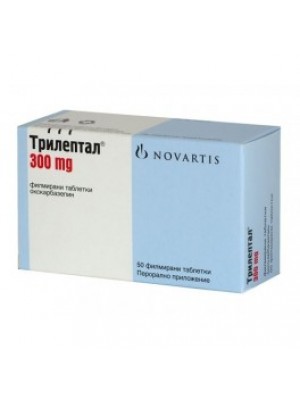
Trileptal Tablets 300 mg. - 50 tablets What is in your medic..
27.00€