Your shopping cart is empty!
Welcome visitor you can login or create an account.
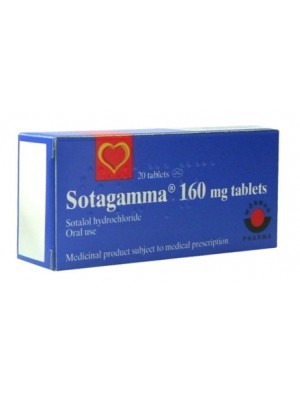
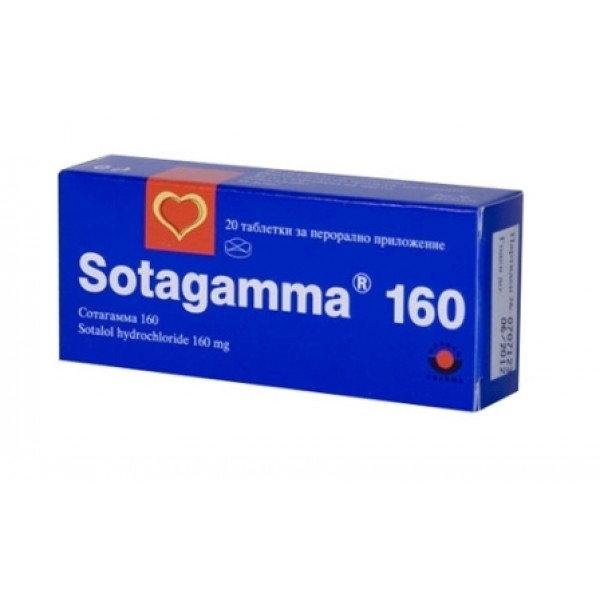
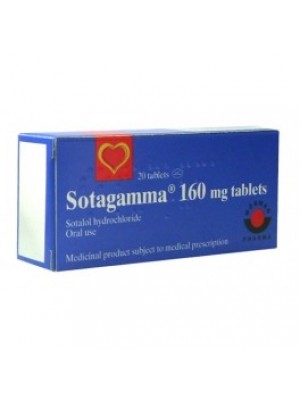
Sotagamma 160 mg. 20 tablets
Product Code: Sotagamma 160 mg. 20 tablets
Availability: In Stock
Product viewed: 1950


What is Sotagamma 160 mg tablets and what it is used for
Sotagamma 160 mg tablets is a class III anti-arrhythmic medicine with a pronounced beta-blocking effect (a medicinal product against heart rhythm disturbances).
Sotagama 160 mg tablets are given in:
Severe symptomatic ventricular tachycardia (severe heart rate rhythm disturbances that arise from heart chambers);
Symptomatic and requiring treatment of supraventricular tachycardia, such as:
Prophylaxis of chronic atrial fibrillation after electroshock therapy;
Prophylaxis of atrial fibrillation attacks.
2. Before you take Sotagamma 160 mg tablets
Do not take Sotagamma 160 mg tablets:
if you are hypersensitive (allergic) to sotalol and sulphonamides or to any of the excipients of Sotagamma 160 mg tablets;
in case of pronounced cardiac insufficiency (NYHA class IV heart failure, uncompensated heart failure);
in acute myocardial infarction;
in shock;
severe disturbances in impulse conduction between heart aorta and heart chambers (AV block II and III degree);
a sinus block (a cardiac block with a sinus node conduction disordered to the heart atrium);
sick sinus syndrome (heart rhythm abnormalities due to impaired sinus function), which may manifest itself as sinus bradycardia (heart rate <60 beats per minute), bradycardia-tachycardia syndrome (heart rate changing from slow to slow and vice versa), a sinus block or a sinus arrest (stopping impulse formation in the sinus node);
pulse at rest below 50 beats per minute before treatment (bradycardia <50 beats per minute);
pre-existing QT prolongation (specific ECG changes);
decreased potassium level (hypokalaemia);
reduced magnesium (hypomagnesaemia);
severely decreased blood pressure (hypotension);
late stages of disturbed peripheral blood supply in the hands and / or feet;
severe diseases of the airways caused by their narrowing (obstruction);
increased acidity of the blood caused by metabolism (metabolic acidosis);
(pheochromocytoma) (see section 2. "Take special care with Sotagamma 160 mg tablets").
Intravenous administration of calcium channel blockers of verapamil and diltiazem type is contraindicated in patients treated with Sotagama 160 mg tablets (except for emergency conditions).
Take special care with Sotagama 160 mg tablets
For patients with limited renal function (dose reduction, see section 3. "In case your doctor has not prescribed otherwise, the usual dose is:") serum creatinine and / or sotalol levels should be monitored regularly.
Hypoglycaemia may occur in diabetic patients taking Sotagama 160 mg tablets. The signs of hypoglycaemia (particularly fast heartbeat and tremor) may be masked. This should be taken into account especially in severe fasting / diets and in diabetics with wide fluctuations in blood glucose levels.
In patients with hyperthyroidism, symptoms like accelerated heartbeat and anxiety may be masked.
Peripheral circulatory disorders, such as Raynaud's syndrome and claudicatio intermittens, may lead to increased symptoms, especially at the beginning of therapy.
For a hormone-producing adrenal tumor (pheochromocytoma, see section 2. "Do not take Sotagama 160 mg tablets:") alpha-receptors should be blocked simultaneously with another medicinal product.
In patients with a history of psoriasis, the use of beta-blocking medicinal products (eg Sotagamma 160 mg tablets) should only be made after a careful benefit-risk assessment.
Sethalol may increase allergy sensitivity and the severity of acute allergic reactions (anaphylactic reactions) due to its beta-blocker properties. Patients with severe hypersensitivity reactions in the past and those predisposed to allergic reactions (who have carried out desensitization therapy) may have an increased risk of anaphylactic reactions. They require particularly strict determination of the indications.
In patients with myocardial infarction or with impaired ventricular function, there is a risk of worsening of cardiac rhythm disturbances (proarrhythmia) and very careful monitoring is required when adjusting the dose of Sotagama 160 mg tablets.
Combination therapy with class I antiarrhythmics (especially quinidine-like substances) that may lead to the expansion of the QRS complex (ECG parameter) should be avoided as it may result in an extraordinarily prolonged QT interval and risk of ventricular arrhythmias. For the same reasons, avoid co-administration with other class III antiarrhythmics.
In cases of severe or prolonged diarrhea, or concomitantly,
When co-administered with Sotagama, 160 mg tablets and medicinal products that can prolong the QT interval, such as tri- and tetracyclic antidepressants (imipramine, maspotolin), antihistamines (astemizole, terfenadine), quinolone antibiotics (eg sprafloxacin) antibiotics (erythromycin), probucol, haloperidol, halofantrine, there is an increased risk of severe rhythm disturbances (Torsade de pointes).
Co-administration of calcium antagonists of the nifedipine type (medicinal products used to control high blood pressure) may result in a greater drop in blood pressure; it is possible to increase the effect of the sick sinus node.
When co-administered with Sotagama 160 mg tablets and noradrenaline or MAO inhibitors (medicines to treat depression) as well as after a sudden discontinuation of concomitant use of clonidine (a medicine used to control high blood pressure), it can significantly increase blood pressure.
With concomitant administration of anti-bronchospastic and anti-asthmatic agents (beta-2-receptor antagonists such as salbutamol, terbutaline and isoprenaline) with Sotagama 160 mg tablets, it may be necessary to increase the dose of the beta-2 receptor antagonist.
Co-administration of Sotagamma 160 mg tablets and medicinal products for the treatment of psychiatric disorders (phenothiazine, some antidepressants), treatment of epilepsy (barbiturates), narcotic drugs and blood pressure lowering agents, diuretics or vasodilators may enhance the blood pressure.
The activity of Sotagamma 160 mg tablets may be supplemented with that of narcotic drugs or medicinal products for the treatment of cardiac rhythm disorders and the effect of cardiac contraction (negative inotropy).
Negative chronotropic (decreased heart rate) and negative dromotropic (decreased conduction and excitability) action of Sotagama 160 mg tablets may increase with concomitant use of reserpine, clonidine, alpha-methyldopa, guanfacine and cardiac glycosides (medicinal products used to treat congestive heart failure).
Neuromuscular blockade (blockage of the neuromuscular junction) with tubocurarine (an active substance used for muscle relaxation) can be enhanced by the Sotagama 160 mg tablets.
Concomitant administration of Sotagama 160 mg tablets and insulin or oral antidiabetic agents (especially at exercise) may cause hypoglycaemia with congestive symptoms.
With concomitant administration of diuretics related to potassium loss (eg furosemide, hydrochlorothiazide) or other medicinal products that lead to loss of potassium or magnesium, there is an increased risk of heart rhythm disturbances due to decreased blood potassium levels .
Concomitant use of tricyclic antidepressants (medicines to treat depression) or alcohol and Sotagamma 160 mg tablets should be avoided because of the possibility of unlocking ventricular rhythm disorders (single cases are described).
Please keep in mind that this information is also valid for medications that have been recently admitted.
Taking of Sotagama 160 mg tablets with food and drink
During treatment with Sotagamma 160 mg tablets, you should avoid drinking alcohol because it may trigger heart rhythm disturbances.
Sotagamma 160 mg tablets should not be taken with milk and dairy products.
Pregnancy and breastfeeding
There is still insufficient information on the use of this product in pregnant women. If you are pregnant, you should take sotalol (the active ingredient of Sotagamma 160 mg tablets) only if your doctor considers this treatment to be absolutely necessary. Because of the potential for adverse drug reactions in the neonate (reduced heart rate, decreased blood pressure, low blood sugar levels), treatment should be discontinued 48-72 hours before the expected date of birth. A newborn baby should be carefully observed for signs of beta blockade (reduced heart rate, low blood pressure) within a sufficiently long period after birth.
Lactation / breastfeeding
Sotalol (the active ingredient of Sotagama 160 mg tablets) accumulates in breast milk. If you need to be treated with sotalol while you are breast-feeding, a newborn baby should be observed for signs of beta-blockade (decreased heart rate, low blood pressure).
Driving and using machines
Even when used as intended, as instructed, this medicinal product may interfere with reactions to the extent of impairment of driving ability, operating machinery or in places where there is no stable support. This particularly applies to the onset of therapy where the benefits increase when changing the preparation or in combination with alcohol.
3. How to take Sotagamma 160 mg tablets
They must always accept
If you take more Sotagama 160 mg tablets than you should
If you are concerned about an overdose of Sotagama 160 mg tablets, tell your doctor immediately! He may take urgent action if necessary.
Depending on the overdose, the following symptoms may occur: fatigue, loss of consciousness, pupil enlargement, convulsions, drop in blood pressure, hypoglycaemia, slow heart rate including heart failure, congestive heart failure, fast heart rate, of cardiovascular shock.
If you forget to take Sotagamma 160 mg tablets
If you take too little Sotagama 160 mg tablets or forget to take a single dose, do not take a double dose or several doses one after another or a few missed single doses and continue your treatment strictly according to your doctor's dosage.
If you experience a recurrence of cardiac arrhythmia, you should contact your doctor immediately.
If you stop taking Sotagamma 160 mg tablets
Do not interrupt or discontinue Sotagama 160 mg tablets before discussing this with your doctor.
In patients with coronary heart disease and / or cardiac arrhythmia or after long-term use, discontinuation of therapy should be a gradual dose reduction as abrupt discontinuation may lead to worsening of the disease.
If you have any further questions on the use of this medicine, please ask your doctor or pharmacist.
4. Possible side effects
Like all medicines, Sotagamma 160 mg tablets can cause side effects, although they do not necessarily appear in any patient.
The following frequency response data were used for the evaluation of adverse drug reactions:
Very common: more than 1 in 10 treated;
Common: less than 1 in 10 but more than 1 in 100 treated;
Uncommon: Less than 1 in 100 but more than 1 in 1000 treated;
Rare: less than 1 in 1000 but more than 1 in 10,000 treated;
Very rare: less than 1 in 10,000 treated, incl. single cases.
Metabolic and nutritional disorders
Diabetic patients taking Sotagamma 160 mg tablets may experience hypoglycaemia. Some symptoms of lowering blood sugar (especially tachycardia) may be masked during treatment with Sotagama 160 mg tablets. This should be taken into account, especially during severe diets (fasting), as well as in diabetics with a history of spontaneous episodes of hypoglycaemia.
Lipid metabolism disorders (increase in total cholesterol and triglycerides, decrease in HDL-cholesterol).
Psychiatric disorders
Common: anxiety, confusion, mood swings, hallucinations, increased dreams, depressed moods.
Nervous system disorders
Common: dizziness, depression, headache, sleep disturbances, paraesthesia, and cold extremities.
Eye disorders:
Common: Visual disturbances;
Uncommon: conjunctivitis;
Very rare: keratoconjunctivitis;
Reduced tearing (to be taken into account when using contact lenses!).
Ear and inner ear disorders
Common: hearing disorder.
Heart and circulatory disorders
Common: chest pain, undesirable drop in blood pressure, increase in congestive heart failure, slow heart rate (bradycardia), pulsations, ECG abnormalities, AV conduction disorders, short episodes of loss of consciousness (syncope) or conditions almost leading to loss of consciousness (presynaptic conditions), water retention in the tissues (edema);
Very rare: Increased angina attacks and disturbances of peripheral circulation.
Pro-arrhythmic activity often occurs in the form of a change or exacerbation of heart rhythm disturbances, which can lead to severe cardiac damage with a possible consequence of heart failure. Cardiac arrhythmias (arrhythmogenic effects) may occur particularly in patients with life-threatening heart rhythm disturbances and impaired left ventricular function.
Because somatol hydrochloride prolongs the QT interval (ECG parameter), it is possible (especially with overdosage and consequently severe heart rate reduction) to experience ventricular ventricular disturbances (tachyarrhythmias, including Torsade de pointes).
Severe proarrhythmias (persistent ventricular tachycardia, ventricular fibrillation / fibrillation or Torsade de pointes) are predominantly dose-dependent and occur at an early stage of treatment or after an increase in dose.
Respiratory tract disorders
Common: dyspnoea (dyspnoea);
Uncommon: In patients with narrowing of the airways or pulmonary diseases (obstructive breathing disorders), breathing can be suppressed;
Very rare: Allergic bronchial inflammation and connective tissue disease.
Gastrointestinal disorders
Common: taste change, abdominal pain, nausea, vomiting, diarrhea, digestive disturbances, gas,
How to store Sotagama 160 mg tablets
Keep the medicine out of the reach and sight of children.
The expiry date is printed on the blister and on the carton. The duration of the deadline is until the last day of that month.
Do not use this medicine after the expiry date.
6. Additional information
What Sotagamma contains 160 mg tablets
Active substance: Sotalol hydrochloride (Sotalol hydrochloride).
One film-coated tablet contains 160 mg of sotalol hydrochloride.
Excipients: Microcrystalline cellulose, magnesium stearate (Ph.Eur.) And highly disperse silica.
What Sotagamma 160 mg tablets looks like and contents of the pack
Sotagama 160 mg tablets are available in packs of 20, 50 and 100 tablets. Not all large packs may be available on the market.
Write a review
Your Name:Your Review: Note: HTML is not translated!
Rating: Bad Good
Enter the code in the box below:
Related Products
SOTAGAMA table. 160 mg. 50 tablets Areas of application Symp..
17.00€