
Your shopping cart is empty!
Welcome visitor you can login or create an account.
Repido plus 8 mg. / 12.5 mg. 30 tablets

Product viewed: 3644


What is the REPIDO PLUS and what it is used
Your medicine is called the Rapid Plus. It is used to treat high blood pressure (hypertension) in adult patients. It contains two active ingredients: candesartan cilexetil and hydrochlorothiazide. They work together to reduce your blood pressure.
Candesartan cilexetil belongs to a group of medicines called "angiotensin II receptor antagonists". It relaxes and widens your blood vessels. This helps to lower your blood pressure;
Hydrochlorothiazide belongs to a group of medicines called diuretics (water). It promotes the excretion of water and electrolytes such as sodium in urine. This helps to lower your blood pressure.
Your doctor may prescribe the Rapid Plus if your blood pressure is not reduced enough with candesartan or hydrochlorothiazide alone.
2. What you need to know before taking the REPIDO PLUS
Do not take the REPIDO PLUS
If you are allergic (hypersensitive) to candesartan cilexetil or hydrochlorothiazide or any of the other ingredients of the Rapid Plus (see section 6).;
If you are allergic to sulfonamide drugs. If you are not sure if this applies to you, ask your doctor;
If you are pregnant after the third month of pregnancy (it is also better to avoid taking the Rapid Plus in early pregnancy - see "Pregnancy");
If you have severe kidney problems;
If you have severe liver disease or biliary obstruction (problems with drainage of the bile from the gall bladder);
If you have sustained low levels of potassium in her blood;
If you have persistently high levels of calcium in their blood;
If you have ever had gout.
If you are not sure if any of these apply to you please talk to your doctor or pharmacist before you start taking the REPIDO PLUS
Warnings and Precautions
Talk to your doctor or pharmacist before taking the Rapid Plus:
If you have diabetes;
If you have heart problems, liver or kidney;
If you have recently had a kidney transplant;
If you vomit or have recently had severe vomiting, or if you have diarrhea;
If you have a disease of the adrenal gland called Conn's syndrome (also called primary aldosteronism);
If you have ever had a disease called systemic lupus erythematosus (CLE);
If you have low blood pressure;
If you have ever had a stroke;
If you have ever had allergy or asthma;
you should tell your doctor if you are pregnant (or might become) pregnant. Not recommended in early pregnancy to accept the Rapid Plus, and after the third month of pregnancy should not be taken because during this period can cause serious harm to the baby (see pregnancy section).
If you have any of these conditions your doctor may want to see you more often and perform tests.
If you have an operation, tell your doctor or dentist that you are taking the Rapid Plus. The reason for this is that when combining the Rapid Plus with certain anesthetics may occur a sharp drop in blood pressure.
The Rapid Plus may cause increased sensitivity of the skin to the sun.
children
There is no experience with the use of the REPIDO PLUS in children (below 18 years). Therefore, theREPIDO PLUS should not be given to children.
Other medicines and the REPIDO PLUS
Tell your doctor or pharmacist if you are taking, using, have recently taken, used or might take, use other drugs.
The REPIDO PLUS can affect the way some medicines work and some medicines can affect the way the REPIDO PLUS. If you use certain drugs may be necessary from time to time, your doctor may do blood tests.
In particular, tell your doctor if you use any of the following medications:
Other drugs to lower blood pressure, including beta-blockers, diazoxide and Angiotensin Converting Enzyme (ACE) inhibitors such as enalapril, captopril, lisinopril or ramipril;
Nonsteroidal anti-inflammatory drugs (NSAIDs) such as ibuprofen, naproxen, diclofenac, celecoxib or etoricoxib (medicines to relieve pain and inflammation);
Acetylsalicylic acid (if taking more than 3 g each day) (medicine to relieve pain and inflammation);
Potassium supplements or salt substitutes containing potassium (preparations that increase potassium in your blood);
Supplements containing calcium or vitamin D;
Drugs to lower cholesterol such as colestipol or cholestyramine;
Medicines for diabetes (tablets or insulin);
Medicines to regulate heartbeat (antiarrhythmic agents) such as digoxin and beta-blockers;
Drugs whose action can be influenced by potassium levels in the blood, such as some antipsychotic drugs;
Heparin (an anti-clotting drug);
Water tablets (diuretics);
laxatives;
Penicillin (antibiotic);
Amphotericin (for the treatment of fungal infections);
Lithium (a medicine for mental disorders);
Steroids such as prednisolone;
Hormones of the pituitary gland (ACTH);
Medicines to treat cancer;
Amantadine (for the treatment of Parkinson's disease or for serious infections caused by viruses);
Barbiturates (a type of sedative also used to treat epilepsy)
Carbenoxolone (for the treatment of diseases of the esophagus or mouth ulcers);
Anticholinergic agents such as atropine and biperiden;
Cyclosporine - a medicine used after organ transplant to prevent rejection;
Other drugs that can cause enhance the antihypertensive effect such as baclofen (a drug for alleviating spasticity), amifostine (used in the treatment of cancer) and some antipsychotic drugs.
Taking the REPIDO PLUS with food and drink
You can take the Rapid Plus with food and fasting;
When you prescribe the Rapid Plus, discuss with your doctor whether you can drink alcohol. Alcohol may feel light-headed or dizzy.
Pregnancy, lactation and fertility
If you are pregnant or breast-feeding, you think you may be pregnant or planning to become pregnant, ask your doctor or pharmacist before taking this medicine.
pregnancy
Your doctor will normally advise you to stop taking the Rapid Plus before you become pregnant or as soon as you know you are pregnant and will advise you to take another medicine instead of the Rapid Plus. At the beginning of pregnancy is not recommended to take the Rapid Plus, and after the third month of pregnancy should not be accepted because if taken after the third month could cause serious harm to your baby.
breastfeeding
Tell your doctor if you are breastfeeding or about to start breast-feeding. Not recommended for mothers who breastfeed to take the Rapid Plus.
Driving and using machines
While taking the REPIDO PLUS , some people may feel tired or dizzy. If this happens to you, do not drive or use any tools or machines.
3. How to take the REPIDO PLUS
Always take this medicine exactly as you have been told by your doctor or pharmacist. If you're not sure, ask your doctor or pharmacist. It is important to take the Rapid Plus every day. The usual dose of the Rapid Plus is one tablet once daily. Swallow the tablet with some water.
Try to take the tablet at the same time each day. This will help you remember to take it.
The scoreline is only to facilitate breaking the tablet if it is difficulty swallowing.
If you take more than the amount of the REPIDO PLUS
If you take a large dose of the Rapid Plus than prescribed by your doctor immediately ask advice from a doctor or pharmacist.
If you forget to take the REPIDO PLUS
Do not take a double dose to make up for a missed tablet. Just take your next dose as usual.
If you stop taking the REPIDO PLUS
If you stop taking the Rapid Plus, your blood pressure may increase again. Therefore, you should not stop taking the Rapid Plus without first talking to your doctor.
If you have any further questions on the use of this product, ask your doctor or pharmacist.
4. Possible side effects
Like all medicines, this medicine can cause side effects, although not everybody gets them.
Like all medicines, the REPIDO PLUS can cause side effects, although not everybody gets them. It is important to be aware of what can be these side effects.
Some of the side effects of the Rapid Plus are caused by candesartan cilexetil, others - hydrochlorothiazide.
Stop taking the Rapid Plus and seek medical help immediately if you develop any of the following allergic reactions:
Difficulty breathing with or without swelling of the face, lips, tongue and / or throat;
Swelling of the face, lips, tongue and / or throat that may cause difficulty in swallowing;
Strong itchy skin (with raised lumps).
The Rapid Plus may cause a reduction in the number of white blood cells. From this it can diminish your security forces against infection and notice tiredness, an infection or fever. If this happens, contact your doctor. Occasionally your doctor may do blood tests to check whether the REPIDO PLUS has had any effect on your blood (agranulocytosis).
Other possible side effects include:
Common (affects 1 to 10 of 100 patients):
Changes in blood test results:
lowering sodium in your blood. If this reduction is large, you may notice weakness, lack of energy, or muscle cramps;
increase or decrease in potassium in your blood, especially if you have kidney problems or heart failure. If this increase or decrease is severe, you may notice tiredness, weakness, irregular heartbeat, and numbness;
increased cholesterol, sugar or uric acid in the blood;
Emergence of sugar in the urine;
Dizziness / vertigo or weakness;
Headache;
Respiratory tract infections.
Uncommon (affects less than 1 in 100 patients):
Lowering blood pressure. As a result, you may experience fainting or dizziness;
Loss of appetite, diarrhea, constipation, gastric irritation;
Skin rash, lumpy rash (urticaria), rash as a result of increased sensitivity to sunlight.
Rare (affects less than 1 in 1000 patients):
Jaundice (yellowing of the skin or whites of your eyes). If this happens, you should contact your doctor;
Effects on renal function, especially if you have kidney problems or heart failure;
Difficulty sleeping, depression, restlessness;
Numbness or tingling of hands and feet;
Blurred vision;
Heart rhythm disturbances;
Breathing difficulties (including lung inflammation and fluid accumulation in the lungs);
High temperature (fever);
Inflammation of the pancreas. It causes a moderately severe to severe pain in the abdomen;
Muscle cramps;
Damage to blood vessels causing the appearance of red or purple spots on the skin;
Lowering the number of red or white blood cells or platelets. You may notice tiredness, an infection, fever or easy bruising;
Severe rash that develops quickly, with blistering or peeling of the skin and possibly blistering in the mouth;
Worsening reactions such as lupus erythematosus or appearance of unusual skin reactions
Very rare (affects less than 1 in 10,000 patients):
Not known (frequency can not be estimated from available data):
Sudden onset of myopia;
Sudden eye pain (acute angle-closure glaucoma).
If you get any side effects, contact your doctor or pharmacist. This includes any possible effects not listed in this leaflet.
5. How to store the REPIDO PLUS
Keep out of reach of children.
This medicinal product does not require any special storage conditions.
Do not use this medicine after the expiry date stated on the carton.
The expiry date refers to the last day of that month.
Do not dispose of medications in wastewater or household waste. Ask your pharmacist how to dispose of medicines no longer use. These measures will help to protect the environment.
6. Contents of the pack and other information
What the Rapid plus
The REPIDO PLUS 8 mg / 12,5 mg:
The active substances are candesartan cilexetil and hydrochlorothiazide. Each tablet contains 8 mg of candesartan cilexetil and hydrochlorothiazide 12,5 mg
The other ingredients (excipients) are: mannitol (E421), copovidone, corn starch, glycerol and magnesium stearate.
Plus the Rapid looks like and contents of the pack
The REPIDO PLUS 8 mg / 12.5 mg:
White or off-white, oval, biconvex (~ 9.5 x 4.5 mm), uncoated tablets scored on one side.
The Rapid plus 8 mg / 12,5 mg are available in blister packages of 7, 10, 14, 15, 28, 30, 50, 56, 98, 98 x 1 (single blister pack), 100 and 300 tablets.
Not all pack sizes may be marketed.
Write a review
Your Name:Your Review: Note: HTML is not translated!
Rating: Bad Good
Enter the code in the box below:
Related Products
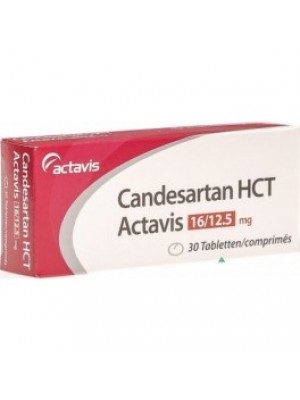
Candesartan НСТ 16 mg. / 12.5 mg. 30 tabletsWhat is Candesar..
18.00€

REPIDO PLUS 32 mg. / 12.5 mg. 30 tabletsWhat is the Repido p..
18.00€

REPIDO PLUS 16 mg /12,5 mg. 30 tabletsWhat is the Repido plu..
14.00€
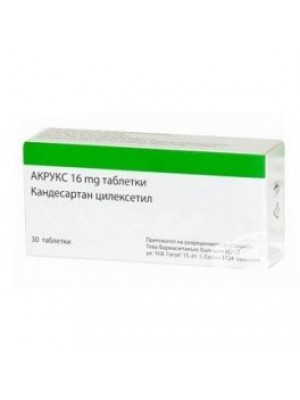
AKRUKS plus 16 mg. / 12.5 mg. 30 tabletsWHAT AKRUKS PLUS AND..
14.00€