Your shopping cart is empty!
Welcome visitor you can login or create an account.
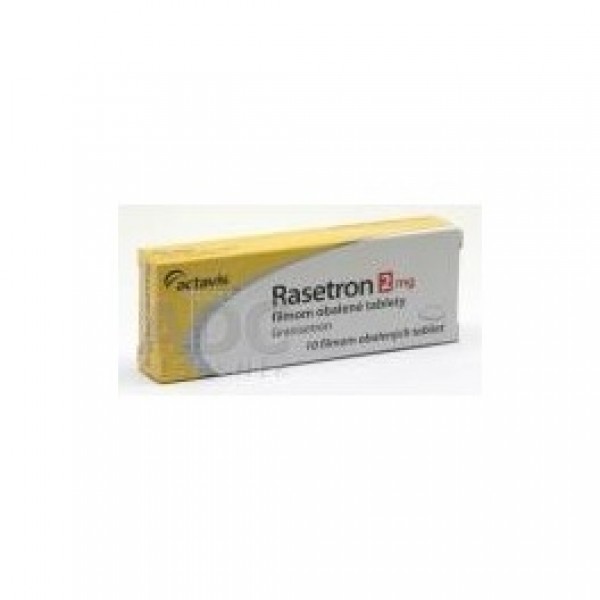
RASETRON 2 mg. 5 tablets
Product Code: RASETRON 2 mg. 5 tablets
Availability: In Stock
Product viewed: 1065


RASETRON 2 mg. 5 tablets
What is Rasetron and what it is used
Rasetron contains a medicine called granisetron, which refers to a group of medicines called '5-HT3 receptor antagonists' or 'anti-emetics'. These tablets are intended for use only in adults.
Rasetron is used to prevent or treat nausea and vomiting caused by other treatments, such as chemotherapy or radiotherapy used to treat cancer.
2. What you need to know before taking Rasetron
Do not use Rasetron tablets:
if you are allergic to granisetron or any of the other ingredients of this medicine (listed in Section 6 Content of the pack and other information) and "Rasetron contains lactose" below).
If you are unsure, talk to your doctor, nurse or pharmacist before taking these tablets.
Warnings and Precautions
Talk to your doctor or pharmacist before taking Rasetron if:
have problems with motility (movement) of the intestine, due to blockage of the gastrointestinal tract (gut);
you have heart problems and have begun treatment with anticancer drugs known to damage the heart or have problems with the content of salts in the body, such as potassium, sodium or calcium) (electrolyte abnormalities);
taking other medicines of the "5-HT3 receptor antagonists" (eg. dolasetron, ondansetron, which, like the Rasetron be used for the treatment and prevention of nausea and vomiting.
children
Children should not take these tablets.
Other medicines and Rasetron
Tell your doctor or pharmacist if you are taking, you have recently taken or might take any other medicines. This is because Rasetron may affect the operation of some drugs and some other medicines may influence the use of these tablets.
In particular, tell your doctor, nurse or pharmacist if you are taking the following medicines:
drugs used to treat abnormal heart rhythm, other '5-HT3 receptor antagonists "(eg. dolasetron, ondansetron) (see" Warnings and Precautions "above);
phenobarbital, a medicine used for the treatment of epilepsy;
medicine called ketoconazole used in the treatment of fungal infections;
erythromycin antibiotic used to treat bacterial infections.
Pregnancy, lactation and fertility
If you are pregnant or breast-feeding, you think you may be pregnant or planning to become pregnant, ask your doctor or pharmacist before taking this medicine.
You should not take Rasetron if you are pregnant, planning to become pregnant or are breast-feeding until your doctor tells you solve.
Driving and using machines
Rasetron no influence marginally ability to drive and use machines.
Rasetron contains lactose (a sugar)
If your doctor has told you that you have an intolerance to some sugars, contact your doctor before taking this product.
3. How to take Rasetron
Always take this medicine exactly as you have been told by your doctor or pharmacist. If you're not sure, ask your doctor or pharmacist.
The dose of Rasetron is different for each patient. It depends on your age, weight and whether the drug you are prescribed to prevent or treat nausea and vomiting - the doctor will decide how much you appoint.
Prevention of nausea or vomiting
The first dose Rasetron usually taken one hour before radiation or chemotherapy. The dosage is one or two tablets of 1 mg or a 2 mg tablet once a day to a week after the radiotherapy or chemotherapy.
Treatment of nausea or vomiting
The dose is usually one or two tablets of 1 mg or one 2 mg tablet once a day, but your doctor may decide to increase the dose to nine tablets of 1 mg per day (9 mg per day).
If you take more than the amount Rasetron
If you think you have taken too many tablets, talk to your doctor or nurse. Symptoms of overdose include mild headaches. You will be treated depending on your symptoms.
If you forget to take Rasetron
If you think you forget to take your medicine, talk to your doctor or nurse.
Do not take a double dose to make up for a forgotten tablet.
If you stop taking Rasetron
Do not stop taking your medicine before the treatment is completed. If you stop treatment with the drug, your symptoms may return.
If you have any further questions on the use of this product, ask your doctor or pharmacist.
4. Possible side effects
Like all medicines, this medicine can cause side effects, although not everybody gets them.
If you notice any of the following symptoms, you should immediately contact your doctor:
allergic reactions (anaphylaxis). Signs can be; swelling of the throat, face, lips and mouth, difficulty breathing or swallowing.
Other side effects you may experience while taking this medicine are:
Very common: affects more than 1 user in 10:
headache;
constipation. Your doctor will monitor your condition.
Common: affects 1 to 10 users in 100:
sleep problems (insomnia);
changes in the liver evidenced by a blood test;
diarrhea.
Uncommon: affects 1 to 10 users in 1000:
skin rashes or allergic skin reaction or "nettle rash 'or hives (urticaria). The signs may include red, raised spots;
changes in heart rate (rhythm) and changes seen on ECG electrical activity of the heart);
abnormal involuntary movements, e. tremors, muscle rigidity and muscle contractions.
5. How to store Rasetron
No special storage conditions!
Store in the original carton to protect from light!
Keep out of reach of children!
Do not use this medicine after the expiry date stated on the carton or blister. The expiry date refers to the last day of that month.
Do not dispose of medications in wastewater or household waste. Ask your pharmacist how to dispose of medicines no longer use. These measures will help to protect the environment.
6. Contents of the pack and other information
What Rasetron:
The active substance is granisetron (granisetron), as hydrochloride 1 mg or 2 mg, respectively.
The other ingredients are lactose anhydrous; cellulose, microcrystalline; sodium starch glycolate; hypromellose; magnesium stearate; tablet coating: Opadry II 85F18378 white (polyvinyl alcohol, titanium dioxide (E171), macrogol 3350, talc).
Write a review
Your Name:Your Review: Note: HTML is not translated!
Rating: Bad Good
Enter the code in the box below:
Related Products