Your shopping cart is empty!
Welcome visitor you can login or create an account.
Quinidine SULPHATE 200 mg. 20 tablets
Product Code: Quinidine SULPHATE 200 mg. 20 tablets
Availability: In Stock

Product viewed: 1446


Quinidine SULPHATE 200 mg. 20 tablets
Quinidine WHAT IS AND WHAT IT IS USED?
Quinidine is antiarrhythmics class IA. It affects both the cardiac tissue and on the conduction system of the heart by affecting certain disorders of the heart rhythm and restore normal rhythm in a number of disease conditions (atrial fibrillation, atrial flutter, paroxysmal supraventricular tachycardia). Quinidine can cause a decrease in blood pressure and inhibit the operation of the heart muscle.
Quinidine is applied for:
• Restoration of normal (sinus) rhythm in atrial fibrillation / flutter.
• Protivoretsidivno treat attacks of atrial fibrillation / flutter
»Treatment of supraventricular arrhythmias (atrial and nodal extrasystoles, paroxysmal supraventricular tachycardia and nodal).
2. WHAT YOU NEED TO KNOW BEFORE quinidine?
Quinidine does not apply to:
• Allergy to quinidine or cinchona derivatives.
• Cardiac conduction (extended Ku-T interval, atrial block, sick sinus syndrome node, atrioventricular block II-nd and III grade, two- and triple vessel chamber blocks).
• Severe heart failure.
• Expressed myocardial disabilities - active revmokardit, bacterial endocarditis.
• Myasthenia gravis (progressive muscle weakness).
• Thrombocytopenic purpura (bleeding due to low platelet levels), associated with pre-administration of quinidine or quinine.
• Severe hepatic and / or renal failure.
• digitalis intoxication.
• Pregnancy and lactation.
In the application of this product, consider the following:
In several clinical trials using antiarrhythmic drugs for the treatment of non-life rhythm disorders is an increase in mortality and the risk was more pronounced in patients with significant myocardial damage.
As with other antiarrhythmic products of class IA, quinidine leads to an extension of the Q-T interval and expansion of the ventricular complex of the electrocardiogram, which may deem to cause the occurrence of life-threatening ventricular arrhythmias (eg. Type "torsades de pointes"), requiring immediate termination of drug administration and close clinical and ECG monitoring. The risk of this pro-arrhythmic effect is greater in the presence of a slow heart rate and low blood potassium, magnesium and calcium ions or high plasma levels of quinidine, but it may also occur in the absence of these risk factors. Major predictive symptom of possible occurrence of dangerous arrhythmias is pathological extension of Q-T interval in the course of treatment.
Treatment with quinidine should be discontinued in case of any abnormal enlargement of the ventricular complex (more than 50%), p-waves disappear, frequent ventricular extrasystoles or ventricular tachycardia events.
There is an increased risk of proarrhythmia upon administration of quinidine in patients with ischemic heart disease, or left ventricular hypertrophy. In the treatment of atrial flutter / fibrillation to sinus rhythm, although rarely preceded by a progressive decrease in the degree of functional atrioventricular block to grade 1: 1, leading to extreme rise in ventricular contraction. This can be prevented by previously conducted therapy with digitalis preparation.
In patients with poorly controlled cardiac diseases, quinidine can cause clinically significant inhibition of cardiovascular events with low blood pressure, heart rate reduction or disorders in cardiac impulse conduction. This requires quinidine be used with caution in individuals with impaired atrioventricular conduction, slow pulse, decompensated heart failure, low blood pressure and decreased concentration of potassium in the blood. Quinidine can cause disturbances in heart rhythm in patients on digitalis therapy due to increased plasma digoxin concentrations. This requires careful monitoring of patients receiving combination therapy and reduce the dose of digitalis. There is a cross-allergy to quinine and quinidine. Patients sensitive to quinine, and are intolerant to quinidine and vice versa. For detection of possible hypersensitivity to quinidine, should be conducted with test taking initial single dose of quinidine sulfate (1 tablet - 200 mg).
During prolonged treatment with quinidine should periodically monitor your blood count and differential leucocyte count, biochemical parameters of renal and hepatic function, plasma levels of potassium.
The secondary anticholinergic effect of quinidine may cause a decrease in saliva, and thus favors the development of caries, dental inflammations, ulcers, fungal infections in the oral cavity, and discomfort due to dry mouth.
Be used with caution in patients with narrowing of the esophagus due to the risk of complications.
Administration of quinidine and intake of food and drinks
No need for a special diet during treatment with this product.
pregnancy
Before intake of any medicine, consult your doctor or pharmacist.
This medicinal product is administered during pregnancy.
Before intake of any medicine, consult your doctor or pharmacist.
breastfeeding
Quinidine is secreted in milk in a somewhat lower concentration than in maternal plasma. Because of the risk of harm to the infant, it should not be administered to nursing mothers. If the application is necessary, the patient should stop nursing.
Driving and using machines
No evidence of effect on ability to drive and use machines.
Important information about some of the ingredients of quinidine
Due to the composition of wheat starch, this product may be dangerous for people with gluten intolerance (celiac disease).
Taking other medicines:
Please tell your doctor shi pharmacist if you are taking or have recently taken any other medicines, even if they have not been prescribed by your doctor.
Effects of other medicinal products on the behavior of quinidine in the body:
Medicines alkalizing urine (carbo-anhydrase inhibitors, sodium bicarbonate, thiazide diuretics) reduce renal excretion of quinidine.
When concomitant administration of amiodarone or quinidine cimetidine increased plasma levels and with nifedipine they fall. Hepatic elimination of quinidine may be increased by co-administration with drugs that enhance hepatic metabolism (phenobarbital, phenytoin, rifampin). Probably competitive mechanism plasma quinidine increased when co-administered with ketoconazole. Hepatic removal of quinidine is significantly decreased by concomitant use with verapamil, leading to a corresponding increase in its serum levels, and an extension of his stay in the body.
Effect of quinidine on the behavior of other drugs in the body:
Quinidine slows elimination of digoxin and simultaneously reduces the volume of distribution. This causes an increase in serum digoxin levels may increase almost double. When concomitant administration of digoxin and quinidine, usually requires reducing the dose of digoxin.
Quinidine enhances the action of anticoagulants (medicines that suppress blood clotting), so their dose should be reduced.
Co-administration of quinidine with procainamide or with haloperidol also leads to an increase in their serum.
Effect of quinidine on the action of other drugs: Concomitant administration of quinidine and verapamil can cause marked lowering of blood pressure.
Increases the risk of low blood pressure when administered concomitantly with drugs leading to vasodilatation (nitrates, prazosin, hydralazine). In simultaneous or sequential use of quinidine with neuromuscular blocking products intensifies the effect of the latter, which is why monitoring of patients. The low potassium concentration decreases the activity of the quinidine.
3. HOW TO TAKE quinidine?
Always use quinidine as instructed by your doctor. According to the complaints, the doctor will determine the appropriate treatment for your disease dose. Administer orally immediately after meals.
Treatment usually begins with a single dose of 1 tablet to assess individual patient tolerance. Dose is individually.
Continuous electrocardiographic monitoring and possibly determine the plasma concentrations of quinidine is recommended in all cases, when using high doses (> 2 g / day).
Supraventricular extrasystoles: 200 mg, 3-4 times daily.
Paroxysmal supraventricular tachycardia, 400 mg every 2-3 hours, to restore the rhythm, the occurrence of toxic effects or achieve "on a daily dose of 3 to 4 g.
Atrial fibrillation: quinidine sulfate should be used after prior digitizing the dose is determined individually.
Recovery of the rhythm in atrial fibrillation: 400 mg every 6 hours up to a total of 4-5 doses, or 200 mg every 2-3 hours until a total of 5-8 doses. If no conversion should carefully increasing the daily dose to restore sinus rhythm or the appearance of toxic effects (changes in the electrocardiogram, significantly speeding up or slowing down the heart rate, a marked decrease in blood pressure). The maximum daily dose should not exceed 3 to 4 g. Before conducting the treatment to restore normal rhythm, it may be necessary anticoagulant therapy within 2 to 3 months. In the presence of congestive heart failure and / or heart rate, they must be pre-adjusted by digitalis therapy.
Maintenance therapy after restoring rhythm: 200 mg, 4 times per day.
Children: The safety and efficacy of quinidine used as an antiarrhythmic drug in children has not been established.
If you take more than the prescribed dose quinidine:
When taking a higher dose than prescribed, immediately consult a doctor!
Manifestations of poisoning are hinidinovo auditory and visual disturbances, vomiting, diarrhea, decreased consciousness, depression of cardiac activity and very low blood pressure, syncope, sudden death from paralysis of the respiratory center, ventricular tachycardia (especially type "torsades de pointes" )> ventricular fibrillation or ventricular asystole (stopping the work of the heart). Possible serious allergic reactions, including difficulty breathing or cardiovascular collapse.
We need immediate hospital treatment. It consists in taking measures to remove the stomach contents, supportive and symptomatic therapy, depending on the type and severity of the disorder occurred. It is necessary to maintain normal blood pressure and normal renal function. Control of arrhythmias can be applied lidocaine or phenytoin. In ventricular tachycardia - electric shock or pacing. To influence greatly slow heartbeat or heart block, accompanied by instability of the cardiovascular function may need placement of a temporary pacemaker. In allergic reactions (angioedema, asthma attacks) can be applied epinephrine and antihistamines.
If symptoms of overdose, immediately contact a doctor!
If you forget to use Quinidine:
If you miss a dose, take it at the next regular intake without increasing the dose.
4. POSSIBLE SIDE EFFECTS
Like all medicines, Quinidine can cause side effects.
Therapeutic quinidine width is small.
The most commonly observed adverse reactions during treatment with quinidine are from the gastrointestinal system: nausea, vomiting, diarrhea and abdominal pain. Hinidizam (often initial sign of hinidinovo overdoses over time) in milder cases occur tinnitus, hearing impairment or vision, gastrointestinal discomfort. In more pronounced cases may occur headache, photophobia, abnormal color vision, confusion, delirium, psychosis. Other possible effects are convulsions, pallor or flushing, tremor, dizziness, agitation, decreased consciousness, coma.
Allergic reactions: angioedema, fever, skin rash, asthma attacks, nausea, vomiting, diarrhea, chest pain, abdominal pain, liver damage, hepatitis, cardiovascular collapse and respiratory arrest.
Cardiovascular system: changes in electrocardiogram (enlargement of the ventricular complex extension of Q-T interval), vasculitis, vascular embolism (after restoration of sinus rhythm in atrial fibrillation of longer duration), suppressing the work of the heart muscle, drop in blood pressure syncope, the occurrence of disturbances in heart rhythm and conduction (ventricular tachycardia, including the type of "torsades de pointes", ventricular fibrillation, asystole, atrioventricular block I, II or III level). Nervous system: agitation, psychomotor activity, hallucinations, paranoia, delirium, confusion, memory loss, dizziness, impaired hearing and / or vision.
Blood: changes in the blood (thrombocytopenia including thrombocytopenic purpura, hemolytic anemia, agranulocytosis, pancytopenia, hypoprothrombinemia, leukopenia).
Liver: Moderately elevated liver enzymes, granulomatous hepatitis, cell necrosis and cholestasis. Kidney: nephrotic syndrome.
Skin: rash, pruritus, urticaria, photosensitivity, discoloration. Musculoskeletal: very rare cases of lupus erythematosus, carpal tunnel syndrome and arthritis.
If you notice any side effects not listed in this leaflet, please tell your doctor or pharmacist.
5. Storage
Keep out of reach of children. At temperatures below 25 ° C.
Do not use after the expiry date stated on the package! Shelf life: 5 (five) years from date of manufacture.
Write a review
Your Name:Your Review: Note: HTML is not translated!
Rating: Bad Good
Enter the code in the box below:
Related Products
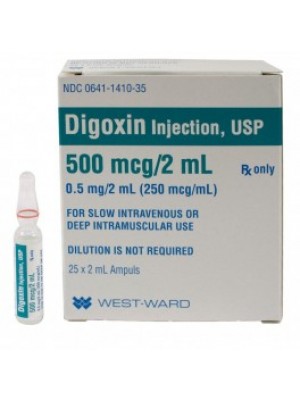
Digoxin 500 mcg .2 ml. 10 ampoulesIndicationsInjection:Chron..
29.00€