Your shopping cart is empty!
Welcome visitor you can login or create an account.
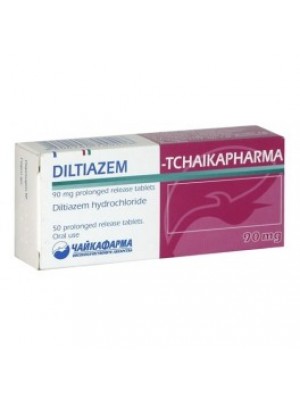
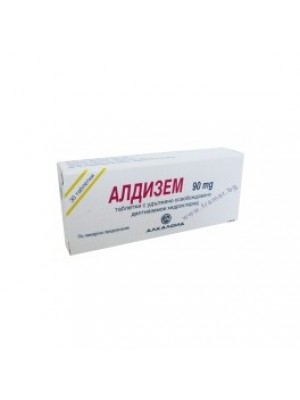
Diltiazem 60 mg. 50 tablets
Product Code: Diltiazem 60 mg. 50 tablets
Availability: In Stock

Product viewed: 1605


Diltiazem 60 mg. 50 tablets
WHAT diltiazem Actavis AND WHAT IT IS USED
Actavis Diltiazem belongs to the drug group called calcium channel blockers. It leads to a reduced calcium influx in cells of the heart and blood vessels, thereby causing vasodilation, increased blood flow to the heart and improve its supply with oxygen, slowing heart rate and decrease blood pressure. Diltiazem Actavis is applied for the treatment of:
• Coronary artery disease - vasospastic angina (a type of angina caused by contraction of the vessels of the heart); - Stable exertional angina - in addition to standard antianginal therapy.
• Hypertension - alone or combined antihypertensive therapy.
• Some cardiac arrhythmias - ventricular rate control in chronic atrial fibrillation and atrial flutter.
2. WHAT YOU NEED TO KNOW BEFORE diltiazem Actavis
Diltiazem Actavis does not apply to: a hypersensitivity to diltiazem or any of the excipients;
• heart failure III-IV degree; »Syndrome sick sinus (a disease associated with abnormal heart rhythm), unless placed pacemaker;
• violations in conducting cardiac impulse (SA-block, AV-block II and III degree), unless placed pacemaker; »Hypotension or shock (severe decrease in blood pressure - systolic pressure below 90 mmHg);
• acute myocardial infarction (complicated by slow heart rate, low blood pressure, severe heart failure).
In the application of this product, please note the following:
Diltiazem administered after accurate assessment of cardiovascular status after liver function tests under close medical supervision Ib during treatment with diltiazem should be taken into account:
• Diltiazem can lead to abnormally slow heart rate (especially in patients with sick sinus syndrome node) or a block in cardiac impulse conducting a second or third degree.
• For patients with prior impairment of the heart may be worsened of congestive heart failure.
• Can occur in very low blood pressure.
• transition can increase some of the indicators of liver function (increased transaminases, alkaline phosphatase and bilirubin).
• Because of the additive effect on heart rate, performance, blood pressure and left ventricular function, concomitant administration of diltiazem with beta-blockers is required strict medical supervision, especially in patients with impaired left ventricular function and / or conduction disorders.
• Abrupt discontinuation of treatment with diltiazem may provoke angina pectoris.
Use in renal and hepatic function:
Diltiazem is extensively degradation in the liver and is excreted through the kidneys and faeces. Therefore, caution should be exercised when treating with diltiazem in patients with impaired renal and hepatic function, the continued use is necessary periodic monitoring of laboratory parameters.
Skin manifestations:
Skin changes occurring during treatment with diltiazem are usually transient and disappear despite continued treatment. However, when persistent skin reactions, treatment should be discontinued, as were observed rare cases of cutaneous complications (eruptions' progressing to erythema multiforme and / or exfoliative dermatitis). Application of Diltiazem Actavis with food and drink There is no need for a special diet during treatment with this product.
Pregnancy
Before taking any medicine, consult your doctor or pharmacist. Diltiazem not be used during pregnancy unless a special need and under strict medical control fruit after careful consideration of the benefit / risk ratio.
Breastfeeding
Diltiazem passes into breast milk. Because of the potential harm to the infant should be a decision or to discontinue breast-feeding or discontinuation of diltiazem.
Driving and using machines
At the beginning of treatment with diltiazem may be a temporary occurrence of faintness and dizziness, which affect the ability to drive and use machines.
Important information about some of the ingredients of Diltiazem Actavis
This medicinal product contains lactose as an excipient, which makes it unsuitable for patients with lactase intolerance.
Taking other medicines:
Please tell your doctor or pharmacist if you are taking or have recently taken any other medicines, even if they have not been prescribed by your doctor. Diltiazem is broken down in the liver and therefore co-administration with other drugs that have the same degradation pathway, could increase or undermine them.
It is necessary to take into account interactions with the following agents:
Cyclosporin: Concomitant administration with diltiazem leads to increased plasma levels of cyclosporine and accordingly to cyclosporine-induced renal toxicity.
Beta blockers: Co-administration of diltiazem is usually well tolerated, but due to additive effect on heart rate, cardiac conduct impulses, blood pressure and left ventricular function is required strict medical supervision, especially in patients with impaired left ventricular function and / or violations conduction. Concomitant intravenous administration should be avoided.
Digoxin: Diltiazem may lead to a strengthening of the effect on suppressing the conductivity.
Cimetidine: Cimetidine increases the plasma levels of diltiazem and its major metabolite.
Diazepam: Diazepam caused an increase in plasma levels of diltiazem, an average of 20 to 30%.
Amiodarone: Co-administration with diltiazem leads to increased suppressing effect on sinus node function and the work of the heart muscle and can cause sinus arrest (cardiac arrest) or life-threatening heart failure, particularly in patients with pronounced rhythm conduction disorders ( bradycardia syndrome, sick sinus or partial conduction block).
Nitrates short and prolonged action: Diltiazem lotentsira effect of nitrate products without increasing side effects.
Carbamazepine: Diltiazem increases the serum levels of carbamazepine and 40 to 72%, which leads to toxicity in some patients. This requires strict medical supervision in their use.
Rifampin: Co-administration causes sharp decrease in plasma concentrations of diltiazem and its therapeutic effect.
Quinidine: Diltiazem significantly increased plasma concentrations of quinidine, which requires monitoring for adverse events and need a dose adjustment.
Anesthetics: When concomitant administration of diltiazem with inhalational anesthetics (halothane, isoflurane, enflurane, etc.) May occur depressant effects on cardiac function, lower blood pressure and abnormal heart conducting impulses.
Statins (drugs to lower cholesterol in the blood): Concomitant use with diltiazem should be done carefully, especially when using high doses of both products, as revealed a significant increase in plasma concentrations of tripods.
3. HOW TO TAKE diltiazem Actavis
Always Diltiazem Actavis exactly as your doctor. According to the complaints, the doctor will determine the appropriate treatment for your disease dose. It is orally before meals. The usual starting dose is 30 mg four times daily before meals. The daily dose divided into three or four, increased gradually at 2-3 day intervals until the optimum effect. The effective dose varies from patient to patient, but the average effective dose is usually 180-240 mg / 24h. divided into three or four doses. The maximum daily dose is 360 mg / 24h.
In elderly patients (above 65 years) and patients with impaired hepatic and renal function requires more slowly increasing the dose and a lower maintenance doses.
Children: This product is not recommended for children. Its safety and efficacy have not been established.
If you have the impression that the effect of the application of Diltiazem Actavis is too strong or too weak, talk to your doctor or pharmacist.
When taking a higher dose than prescribed, immediately contact a doctor!
Overdose can occur any of the following symptoms: slow heart rate, low blood pressure, conduction disorders and heart failure. When observing some of the symptoms of an overdose, it is necessary to discontinue the product, gastric lavage and appoint charcoal and symptomatic agents. In a strong delay cardiac appointed atropine (0.6-1.0 mg). Prolonged high-grade block of conduct is placed temporary pacemaker. Correction of low blood pressure, administration of vasopressor drugs. In heart failure apply pacemakers (isoprenaline, dopamine or dobutamine) and diuretics (drugs that increase the flow of urine). If symptoms of overdose, immediately contact a doctor! If you forget to use Diltiazem Actavis If you miss a dose, take it at the next regular intake without increasing the dose.
4. POSSIBLE SIDE EFFECTS
Like all medicines, Diltiazem Actavis can cause neoyuelani medicinal reakgshti. Adverse reactions are most often related to dose and duration of treatment. Diltiazem is well tolerated by most patients and causes less severe side effects compared to other calcium antagonists.
Adverse reactions: More frequent (at a frequency of> 1%): edema (2.4%), headache (2.1%), nausea (1.9%), atrioventricular block (1.6%), dizziness (1.5%), rash (1.3%), fatigue (1.2%), rash (1%). Rare (with a frequency <1%): Cardiovascular: AV block I degree atrioventricular block II and III degree, slow heart rate, congestive heart failure, electrocardiographic changes, flushing, low blood pressure, palpitations, ventricular extrasystoles (irregular heartbeat).
Nervous system: forgetfulness, depression, unsteadiness when walking, hallucinations, insomnia, nervousness, paresthesia, drowsiness, tinnitus, tremor.
Gastrointestinal: nausea, constipation, diarrhea, dry mouth, altered taste, thirst, vomiting, weight gain.
Skin: petechiae (bleeding), photosensitivity, pruritus, rash.
Laboratory tests: increase in some parameters (AST, ALT, LDH, alkaline phosphatase and TSSHS, blood sugar, uric acid).
Other: shortness of breath, nosebleeds, itchy eyes, impaired libido, muscle cramps, night urination, increased excretion of urine, bone and joint pain.
There are rare reports of adverse events following: hair loss, erythema multiforme, exfoliative dermatitis, extrapyramidal symptoms, growth of the lining of the gums, changes in the cell composition of blood (haemolytic anemia, leucopenia, thrombocytopenia).
If you notice any side effects not listed in this leaflet, please tell your doctor or pharmacist.
Write a review
Your Name:Your Review: Note: HTML is not translated!
Rating: Bad Good
Enter the code in the box below:
Related Products