
Your shopping cart is empty!
Welcome visitor you can login or create an account.
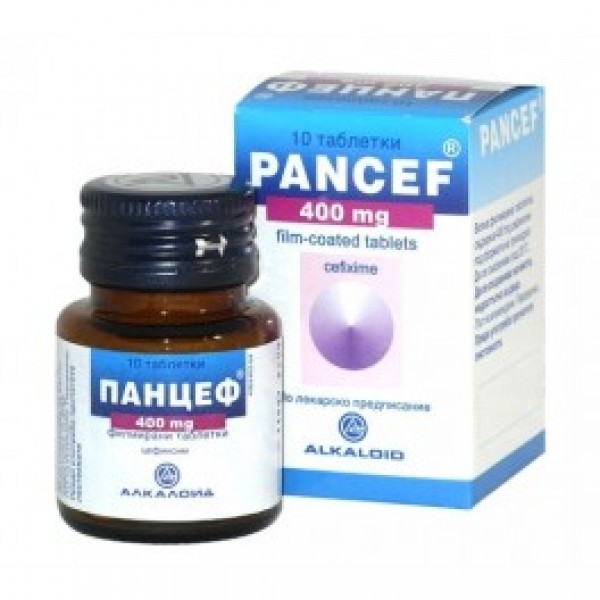
PANTSEF table. 400 mg. 10 table
Product Code: PANTSEF table. 400 mg. 10 table
Availability: In Stock
Product viewed: 1196


PANTSEF table. 400 mg. 10 table

PANTSEF WHAT IS AND WHAT IT IS USED
Pantsef (tsefiksim) is an oral antibiotic of cephalosporins. Tsefiksim showed activity both in vitro and in clinical infections against most strains of I the following microorganisms: Streptococcus pneumoniae, Streptococcus pyogenes, Haemophilus influenzae, Moraxella catarrhalis, Escherichia coli, Proteus mirabilis, Neisseria gonorrhoeae and others. Pantsef recommended for the treatment of infections caused by microorganisms sensitive to tsefiksim, namely:
Acute infections of the upper and lower respiratory tract, incl. pharyngitis and tonsillitis, acute bronchitis and acute exacerbations of chronic bronchitis, pneumonia, and acute exacerbations of chronic sinusitis;
Urinary tract infections;
Uncomplicated gonorrhea (cervical / urethral).
BEFORE YOU TAKE PANTSEF
Pantsef not take if:
Are allergic (hypersensitive) to tsefiksim, other cephalosporin antibiotics, or to any of the excipients Pantsef.
Take special care with Pantsef if:
Have or have ever had an allergic reaction to penicillin or to other drugs in the case of other allergic manifestations (I allergic reaction may include rash, itching, swelling, unusual joint pain, or difficulty breathing). If an Ialergichna effect the drug should be discontinued;
Have kidney problems or diseases of the gastrointestinal tract (especially colitis).
Prolonged treatment with tsefiksim can lead to overgrowth of non-susceptible organisms. If severe watery diarrhea accompanied by fever and malaise (pseudomembranous colitis) Pantsef stop using and contact your doctor.
Pantsef tablets should not be administered to children under 12
Taking other medicines
Please tell your doctor or pharmacist if you are taking or have recently taken any other medicines, including medicines obtained without a prescription. It is essential if you are taking any of the following:
Probenecid - tsefiksim eliminating delays and increases the plasma concentration - carbamazepine - tsefiksim increasing concentration of carbamazepine in concomitant;
Aminoglycosides - aminoglycosides increase the risk of kidney damage;
Anticoagulants - tsefiksim may extend protrom binovoto-time.
Tsefiksim intake can lead to false positive in some laboratory tests. During the drug should not be done protivotifna vaccination.
Taking Pantsef with food and drink
Pantsef can be taken regardless of meals.
Pregnancy and lactation
Ask your doctor or pharmacist before taking any medicine. The medicinal product is not recommended for pregnant women, especially during the first three months and the last six weeks, and in nursing mothers should be handled with caution.
Driving and operating machinery
Tsefiksim not affect your ability to drive or operate machinery.
HOW TO TAKE PANTSEF
Always Pantsef exactly as your doctor tells you. If you're not sure, ask your doctor or pharmacist.
Adults: The usual dose is 400 mg (one tablet) as a single daily oral dose or divided into two equal oral dose of 200 mg (half tablet) every 12 hours. The duration of treatment is usually 7-14 days depending on the severity of the infection. Streptococcal infections should be treated for at least 10
For the treatment of urinary tract infections in women recommended single dose of 400 mg (one tablet) or three-day treatment. For the treatment of uncomplicated cervical / urethral gonococcal infections recommended single dose of 400 mg (one tablet). Patients with severe renal insufficiency should not take half the standard dose (200 mg or half a tablet) daily.
If you take more than the dose Pantsef
If you take more than is necessary, contact your doctor or pharmacist. In case of overdose, gastric lavage is recommended. There is no specific antidote. Tsefiksim can be removed by hemodialysis or peritoneal dialysis.
If you forget to take Pantsef
If missed dose, the next dose should be taken as soon as possible. If it is almost time for your next dose, the missed dose should be skipped and continued treatment scheme. Do not take a double dose to make up for a missed dose.
If you stop taking Pantsef
Do not stop taking medication without consulting your doctor.
Do not stop taking Pantsef, just because you feel better as the infection can reoccur.
If you have any further questions relating to use of this product, ask your doctor or pharmacist.
POSSIBLE SIDE EFFECTS
Like all medicines, Pantsef can cause side effects, although not everybody gets them. If any of these symptoms occur, it is important to tell your doctor because if you do not pay attention may occur more serious complications. Adverse reactions are listed according to their frequency:
Uncommon (affecting less than 1 in 100 but more than 1 in 1000 patients): diarrhea, abdominal pain, indigestion, flatulence (bloating), nausea and vomiting, headache, or dizziness.
Rare (affecting less than 1 in 1000 patients, but more than 1 in 10,000 patients) hypersensitivity reactions (rash, urticaria, drug fever and itching), transient elevations in ALT, AST and ALP genital itching, vaginitis, candidiasis.
Very rare (affecting less than 1 in 10,000 patients, but more than 1 per 100,000 patients), transient thrombocytopenia, leucopenia and eosinophilia (disorder in the number of certain types of blood cells), prolonged prothrombin time, severe skin reactions such as syndrome, erythema multiforme and Stevens-Johnson; reactions, serum sickness, pseudomembranous colitis, transient elevations in blood urea nitrogen and creatinine.
If any of the side effects gets serious, or you notice other effects not listed in this leaflet, please tell your doctor or pharmacist.
HOW TO STORE PANTSEF
Keep out of reach of children. This medicinal product does not require any special storage conditions.
Pantsef not use tablets after the expiry date stated on the pack (to mark the expiry date are abbreviations). The expiry date refers to the last day of that month.
Medicines should not be disposed of via wastewater or household waste. Ask your pharmacist how to dispose of medicines no longer required. These measures will help to protect the environment.
ADDITIONAL INFORMATION
What Pantsef
The active substance is tsefiksim. Each tablet contains 400 mg tsefiksim form of trihydrate.
The other ingredients are starch, pregelatinized, cellulose microcrystalline, calcium hydrogen phosphate dihydrate, gelatin, corn starch, sodium lauryl sulfate, magnesium stearate, hypromellose, macrogol 4000, titanium dioxid
Pantsef looks like and contents of pack
Pantsef tablets are pale cream to white in color oblong, biconvex film-coated tablet with a dividing line on one side.
Write a review
Your Name:Your Review: Note: HTML is not translated!
Rating: Bad Good
Enter the code in the box below:
Related Products
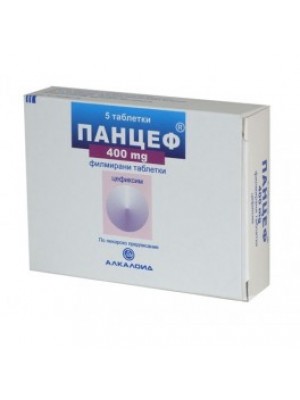
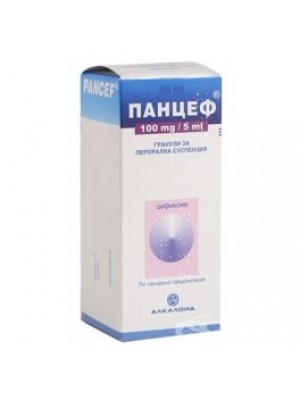
PANTSEF suspensions. 100 mg. / 5 ml. 60 ml PANTSEF WHAT IS A..
25.00€