Your shopping cart is empty!
Welcome visitor you can login or create an account.
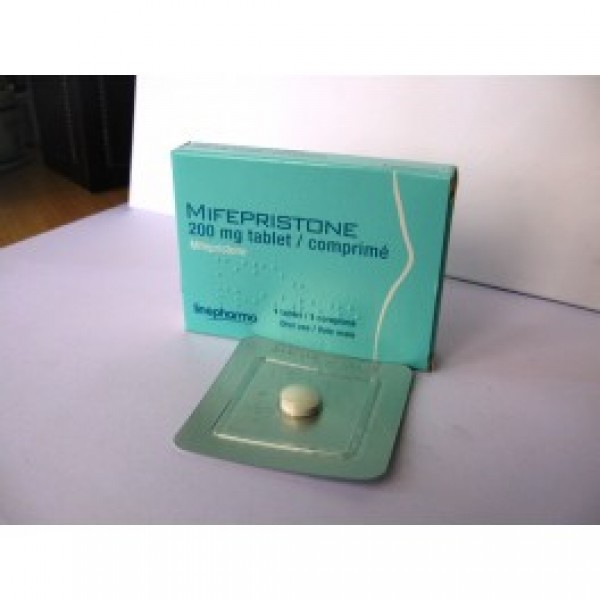
Mifepristone 200 mg. 1 tablet
Product Code: Mifepristone 200 mg. 1 tablet
Availability: In Stock
Product viewed: 2005


Mifepristone 200 mg. 1 tablet
WHAT mifepristone LINEFARMA AND WHAT IT IS USED
Mifepristone Linefarma represents hormones that acts by blocking the effects of progesterone - a hormone needed to continue the pregnancy. Therefore Mifepristone Linefarma can cause termination of pregnancy.
Mifepristone Linefarma recommended for medical termination of pregnancy:
no later than 63 days after the first day of the last menstrual cycle;
in combination with another medicine called prostaglandin (a substance which increases the contraction of the uterus), which is administered 36 to 48 hours after administration of Mifepristone Linefarma.
2. WHAT YOU SHOULD KNOW BEFORE YOU TAKE mifepristone LINEFARMA
Do not take Mifepristone Linefarma:
if you are allergic (hypersensitive) to mifepristone or any of the other ingredients this medicine (listed in section 6);
if you suffer from chronic adrenal failure;
if you suffer from asthma that is not controlled with treatment;
if you have hereditary porphyria;
if the pregnancy has not been established by a biological test or ultrasound;
if the first day of your last regular menstrual cycle was more than 63 days (9 weeks);
if your doctor is suspected ectopic pregnancy (the egg is implanted outside the womb);
the need to be prescribed in combination with prostaglandin mifepristone should not take this medicine if you are allergic to prostaglandins.
Be especially careful when using Mifepristone Linefarma
In some other circumstances the treatment may also be unsuitable to you, so tell your doctor if:
have symptoms of heart;
there are risk factors for heart disease such as high blood pressure or high cholesterol levels in the blood (increased fat in the blood);
suffer from asthma;
suffer from a disease which can disrupt blood clotting;
have liver or kidney disease;
you have anemia or other malnutrition;
you have an infection.
This will allow your doctor to discuss with you whether it is possible to take this treatment.
You can get long and / or profuse vaginal bleeding (an average of about 12 days or more after taking Mifepristone Linefarma). The presence of such bleeding is not related to the success of the method.
Other medicines and Mifepristone Linefarma
Drugs containing these active substances can interfere with the action of Mifepristone Linefarma:
corticosteroids (used in the treatment of asthma or other inflammatory diseases);
ketoconazole, itraconazole (used in the treatment of fungal infections);
erythromycin, rifampicin (antibiotic);
St. John's Wort (natural drug used in the treatment of mild depression);
phenytoin, phenobarbital, carbamazepine (used in the treatment of seizures, epilepsy).
Tell your doctor if you are taking or have recently taken any other medicines, including medicines obtained without a prescription.
Mifepristone Linefarma with food and drink:
You should not take grapefruit juice when treated with Mifepristone Linefarma.
This method requires your active participation and therefore you should be familiar with the requirements of the method:
The need for combination therapy with prostaglandin, which is used in the second review;
The need for a checkup within 14 to 21 days after taking Mifepristone Linefarma to confirm that the abortion is completed;
Non-negligible risk of failure of the method, which may require interruption of pregnancy by another method, in rare cases may require surgery.
Pregnancy and lactation Fertility
If you are pregnant:
There is insufficient information on the risks to the unborn baby. If the pregnancy continues and you decide to keep it, discuss this with your doctor, who will appoint carefully follow the birth and ultrasound.
If you are breastfeeding:
Mifepristone Linefarma can pass into breast milk and be ingested by your baby, so you should stop breast-feeding when taking the drug.
Fertility:
Animal studies with mifepristone showed no direct or indirect harmful effects on fertility.
It should avoid getting pregnant again before you have your monthly period following the intake of Mifepristone Linefarma.
Ask your doctor or pharmacist before uses any drugs.
Driving and using machines
No reported impact studies on the ability to drive and use machines.
3. HOW TO USE mifepristone LINEFARMA
Always take Mifepristone Linefarma exactly as your doctor tells you. Mifepristone Linefarma is intended for oral use.
The recommended dose is 200 mg of mifepristone (one tablet), followed 36 to 48 hours of administration of prostaglandin analogue (1 pessary, containing 1 mg gemeprost placed in the vagina).
The dose of 200 mg should not be exceeded.
Mifepristone Linefarma tablet was taken up with a little water in the presence of a doctor or a member of his / her medical staff.
If pregnancy occurs in the presence of an intrauterine device (IUD), the latter must be removed.
Expulsions can be done before the application of prostaglandin (in about 3% of cases). This does not preclude the control visit in order to confirm that the abortion is complete.
After application of Mifepristone Linefarma will get home. Uterine bleeding usually begins 1-2 days after the administration of Mifepristone Linefarma.
In rare cases the disposal of the fetus can occur before you take the prostaglandin. It is necessary to move a review to confirm the full disposal, so you need to return to the health facility.
Two days later the prostaglandin is administered. You should stay at rest for 3 hours after taking the prostaglandin. The fruit can be disposed several hours after administration of the prostaglandin or in the next few days. Bleeding continued for an average of 12 days or more. In case of very heavy or prolonged bleeding, tell your doctor to write you a time earlier review.
You must go checkup in the health facility within 14 to 21 days after taking Mifepristone Linefarma. If pregnancy continues or disposal is incomplete, you will be offered another method of abortion.
It is advisable not to move away from health facility to date.
In an emergency or if you are worried for any reason, you can call the health facility or to return there before the date fixed for the next consultation. You will be given a phone number for emergencies and when problems arise.
Use of Mifepristone Linefarma entails taking measures to prevent sensitization to the Rh-factor (if you are Rh-negative), and general measures to be taken during each interruption of pregnancy.
It is possible to get pregnant again immediately after the interruption of pregnancy.
Since some of the effects of Mifepristone Linefarma may still be present, it is advised to avoid becoming pregnant again before the onset of your menstrual cycle, subsequent intake of Mifepristone Linefarma.
Use in children
There are no data for women under 18 years.
If you take more dose Mifepristone Linefarma
The medicine is carried out under supervision, so it is unlikely to take more dose.
If you forget to take Mifepristone Linefarma
If you forget to take some of the drugs are likely method is not fully effective. Talk to your doctor if you forget to take your medicine.
If you have further questions about the use of this product, ask your doctor.
4. POSSIBLE SIDE EFFECTS
Like all drugs, Mifepristone Linefarma can cause side effects, although not everybody gets them.
Adverse reactions:
Very common side effects (may affect more than 1 in 10 patients):
headache;
vaginal bleeding;
effects associated with the intake of prostaglandin, such as nausea, vomiting, diarrhea, dizziness, abdominal discomfort, abdominal pain, uterine cramping, fatigue and chills / fever;
Contractions or spasms of the uterus in the hours after taking the prostaglandin.
Common side effects (may occur in less than 1 in 10 patients):
profuse vaginal bleeding;
prolonged bleeding after abortion;
spotting;
bleeding;
endometritis (inflammation of the uterus);
breast tenderness;
loss of consciousness;
cramps.
Uncommon side effects (may occur in less than 1 in 100 patients):
hemorrhagic shock;
salpingitis (infection of the fallopian tubes);
infection;
hypotension.
Rare (may occur in less than 1 in 1,000 patients) and very rare (may occur in less than 1 in 10,000 patients) adverse reactions:
cases of fatal toxic shock associated with inflammation of the uterus (endometritis) caused by infection with Clostridium sordellii, without fever or other overt signs of infection;
ectopic pregnancy;
bilateral adnexal mass (increased size of the fallopian tubes);
adhesions in the uterus, uterine rupture, hematosalpings (bleeding in the fallopian tubes);
ruptured ovarian cyst;
abscess of the breast;
molar pregnancy, trophoblastic tumor, increased levels of alpha-fetoprotein, elevated levels of carcinoembryonic antigen amniotic goes, utero-placental apoplexy;
anaphylactic shock, hives reaction, periorbital edema;
bronchospasm, asthma;
abnormal liver function tests;
liver failure;
gastric hemorrhage;
epilepsy;
tinnitus (ringing in the ears);
craze;
superficial thrombophlebitis;
myocardial infarction;
disturbances of the heart rhythm;
toxic epidermal necrolysis;
thrombotic thrombocytopenic purpura (bleeding disorder);
thrombocytopenia;
acquired systemic lupus erythematosus;
kidney failure;
muscular spasms;
ophthalmoplegia;
erythema nodosum;
angioedema;
vagal symptoms (hot flushes, rashes / itching);
malaise.
In a very small number of women, especially those who have undergone surgery of uterus or cesarean birth, there is a risk the uterus to rupture in the next pregnancy.
5. HOW TO STORE mifepristone LINEFARMA
Keep out of reach of children.
Keep the blister in the outer carton to protect it from light.
Do not use Mifepristone Linefarma after the expiry date stated on the carton after "EXP". The expiry date refers to the last day of that month.
Do not dispose of medications in wastewater or household waste. Ask your pharmacist how to dispose of medicines you no longer use. These measures will help to protect the environment.
Write a review
Your Name:Your Review: Note: HTML is not translated!
Rating: Bad Good
Enter the code in the box below:
Related Products