
Your shopping cart is empty!
Welcome visitor you can login or create an account.
Brufen 200 mg. 20 sachets
Product Code: Brufen 200 mg. 20 sachets
Availability: In Stock

Product viewed: 1667


Brufen 200 mg. 20 sachets
WHAT Brufen AND WHAT IT IS USED
Ibuprofen, the active ingredient in Brufen belongs to a group of medicines called non-steroidal anti-inflammatory drugs or NSAIDs. Each sachet contains 200 mg of the drug ibuprofen.
This medicine is used:
to relieve pain in conditions such as dental pain, intermittent pain or headache;
to lower the temperature and pain in the common cold.
This medicine may be used in adults and children weighing more than 30 kg (over 8 years).
If after three days you do not feel better or your condition worsens, you should seek medical attention.
2. WHAT YOU SHOULD KNOW BEFORE YOU TAKE Brufen
Do not take Brufen if:
you are allergic to ibuprofen or any of the other ingredients of this medicine (listed in section 6);
have or have had an allergic reaction to acetylsalicylic acid (eg. aspirin) or other NSAIDs - signs include redness or skin rash, swollen face or lips, or shortness of breath;
have (or have had) two or more episodes of stomach ulcers or bleeding from the stomach;
you had gastrointestinal bleeding or perforation, related to previous treatment with NSAIDs;
you have severe liver or kidney disease;
you have severe heart failure or cardiovascular disease;
have a condition that predispose to bleeding;
you are very dehydrated - this may be due to ill health, diarrhea or insufficient fluid intake;
you are in the last trimester of pregnancy. See "Pregnancy, lactation and fertility" below for more information.
Do not take Brufen if any of these circumstances apply to you. If you are unsure, ask your doctor or pharmacist.
Warnings and Precautions
Talk to your doctor or pharmacist before taking ibuprofen if you:
Have a disease which is called "systemic lupus erythematosus" or SLE (a disease that affects connective tissue, including joints and skin);
Have or have had problems with your stomach or intestines (such as ulcerative colitis or Crohn's disease);
You have kidney or liver problems;
Have you recently have major surgery;
Have had allergic reactions to other drugs in the past;
You had hay fever, nasal polyps (loss of smell, runny or stuffy nose) or trouble breathing;
You are elderly (over 65 years) - this implies greater probability of serious adverse reactions;
You have chickenpox or shingles;
You are dehydrated;
Have or have had asthma;
Regularly taking other drugs to relieve pain - especially if you are physically active, which can result in the loss of salt and dehydration.
Talk to your doctor or pharmacist before taking ibuprofen if any of these circumstances apply to you.
Myocardial infarction and stroke
C Talk with your doctor or pharmacist before taking this medicine if you have heart problems, have had a stroke or think that it is possible to get them (for example, have high blood pressure, diabetes, high cholesterol or smoking).
This medicine may lead to slightly increased risk of heart attack or stroke. This increased risk is more likely with high doses and prolonged treatment.
Do not take more than the recommended dose of this medicine.
Also, do not take this medicine for longer than recommended in this leaflet (3 days).
Overview prolonged use of painkillers
In general, the normal use of certain analgesics can result in a prolonged severe kidney problems. This risk may increase during physical stress associated with loss of salt and dehydration. Consequently, this should be avoided.
With continued use of analgesics may occur headache, which should not be treated with higher doses of this drug.
Consult a physician before using Brufen if any of the above mentioned conditions apply to you.
Children
This medicine should not be given to children weighing less than 30 kg (under 8 years of age)
Other medicines and Brufen
Please talk to your doctor or pharmacist if you are taking or have taken any other medicines, including medicines obtained without a prescription. In particular, talk to him if you are taking:
acetylsalicylic acid (eg. Aspirin) - do not use ibuprofen if you are taking more than 75 mg of acetylsalicylic acid (eg. Aspirin) daily, as this may increase the risk of gastrointestinal ulcers or bleeding;
NSAIDs (anti-inflammatory and analgesic agents) including Cox-2 inhibitors (such as celecoxib), as this may increase the risk of gastro-intestinal ulcers or bleeding;
other medicines containing ibuprofen, such as those you can buy without a prescription, as this may increase the risk of gastrointestinal ulcers or bleeding;
acetylsalicylic acid (eg. Aspirin), low doses - if you are a low-dose aspirin (75 mg daily) talk to your doctor or pharmacist before taking ibuprofen as the dilution of the blood can be violated;
medicines for heart problems such as digoxin, as the effect of digoxin can be strengthened;
steroids used as anti-inflammatory, as this may increase the risk of gastro-intestinal ulcers or bleeding;
clotting drugs such as acetylsalicylic acid (eg. Aspirin) or ticlopidine, as this may increase the risk of bleeding;
medicines for blood thinners (such as warfarin) as ibuprofen may increase the effect of these drugs;
phenytoin (for epilepsy), because the effect of phenytoin may be enhanced;
selective inhibitors of serotonin reuptake inhibitors (SSRIs) such as fluoxetine, used for depression since it may increase the risk of gastrointestinal bleeding;
lithium - used in some forms of depression as the effect of lithium may be strengthened;
probenecid and sulfinpyrazone (medicines for gout), as may the separation of ibuprofen to be delayed;
drugs for high blood pressure - including ACE inhibitors (such as captopril), beta blockers (such as atenolol) or an angiotensin-II receptor antagonists (such as losartan) or diuretics (water tablets) as ibuprofen can reduce the effect of these drugs and could be an increased risk of kidney;
potassium-sparing diuretics, as this can lead to hyperkalemia;
methotrexate - used in certain types of cancer or rheumatism, because the effect of methotrexate can be enhanced;
drugs that suppress the immune system - such as cyclosporin or tacrolimus, as may occur renal injury;
zidovudine - used for HIV or AIDS, since the use of ibuprofen may lead to an increased risk of bleeding or bleeding in the joints, leading to swelling in HIV (+) hemophiliacs;
antidiabetic drugs - such as glibenclamide, since interactions are likely to be possible;
quinolone antibiotics for infection (such as ciprofloxacin) because the risk of seizures may be increased;
certain antibiotics in infections - aminoglycosides such as gentamycin, since their release may be delayed;
cholestyramine - used to lower cholesterol, as the absorption of ibuprofen may be reduced;
mifepristone - used for medical termination of pregnancy, as they can reduce the effect of mifepristone;
Ginkgo biloba - a herbal medicine commonly used in dementia, as there it easier to bleed if you take ibuprofen;
voriconazole and fluconazole - used for fungal infections, since they increase the risk of a higher concentration of ibuprofen in the blood.
Talk to your doctor or pharmacist before taking Brufen if any of the above applies to you (or are not sure).
Brufen alcohol
If you drink alcohol while taking this medicine are more likely to get side effects.
Pregnancy, lactation and fertility
Do not take this medicine if you are pregnant in the last 3 months.
Talk to your doctor or pharmacist before taking this medicine if you are in the first 6 months of pregnancy or breast-feeding. You should not take this medicine only if your doctor's advice.
Ibuprofen belongs to a group of drugs that can impair fertility in women. This effect is reversible upon discontinuation of the drug. Unlikely ibuprofen, taken occasionally affect your options for pregnancy, still talk to your doctor before taking this medicine if you have fertility problems.
Driving and using machines
This medicine may make you dizzy and drowsy. If this happens, do not drive or perform work machines. Also, do not do anything that requires increased vigilance.
Ibuprofen contains sucrose and sodium
Saccharose
Sucrose is a sugar. If you have been told that you have an intolerance to some sugars or can not absorb them, talk to your doctor before taking this medicine.
Sodium
Brufen contains 50 mg of sodium in one sachet. This should be taken into consideration by patients on a controlled sodium diet. You may need less sodium in your diet because sodium in this medicine.
3. HOW TO TAKE Brufen
Always take this medicine exactly as described in this leaflet or as you have been told your pharmacist. If you are not sure, ask your doctor or pharmacist.
This medicine is only for short-term use. You should take the lowest dose for the shortest time necessary to relieve your symptoms.
How much to take
Adults and young people over 40 kg body weight (over 12 years):
The recommended dose is one or two sachets (200-400 mg ibuprofen) every 4-6 hours.
Do not take more than a total of 6 sachets for 24 hours.
Children over 30 kg body weight (8 to 12 years old):
If you give this medicine to a child, you should follow the instructions for dosage:
Body weight Recommended dose How often?
Children 30 kg to 39 kg (8-12 years) 1 sachet (200 mg ibuprofen) dose should be given every 6-8 hours if necessary.
Do not take more than 3 sachets (600 mg ibuprofen) for 24 hours.
The recommended dose of ibuprofen is 20 mg per kg of body weight each day.
This is considered to 3 divided doses throughout the day.
Please see the table above.
Do not take more than a total of 600 mg (3 sachets) for 24 hours.
Children under 30 kg body weight (under 8 years of age)
This medicine should not be given to children weighing less than 30 kg (under 8 years of age).
Taking this medicine
If you have a sensitive stomach, take this medicine with food or immediately after meals.
Empty the granules from the sachet into a small glass of water (about 125 ml).
Make sure you use the entire contents granules in sachet.
Mix the drug until no bubbling and the pellet was completely dissolved - should give a carbonated orange-flavored beverage.
If you use more than one sachet once, you should use more water. Use 125 ml of each sachet drug.
Write a review
Your Name:Your Review: Note: HTML is not translated!
Rating: Bad Good
Enter the code in the box below:
Related Products
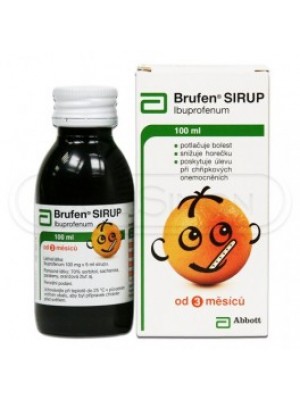

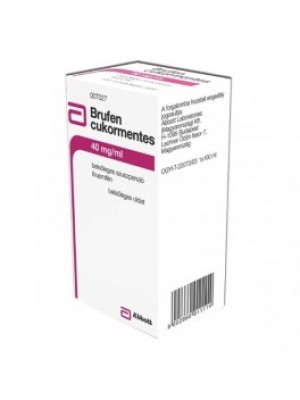
Brufen forte 40mg. / ml. 100 ml. What Brufen Forte 40 mg / m..
18.00€