Your shopping cart is empty!
Welcome visitor you can login or create an account.
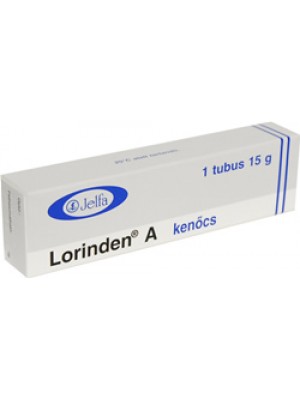
Lorinden C ointment 15 g.
Product Code: Lorinden C ointment 15 g.
Availability: In Stock

Product viewed: 4295


What Lorinden is with ointment and what it is used for
The ingredients of Lorinden with Ointment show a combined effect in the treatment of keratinized inflammatory skin changes with allergic origin.
Flumazazole pivalate is a synthetic glucocorticosteroid intended for topical application to the skin. It has a moderately powerful anti-inflammatory, anti-inflammatory, anti-allergic and vasoconstrictor effect.
Cleocinol is effective against Gram-negative and the corresponding Gram-positive bacteria. It also has a weak antifungal effect.
Lorinden C is used topically to treat dry skin inflammation, especially those with allergic origin, complicated by secondary bacterial infection, hyperkeratosis and persistent itching.
The medicinal product is specifically used to treat:
seborrheic dermatitis;
atopic dermatitis;
allergic contact eczema;
erythema multiforme;
lupus erythematosus;
persistent psoriasis;
lichen planus.
2. What you need to know before using Lorinden With Ointment
Do not use Lorinden With Ointment:
if you are allergic to flumetasone pivalate, other glucocorticosteroids, clioquinol or any of the other ingredients of this medicine (listed under b);
in viral, fungal or tuberculous skin diseases, skin tumors, usually acne or acne rosacea, varicella, varicose inflammation or ulceration (trophic ulcers of lower limbs), syphilis;
on large skin areas, particularly damaged, e.g. burns;
during the first trimester of pregnancy;
in children under the age of 2 years.
Warnings and precautions
Talk to your doctor or pharmacist before using Lorinden With Ointment:
Do not use more than 2 weeks without interruption. With prolonged use of large areas of skin, the incidence of side effects is increased.
Local administration of flumetasone pivalate may reduce the secretion of the adrenocorticotropic hormone (ACTH) from the pituitary due to suppression of the adrenal hypophysis axis, which leads to a decrease in blood cortisol concentration and to Cushing's iatrogenic syndrome which resolve upon cessation of treatment. Periodic testing of adrenal gland function is recommended to determine cortisol concentration in blood and urine after stimulation of the adrenal gland with ACTH.
In case of acute infection after ointment, additional antibacterial or antifungal treatment should be performed. If the symptoms do not disappear, the ointment should be discontinued until the infection is cured.
Avoid using the drug on the eyelids or the skin around them, due to the risk of glaucoma or cataracts. In patients with glaucoma or cataracts, it is possible to exacerbate the symptoms of the disease.
The medicinal product can be applied to the facial, armpit and groin skin only when absolutely necessary due to increased absorption and higher risk of adverse reactions (teleangiectasis, perioral dermatitis), even after short-term treatment.
The use of the occlusive dressing product should be limited to exceptional cases due to the risk of epidermal atrophy, stretch marks and severe infections.
To be used with caution in existing atrophic conditions of subcutaneous tissue, especially in older patients.
To be used with caution in patients with psoriasis. Local administration of corticosteroids in psoriasis may be risky due to the possibility of relapse due to developed tolerance, risk of generalized pustular psoriasis and systemic toxicity due to dysfunction of the skin.
Special attention should be paid to children over 2 years of age.
In children, due to the higher body-to-body ratio than adults, there is an increased risk of systemic adverse reactions of glucocorticosteroids, including dysplasia of the hypothalamic-pituitary-adrenal gland and Cushing's syndrome. Treatment with corticosteroids may adversely affect the growth and development of children.
The neurotoxic effect of topically applied cloquinolol may be possible, especially in long-term use or use of occlusive dressing.
Contact your doctor if you have blurred vision or other visual disturbances.
Other Drugs and Lorinden With Ointment
Tell your doctor or pharmacist if you are using, have recently used or are likely to use other medicines, including medicines obtained without a prescription.
There are no proven drug interactions associated with topical administration of glucocorticosteroids.
However, during treatment with glucocorticoids, patients should not be vaccinated against smallpox. Other types of immunization are not recommended, especially in long-term treatment of large skin surfaces due to the risk of lacking an antibody-mediated immune response.
The drug may activate the immunosuppressive agents and suppress that of the immunostimulants.
Pregnancy and breastfeeding
If you are pregnant or are breast-feeding, think you may be pregnant or plan to become pregnant, ask your doctor or pharmacist for advice before taking this medicine.
The use of Lorinden C by pregnant and lactating women is not recommended.
It can be used during pregnancy and lactation for a short period of time and on a small area of the skin only if absolutely necessary and if the benefit to the mother outweighs the risk to the fetus or baby.
3. How to use Lorinden With Ointment
Always use this medicine exactly as your doctor or pharmacist has told you. If you are not sure, ask your doctor or pharmacist.
It is applied in a thin layer on the affected skin, not more than once a day.
In the case of excessive lichenification or hyperkeratosis of skin lesions, it is acceptable to use an occlusive dressing to be changed over 24 hours.
Duration of treatment
Treatment should not last for more than two weeks. Do not apply in the facial area for longer than a week.
Do not use more than one tube of ointment a week.
Use in children
To be used with caution in children over 2 years of age, only once daily, on small skin areas. Do not apply to the skin of the face.
If you have any further questions on the use of this medicine, ask your doctor or pharmacist.
4. Possible side effects
Like all medicines, this medicine can cause side effects, although not everyone gets them.
Skin and subcutaneous tissue disorders
Acne, small spotted hemorrhages (steroid purpura), thinning of the skin and subcutaneous tissue, dry skin, excessive hair growth or hair loss, skin coloring and discoloration, skin atrophy and stretch marks, enlargement of the small blood vessels of the skin or mucous membranes, inflammation of the skin around the mouth, folliculitis, skin irritation or secondary infection. Sometimes urticaria or maculopapular rashes, aggravation of existing lesions.
Eye disorders
Topical application to the eyelids may lead to glaucoma or cataracts.
Blurred vision.
Endocrine system disorders
Due to the absorption of flumetasone pivalate and clinichenol through the skin, systemic side effects may occur, especially in prolonged use, application to large areas of the skin, occlusive dressing, and children.
The systemic side effects of flumetasone pivalate are suppression of the hypothalamic-adrenal-pituitary axis, Cushing's syndrome, growth inhibition and development in children, edema, hypertension, hyperglycemia, glucosuria, decreased immunity.
Nervous system disorders
Possible neurotoxic action of topically applied cloquinol, especially in the case of prolonged use or occlusive dressing.
Reporting of side effects
If any of the side effects gets serious, tell your doctor, pharmacist or nurse. This includes all possible side effects not listed in this leaflet.
How to Store Lorinden With Ointment
Keep out of the reach and sight of children.
Store below 25 ° C.
Do not use Lorinden Ointment after the expiry date which is stated on the pack. The expiry date refers to the last day of that month.
Do not dispose of medicines in the sewage system or in the household waste container. Ask your pharmacist how to dispose of medicines you no longer use. These measures will help to protect the environment.
6. Package Contents and Additional Information
What Lorinden Contains With Ointment
The active substances are: flumetasone (as pivalate) 0.2 mg and clioquinol 30 mg in 1 g ointment.
The other ingredients are beeswax and paraffin, white soft.
What Lorinden looks like with ointment and what the pack contains
Lorinden With Ointment is a white ointment with a yellow or gray hue.
The aluminum tube contains 15 g of ointment. Each tube together with a leaflet is packed in a cardboard box.
Write a review
Your Name:Your Review: Note: HTML is not translated!
Rating: Bad Good
Enter the code in the box below:
Related Products