Your shopping cart is empty!
Welcome visitor you can login or create an account.
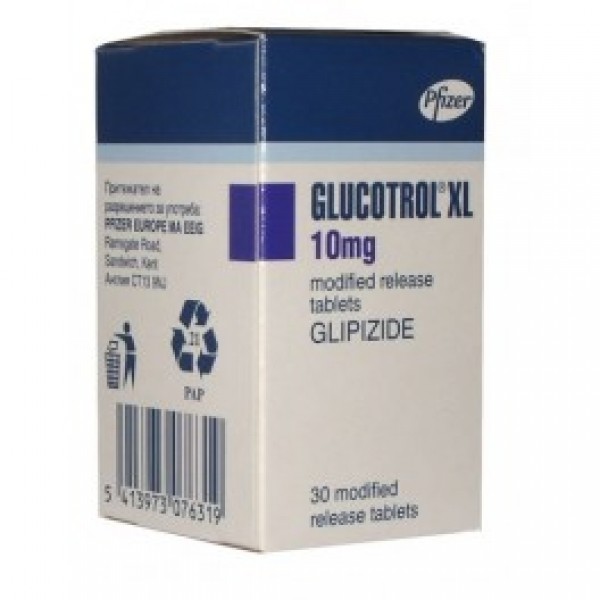
GLUCOTROL 10 mg. 30 tablets
Product Code: GLUCOTROL 10 mg. 30 tablets
Availability: In Stock
Product viewed: 1048


GLUCOTROL 10 mg. 30 tablets
WHAT GLUCOTROL AND WHAT IT IS USED
Glucotrol belongs to the group of sulphonylurea drugs. It is used for the oral treatment of Type II diabetes. Also used to reduce blood sugar levels in patients suffering from insulin-dependent diabetes mellitus, also known as diabetes of adulthood or diabetes type II. It is always employed together with a diet low in carbohydrates and fat.
The effect of any such drug (sulphonylurea), including Glucotrol may shorten in many patients over time. This phenomenon is known as secondary refractoriness unlike primary refractoriness in which the product had no effect at the first intake.
2. BEFORE YOU TAKE GLUCOTROL
Do not take GLUCOTROL
if you are allergic (hypersensitive) to glipizide or any of the other ingredients
if you first type (insulin-dependent) diabetes;
if you acetone and sugar in the urine (this may mean you have ketoacidosis);
if you have diseased kidneys or liver;
if you have a narrowing of the digestive system;
if you suffer from chronic diarrhea;
if you are under stress, have a fever, have undergone trauma, you are going to major surgery or you have recently suffered a severe illness or infection in these cases the control of diabetes can be lost;
if you are pregnant or trying to get pregnant;
if you are breastfeeding;
if you are under 16 or over 65 years;
If you eat irregularly, drink alcohol;
if you are treated with insulin or other medicines for diabetes (sulfonylureas or biguanides).
if you have a deficiency of the enzyme glucose-6-phosphate dehydrogenase
Taking other medicines
Drugs that interact with GLUCOTROL XL:
Miconazole, fluconazole, voriconazole (used to treat fungal infections);
Inflammatory drugs (used to treat sore muscles and joints), particularly phenylbutazone;
Salicylates such as aspirin (used for pain relief);
Beta-blockers (used to treat high blood pressure and certain cardiac diseases);
Angiotensin converting enzyme inhibitors such as captopril and enalapril (used to treat high blood pressure);
H2-receptor antagonists (used to treat ulcers), eg. cimetidine.
corticosteroids;
Phenothiazines (used to treat certain mental illnesses) as chlorpromazine;
Progestogens and oral birth control pills;
Sympathomimetic agents such as reducing the swelling of the nasal mucosa;
Bronchodilators, e. salbutamol, ritodrine and terbutaline (used to treat asthma);
Diuretics, calcium antagonists, thyroid hormones, nicotinic acid, isoniazid.
Please tell your doctor or pharmacist if you are taking or have recently taken any other medicines, including medicines obtained without a prescription.
Taking Glucotrol with food and drink
Alcoholic beverages (wine, beer, concentrates) may impair the control of diabetes.
Pregnancy and lactation
Ask your doctor or pharmacist before taking any medicine.
Driving and using machines
All patients with diabetes who drive should be especially careful not to fall into hypoglycaemia. (See section "Undesirable effects"). In the event that you are affected, you should not drive or operate machinery.
3. HOW TO TAKE GLUCOTROL
The tablets should be swallowed whole with sufficient water. They should not be chewed, divided, or crushed. It is particularly important to take your medicine as directed by your doctor. Do not take more tablets than recommended by your doctor. Listed below recommended doses are only general guidelines.
The usual starting dose is one tablet of 5 mg. adopted with breakfast.
If your doctor determines that you need a higher dose, it will tell you how to gradually zoom - usually it with 5mg. at an interval of several days.
The maximum recommended dose is 20 mg.
Combination use: In addition to other hypoglycaemic agents to GLUCOTROL XL combination therapy for the application of the new drug should be initiated at the lowest recommended dose and the patient should be observed closely for hypoglycemia.
When adding Glucotrol to other hypoglycaemic agents, the administration of Glucotrol should start with 5 mg. Titration should be based on clinical judgment.
Treatment should be stopped or the dose may be changed without instructions from your doctor. Stopping the drug may lead to worsening of diabetes.
Do not worry if you see in their stool something that resembles a tablet. Your medicine is contained in a special envelope, which releases it gradually and allows gradual entry into the body. Then the empty envelope is ejected from the body.
During treatment it is necessary periodically to track blood sugar levels. If you have any doubts or questions, ask your doctor or pharmacist.
Always take Glucotrol exactly as prescribed by your doctor. If you are not sure, ask your doctor or pharmacist.
If you take more dose
If you accidentally swallow more tablets than your doctor prescribes, you should seek immediate medical assistance. Symptoms such as fainting, confusion, sweating or shaking can be caused by low blood sugar. You can eat or drink something sweet. In collapse or loss of consciousness should immediately call an ambulance.
If you forget to take a tablet
If you forget to take a tablet, take it at the next meal.
If you have any further questions on the use of this product, ask your doctor or pharmacist.
4. POSSIBLE SIDE EFFECTS
Like all medicines, GlyukotrolL can cause side effects, although not everybody gets them.
While taking your medicine can watch any of the following side effects:
Common side effects (affecting less than 1 in 10 but more than 1 in 100 people): hypoglycemia; abdominal pain, diarrhea, stomach pain, nausea
Uncommon side effects (affecting less than 1 in 100 but more than 1 in 1,000 people): blurred vision; vomiting; jaundice; acute adverse reaction in concomitant use with alcohol (vomiting, palpitations, headache, flushing, hot flushes); dizziness, drowsiness, tremor; eczema, erythema
Very rare (affecting less than 1 in 10,000): reduced number of white blood cells, anemia, reduced numbers of all blood cells, reduced platelet count; hepatic porphyria, late skin porifiriya; reduced level of sodium in the blood; abnormal vision, reduced vision, double vision, visual disturbance, visual impairment; constipation; malaise; impaired liver function, hepatitis; hypersensitivity reactions; mild to moderate increase in liver enzymes; headache; confusion; allergic skin reactions, skin rash, hypersensitivity to light, itching, hives
If any of the side effects gets serious, or if you notice other effects not listed in this leaflet, please tell your doctor or pharmacist.
5. HOW TO STORE GLUCOTROL
Keep out of reach of children.
Do not store above 30 C. Store in a dry place.
Medicines should not be disposed of via wastewater or household waste. Ask your pharmacist how to dispose of medicines no longer required. These measures will help to protect the environment.
6. FURTHER INFORMATION
What GLUCOTROL
- The active substance is glipizide
- The other ingredients are polyethylene oxide, hydroxypropyl methylcellulose, iron oxide, magnesium stearate, sodium chloride, cellulose acetate and polyethylene glycol. Both tablets contain white coloring (E171).
Write a review
Your Name:Your Review: Note: HTML is not translated!
Rating: Bad Good
Enter the code in the box below:
Related Products
Gliclazide GAMMA. 30 mg. 60 tabletsWHAT GAMMA 30 gliclazide ..
15.00€