Your shopping cart is empty!
Welcome visitor you can login or create an account.
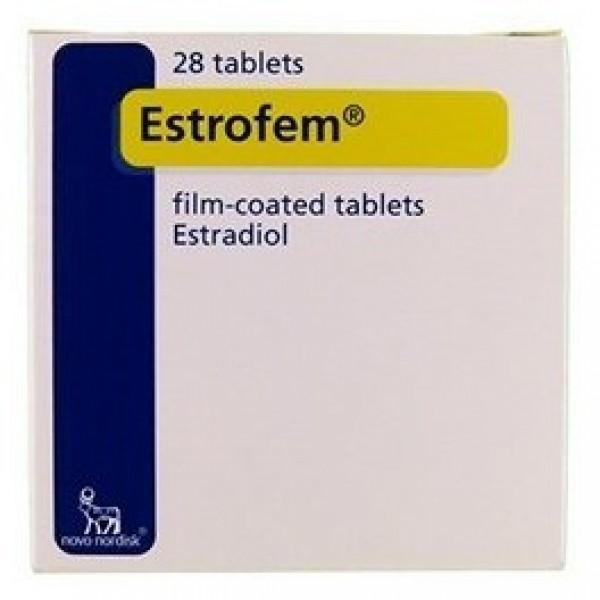
ESTROFEM 2 mg. 28 tablets
Product Code: ESTROFEM 2 mg. 28 tablets
Availability: In Stock
Product viewed: 1895


ESTROFEM 2 mg. 28 tablets
WHAT ESTROFEM AND WHAT IT IS USED
Estrofem is hormone replacement therapy (HRT). It contains the female hormone estradiol. Estrofem use in postmenopausal women, especially those with a uterus (hysterectomy) and therefore do not require combined estrogen / progestogen therapy.
Estrofem be used for:
Relief of symptoms arising after menopause - the amount of estrogen produced by the female body decreases during menopause. This can cause symptoms such as hot face, neck and chest ("hot flushes"). Estrofem alleviates these symptoms after menopause. Estrofem should only be prescribed if your symptoms seriously hinder your daily life.
Prevention of osteoporosis (thinning of the bones), if you are at high risk of future fractures and if you are unable to take other medications for this purpose.
Experience of treatment with Estrofem of women older than 65 years is limited.
2. BEFORE YOU TAKE ESTROFEM
Medical history and regular check-ups
Not use HRT carries some risks that you should consider when making a decision whether to start treatment or to continue it.
Experience in the treatment of women with premature menopause (due to damage to the ovaries) is limited. The risk of using HRT may be different if you have a premature menopause. Please consult your doctor.
Before you start (or restart) HRT, your doctor will ask you about your and that of your family history. Your doctor may decide to carry out a physical examination. This may include examination of the chest and / or internal review if necessary.
After starting treatment with Estrofem, you should go for regular check-ups with your doctor (at least annually). In these reviews, discuss with him the benefits and risks of continuing taking Estrofem.
Go for regular breast screening as recommended by your doctor.
Do not take Estrofem
If any of the following apply to you. If you are unsure about any of the following point, talk to your doctor before you start taking Estrofem.
Do not take Estrofem:
If you have, you have or suspect that you have breast cancer;
If you have, have had or suspect that you have estrogen-dependent cancers such as cancer of the womb lining (endometrial cancer);
If you have unexplained vaginal bleeding;
If you have excessive growth of the uterine lining (endometrial hyperplasia), which is not treated;
If you have or have had a blood clot in a vein (thrombosis) such as. in the legs (deep vein thrombosis) or lungs (pulmonary embolism);
If you have a bleeding disorder (thrombophilic disorder such as protein C deficiency, protein S or antithrombin);
If you have or have recently had a disease caused by blood clots in the arteries such. heart attack, stroke or angina;
If you have or have had liver problems and your liver tests have not returned to normal;
If you have a rare blood disease called "porphyria" which is passed down through the generations (hereditary);
If you are allergic (hypersensitive) to estradiol or any of the other ingredients of Estrofem (listed in section 6. "Further information").
Immediately stop taking Estrofem and immediately consult your doctor if any of these conditions appear for the first time.
Take special care with Estrofem
Before starting treatment, tell your doctor if you have had any of the following as they may recur or worsen during treatment with Estrofem. If this happens, you should see your doctor more often for medical examinations carried out:
fibroids in your uterus;
growth of the uterine lining outside the uterus (endometriosis) or a history of excessive growth of the uterine lining (endometrial hyperplasia);
increased risk of developing blood clots (see "Blood clots in a vein (thrombosis)");
increased risk of estrogen-dependent cancer (eg, mother, sister, grandmother with breast cancer);
high blood pressure;
liver disorder, such as a benign tumor in the liver;
diabetes mellitus;
gallstones;
migraine or severe headache;
immune system disease that affects many organs in the body (systemic lupus erythematosus, SLE);
epilepsy;
asthma;
a disease that affects the eardrum and hearing (otosclerosis);
very high levels of blood fats (triglycerides);
fluid retention due to cardiac and renal disorders.
The use of HRT carries an increased risk of gallstones.
Stop taking Estrofem and immediately see a doctor
If you experience any of the following conditions in the use of HRT:
some of the conditions mentioned in the section "Do not take Estrofem";
yellow skin or eyes (jaundice), generalized itching, abdominal (stomach) pain can be signs of liver disease;
significant increases in blood pressure (the symptoms can be headaches, fatigue, dizziness);
migraine headache, which appears for the first time;
strongly continuous headache, impaired vision or hearing, seizures, expressed numbness or weakness in one part of the body;
epileptic seizure, which appears for the first time;
if you become pregnant;
if you notice signs of blood sisirek as:
painful swelling and redness of the legs;
sudden chest pain;
difficulty breathing.
For more information, see "Blood clots in a vein (thrombosis)."
Note: Estrofem not a contraceptive. If it is less than 12 months from your last menstrual period or you are under 50 years of age, you still need a contraceptive to prevent pregnancy. Ask your doctor.
HRT and cancer
Excessive growth of the uterine lining (endometrial hyperplasia) and cancer of the uterine lining (endometrial cancer)
Taking HRT containing only estrogen, will increase the risk of excessive growth of the womb lining (endometrial hyperplasia) and cancer of the womb lining (endometrial cancer).
Taking a progestogen with estrogen for at least 12 days of each 28 day cycle protects you from this extra risk. So, your doctor will prescribe separately and progestagen, if you still have a uterus. If you have a uterus removed (hysterectomy), ask your doctor whether you can safely take this product without progestogen.
comparison
In women who still have a uterus and who are not taking HRT, on average 5 of 1000 will be diagnosed with endometrial cancer between the ages of 50 and 65 years.
In women aged between 50 and 65 who still have a uterus and HRT containing estrogen alone, between 10 and 60 of 1000 will be diagnosed with endometrial cancer (ie between 5 and 55 additional cases) in depending on the dose and duration of treatment.
Breast Cancer
According to the evidence, use of combined estrogen-progestagen and possibly also HRT containing estrogen alone increases the risk of developing breast cancer. Additional risk depends on the duration of intake. The additional risk is visible after several years. However, it returns to normal within a few (at most 5) years after discontinuation of treatment. In women with a uterus who use HRT containing estrogen alone for five years, there is little or no risk of developing breast cancer.
comparison
Women aged 50 to 79 years who are not taking HRT, on average 9 to 14 in 1000 will be diagnosed with breast cancer over a period of 5 years.
In women aged 50 to 79 years who use estrogen-progestagen HRT for five years, the number of cases will be 13 to 20 of 1000 patients (ie 4 to 6 additional cases).
Regularly check your breasts. See your doctor if you notice changes such as:
creasing of the skin;
alteration of the nipple;
any lumps you can see or feel.
Ovarian Cancer
Ovarian cancer is rare. Slightly increased risk of developing ovarian cancer reported in women taking HRT for at least 5 to 10 years.
In women aged 50 to 69 years who are not taking HRT, on average about 2 1000 will be diagnosed with ovarian cancer after 5 years.
In women who used HRT for five years, there will be between 2 to 3 cases of 1000 patients (ie 1 additional case).
Effects of HRT on heart and circulation
Blood clots in a vein (thrombosis)
The risk of blood clots in the veins is about 1.3 to 3 times higher in patients receiving HRT than in those taking, especially in the first year of treatment.
Blood clots can be serious and if one of them reaches the lungs, it can cause chest pain, shortness of breath, fainting or even death.
There is a greater likelihood of getting a blood clot in the veins with age and if one or more of the following conditions applies to you.
Tell your doctor if any of these apply to you:
you can not walk for a long time due to major surgery, injury or illness (see also section 3 "If you need an operation");
you are very overweight (BMI> 30 kg / m);
have a problem with bleeding, which require prolonged treatment with a drug used to prevent blood clots;
if one of your close relatives ever had a blood clot in the leg, lung or other body;
have systemic lupus erythematosus (SLE);
have cancer.
If there are signs of a blood clot, see "Stop taking Estrofem and immediately see a doctor."
comparison
In women aged between 50 and 59 years who are not taking HRT, on average 4 to 7 of 1000 would receive a blood clot for 5 years.
In women aged between 50 and 59 years who use estrogen-progestagen HRT for more than five years, the number of cases will be 9 to 12 of 1000 patients (ie 5 additional cases).
In women aged between 50 and 59 years with a uterus and receiving estrogen therapy for five years, the number of cases will be 5 to 8 of 1000 patients (ie one additional case).
Heart disease (heart attack)
There is no evidence that HRT will prevent a heart attack.
In women over 60 years taking estrogen-progestagen HRT is slightly more likely to develop heart disease than those who do not accept any HRT.
There was no increased risk of developing heart disease in women with a uterus and receiving estrogen therapy.
stroke
The risk of having a stroke is about 1.5 times higher in patients receiving HRT than in those taking. The number of additional cases due to the adoption of HRT will increase with age.
comparison
In women aged between 50 and 59 years who are not taking HRT, on average 8 of 1000 is expected to receive a stroke over a 5 year period.
In women aged between 50 and 59 years who use HRT, the number of cases will be 11 of 1000 for a 5 year period (ie 3 additional cases).
other conditions
HRT will not prevent memory loss. There is some evidence for an increased risk of memory loss in women who start taking HRT after age 65. Consult with your doctor.
Using other medicines
Some medicines may reduce the effect of Estrofem. This can lead to irregular bleeding. This applies to the following medicines:
Medicines used for epilepsy (such as phenobarbital, phenytoin and carbamazepine);
Medicines used for tuberculosis (such as rifampicin and rifabutin);
Medicines used for HIV infections (such as nevirapine, efavirenz, ritonavir and nelfinavir);
Herbal preparations containing St. John's wort (Hypericum perforatum).
Please tell your doctor or pharmacist if you are taking or have recently taken any other medicines, even those not prescribed, herbal or other natural products.
Taking Estrofem with food and drink
The tablets can be taken with or without food and drink.
Driving and using machines
Estrofem does not affect the ability to safely operating machinery or driving.
Important information about some of the ingredients of Estrofem:
Estrofem contains lactose monohydrate. Contact your doctor before taking Estrofem if you have an intolerance to some sugars.
laboratory tests
If you need a blood test, tell your doctor or laboratory staff that you are taking Estrofem as this medicine may affect the results of her tests.
Pregnancy and lactation
Estrofem use only in postmenopausal women. If you become pregnant, stop taking Estrofem and contact your doctor.
3. HOW TO TAKE ESTROFEM
Always take Estrofem exactly as prescribed by your doctor. Consult your doctor or pharmacist if you are unsure.
If you are a uterus or if you have vaginal bleeding and not taking other hormonal products, you can start treatment at any convenient for you day.
Take one tablet daily at roughly the same time of day. After you have finished all 28 tablets in the pack, start a new pack continuing the treatment without interruption.
For additional information on the use of the calendar pack, see "USER INSTRUCTIONS" at the end of the leaflet.
Your doctor will aim to prescribe the lowest effective dose to relieve symptoms for the shortest period of time. Tell your doctor if you think that the dose is too strong or strong enough.
If you have a uterus, your doctor will prescribe a progestogen (another female hormone), unless you have a condition called endometriosis (presence of uterine tissue outside the womb).
Consult your doctor or pharmacist when you should start taking Estrofem if you have taken so far other HRT products.
If you take more Estrofem than you should:
Ask your doctor or pharmacist if you take more Estrofem than you need. Estrofem overdose may feel sick or vomit.
If you forget to take Estrofem:
If you forget to take a tablet at the usual time, take it within the next 12 hours. If more than 12 hours, continue treatment as usual the next day. Do not take a double dose to make up for a forgotten tablet. A dose may increase the likelihood of breakthrough bleeding and spotting if you still have a uterus.
If you stop taking Estrofem:
If you want to stop treatment with Estrofem, please discuss this with your doctor. He will explain the effects of stopping treatment and will discuss other treatment options.
Ask your doctor or pharmacist if you have any further questions on the use of this product.
If you need surgery:
Tell the surgeon that you are taking Estrofem if you have an operation. You may need to stop taking Estrofem about 4 to 6 weeks before surgery to reduce the risk of a blood clot (see section 2, Blood clots in a vein). Ask your doctor when you can start again taking Estrofem.
4. POSSIBLE SIDE EFFECTS
These diseases are reported more often in women taking HRT compared with those taking:
breast cancer;
abnormal growth or cancer of the uterine lining (endometrial hyperplasia or cancer);
ovarian cancer;
blood clots in the legs or lungs (venous thromboembolism);
heart disease;
stroke;
possible loss of memory if HRT is started over 65 years.
For more information on these events, see section 2.
The frequency of possible side effects listed below is defined using the following convention:
Very common (affects more than 1 patient in 10);
Common (affects 1 to 10 patients in 100);
Uncommon (affects 1 to 10 patients in 1000);
Rare (affects 1 to 10 users in 10,000);
Very rare (affects less than 1 in 10,000);
Not known (frequency can not be estimated from available data).
Common side effects:
depression;
headache;
Abdominal (stomach) pain;
nausea;
Leg cramps;
Pain, tenderness or breast enlargement;
Edema (fluid retention);
Weight gain.
Uncommon side effects:
Visual abnormalities;
Blood clots in the veins (venous embolism);
Heartburn (dyspepsia);
vomiting;
Bloating or swelling;
Gallstones;
Itching or rash (urticaria).
Very rare side effects:
Irregular vaginal bleeding - if prescribed in women with a uterus;
Worsening of migraine;
stroke;
insomnia;
epilepsy;
Changes in libido;
Vaginal yeast infection;
Aggravated asthma;
dizziness;
diarrhea;
Hair loss (alopecia);
Increased blood pressure.
The following adverse reactions have been reported in other HRT:
Gallbladder disease;
Various skin disorders:
Discoloration of the skin, especially the face or neck known as "pregnancy patches" (chloasma);
Painful reddish skin nodules (nodular erythema);
A circular rash with redness or sores (erythema multiforme).
5. HOW TO STORE ESTROFEM
Keep out of the reach and sight of children.
Estrofem not use after the expiry date stated on the label and carton. The expiry date refers to the last day of that month.
Do not store above 25 ° C.
Write a review
Your Name:Your Review: Note: HTML is not translated!
Rating: Bad Good
Enter the code in the box below:
Related Products