
Your shopping cart is empty!
Welcome visitor you can login or create an account.
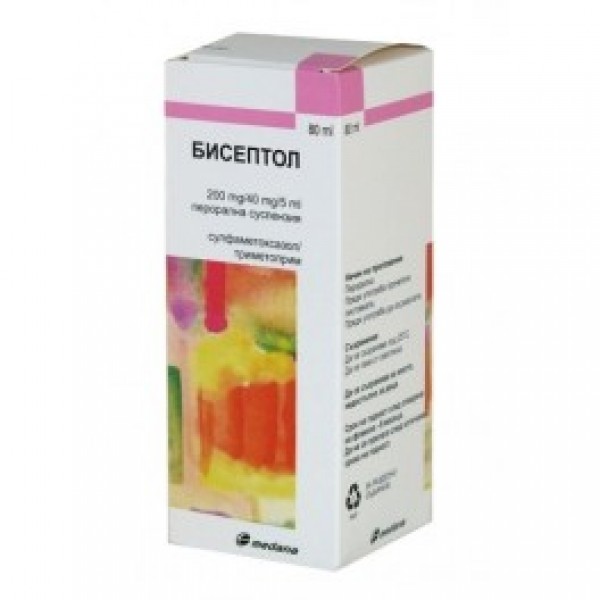
Biseptol syrup 240 mg. / 5 ml. 80 mg.
Product Code: Biseptol syrup 240 mg. / 5 ml. 80 mg.
Availability: In Stock
Product viewed: 1696


Biseptol syrup 240 mg. / 5 ml. 80 mg.

What is biseptol suspension and what it is used
Biseptol 200 mg / 40 mg in 5 ml oral suspension / biseptol referred to in this leaflet / is composed of two different medicines called sulfamethoxazole and trimethoprim. These drugs carry sometimes combined name co-trimoxazole. Both belong to a group of antibiotics. They are used to treat infections caused by bacteria. Like all antibiotics biseptol only works for certain types of bacteria. This means that it is only suitable for treating certain types of infections. Biseptol can be used for treatment and prophylaxis in the following cases:
Lung infections / pneumonia or pneumonitis / caused by bacteria called Pneumocystis jiroveci, formerly Pneumocystis cariniil- PCP.
Infections caused by a parasite called Toxoplasma gondii / toxoplasmosis /. Biseptol can be used in the treatment of:
Urinary tract infections;
Lung infections such as bronchitis;
Otitis media / otitis media /;
Infection called nocardiosis, which affects the lungs, skin and brain.
2 Before using the biseptol
Must not be taken if biseptol:
You have an allergy / hypersensitivity / sulfamethoxazole trimethoprim or to co-trimoxazole or any of the other ingredients of biseptol / See Section 6 - Additional information /;
Have an allergy to sulfa drugs - such as sulfonylurea / gliclazide and glibenclamide as / or to thiazide diuretics / bendroflumethiazide as /;
Have kidney or liver problems;
Have or have had blood problems;
In children younger than 6 weeks or prematurity, except for the treatment or prophylaxis of PCP. In these cases, children must be at least 4 weeks.
If you are not sure if the above applies to you, talk to your doctor or pharmacist for advice before taking biseptol.
Biseptol Use with caution if:
Before taking biseptol ask your doctor or pharmacist if:
You have severe allergies or asthma;
Have had allergic skin reactions like syndrome Stevens-Johnson syndrome or Lyell - in these conditions appear blistering of the skin, mouth, eyes and genitals;
You have a rare blood disease called porphyria, which affects the skin and nervous system;
Have folic acid deficiency - the condition is called anemia and leads to pallor of the skin, fatigue, weakness and shortness of breath;
You had jaundice - yellowing of the skin causes and whites of the eyes;
Problem with metabolism called phenylketonuria and you are not on a special diet;
In the case of malnutrition;
Have a surplus of potassium in the blood.
If you are not sure if the above applies to you, please ask your doctor or pharmacist before taking biseptol.
Using other medicines
Please tell your doctor or pharmacist about all the medicines you are taking or have recently taken, even those not prescribed. Including herbal medicines. This is necessary because biseptol may affect the action of certain drugs, as well as certain drugs affect the operation of biseptol. It is particularly important to tell your doctor or pharmacist if you are taking the following medicines:
Diuretics / help for urinary /;
Pyrimethamine used for the treatment of malaria and also in diarrhea;
Ciclosporin, used after organ transplants or action on the immune system;
Warfarin or other anticoagulants / drugs that reduce the ability of blood to clot /;
Phenytoin used in epilepsy;
Drugs used in the treatment of diabetes, such as glibenclamide, glipizide or tolbutamide / sulfonylurea /;
Digoxin or procainamide used for heart problems;
Amantadine, used in the treatment of Parkinson's disease, multiple sclerosis, influenza or herpes zoster;
Zidovudine and lamivudine used in the treatment of AIDS;
Drugs that can lead to increased plasma levels of potassium - diuretics, steroids, and digoxin;
Methotrexate used for treating cancer and for influencing the immune system.
If you are not sure if the above applies to you, please ask your doctor or pharmacist before taking biseptol.
Taking biseptol with water and food
Should take biseptol with any liquid or food, this will prevent the possible occurrence of nausea or diarrhea. Although it is better to take biseptol this way you can still take it and fasting. It is important to take large amounts of fluids during the treatment.
Important information about some of the ingredients of biseptol
Biseptol contain maltitol and if you have fructose intolerance should not take it. The product contains propyl and methyl benzoate, which can cause allergic reactions / usually late /.
Biseptol contains makrogoglitserol hydroxystearate, which may cause stomach upset or diarrhea.
Each 5 ml of biseptol containing approximately 1.62 mmol of sodium. This must be taken into consideration in patients receiving a diet with a controlled intake of sodium.
3 How to use biseptol
You must always take biseptol exactly as it is prescribed by your doctor. If you are unsure contact your doctor or pharmacist. Shake well before use to obtain a homogeneous suspension.
usual dosage
The dosage to be taken depends on age:
6 to 12 years: 10 ml 10 ml morning and evening;
6 months to 5 years: 5 ml 5 ml morning and evening;
6 weeks to 5 months: 2.5 ml 2.5 ml morning and evening;
Biseptol should be taken at least 5 days;
Children 12 years and older - 20 ml every 12 hours.
special dosage
Biseptol dose and duration of treatment depend on the infection rate from which you suffer. Your doctor may prescribe a different dosage and course of treatment in the following cases:
Treatment of urinary tract infections;
Treatment and prevention of infections caused by bacteria Pneumocystis jiroveci;
Treatment of infections caused by a parasite called Toxoplasma gondii / toxoplasmosis / or Nocardia / nocardiosis /.
If you take biseptol for a long period of time, your doctor may:
Blood tests done to assess the effects of the drug;
Prescribe folic acid, which you should take with biseptol.
If you take more than biseptol had
If you take more than biseptol should consult your doctor or visit a hospital. In this case, you may have the following symptoms:
Nausea or vomiting;
Dizziness or confusion.
If you forget to take biseptol
If you miss a dose, take it as soon as possible - fast.
Do not take a double dose.
4 Possible side effects
As with any drug biseptol may cause side effects, although not everybody gets them.
Adverse drug reactions of biseptol.
Stop taking the drug and contact your doctor immediately in case of an allergic reaction. The chance occurrence of such a reaction is very rare / less than 1 in 10,000 people are affected /. The signs of an allergic reaction include:
Allergic reactions:
Difficulty in breathing;
fainting;
Swelling of the face;
Swelling of the mouth, tongue or throat with redness and tenderness, and difficulty in swallowing;
Chest pain;
Red skin rash.
Very common / more than 1 in 10 people /:
High potassium levels in the blood, which may cause palpitations / heart rhythm disturbances /.
Common / less than 1 in 10 people /:
Infection called candidiasis that affects the mouth and / or vagina. It is caused by a fungus;
headache;
nausea;
diarrhea;
Skin rashes.
Uncommon / less than 1 in 100 people /:
Vomiting.
Very rare / less than 1 in 10,000 people /:
Fever / temperature increase / or frequent infections;
Sudden wheezing or difficulty breathing;
Mouth ulcers, painful ulcers or inflammation of the tongue;
Skin lumps or hives / raised white or red itchy blisters on the skin;
Blisters on the skin or in the mouth, nose, vagina or headquarters;
Inflammation of the eye, causing pain and redness;
Rash or sunburn stays outside, even on cloudy days;
Low levels of sodium in the blood;
Changes in blood count;
Feelings of weakness, fatigue or weakness, paleness of the skin / anemia /;
Heart problems;
Jaundice / coloring of the skin and whites of the eyes in yellow /. May occur simultaneously with unexpected bleeding or bruising;
Stomach pain, which can occur with blood in the stool;
Chest pain, muscle or joint pain and muscle weakness;
arthritis;
Problems with urination. Difficulty in urination. Separation of fewer or greater amount relative to the normal urine. Appearance of blood or cloudiness of the urine;
Kidney problems;
Sudden onset of headache or neck stiffness accompanied by fever / temperature increase /;
Problems with control of movements;
Seizures / convulsions /;
Feelings of restlessness and dizziness;
Ringing or other unusual sounds in the ears;
Tingling or numbness in hands and feet;
Seeing strange or unusual images / hallucinations /;
depression;
Muscle pain and / or muscle weakness in patients with AIDS.
If any of the side effects gets serious, or appear other not listed in this leaflet, please tell your doctor or pharmacist.
5 Storing biseptol
Keep out of reach of children.
Protect from light.
Do not store above 25 ° C.
Store in the original package with this leaflet. Opened bottle can be used up to 8 months.
The suspension should not be used after the expiry date stated on the packaging.
The expiry date refers to the last day of that month.
6 Further information
Contents biseptol
The active substances are sulfamethoxazole and trimethoprim.
5 ml of suspension contains 200 mg of sulfamethoxazole and 40 mg trimethoprim
The other ingredients are: makrogolglitserolov Hydroxystearate, croscarmellose sodium, magnesium aluminum silicate, citric acid monohydrate, disodium phosphate dodecahydrate, methylparahydroxybenzoate (E218) propylparahydroxybenzoate (E216) and maltitol liquid, saccharin sodium, propylene glycol, fragrance of wild strawberries purified water.
Biseptol looks like and contents of the pack
Biseptol suspension is white or fawn color and strawberry flavor.
In carton containing an amber glass vial with 80 ml suspension, measuring cup and package information for the user.
Write a review
Your Name:Your Review: Note: HTML is not translated!
Rating: Bad Good
Enter the code in the box below:
Related Products
Biseptol 480 mg. 5 ml. 10 ampoules1 ml concentrate for solut..
29.00€