Your shopping cart is empty!
Welcome visitor you can login or create an account.
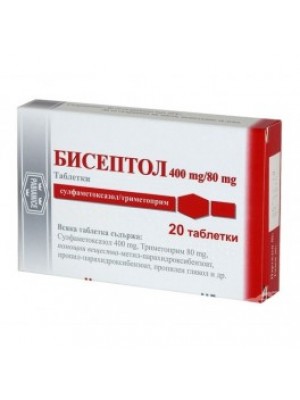
Biseptol 120 mg. 20 tablets
Product Code: Biseptol 120 mg. 20 tablets
Availability: In Stock

Product viewed: 1487


Biseptol 120 mg. 20 tablets

Biseptol WHAT IS AND WHAT IT IS USED FOR ?
Biseptol 100 mg/20 mg is complex antibacterial medicine that contains Cotrimoxazole - a mixture of sulfamethoxazole ( sulfonamide with an average duration of action ), and trimethoprim in suitable proportions .
The two components of the drug acting on the same biochemical reaction chain which enhances the antibacterial effect and inhibits the development of bacterial resistance Cotrimoxazole acts on susceptible strains of Escherichia coli ( including strains pathogenic ) indolpozitivni strains of Proteus spp. (including P. vulgaris), Morganella morganii, Klebsiella spp., Proteus mirabilis, Enterobacter spp., Haemophilus influenzas, Streptococcus pneumoniae, Shigella flexneri, S. sonnei, Neisseria gonorrhoeae and Pneumocystis jiroveci (P. carinii).
The two components of the product are rapidly absorbed from the gastrointestinal tract . The maximum level in the blood of the two components is reached from 1 to 4 hours after oral administration . Both compounds in therapeutic concentrations are found in many tissues and body fluids.
Medicinal product used in :
Urinary tract infections caused by susceptible strains of E. coli, Klebsiella spp., Enterobacter spp., Morganella morganii, Proteus mirabilis and Proteus vulgaris. Note: It is preferable that refractory urinary tract infections can be treated with an antibacterial drug product;
Acute Otitis media, caused by susceptible strains of Str. pneumonias and H. influenzae, if the physician considers that the application of Cotrimoxazole is justified by giving an antibiotic ;
Exacerbation of chronic bronchitis caused by susceptible strains of Streptococcus pneumoniae lub H. Influenzae, if the physician determines that the application of complex medical product is more beneficial than monotherapy ;
Gastrointestinal infections caused by bacteria Shigella;
Microbiologically confirmed pneumonia caused by Pneumocystis jiroveci (P. carinii) and prevention of microbial infection in patients with decreased immunity ( eg, AIDS) ;
Traveler's diarrhea in adults caused by enteropathogenic strains of E. coli.
2 . BEFORE YOU TAKE biseptol 100 mg/20 mg
Do not apply biseptol 100 mg/20 mg in the case of:
Hypersensitivity to Cotrimoxazole ( sulfamethoxazole with trimethoprim ) , any of the excipients , sulfonamides or trimethoprim ;
Diagnosed hepatic paranhim ;
Severe renal failure , when the level of the product in the serum can not be determined;
Severe haematological disorders;
Megalablastna anemia caused by folic acid deficiency ;
Deficiency of glucose- 6-phosphate dehydrogenase ( possible hemodialysis) ;
Children under 2 months (risk of nuclear jaundice) ;
Pregnancy and lactation .
Take special care when applying biseptol 100 mg/20 mg:
There have been some rare cases of life-threatening complications associated with the administration of sulfonamides , including severe skin reactions ( Stevens -Johnson syndrome - severe erythema multiforme or Lyell 's syndrome - toxic epidermal necrolysis ), acute hepatic necrosis , aplastic anemia, other disorders of blood composition and hypersensitivity of the respiratory tract .
During treatment with Cotrimoxazole may manifest the following: rash , sore throat , fever, joint pain , cough , shortness of breath , jaundice, urinary disorders , edema, pain in the groin or epigastric area. In the event that any of these events , stop taking the medicine and immediately consult a doctor .
The product should be used with caution in patients with renal insufficiency , with a deficiency of folic acid (such as older patients , alcoholics , patients treated with anti-convulsive drugs , to patients with malabsorption and malnutrition ) , in patients with severe allergic reactions or suffering from bronchial asthma. Inform the doctor to any of these conditions !
In older patients often experience severe adverse reactions after taking Cotrimoxazole ( renal or hepatic insufficiency , severe skin reactions , bone marrow suppression ) .
The most common adverse reactions in patients with AIDS treated with Cotrimoxazole include rash , fever, leukopenia ( decrease in white blood cells in the peripheral blood) , increased activity of liver enzymes ( aminotransferases ) in the blood serum , hyperkalemia (elevated potassium content in the blood) and hyponatremia (low sodium in the blood) .
As with other antibacterial drugs in the treatment Cotrimoxazole may occur pseudomembranous colitis . Therefore , if you have diarrhea after taking the drug product , consult a doctor ! It may be necessary to stop taking the medicine and the application of appropriate treatment ( oral metronidazole or vancomycin ) . Do not take medicines with costive effect!
Administration of other medicinal products
Please tell your doctor or pharmacist if you are taking or have recently taken any other medicines , including medicines obtained without a prescription !
thiazide diuretics
Co-administration of Cotrimoxazole with certain diuretics (especially thiazides ) in elderly patients may increase the risk of thrombocytopenia with bleeding tendency .
antiplatelet drugs
Cotrimoxazole can intensify the effects of antithrombotic drugs in the extent necessary to reduce the dose .
phenytoin
Cotrimoxazole suppresses hepatic metabolism of phenytoin , the time of action of phenytoin is increased in patients receiving both drugs .
methotrexate
Cotrimoxazole can intensify the effects of methotrexate.
Sulphonylureas
Cotrimoxazole can intensify the effects of antidiabetic agents , sulphonylureas - and cause blood sugar levels to drop significantly.
digoxin
Cotrimoxazole can raise blood levels of digoxin in some elderly patients .
tricyclic antidepressants
Cotrimoxazole may reduce the efficacy of tricyclic antidepressants.
Primetamin
Cotrimoxazole with primetamin can cause megaloblastic anemia.
cyclosporine
In kidney transplant patients treated with cyclosporine and Cotrimoxazole are marked temporary disturbances in the function of the transplanted kidney, which translates into an increased level of serum creatinine , which is probably caused by the action of trimethoprim .
Sulfonamides may cause allergy in patients sensitive to certain antithyroid drugs , diuretics ( thiazide and atsetolamid ) and some oral antidiabetic agents due to their chemical structure .
anticoagulants
Have increased the effects of acenocoumarol and warfarin.
antidiabetics
Increased effect of sulphonylureas .
ACE inhibitors
Risk of severe hyperkalemia.
anesthetic
Increase the risk of methemoglobinemia when sulfonamides taken with prilocaine .
antiarrhythmics
Increased risk of ventricular arrhythmias when given with amiodarone . Plasma levels of dofetilide is significantly increased when administered with trimethoprim / sulfamethoxazole , causing induced dofetilide QT interval prolongation and arrythmia .
antibacterials
Serum levels of dapsone and trimethoprim / sulfamethoxazole may be increased by concomitant intake . Caution is required due to toxicity of dapsone causing methemoglobinemia . The risk of crystalluria is increased with sulfonamides with methenamine . Concurrent administration of trimethoprim / sulfamethoxazole and rifampicin may lead to increased levels of rifampicin and short half-life of trimethoprim .
antifolate agents
By applying these tools is necessary to consider additional intake of folate .
antimalarial drugs
Risk of megaloblastic anemia in doses of pyrimethamine in excess of 25 mg per week.
antivirals
Increase the plasma concentrations of lamivudine , high doses of trimethoprim / sulfamethoxazole should be avoided . Concomitant treatment with zidovudine may increase the risk of haematological adverse reactions to trimethoprim / sulfamethoxazole . Plasma concentrations of zalcitabine is possible to increase of trimethoprim / sulfamethoxazole .
Cations at physiological pH
Plasma concentrations of trimethoprim and / or procainamide and / or amantadine may be increased unidirectional or bidirectional .
clozapine
Avoid concomitant use , due to an increased risk of fatal agranulocytosis .
potassium aminobenzoate
Suppresses the effect of sulfonamides .
laboratory tests
It is reported that sulfonamide- trimethoprim and affect diagnostic tests , incl. serum levels of methotrexate and creatinine, urea , glucose , and urine tests for urobilinogen .
salicylates
Efforts sulfonamide action.
antacids
Reduce absorption of sulfamethoxazole .
barbiturates
Increase toxicity of trimethoprim .
In association with indomethacin have been elevated sulfamethoxazole .
Effects on laboratory results :
Trimethoprim can change the results of the analysis of serum methotrexate by enzymatic method , but does not affect the results of analyzes carried out by radio-immunoassay ;
Cotrimoxazole may increase by an average of 10% of the results of the analysis of creatinine method Yafe ( with alkaline picrate ) .
Application of biseptol 100 mg/20 mg with food and drink
The medicinal product is administered orally with meals or immediately thereafter. During treatment the patient should drink plenty of fluids.
Pregnancy and lactation
Ask your doctor or pharmacist before taking any medication !
Biseptol should not be used during pregnancy, especially in the first trimester , unless absolutely necessary . Addition of folate is appointed if biseptol be used in pregnant women.
Both trimethoprim and sulfamethoxazole pass into breast milk . Not recommended to take the drug in nursing.
Driving and using machines
Medicinal product will not normally affect the psychophysical condition, ability to drive and use machines in motion.
However, if you experience side effects such as headache , convulsions , nervousness , fatigue, caution should be used while driving or operating machinery.
Important information about some of the ingredients of biseptol 100 mg/20 mg
The product contains parahydroxybenzoates , which can cause allergic reactions (possibly delayed reactions are ) .
3 . HOW TO USE biseptol 100 mg/20 mg?
Always biseptol 100 mg/20 mg exactly as prescribed by your doctor ! Ask your doctor or pharmacist if you are unsure on how to apply !
The tablets should not be divided .
Children under 6 years : Not recommended giving tablets because of risk of aspiration . There are preparations in the form suspension for children under 6 years.
Urinary tract infections , gastrointestinal infections caused by Shigella bacteria and worsening of chronic bronchitis in adults:
The usual dosage regimen comprises the administration of 960 mg Cotrimoxazole ( 8 tablets ) orally twice daily. In urinary tract infections drug product is usually applied 10 to 14 days in adverse chronic bronchitis - 14 days , in the gastro- intestinal infections caused by bacteria Shigella - 5 days .
Urinary tract infections , gastrointestinal infections caused by Shigella bacteria and acute Otitis media in children:
Typically, 48 mg / kg of body weight / day in two divided doses every 12 hours. Do not take a higher dose than prescribed for adults !
In urinary tract infections and acute Otitis media medicinal product is administered 10 days for infections caused by bacteria Shigella - 5 days .
Pneumonia caused by Pneumocystis jiroveci (P. carinii) in adults and children :
The recommended dose for patients with a confirmed infection is 90-120 mg Cotrimoxazole per kilogram body weight per day in divided doses taken every 6 hours for a period of 14 to 21 days.
Prevention of infections caused by Pneumocystis jiroveci (P. carinii):
Adults: 960 mg Cotrimoxazole ( 8 tablets ) once daily for 7 days.
Children: 900 mg Cotrimoxazole/m2 body surface area into two equal divided doses every 12 hours for 3 consecutive days per week . The maximum daily dose is 1920 mg ( 16 tablets) .
Traveler's diarrhea in adults caused by enteropathogenic strain E. soli .
The recommended dose is 960 mg ( 8 tablets ) every 12 hours.
Dosage in patients with renal insufficiency:
The dose for patients with creatinine clearance 15-30 ml / min should be reduced by half , if creatinine clearance less than 15 ml / min, is not recommended to Cotrimoxazole.
In case you take a larger dose Biseptol 100 mg/20 mg of prescribed
Do not know what the life-threatening dose Cotrimoxazole.
Possible symptoms of overdose include loss of appetite , stomach pain, nausea , vomiting , dizziness and headache , fever, drowsiness , loss of consciousness , confusion, blood or crystals in the urine. At a later stage can occur suppressing bone marrow function and jaundice .
Recommended actions after an overdose may include gastric lavage, emesis , giving plenty of fluids in low urination and normal renal function.
Removal of trimethoprim can be intensified by applying a urine acylate agents. Implementation of alkalizing and increasing the flow of urine drug facilitates the disposal of sulfamethoxazole .
Recommended total life- supporting treatment , the application of large amounts of fluids and placing on a complete blood count and analysis of electrolyte level.
If you forget to take biseptol 100 mg/20 mg
Take the missed dose immediately !
Do not take a double dose to make up for a forgotten dose!
If you stop using biseptol 100 mg/20 mg
If you have any questions regarding the application of the product, ask your doctor or pharmacist !
4 . POSSIBLE SIDE EFFECTS
As with all medications , Biseltol 100 mg/20 mg can cause side effects , even though they do not occur at all .
The most commonly occurring disorders are those of the gastrointestinal (nausea, vomiting ), and skin changes ( rash , urticaria) .
The following practice has been used for the classification of undesirable effects in terms of frequency :
Very common (> 1 /10);
common ( > = 1/100 <1/ 10);
uncommon ( > = 1 /1, 000 <1/ 100) ;
Rare (> = 1/10000 <1/ 1, 000) ;
very rare (< 1/10000 ) ;
not known ( can not be estimated from the available data).
Common: skin reactions (eg rash, urticaria, pruritus ), allergic rashes , headaches , nausea, vomiting.
Rare: leukopenia , neutropenia , thrombocytopenia, diarrhea , glossitis , stomatitis .
Very rare: agranulocytosis, megaloblastic anemia , aplastic anemia, hemolytic anemia, methemoglobinemia , eosinophilia syndrome, serum sickness , anaphylactic reactions (including severe and life -threatening ), high temperature cause the medicine , angioedema , allergic myocarditis , purpura of Henoch - Schonlein purpura , arteriitis nodosa , lupus -like syndrome, respiratory hypersensitivity , photosensitivity , exfoliative dermatitis , erythema multiforme, Stevens -Johnson syndrome, Lyell 's syndrome (toxic epidermal necrolysis ) , hyperkalemia , hyponatremia , hypoglycemia, lack of appetite , depression , hallucinations, dizziness , aseptic meningitis , convulsions , peripheral neuropathy , ataxia , tinnitus , shortness of breath , cough, lung infiltration , pseudomembranous colitis , pancreatitis, increased activity of liver enzymes, hepatitis, sometimes accompanied by cholestatic jaundice or liver necrosis , joint pain , muscle pain , crystalluria , renal failure, interstitial nephritis, increases in non-protein nitrogen , increased creatinine levels , worsening of diuresis .
Unknown : hypoprothrombinaemia , convulsions, and conjunctival scleral hyperemia , apathy , nervousness , abdominal pain , toxic nephrotic syndrome with anuria or oliguria , weakness , fatigue, insomnia.
In the event that any of the side effects get worse or if you notice any side effects not listed in this leaflet, please ask your doctor or pharmacist !
5 . HOW TO STORE biseptol 100 mg/20 mg?
Keep out of reach of children !
Do not use biseptol 100 mg/20 mg after the expiry date mentioned on the packaging !
Date of expiry date refers to the last day of the month.
Medicinal products should not be disposed of via wastewater or household waste . Ask your pharmacist how to dispose of medications that you no longer need! Such measures help to protect the environment.
Store in original containers at temperatures up to 25 ° C.
6 . ADDITIONAL INFORMATION
What does biseptol 100 mg/20 mg?
The active substances are : sulfamethoxazole 100 mg + 20 mg trimethoprim
Other ingredients are :
Potato starch, talcum , magnesium stearate , polyvinyl alcohol, methyl parahydroxybenzoate , propyl parahydroxybenzoate , propylene glycol.
Looks like biseptol 100 mg/20 mg and contents of the pack ?
White tablets with a yellowish tint , round, two-plane , smooth without loosen edges on one side engraved with "-" sign and the letters "Bs" over it .
Available packaging :
1 blister contains 20 tablets .
1 vial containing 20 tablets .
Write a review
Your Name:Your Review: Note: HTML is not translated!
Rating: Bad Good
Enter the code in the box below:
Related Products
Biseptol 480 mg. 5 ml. 10 ampoules1 ml concentrate for solut..
29.00€