Your shopping cart is empty!
Welcome visitor you can login or create an account.
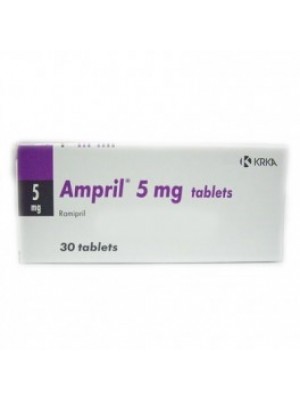
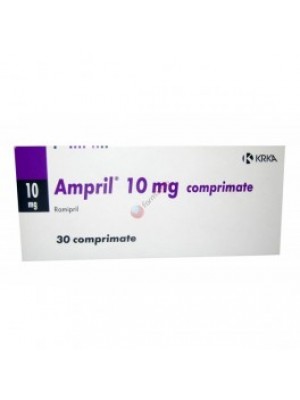
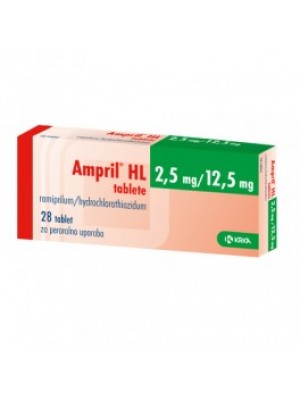
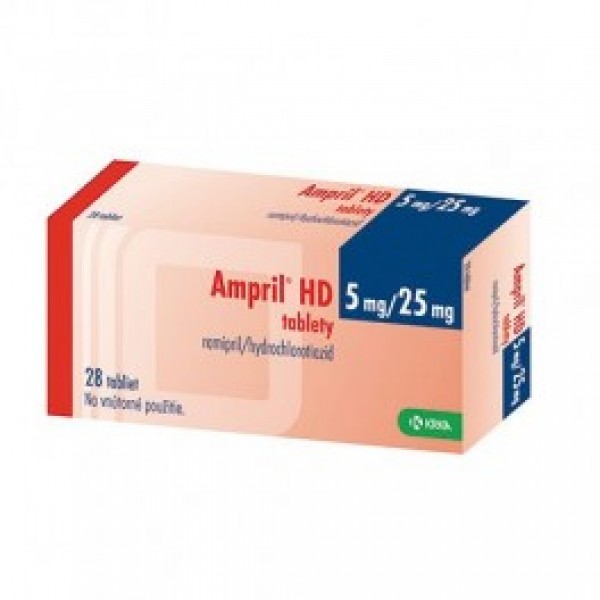
AMPRIL HD. 28 tablets
Product Code: AMPRIL HD. 28 tablets
Availability: In Stock
Product viewed: 1789


AMPRIL HD. 28 tablets
WHAT AMPRIL AND WHAT IT IS USED
Ampril is a combination of two medicines called ramipril and hydrochlorothiazide. Ramipril belongs to a group of medicines called "ACE inhibitors" (Angiotensin Converting Enzyme). It works by:
Reduces your body's production substances that may increase blood pressure;
Helps to relax and widen your blood vessels;
Helps the heart easier to pump blood around your body.
Hydrochlorothiazide belongs to a group of medicines called "thiazide diuretics" or water tablets. It works by increasing the amount of water (urine) you produce. This lowers your blood pressure.
Ampril is used to treat high blood pressure. The two active substances work together to lower your blood pressure. They are used together when treatment with one of the two substances is not sufficient.
2. BEFORE YOU TAKE AMPRIL
Do not take Ampril:
if you are allergic (hypersensitive) to ramipril, hydrochlorothiazide or any of the other ingredients of Ampril (see section 6).;
if you are allergic (hypersensitive) to medicines similar to Ampril (other ACE inhibitors or sulphonamide derived medicines);
Signs of an allergic reaction may include rash, difficulty swallowing or breathing, swelling of the lips, face, throat or tongue;
if you have ever had a serious allergic reaction called "angioedema". The signs include itching, hives (urticaria), redness of the hands, feet and throat, swelling of the throat and tongue, swelling around the eyes and lips, difficulty breathing and swallowing;
if you are on dialysis or any other type of blood filtration. Depending on the equipment, Ampril may not be suitable for you;
if you have severe liver problems;
if the amount of salts (calcium, potassium, sodium) in your blood is abnormal;
if you have kidney problems where the blood supply to your kidney is reduced (renal artery stenosis);
during the last 6 months of pregnancy (see section below on "Pregnancy and lactation");
if you are breastfeeding (see. section below on "Pregnancy and lactation").
Do not take Ampril if any of the above applies to you. If you are not sure, ask your doctor before taking Ampril.
Take special care with Ampril
Ask your doctor or pharmacist before taking your medicine:
if you have heart problems, liver or kidney;
If you have lost a lot of body salts or fluids (through vomiting, diarrhea, sweating more than usual, if you are on a diet low in salt, taking diuretics (water tablets) for a long time or having had dialysis);
If you are going to have treatment to reduce your allergy to stings from bees or wasps (desensitization);
if you will be undergoing anesthesia. It can be given for an operation or dental work. You may need to stop treatment with Ampril one day earlier; ask your doctor for advice;
If you have high amounts of potassium in your blood (shown in the results of blood tests);
If you have collagen vascular disease such as scleroderma or systemic lupus erythematosus;
you should tell your doctor if you think you are (or might become) pregnant. Ampril not recommended during the first three months of pregnancy and may cause serious harm to your baby after the third month of pregnancy (see. Section below on "Pregnancy and lactation").
Children
Ampril not recommended in children and adolescents under 18 years of age because the drug has never been used in this age group.
If any of the above applies to you (or are not sure), talk to your doctor before taking Ampril.
Taking other medicines
Please tell your doctor or pharmacist if you are taking or have recently taken any other medicines, including medicines obtained without a prescription (including herbal medicines). Ampril may affect the operation of some other medicines. And some medicines can affect the way of Ampril.
Please ask your doctor if you are taking any of these medicines. They may weaken the effect of Ampril:
Drugs used to relieve pain and inflammation (e.g., non-steroidal anti-inflammatory drugs (NSAIDs) such as ibuprofen or indomethacin and aspirin);
Medicines used for the treatment of low blood pressure, shock, heart failure, asthma or allergies such as ephedrine, noradrenaline or adrenaline. Your doctor will need to check your blood pressure.
Please tell your doctor if you are taking any of these medicines. They can increase the chance of getting side effects if you take them with Ampril:
Drugs used to relieve pain and inflammation (e.g., non-steroidal anti-inflammatory drugs (NSAIDs) such as ibuprofen or indomethacin and aspirin);
Drugs that may decrease the amount of potassium in the blood. These include medicines for constipation, diuretics (water tablets), amphotericin B (used for fungal infections) and ACTH (used to test the function of the adrenal glands);
Medicines to treat cancer (chemotherapy);
Medicines for heart problems, including heart palpitations;
Medicines used to prevent organ rejection after a transplant such as ciclosporin;
Diuretics (water pills) such as furosemide;
Drugs that can increase the amount of potassium in your blood such as spironolactone, triamterene, amiloride, potassium salts and heparin (for thinning the blood);
Steroid medicines for inflammation such as prednisolone;
Calcium supplements;
Allopurinol (used to lower the uric acid in the blood);
Procainamide (for heart rhythm disturbances);
Cholestyramine (to reduce the amount of fat in the body);
Carbamazepine (epilepsy).
Please tell your doctor if you are taking any of these medicines. They can be influenced by Ampril:
Medicines for diabetes, blood sugar, which is taken orally and insulin. Ampril can lower your blood sugar. Check your blood sugar closely while taking Ampril;
Lithium (for mental health problems). Ampril can increase the amount of lithium in your blood. The amount of lithium should be closely monitored by your doctor;
Medications to relax the muscles;
Quinine (for malaria);
Medicines that contain iodine, they can be used in a hospital where a scan or X-ray;
Penicillin (for infections);
Medication to thin the blood that you take by mouth (oral anticoagulants) such as warfarin.
If any of the above applies to you (or are not sure), talk to your doctor before taking Ampril.
Research
Consult your doctor or pharmacist before taking this medicine:
If you need to test for parathyroid function Ampril can affect the results of this study;
If you are an athlete and an anti-doping tests Ampril can give a positive result.
Taking Ampril with food and drink
Drinking alcohol with Ampril can cause dizziness and fainting. If you take Ampril discuss with your doctor how much you can drink as drugs used to lower blood pressure and alcohol can have additive effects;
Ampril can be taken with or without food.
Pregnancy and lactation
You should tell your doctor if you think you are (or might become) pregnant. Usually, your doctor will advise you to take another medicine instead Ampril as Ampril not recommended during pregnancy. This is because Ampril crosses the placenta and its use after the third month of pregnancy can cause potentially harmful effects on the fetus and neonate. You should not take Ampril if you are breastfeeding.
Consult your doctor before taking any medicine.
Driving and using machines
You are advised not to drive or operate machinery until you know how you act Ampril. You may feel dizzy when taking Ampril. More likely is that to happen when you start taking Ampril or start taking a higher dose. If this happens, do not drive or use any tools or machines.
Important information about some of the ingredients of Ampril
If your doctor has told you that you have an intolerance to some sugars, contact him before taking this medicine.
3. HOW TO TAKE AMPRIL
Always take Ampril exactly as prescribed by your doctor. If you are not sure, ask your doctor or pharmacist.
The usual dose is 1 tablet Ampril HL 2,5mg / 12,5 Mg morning. If necessary, the dose may be increased at intervals of at least 3 weeks to 1 tablet Ampril HD 5 mg / 25 mg in the morning.
The maximum dose is 5 mg of ramipril and 25 mg of hydrochlorothiazide.
Taking the medicine
Take this medicine by mouth at the same time of day each day, usually in the morning.
Swallow the tablets with a drink.
Tablets should not be crushed or chewed.
How many tablets to take
Treatment of high blood pressure
Your doctor will adjust the amount you take until you achieve control of your blood pressure.
Elderly
Your doctor will reduce the initial dose and adjust your treatment more slowly.
If you take more Ampril
Call your doctor or go to the nearest hospital casualty department immediately after the incident. Do not drive to the hospital, someone else must drive you or call for an ambulance. Take the pack of medicine with you. This is so the doctor knows what you have taken.
If you forget to take Ampril
If you miss a dose, take your normal dose when the next time for that. Do not take a double dose to make up.
4. POSSIBLE SIDE EFFECTS
Like all medicines, Ampril can cause side effects, although not everybody gets them.
Very common: more influenced than 1 in 10 users;
Common: Affected 1 to 10 users in 100;
Uncommon: Affected 1 to 10 users in 1000;
Rare: Affected 1 to 10 users in 10,000;
Very rare: Affected less than 1 in 10,000 users;
Not known: frequency can not be made from the available data.
If any of the side effects gets serious, or if you notice any side effects not listed in this leaflet, please tell your doctor or pharmacist.
Stop taking Ampril and immediately consult a doctor if you notice any of the following serious side effects - you may need urgent medical treatment:
Swelling of the face, lips or throat which make it difficult to swallow or breathe, as well as itching and rash. This may be a sign of a severe allergic reaction to Ampril;
Severe skin reactions including rash, ulcers in your mouth, worsening of pre-existing skin disease, reddening, blistering or peeling of the skin (eg. Syndrome Stevens-Johnson, toxic epidermal necrolysis and erythema multiforme).
Immediately contact a doctor if you experience:
Increased heart rate, irregular or rapid heartbeat (palpitations), chest pain, tightness in your chest or more serious problems including heart attack and stroke;
Shortness of breath, cough, fever lasting 2 to 3 days and decreased appetite. These may be signs of lung problems including inflammation;
At easy bruising, prolonged bleeding than usual, any bleeding (eg bleeding from the gums), purple spots blotching on the skin; easier susceptibility to infection, sore throat and fever, feeling tired, dizzy or having pale skin. These may be signs of problems with blood or bone marrow;
Severe stomach pain, which can spread to the back. This may be a sign of pancreatitis (inflammation of the pancreas);
Fever, chills, tiredness, loss of appetite, stomach pain, nausea, yellowing of the skin or eyes (jaundice). These may be signs of liver problems such as hepatitis (inflammation of the liver) or liver damage.
Other side effects include:
Please tell your doctor if any of these effects gets serious or lasts longer than a few days.
Common (affects less than 1 in 10 people):
Headache, feeling of weakness or fatigue;
Feeling dizzy. More likely to happen in the beginning of taking Ampril or increasing the dose;
Dry tickly cough or bronchitis;
Blood tests showing a greater amount of sugar in the blood than normal. If you have diabetes, it may worsen your condition;
Blood tests showing a larger amount of uric acid or a greater amount of fat than usual in the blood;
Painful, red and swollen joints.
Uncommon (affects less than 1 in 100 people):
Skin rash with or without swelling;
Flushing, fainting, hypotension (abnormally low blood pressure), especially when you stand up from a lying or sitting position;
Disequilibrium (vertigo);
Itching and unusual skin sensations such as numbness, tingling, pricking, burning or creeping on your skin (paraesthesia);
Loss or change in sense of taste;
Sleep problems;
Feeling depressed, anxious, more nervous or shaky than usual;
Stuffy nose, inflammation of the sinuses (sinusitis), shortness of breath;
Inflammation of the gums (gingivitis), swollen mouth;
Red, itchy, swollen or watery eyes;
Tinnitus;
Blurred vision;
Hair loss;
Chest pain;
Muscle pain;
Constipation, stomach or intestinal pain;
Indigestion or nausea;
Passing more urine than usual for the day;
More abundant than usual sweating or thirst;
Loss or decrease of appetite (anorexia), feeling less hungry;
Fast or irregular heartbeat;
Swelling of the hands and feet. This is a sign to retain more fluid in the body;
Fever;
Sexual inability in men;
Blood tests show a decrease in the number of red blood cells, white blood cells or platelets, or amount of hemoglobin;
Blood tests showing changes in the function of the liver, pancreas or kidneys;
Blood tests showing less than normal amount of potassium in the blood.
Very rare (affects less than 1 in 10,000 people):
Nausea, diarrhea, or heartburn;
Red swollen tongue or dry mouth;
Blood tests showing more than the usual amount of potassium in the blood.
Other reported side effects:
Please tell your doctor if any of the side effects gets serious or lasts more than a few days:
Poor concentration, anxiety or confusion;
Discoloration of the fingers and toes when you are cold and then tingling or painful when you warm up. This could be Raynaud's phenomenon;
Breast enlargement in men;
Blood clots;
Deaf;
Less than normal eyes watering;
Objects looking yellow;
Dehydration;
Swelling, pain and redness in your cheek (inflammation of the salivary gland);
Swelling in your gut called "intestinal angioedema" presenting with symptoms like abdominal pain, vomiting and diarrhea;
More sensitive to sunlight than usual;
Severe flaking or peeling of the skin, itchy, lumpy rash or other skin reactions such as red rash on your face or forehead;
Skin rash or bruising;
Spots on the skin and cold extremities;
Nail problems (eg loosening or separation of the nail from the nail bed);
Musculoskeletal stiffness or inability to move your jaw (tetany)
Weakness or numbness of the muscles;
Reduced sexual desire in men or women;
Blood in the urine. This may be a sign of a kidney problem (interstitial nephritis);
A large amount of sugar in the urine;
An increased number of certain white blood cells (eosinophilia), detected in blood tests;
Blood tests showing too few blood cells in the blood (pancytopenia);
Blood tests showing changes in the amount of salts such as sodium, calcium, magnesium and chloride in the blood;
Slowed or impaired reactions;
Change in sense of smell;
Difficulty breathing or worsening of asthma.
If you notice other effects not listed in this leaflet, please tell your doctor or pharmacist.
5. HOW TO STORE AMPRIL
Keep out of the reach and sight of children.
Ampril not use after the expiry date stated on the carton.
Write a review
Your Name:Your Review: Note: HTML is not translated!
Rating: Bad Good
Enter the code in the box below:
Related Products