Your shopping cart is empty!
Welcome visitor you can login or create an account.
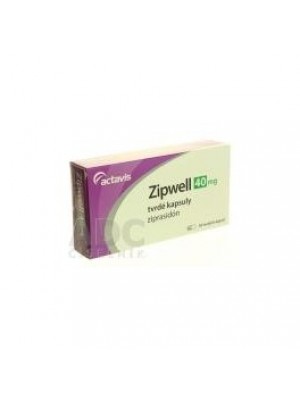
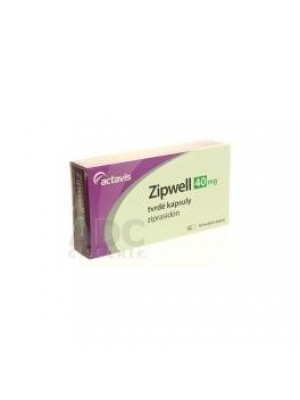
ZIPWELL 60 mg. 30 capsules
Product Code: ZIPWELL 60 mg. 30 capsules
Availability: In Stock
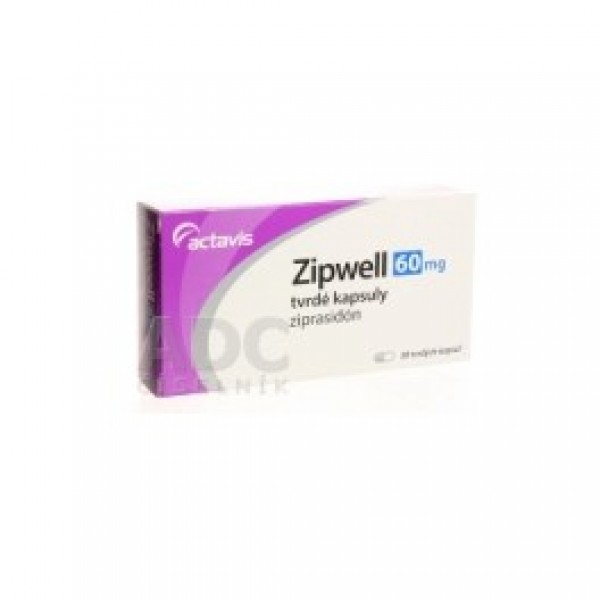
Product viewed: 1296


ZIPWELL 60 mg. 30 capsules
WHAT Zipwell AND WHAT IT IS USED
Zipwell belongs to a group of medicines called antipsychotics.
Zipwell is used to treat the symptoms of schizophrenia in adults.
In addition, Zipwell may also be used to control the manic symptoms in adults, children and adolescents aged 10-17 years with bipolar disorder.
Signs and symptoms of schizophrenia can vary, but generally include: beliefs that are not based on reality (delusions), such as the conviction that against you has conspired, seeing and hearing things (hallucinations), especially voices slurred speech, neglect of personal hygiene, lack of emotions, emotions inadequate to the situation, angry outbursts, behavior characterized by muscle stiffness or rigidity and unresponsiveness to the environment, constantly feeling that you've seen problems with performance at school or workplace, social isolation and inadequacy, uncoordinated movements.
People with bipolar disorder experience dramatic mood swings. They can go from extreme energy, exaltation and / or irritability to sadness and hopelessness, and then again to return to a previous state. They often have interim normal moods. The feeling in the upper part of the scale is called mania, and at the bottom - depression.
2. BEFORE YOU TAKE Zipwell
Do not take Zipwell
if you are allergic (hypersensitive) to ziprasidone or any of the excipients of Zipuel, see section 6. An allergic reaction can be a rash, itching, swollen face, swollen lips or shortness of breath;
if you have ever had heart problems. You should discuss this first with your doctor;
if you are taking medicines that affect the heart rhythm. Refer also to section "Taking other medicines" below.
Take special care with Zipwell
if you have ever had seizures / convulsions, liver damage or you have been told you have low levels of potassium or magnesium in the blood. Discuss with your doctor before you start taking Zipwell
if you are elderly suffering from dementia;
if there is an increased risk of a stroke;
if you have unusual movements mainly of the face or tongue. Tell your doctor if this happens after you have taken Zipwell
if you have an irregular heartbeat. Immediately contact your doctor;
if you have symptoms including high fever, rapid breathing, sweating, muscle stiffness, tremors, difficulty swallowing and reduced consciousness, stop taking Zipuel and immediately contact your doctor;
if you or someone in your family has had in the past, blood clots, as medicines like it have been associated with formation of blood clots.
Taking other medicines
Please tell your doctor or pharmacist if you are taking or have recently taken any medicines, including those obtained without a prescription.
Before taking any new medicine with Zipwell, you should talk with your doctor. In particular:
Drugs which are known to affect the cardiac rhythm, comprising:
Drugs used to slow the heart rate;
Drugs used to treat cancer (arsenic trioxide);
Drugs used to treat malaria (halofandrin, mefloquine);
Medicines used for the treatment of drug dependence (levomethadyl acetate);
Medicines used for the treatment of schizophrenia (mesoridazine, thioridazine, pimozide, sertindole);
Drugs used to treat bacterial infections (sparfloxacin, gatifloxacin, moxifloxacin);
Drugs used to treat nausea and vomiting after chemotherapy (dolasteron mesylate);
Medicines used for the treatment of reflux (cisapride);
Medications for mania and depression (lithium), anxiety (SSRIs), obsessive-compulsive disorder, panic disorder;
Medicines for epilepsy (carbamazepine, valproate);
Drugs for Parkinson's.
Ziprasidone should be used with caution when taken with other drugs that affect the central nervous system, and alcohol, as this can cause drowsiness.
Concomitant use of ziprasidone and other drugs that affect the central nervous system such as SSRIs, can lead to severe reactions, including confusion, agitation, fever, sweating, lack of coordination of movements, overreact, involuntary muscle contractions and diarrhea.
If Zipuel and some medicinal products are co-administered, treatment with Zipuel can be influenced and side effects can be intensified.
Taking Zipwell with food and drink
The capsules should be taken with food. In this way, your body will absorb better medicine.
It is recommended not to drink alcohol while taking Zipuel because there is a risk of side effects.
Pregnancy and lactation
Consult your doctor or pharmacist before taking any medicine.
pregnancy
Zipuel should not be taken during pregnancy unless your doctor has told you, because there is a risk to the fetus. Women of childbearing age should implement reliable contraceptive methods. Immediately contact your doctor if you are pregnant or planning to become pregnant while taking Zipuel.
breastfeeding
It is not recommended to breast-feed during treatment with Zipuel because it is not known whether ziprasidone is excreted in breast milk. If treatment is necessary, breast-feeding should be discontinued.
Driving and using machines
Zipuel may cause drowsiness. Do not drive, operate machinery or engage in other risk implying activity until you know whether this medication affects your ability to perform these activities.
3. HOW TO TAKE Zipwell
Always take Zipwell exactly as prescribed by your doctor. You should check with your doctor or pharmacist if you are unsure.
Adults
The usual dose is 40 to 80 mg twice daily. The maximum dose is 80 mg twice daily. Most preferably, the capsules to be taken at the same time.
If you are over 65, your doctor may decide to reduce your starting dose.
Your doctor may reduce your dose if you have to take Zipuel long time.
Children and adolescents aged 10-17 years
The usual starting dose is 20 mg taken with food, then your doctor will advise you on the optimal dose for you. Must not exceed the maximum dose of 80 mg per day in children weighing 45 kg or less, or 160 mg per day in children weighing more than 45 kg. The safety and effectiveness of Zipuel in children and adolescents with schizophrenia have not been established.
Elderly (over 65 years)
If you are elderly your doctor will decide the right dose for you. The doses in patients over the age of 65 are sometimes lower than those in younger patients. Your doctor will advise you on what is the right dose for you.
Patients with liver problems
If you have liver problems, you may need a lower dose Zipuel. Your doctor will calculate the right dose for you.
Method of administration
Swallow the capsules whole and take them with food. Zipuel should be taken twice daily (morning and evening).
If you take more Zipwell than you should
Contact your doctor immediately or go to the nearest emergency rooms. Take your package Zipwell with him.
The most common symptoms of overdose include: disorders of movement, sleepiness, tremors and anxiety.
If you forget to take Zipwell
It is important to take Zipuel regularly at the same time each day. If you forget to take a dose, take it as soon as you remember unless it is time for your next dose. In this case, skip the missed dose and just take the next dose at the usual time. Do not take a double dose to make up for a missed dose.
If you stop taking Zipwell
Your doctor will tell you how long to take Zipuel. Do not stop taking Zipuel unless your doctor recommends it.
Remember to take your capsules, even if you feel better. If you stop treatment too early, your symptoms may recur.
If you have any questions about using this medicine, ask your doctor or pharmacist.
4. POSSIBLE SIDE EFFECTS
Like all medicines, Zipwell can cause side effects, although not everybody gets them.
However, most side effects are transient. It can often be difficult to distinguish the symptoms of your illness from these side effects.
Stop taking Zipwell and contact your doctor immediately if you experience any of the following serious side effects.
Uncommon side effects (affects 1 to 10 patients in 1000):
Fast or irregular heartbeat, dizziness on standing up which may indicate a malfunction of the heart;
Involuntary / unusual movements, especially of the face or tongue.
Not known (from the available data can not be estimated):
Swelling of the face, lips, tongue and throat, difficulty swallowing or breathing, rash. These may be symptoms of a serious allergic reaction such as angioedema;
Fever, rapid breathing, sweating, stiff muscles, shaking (tremors), difficulty swallowing and reduced consciousness. These may be symptoms of a condition called neuroleptic malignant syndrome;
Confusion, agitation, fever, sweating, lack of muscle coordination, muscle twitching. These may be symptoms of a condition called serotonin syndrome;
Fast, irregular heartbeat; seizures which can be life-threatening symptoms of a condition known "torsades de pointes".
You can get any of the side effects listed below. These potential side effects are generally mild to moderate and resolved over time. However, if these side effects are severe or persistent, you should contact your doctor.
Common side effects (affects 1 to 10 patients in 100):
anxiety;
Muscle cramps, tightness and muscle weakness, abnormal movements, tremors, slow movements, dizziness, drowsiness, feeling weak or otmalyalost, headache;
Nausea, vomiting, constipation, indigestion, dry mouth, increased salivation;
Blurred vision.
Uncommon side effects (affects 1 to 10 patients in 1000):
Increased appetite;
A sense of agitation, anxiety, tightness in the throat, abnormal dreams;
Seizures, abnormal movements of the face and tongue, clumsiness, let-down leagues, impaired speech, abnormal eye movements, decreased attention, excessive daytime sleepiness, tingling, feelings of tingling, fatigue;
Fast or irregular heartbeat, abnormal sensation of heart beat;
Sensitivity to light, ringing in the ears, dizziness or a feeling of rotation;
Low blood pressure, feeling dizzy when standing up, high blood pressure;
Difficulty breathing, sore throat;
Diarrhea, difficulty swallowing, gastrointestinal discomfort, inflammation of the stomach, swollen tongue, swollen stomach;
Increase in liver enzymes;
Itchy skin rash, acne;
Muscle cramps (cramps), stiff or swollen joints;
Abnormal gait, pain;
thirst;
Chest pain.
Rare side effects (affects 1 to 10 patients in 10,000):
fever;
Decreased levels of white blood cells, increase in certain white blood cells (called eosinophils) in blood tests;
Decrease in calcium levels in the blood;
Panic attacks, feelings of depression, slow thinking, lack of emotion;
Unusual position of head (twisted neck), partial paralysis, loss of normal muscle movements, stiffness, restless legs;
Partial or complete loss of vision in one eye, visual disturbances, eye itching, dry eyes;
Ear pain;
Abnormal results from blood tests or heart tests;
Unstable blood pressure;
hiccups;
Return heartburn, loose stools;
Abnormal liver function tests;
Hair loss, facial swelling, skin redness, skin irritation, blisters of raised and inflamed red skin covered with white flakes known as psoriasis;
Inability to open the mouth;
Involuntary loss of urine (urinary incontinence), pain or difficulty urinating;
Decreased and increased erection, reduced orgasm, abnormal breast milk, breast enlargement in men and women;
Feeling hot, fever.
Not known (from the available data can not be estimated):
Serious allergic reactions;
Difficulty falling asleep; very upbeat, energetic mood; Strange thoughts and hyperactivity;
Sagging of the face;
seizures;
Blood clots in the veins - especially in the legs (symptoms include sweating, pain and redness in the leg) that can pass through the blood vessels in the lungs and cause chest pain and breathing difficulties. If you notice any of these symptoms, seek immediate medical attention;
Involuntary urination;
Permanent abnormal and painful erection.
If any of these side effects gets serious, or if you notice any side effects not listed in this leaflet, please tell your doctor or pharmacist.
5. HOW TO STORE Zipwell
Keep out of reach of children.
Do not use Zipwell after the expiry date stated on the carton and blister. The expiry date refers to the last day of that month.
Do not store above 30 ° C.
Medicines should not be disposed of in wastewater or household waste. Ask your pharmacist how to dispose of medicines no longer required. These measures will help to protect the environment.
6. FURTHER INFORMATION
What Zipwell
The active substance is ziprasidone. Each hard capsule contains ziprasidone hydrochloride (ziprasidone hydrochloride) equivalent to 20 mg, 40 mg, 60 mg or 80 mg of ziprasidone (ziprasidone).
Excipients are magnesium stearate, silica colloidal anhydrous, croscarmellose sodium, pregelatinized corn starch.
Gelatin capsules:
20 mg: Body: contains titanium dioxide (E171) and gelatin cap and: contains indigo carmine (E132), titanium dioxide (E171) and gelatin;
40 mg: Body Cap: contains indigo carmine (E132), titanium dioxide (E171) and gelatin;
60 mg: Body and cover: titanium dioxide (E171) and gelatin;
80 mg: contains titanium dioxide (E171) and gelatin cap and: contains indigo carmine (E132), titanium dioxide (E171) and gelatin.
Write a review
Your Name:Your Review: Note: HTML is not translated!
Rating: Bad Good
Enter the code in the box below:
Related Products