Your shopping cart is empty!
Welcome visitor you can login or create an account.
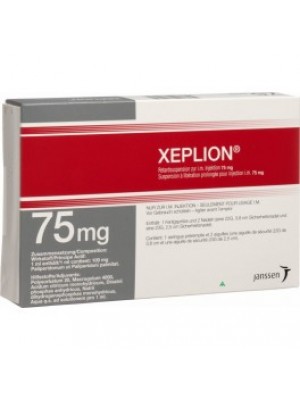
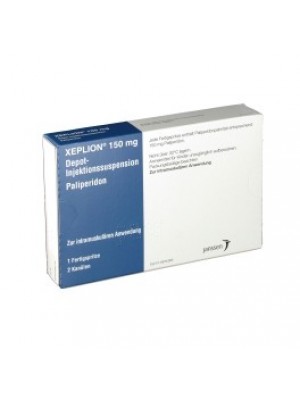
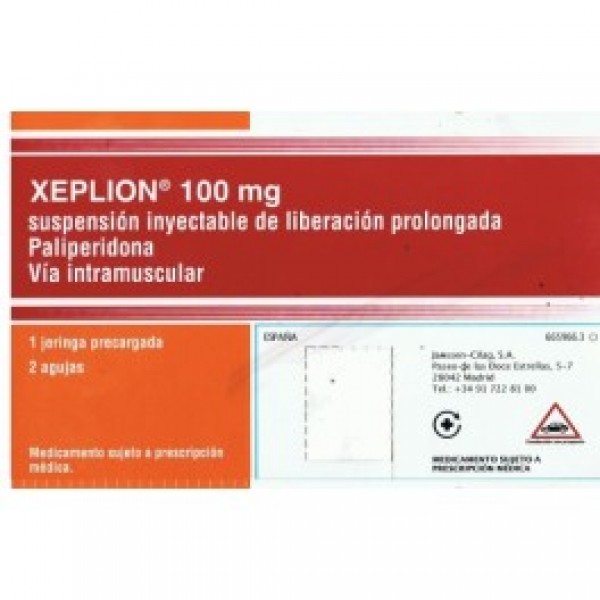
XEPLION 100 mg.
Product Code: XEPLION 100 mg.
Availability: In Stock
Product viewed: 3164


XEPLION 100 mg.
WHAT XEPLION AND WHAT IT IS USED FOR?
XEPLION is used as a supportive treatment for the symptoms of schizophrenia in adult patients stabilized with paliperidone or risperidone.
If you have previously shown a response to paliperidone or risperidone and have mild to moderate symptoms, your doctor may start treatment with XEPLION without prior stabilization with paliperidone or risperidone.
Schizophrenia is a disease with "positive" and "negative" symptoms. "Positive" means excessive symptoms that are not normally occur. For example, a person with schizophrenia may hear voices or see things that are not there (called hallucinations), believe things that are not true (delusions) or feel unusually suspicious of others. "Negative" means a lack of behaviors or feelings that are normally present. For example, a person with schizophrenia may seem secluded and not to react emotionally or have difficulty speaking in a clear and logical manner. People with this disease may feel depressed, anxious, guilt or strained.
2. BEFORE YOU USE XEPLION
Do not use XEPLION
- If you are allergic (hypersensitive) to paliperidone or any of the other ingredients of XEPLION.
- If you are allergic (hypersensitive) to another antipsychotic medicine including the substance risperidone.
Take special care with XEPLION
XEPLION has not been studied in elderly patients with dementia. However, in elderly patients with dementia treated with other similar types of medicine, may have an increased risk of stroke or death (see. Section 4, Possible side effects).
XEPLION should not be used in children and adolescents under 18 years of age.
All medicines have side effects and some of the side effects of XEPLION can worsen the symptoms of other diseases. Therefore, it is especially important to discuss with your doctor any of the below mentioned conditions which can potentially worsen during treatment with XEPLION.
- If you have Parkinson's disease.
- If you have ever been diagnosed with a condition whose symptoms include high temperature and muscle stiffness (also known as neuroleptic malignant syndrome).
- If you have ever experienced abnormal movements of the tongue or face (tardive dyskinesia).
- If you know that you have had low levels of white blood cells (which may have been or may not have been the consequence of other drugs).
- If you are diabetic or prone to diabetes.
- If you have had breast cancer or a tumor of the pituitary gland in the brain.
- If you have heart disease or the treatment of heart disease, which leads to a predisposition to low blood pressure.
- If you have epilepsy.
- If you have a loss of kidney function.
- If you have a loss of liver function.
- If you have prolonged and / or painful erection.
- If you have problems with controlling core body temperature or overheating.
- If you have unusually high levels of the hormone prolactin in the blood or if you probably have prolactin-dependent tumor.
- If you or someone in your family has a history of blood clots, as antipsychotic drugs have been associated with formation of blood clots.
If you have any of these conditions, please tell your doctor as he / she may adjust your dose or monitor you for a while.
In very rare cases, patients taking XEPLION, seen dangerously low numbers of certain white blood cells in the blood necessary for fighting infection and so your doctor can check the number of white blood cells.
XEPLION can lead to an increase in your weight. The significant increase in weight can have adverse effects on your health. Your doctor should regularly measure your body weight.
In patients receiving XEPLION, observed blows of diabetes or worsening of existing diabetes mellitus and so your doctor should examine you for signs of high blood sugar. In patients with established diabetes should regularly monitor the level of glucose in the blood.
Since XEPLION can suppress feeling sick, he is likely to mask the normal response of the body to the ingestion of toxic substances or other medical conditions.
Taking other medicines
Please tell your doctor if you are taking or have recently taken any other medicines, including medicines obtained without a prescription.
Since XEPLION works primarily in the brain, influences of other prodrugs (or alcohol) that work in the brain may lead to enhancement of side effects such as drowsiness or other effects on the brain.
Since XEPLION can lower blood pressure, should be given special attention when XEPLION is used with other drugs that lower blood pressure.
XEPLION can reduce the effect of medicines against Parkinson's disease and restless legs syndrome (eg levodopa).
Paliperidone palmitate may cause pathological changes in the electrocardiogram (ECG), occurring as long crossing pulse in a certain part of the heart (known as "QT prolongation"). Other medicines that have this effect include some medicines used to treat heart rhythm or to treat infection, and other antipsychotics. It is important to tell your doctor about all the medicines you are taking to treat such diseases.
If you are prone to develop convulsions, paliperidone palmitate may increase the chance to get them. Other medicines that have this effect include certain drugs used to treat depression or infection, and other antipsychotics. It is important to tell your doctor about all the medicines you are taking to treat such conditions.
Pregnancy and lactation
Tell your doctor if you are pregnant or think you are pregnant. You should not use XEPLION during pregnancy unless you have discussed this with your doctor. The following symptoms may occur in infants whose mothers used XEPLION in the last trimester (last three months of pregnancy): shaking, muscle stiffness and / or weakness, sleepiness, agitation, breathing problems, and difficulty in feeding. If your baby develops any of these symptoms contact your doctor.
XEPLION can pass from mother to baby through breast milk and may harm a child. Therefore, it should not breastfeed when using XEPLION.
Driving and using machines
During treatment with XEPLION can occur dizziness, fatigue and vision problems (see. Section 4). This should be considered in cases where full alertness is required, eg when driving or operating machinery.
Important information about some of the ingredients of XEPLION
This product contains less than 1 mmol sodium (23 mg) per dose of 100 mg, i.e., essentially sodium free.
3. HOW TO USE XEPLION?
XEPLION is administered by your doctor or other health care professional in a doctor's office or clinic. Your doctor will tell you when to go to the office or clinic for the injection. It is important not to miss your scheduled dose. If you can not stick to your appointment with the doctor, make sure you promptly phoned the doctor to arrange another appointment as soon as possible.
You will receive the first injection (150 mg) and second injection (100 mg) XEPLION in the upper arm approximately 1 week. You will then be placed injection (25 mg to 150 mg) once a month or in the upper arm or in the seat.
If your doctor changes your treatment with risperidone long-acting injection of XEPLION, you will get your first injection XEPLION (from 25 mg to 150 mg) or in the upper arm or in the seat on the day planned for the next injection. You will then be placed injection (25 mg to 150 mg) once a month or in the upper arm or in the seat.
Depending on symptoms, your doctor may increase or decrease the amount of medicine you receive by one dose level at the time of your scheduled monthly injection.
Kidney problems
If you have mild kidney problems, your doctor may give you a lower dose. If you have moderate or severe kidney problems should not use XEPLION.
Elderly
If you are an elderly patient and you have moderate kidney problems, your doctor may give you a lower dose.
Liver problems
If you have severe liver problems XEPLION should be used with caution. If you are given more XEPLION dose
This medicine will be given under medical supervision, so it is unlikely you are given more than necessary.
Patients who have been given too much paliperidone may experience the following symptoms:
- Drowsiness or sedation, fast heart rate, low blood pressure, abnormal electrocardiogram (electrical tracing of the heart), or slow or abnormal movements of the face, body, arms or legs.
If you stop using XEPLION
If you stop receiving your injections, the effects of the drug will be lost. You should not stop this medicine unless you are told by your doctor as your symptoms may reappear.
If you have any further questions on the use of this medicine, ask your doctor or pharmacist.
4. POSSIBLE SIDE EFFECTS
Like all medicines, this medicine can cause side effects, although not everybody gets them.
Tell your doctor if you:
• you have blood clots in the veins especially in the legs (symptoms include swelling, pain and redness in the leg), which may travel through blood vessels to the lungs causing chest pain and difficulty breathing. If you notice any of these symptoms, seek medical advice immediately.
• have dementia and experience a sudden change in your mental state or sudden weakness or numbness of the face, arms or legs, especially on one side, or slurred speech, even for a short period of time. These may be symptoms of a stroke.
• you have a fever, muscle stiffness, sweating or a lowered level of consciousness (a disorder known as neuroleptic malignant syndrome). May need immediate medical treatment.
• are a man and get a prolonged and painful erection. This is called priapism. May need immediate medical treatment.
• have involuntary rhythmic movements of the tongue, mouth and face. May be necessary to stop treatment with paliperidone.
• a severe allergic reaction characterized by fever, swelling of the mouth, face, lips and tongue, shortness of breath, itching, skin rash and sometimes drop in blood pressure (all symptoms mean 'anaphylactic reaction').
May experience the following side effects:
Very common side effects (affects more than 1 user in 10)
• difficulty falling asleep or staying asleep
• headache.
Common side effects (affects 1 to 10 users in 100):
• cold symptoms, urinary tract infection, flu-like symptoms
• XEPLION may increase levels of a hormone called "prolactin", as determined by blood tests (may have either no symptoms). When symptoms of high prolactin, they may include: men - breast swelling, difficulty achieving and maintaining erections, or other sexual dysfunction in women -diskomfort chest, breast milk from the breasts, missed menstrual periods or other problems with your cycle
• high blood sugar, weight gain, weight loss, increased blood triglycerides (fats)
• irritability, depression, anxiety
• Parkinsonism: this condition may include: delayed or impaired movement, sensation of stiffness or tightness of the muscles (which makes your movements jerky), and sometimes even a sense of "pour" and then restore movement. Other signs of parkinsonism include slow gait with towed away, resting tremor, salivation and / or drooling and loss of facial expression
• anxiety, sleepiness or decreased attention
• dystonia: this is a condition in which the observed delayed or sustained involuntary muscle contractions. Dystonia can affect any part of the body (and lead to abnormal posture), but commonly seen in the facial muscles, expressed in abnormal movements of the eyes, mouth, tongue or jaw dizziness
-diskineziya: This is a condition in which the observed involuntary muscle movements, and may include repetitive spasmodic or garchovidni twitching movements or tremor (shaking)
- Slow heartbeat, rapid heartbeat high blood pressure cough, stuffy nose
- Abdominal pain, vomiting, nausea, constipation, diarrhea, indigestion, toothache elevated liver transaminases in blood rash
- Pain in the bones or muscles, back pain fever, malaise, fatigue
- Reaction at the site of injection, including itching, pain or swelling.
Uncommon side effects (affects 1 to 10 users in 1,000):
• pneumonia, chest infections (bronchitis), respiratory tract infection, sinus infection, bladder infection, ear infection, tonsillitis, skin infection, skin infection caused by the mite, subcutaneous abscess
• low white blood cell count, anemia, low red blood cells, increased eosinophils (a type of white blood cell) in the blood
• allergic reaction
• onset or worsening of diabetes, elevated insulin (a hormone that controls blood sugar) in the blood
increased appetite, decreased appetite, loss of appetite, leading to malnutrition and low body weight
- Increased cholesterol levels in the blood
- Sleep disorders, elevated mood (mania), confusion, decreased sexual desire, nervousness, nightmares
- Tardive dyskinesia (twitching or jerking movements that you can not control, face, tongue or other parts of the body). Tell your doctor if you experience in involuntary rhythmic movements of the tongue, mouth and face. May be necessary to stop treatment with XEPLION
- Seizures (convulsions), fainting, an irresistible urge to move parts of the body, dizziness upon standing, impaired concentration, speech problems, loss or unusual sense of taste, decreased skin sensitivity to pain and touch, a sensation of tingling, pricking or numbness of the skin blurred vision, eye infection or "pink eye" dry eyes feeling of dizziness (vertigo), tinnitus, ear pain
- Atrial fibrillation (abnormal heart rhythm), interruption of impulses between the upper and lower parts of the heart, abnormal electrical impulses of the heart, QT prolongation of the heart, increased heart rate when standing, unusual recording of electrical signals from the heart (electrocardiogram or ECG ), sense of speed or pant chest (palpitations), low blood pressure, low blood pressure when standing up (so some people taking XEPLION, may feel sick, dizzy or faint when you stand or sitting)
- Shortness of breath, pulmonary congestion, wheezing, sore throat, nosebleeds abdominal discomfort, infection of the stomach or intestines, dry mouth, increased flatulence
- Elevated GGT (a liver enzyme called gamma-glutamyl transferase) in the blood, elevated liver enzymes in the blood
- Urticaria (or hives), itching, hair loss, eczema, dry skin, redness of the skin, acne
- Muscle cramps, stiffness, neck pain, joint pain, incontinence (lack of control of urination), frequent urination, pain during urination
- Erectile dysfunction, abnormal ejaculation, stop the menstrual cycle delay of menstrual cycles, missed menstrual periods or other problems with your cycle (females), development of breasts in men, breast milk from the breasts, sexual dysfunction, vaginal discharge
- Swelling of the face, mouth, eyes or lips, swelling of the body, hands or feet changes in gait
- Chest pain, chest discomfort, unwell
- Hardening of the skin
- Fall.
Rare side effects (affects 1 to 10 users in 10,000):
• fungal infection of the nails
• dangerously low numbers of certain white blood cells necessary to fight infections in the blood
• reduced number of types of white blood cells, which help protect against infection, reduced number of platelets (blood cells that help stop bleeding)
• a severe allergic reaction that is characterized by high fever, swelling of the mouth, face, lips or tongue, dyspnoea, itching, skin rash, and sometimes decrease in blood pressure
inadequate secretion of the hormone, which controls the volume of urine; dangerously excessive water intake; life-threatening complications of uncontrolled diabetes;
Write a review
Your Name:Your Review: Note: HTML is not translated!
Rating: Bad Good
Enter the code in the box below:
Related Products