Your shopping cart is empty!
Welcome visitor you can login or create an account.
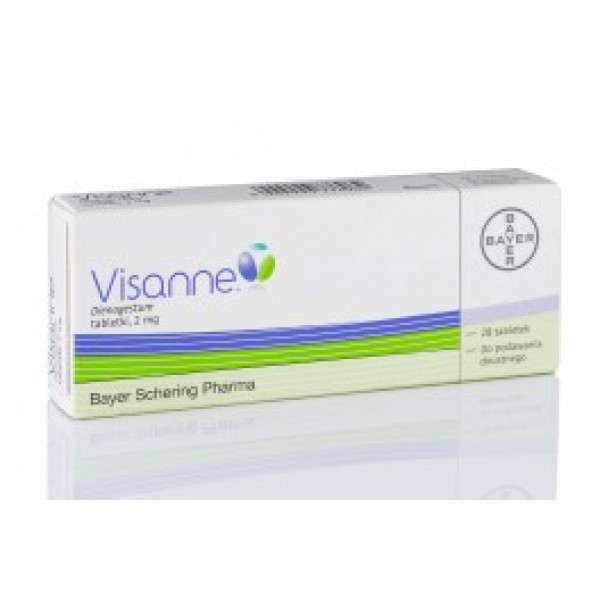
Vissanne 2 mg. 28 tablets
Product Code: Vissanne 2 mg. 28 tablets
Availability: In Stock
Product viewed: 1427


Vissanne 2 mg. 28 tablets
WHAT Vissanne AND WHAT IT IS USED
Vissanne is a medicine for the treatment of endometriosis (painful symptoms due to the transfer of an unusual place of tissue from the inner surface of the uterus). Vissanne contains a hormone - progestogen dienogest.
2. BEFORE YOU TAKE vissanne
DO NOT TAKE Vissanne if:
have an increased tendency to form clots in your veins (thromboembolic disorder). This can happen, for example in the blood vessels of the legs (deep venous thrombosis) or the lungs (pulmonary embolism). See also "Visa and venous blood clots" below;
have or have ever had a severe disease of the arteries, including cardiovascular disease such as heart attack, stroke or heart disease, which leads to reduced blood supply (angina pectoris). See also "Visa and arterial blood clots" below;
have diabetes with blood vessel damage;
you have or have ever had severe liver disease (and laboratory test values, reflecting liver function are not returned within the normal range). Symptoms of liver disease may be yellowing of the skin and / or itching;
you have or have ever had a benign or malignant liver tumors;
suffer or have suffered in the past, or are suspected of suffering from cancer whose growth is favored by sex hormones, such as cancer of the breast or genital organs;
have any unusual vaginal bleeding;
you are allergic (hypersensitive) to dienogest or any of the other ingredients of Vissanne (see section 6 and end of section 2).
If any of these conditions occur for the first time at the reception of the visa immediately stop taking it and consult a doctor.
When should take special care with Vissanne
You should not use hormonal contraceptives in any form (tablet, patch, intrauterine system) while taking a visa.
Visa is not a contraceptive. If you want to avoid pregnancy, you should use condoms or other non-hormonal contraceptive precautions.
In some situations, you need to take special care with Vissanne and your doctor may need to check you at regular intervals.
Tell your doctor if any of the following apply to you:
If you:
have ever had a blood clot (venous thromboembolism) or any of your immediate blood relatives had a clot in a blood vessel at a relatively young age;
have a close relative with breast cancer;
ever suffered from depression;
have high blood pressure or if you experience high blood pressure while taking the visa;
develop a liver disease while taking the visa. Symptoms may include yellowing of the skin or whites of the eyes or itching. Tell your doctor also if, when you have such symptoms occurred during previous pregnancies;
have or had diabetes temporarily during previous pregnancies;
have ever had chloasma (golden-brown patches on the skin, especially the face); in this case, avoid too much exposure to the sun or ultraviolet radiation;
suffer from pain in the lower abdomen while taking a visa.
During the reception of Vissanne likelihood of becoming pregnant is reduced because Vissanne can affect ovulation.
If you become pregnant while using Vissanne, you have a slightly increased risk of ectopic pregnancy (embryo develops outside the womb). Tell your doctor before you start taking a visa if you have previously had an ectopic pregnancy or have impaired function of the Fallopian tubes.
Vissanne and plenty uterine bleeding
It is possible through the use of Vissanne uterine bleeding to deteriorate, for example in women with a condition where the lining of the uterus (endometrium) grows into the muscle layer of your uterus (called adenomyosis of the uterus) or benign tumors of the uterus (sometimes called uterine fibroids (uterine leiomyomas). If bleeding is heavy and continuous over time, this can lead to a decrease in the number of red blood cells (anemia), which can sometimes be severe. in case of anemia, you should discuss with your doctor whether you need to stop taking visa.
Vissanne and changes in the characteristics of bleeding
The majority of women treated with Vissanne, have changes in the characteristics of their menstrual bleeding (see. Section 4, "Possible side effects").
Vissanne and venous clots
Some studies suggest that there may be a slightly increased but without statistical reliability, risk of clots in the blood vessels of your legs (venous thromboembolism), which is associated with the use of medicines containing progestogens, such as a visa. Very rarely, blood clots can lead to severe permanent disability or even be fatal.
The risk of developing venous blood clot increases:
with age;
if you are overweight;
if you or someone in your immediate relatives have had clots in the blood vessels of the legs (thrombosis), pulmonary embolism or embolism in other organs at an early age;
if you are surgery, if you had a serious injury or if you have to have fasted for a long time. It is important to tell your doctor in advance that used the visa, because it may require discontinuation of therapy. Your doctor will tell you when to start again accepts Visa. Usually this is two weeks after back to his feet.
Vissanne and clots in the arterial
There is little data on the relationship between medicinal products containing progestogens as a visa and an increased risk of forming a blood clot, for example in the blood vessels of the heart (heart attack) or brain (stroke). In women with hypertension the risk of stroke may be slightly higher than similar drugs.
The risk of developing a blood clot in the artery rises:
if you smoke. It is strongly advised to stop smoking when you use Vissanne, especially if you are over 35 years of age;
if you are overweight;
if one of your close relatives had a heart attack or stroke, when he was your age;
If you have high blood pressure.
Stop taking Vissanne and immediately contact your doctor if you notice signs of blood clots, such as:
acute pain and / or swelling in one leg;
sudden severe pain in the chest, which may spread to the left arm;
sudden shortness of breath;
suddenly started coughing for no apparent reason;
any unusual, severe or long-lasting headache or worsening of migraine;
partial or complete blindness or double vision;
difficulty in speaking or inability to speak;
dizziness or fainting;
weakness, strange feeling or numbness in any part of the body.
Vissanne and cancers
From these data it is not clear whether Vissanne increases the risk of breast cancer or not. Breast cancer occurs slightly more often in women taking hormone as compared with women who did not receive hormone, but is not known whether this is due to the treatment. For example, it is possible to more tumors are detected and in this earlier in women taking hormones because they are more often seen by doctors. The incidence of breast tumors becomes gradually less after stopping the hormone treatment. It is important to regularly check your breasts and you should contact your doctor if you feel lumps.
Rare cases of benign liver tumors and even more rarely - malignant liver tumors in women taking hormones. Contact your doctor if you have unusually severe stomach pain.
Vissanne and osteoporosis
If you are at increased risk for osteoporosis (weakening of the bones due to loss of minerals), your doctor will carefully consider the risks and benefits of treatment with the visa because the visa is moderate suppressive effect on the production of estrogen (female hormone type) in the body you.
Vissanne and other medicines
Please tell your doctor if you are taking or have recently taken any other medicines, including medicines obtained without a prescription or herbal products. Also tell any other doctors or dentists that you prescribe other medicines (or the pharmacist) that take visa.
The following may reduce the effect of a visa:
drugs used for treatment of:
epilepsy (eg. phenytoin, barbiturates, primidone, carbamazepine, oxcarbazepine, topiramate, felbamate);
tuberculosis (eg. rifampicin);
HIV infection: nucleoside reverse transcriptase inhibitors (e. Nevirapine);
other infections (antibiotics such as griseofulvin);
medicine based on the herb St. John's Wort.
The following may increase the levels of a visa in your blood and cause adverse effects:
drugs such as:
antifungals (e. ketoconazole, itraconazole, fluconazole);
antibiotics (eg. erythromycin, clarithromycin and roxithromycin);
antidepressants (e. nefazodone, fluvoxamine, fluoxetine);
antacids (eg. cimetidine);
drugs for blood pressure control (eg. diltiazem, verapamil);
protease inhibitors of infection with HIV (eg. ritonavir, saquinavir, indinavir, or nelfinavir);
grapefruit.
Ask your doctor or pharmacist before taking any medicine.
Taking Vissanne with food and drink
You can take visa with or without food.
laboratory tests
If you need laboratory tests of blood, tell your doctor or the laboratory staff that you are taking Vissanne because Vissanne may affect the results of some laboratory parameters.
Pregnancy and lactation
Do not take Vissanne if you are pregnant or breast-feeding.
Driving and using machines
No effects on ability to drive and use machines in women using Vissanne.
Important information about some of the ingredients of Vissanne
Vissanne contains lactose.
If you have an intolerance to some sugars, please contact your doctor before taking visa.
3. HOW TO TAKE vissanne
Always take Vissanne exactly as your doctor tells you. If you are not sure about anything, ask your doctor or pharmacist. For adults, the usual dose is one tablet daily.
The following statements refer to Vissanne, unless otherwise prescribed by your doctor. Please follow these instructions, otherwise you will not get the full effect of the visa.
You can start treatment with Vissanne of any day of your natural cycle.
Adults: take one tablet every day, preferably at the same time with some liquid as needed. Where a package is over, should be continued with the next without interruption. Keep taking the tablets in the days of menstrual bleeding.
There is no experience with the treatment of patients with Vissanne endometriosis, lasted more than 15 months.
If you take more dose Vissanne
No serious adverse effects due to excessive intake of many tablets visa once. However, if you happen something like this, tell your doctor.
If you forget to take your Vissanne or have vomiting or diarrhea
Vissanne is less effective if you miss a tablet. If you miss one or more tablets, take only one tablet as soon as you remember and then continue at the usual time.
If within 3-4 hours after administration of Vissanne vomit or have severe diarrhea, there is a risk active substance in the tablet will not be accepted by your body. The situation is almost the same as the forgotten tablet. After vomiting or diarrhea within 3-4 hours after the visa should take another tablet as soon as possible.
Do not take a double dose to make up for a forgotten tablet.
If you stop taking Vissanne
If you stop taking visa possible initial symptoms of endometriosis recur.
4. POSSIBLE SIDE EFFECTS
Like all medicines, Vissanne can cause side effects, although not everybody gets them. These effects are more common during the first few months after starting the visa and usually disappear with continued use. You may have changes in the characteristics of bleeding, spotting izvanmenstrualno as less bleeding, irregular bleeding or complete cessation of the cycle.
Common (affect between 1 and 10 in every 100 patients):
weight gain;
depressed mood, trouble sleeping, nervousness, loss of sexual desire or mood changes;
headache or migraine;
nausea, abdominal pain, flatulence, bloating or vomiting;
acne and hair loss;
back pain;
chest discomfort, ovarian cysts or hot flushing;
uterine / vaginal bleeding including spotting weak izvanmenstrualno bleeding;
weakness or irritability.
Uncommon (affecting between 1 and 10 in every 1000 patients):
anemia;
loss of weight or increase in appetite;
anxiety, depression or mood swings;
disorder of the autonomic nervous system (controls unconscious functions in the body, eg. perspiration) or attention deficit disorder;
dry eyes;
tinnitus;
nonspecific circulation problems or heart palpitations;
hypotension;
shortness of breath;
diarrhea, constipation, discomfort in the abdomen, inflammation of the stomach and intestines (gastrointestinal inflammation), inflammation of the gums (gingivitis);
dry skin, excessive sweating, severe itching of the whole body, body hair (hirsutism), split nails, dandruff, dermatitis, abnormal hair growth, hypersensitivity to light or problems with skin pigmentation;
joint pain, muscle cramps, pain and / or feeling of heaviness in the arms and hands or legs and feet;
urinary tract infections;
whites, dry the genital area, vaginal discharge, pelvic pain, atrophic inflammation of the genitals with discharge (atrophic vaginitis) or lump / lumps in the breast;
swelling due to fluid retention.
If any of the side effects gets serious, or if you notice other effects not listed in this leaflet, please tell your doctor or pharmacist.
5. HOW TO STORE vissanne
Store in the original package in order to protect from light. Keep out of reach of children.
Do not use Vissanne after the expiry date stated on the carton and blister. The expiry date refers to the last day of that month.
Medicines should not be disposed of via wastewater or household waste. Ask your pharmacist how to dispose of medicines no longer required. These measures will help to protect the environment.
6. FURTHER INFORMATION
What Vissanne
The active substance is dienogest. Each tablet contains 2 mg dienogest.
The other ingredients are lactose monohydrate, starch, microcrystalline cellulose, povidone K25, talc, crospovidone, magnesium stearate.
Looks like Vissanne and contents of the pack
Vissanne tablets are white to off-white, round with a diameter of 7 mm, flat, bevelled edge tablets embossed "B" on one side.
Sold in blister packs containing 14 tablets.
Boxes contain blister packs with 28, 84 or 168 tablets.
Not all pack sizes may be marketed.
Write a review
Your Name:Your Review: Note: HTML is not translated!
Rating: Bad Good
Enter the code in the box below:
Related Products