Your shopping cart is empty!
Welcome visitor you can login or create an account.
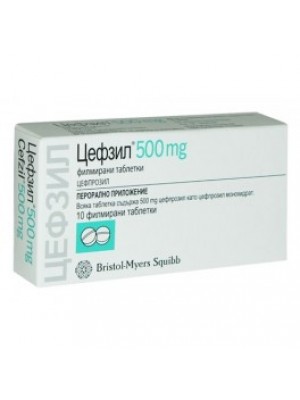
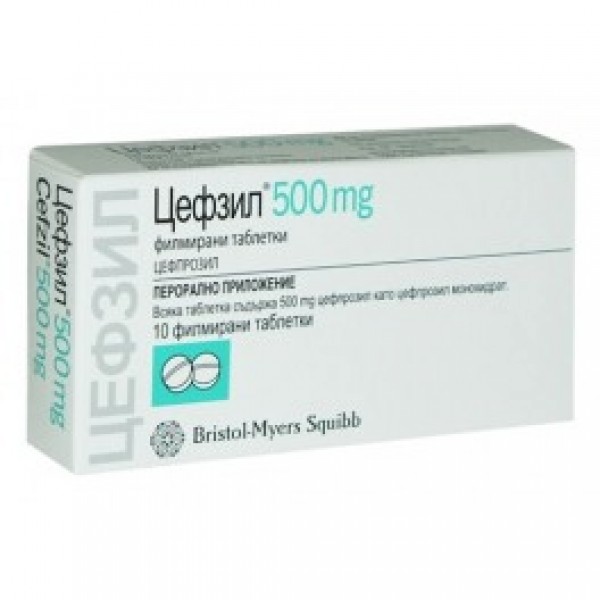
TSEFZIL table. 500 mg. 10 table
Product Code: TSEFZIL table. 500 mg. 10 table
Availability: In Stock
Product viewed: 1073


TSEFZIL table. 500 mg. 10 table

TSEFZIL WHAT IS AND WHAT IT IS USED
Tsefzil 500 mg film-coated tablets contain as active ingredient 500 mg monohydrate tsefprozil as tsefprozil.
Tsefzil is a semisynthetic, broad-spectrum cephalosporin antibiotic.
Tsefzil is used to treat patients with the following infections caused by susceptible bacteria tsefprozil:
Infections of the upper respiratory tract, including pharyngitis, tonsillitis and sinusitis.
Acute otitis media in children.
Infections of the lower respiratory tract, including bronchitis and pneumonia.
Uncomplicated skin and soft tissues.
NOTE: Abscesses usually require surgical drainage.
Uncomplicated urinary tract infections, including acute cystitis.
BEFORE YOU TAKE TSEFZIL
Do not take Tsefzil
if you are allergic (hypersensitive) to tsefprozil or any of the other ingredients of Tsefzil.
if you are allergic (hypersensitive) to the class of antibiotics cephalosporins.
Take special care with Tsefzil
if you are allergic to Tsefzil, cephalosporins, penicillins, or other drugs, tell your doctor.
if you have or have had kidney or liver disease, colitis or stomach problems, tell your doctor.
if you are pregnant or planning to become pregnant, or are breast-feeding, tell your doctor
if you have surgery, including dental, tell your doctor that you are taking tsefprozil.
If you are laboratory tests as Tsefzil can lead to a change in the results of some tests.
Taking other medicines
Please tell your doctor or pharmacist if you are taking or have recently taken any other medicines, including medicines obtained without a prescription.
If you are taking other medications (prescription or non-prescription), and especially other antibiotics, anticoagulants, vitamins, tell your doctor.
Cephalosporins, including Tsefzil should be used with caution in patients receiving concomitant diuretics and aminoglycoside antibiotics as they further affect renal function.
Taking Tsefzil with food and drink
Tsefzil can be taken with or without food. Food does not affect the extent of absorption.
Pregnancy and lactation
Tsefzil should be used during pregnancy only if the doctor considers it absolutely necessary. Caution should be exercised when Tsefzil be used during lactation. Ask your doctor or pharmacist before taking any medicine.
Driving and operating machinery
No studies on the effects of Tsefzil on ability to drive and use machines.
Important information about some of the ingredients of Tsefzil: Not applicable.
HOW TO TAKE TSEFZIL
Always Tsefzil exactly as your doctor tells you. If you're not sure, ask your doctor or pharmacist.
If your doctor advises otherwise, comply with the following dosage and method of administration:
Tsefzil is administered orally for the treatment of infections caused by susceptible bacteria tsefprozil in the following doses:
Pneumonia and bronchiti
500 mg every 12 hours
Pharyngitis and tonsillitis
500 mg per 24 hours
Sinusiti
250 to 500 mg per 12 hours
Infections of the skin and
soft tissu
250 mg every 12 hours or
500 mg per 24 hours
Uncomplicated infections
Urinary
500 mg per 24 hours
Children
For accurate dosing in children should be used Tsefzil oral suspension.
Safety and effectiveness in children under 6 months has not been established.
Usually treatment lasts Tsefzil 7-10 days, but could be even longer at the discretion of the treating physician.
If you take more than the dose Tsefzil
If you take more than the dose Tsefzil, seek medical attention.
If you have any further questions on the use of this product, ask your doctor or pharmacist.
If you missed taking Tsefzil
Usual dose as soon as possible and then continue as usual. Do not take a double dose to make up for a missed dose.
If you stop taking Tsefzil
It is important to complete the full course of treatment even if you already feel better. If the drug is stopped too soon, as infection is not completely cured and the symptoms to reappear.
POSSIBLE SIDE EFFECTS
Common (between 1 and 10 in every 100 patients) - sensitive to infection with microorganisms, fungal infection of the vagina increase of eosinophilic cells in the blood, dizziness, abdominal pain, diarrhea, nausea, vomiting, increased liver function tests.
Uncommon (between 1 and 10 in every 1000 patients) - reduced number of white blood cells, confusion, insomnia, somnolence, nervousness, headache, rash, urticaria (hives).
Rare side effects (between 1 and 10 in every 10,000 patients) - reduced number of platelets, blood clotting difficulty, angioedema (swelling of the face, eyelids, tongue, throat), colitis (including pseudomembranous), yellowing of the skin and eclairs;
severe skin reactions with blistering of the skin and mucous membranes, genital itching, fever.
If any of the side effects gets serious, or you notice other effects not listed in this leaflet, please tell your doctor or pharmacist.
HOW TO STORE TSEFZIL
Keep out of reach of children.
Store at room temperature (below 30 ° C). Keep container tightly closed. Protect from moisture.
Tsefzil Do not use after the expiry date stated on the carton. The expiry date refers to the last day of that month.
Medicines should not be disposed of via wastewater or household waste. Ask your pharmacist how to dispose of medicines no longer required. These measures will help to protect the environment.
ADDITIONAL INFORMATION
What Tsefzil
The active substance is tseflrozil.
The other ingredients are: microcrystalline cellulose, sodium starch glycolate, magnesium stearate, antifoam emulsion, white dye Opadry YS-1-7003.
Tsefzil looks like and contents of pack
Tsefzil 500 mg film-coated tablets are available in blister packs of 10 tablets.
Write a review
Your Name:Your Review: Note: HTML is not translated!
Rating: Bad Good
Enter the code in the box below:
Related Products
TSEFZIL suspensions. 250 mg. / 5 ml. 60 ml TSEFZIL WHAT IS A..
18.00€