Your shopping cart is empty!
Welcome visitor you can login or create an account.
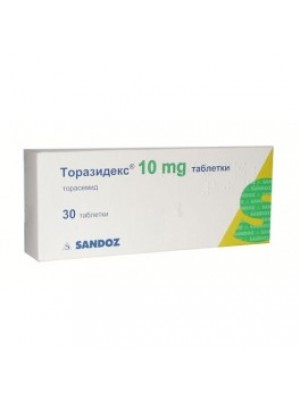
TORAZIDEX 10 mg. 30 tablets
Product Code: TORAZIDEX 10 mg. 30 tablets
Availability: In Stock

Product viewed: 1302


TORAZIDEX 10 mg. 30 tablets
INDICATIONS:
Edema in patients with heart failure
Dosage and method of use:
Adults:
The usual dose is 5 mg orally once daily. This usually is the maintenance dose. If necessary, the dose may be increased gradually to 20 mg once daily.
Elderly:
There are different dosage recommendations in elderly patients. Data from comparative studies between older and younger patients, however, are insufficient.
children:
There is no experience with torasemide in children.
Hepatic and renal insufficiency:
Information on dose adjustments in patients with hepatic or renal insufficiency is limited. They should be treated with caution, as plasma concentrations may be higher.
Route of administration:
Oral prolozhenie.
Tablets should be swallowed without chewing, with some liquid. Torasemide is generally applied as long-term treatment or until disappearance of edema.
CONTRAINDICATIONS:
Hypersensitivity to torasemide, sulfonylurea medicines or to any of the excipients;
Renal failure with anuria;
Hepatic coma and coma;
hypotension;
breastfeeding
Pregnancy and lactation:
No evidence of human experience on the effect of torasemide on the embryo and fetus.
While studies in rats showed no teratogenic effects in pregnant rabbits and rats, fetal and maternal toxicity following administration of high doses. torasemide passes into the fetus and causes electrolyte imbalance. There is also a risk of neonatal thrombocytopenia.
There is no information on the excretion of torasemide in human milk and animals. Therefore, prescribing torasemide during lactation is not recommended.
To hold additional experience torasemide should be used during pregnancy only after careful consideration of whether the benefits clearly outweigh the risks. You need to use the lowest possible dose.
UNWANTED REACTIONS:
Metabolism and nutrition
Common - a worsening of metabolic alkalosis, muscle spasm, increasing the concentration of uric acid or glucose and lipid, hypokalemia with concomitant diet with low potassium intake, emesis, diarrhea, after excessive use of laxatives, as well as in patients with hranichna liver dysfunction.
Depending on the dose and duration of treatment may occur disturbances in the water and eletrolitniya balance, in particular, for example. hypovolemia, hypokalemia and / or hyponatremia.
Cardiovascular disorders:
Very rare - confusion, hypotension and abnormal heart and peripheral circulation.
Gastrointestinal disorders
Common - gastrointestinal disorders / anorexia, beams in the stomach, nausea, vomiting, diarrhea, constipation /, especially early in treatment
Very rare - pancreatitis
Renal and urinary
Uncommon - increased concentrations of creatinine and blood urea nitrogen. In patients with disorders of micturition, the increased urine output may lead to urinary retention and hyperextension of bladder.
Hepatobiliary disorders
Common - increase blood levels of certain liver enzymes
Skin and subcutaneous tissue disorders
Very rare - allergic reactions, severe skin reactions
Blood and lymphatic system
Very rare - reducing the number of platelets, erythrocytes and / or leukocytes
General disorders
Common - headache, dizziness, fatigue, asthenia
Uncommon - dry mouth, paraesthesia
Very rare - dizopiya, tinnitus, hearing loss.
Write a review
Your Name:Your Review: Note: HTML is not translated!
Rating: Bad Good
Enter the code in the box below:
Related Products