Your shopping cart is empty!
Welcome visitor you can login or create an account.
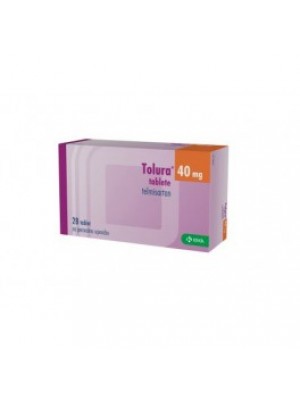
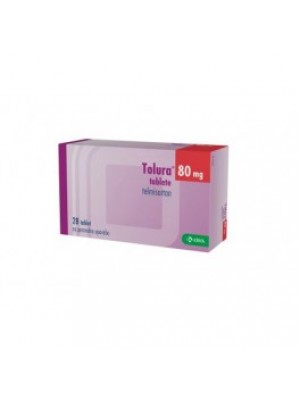
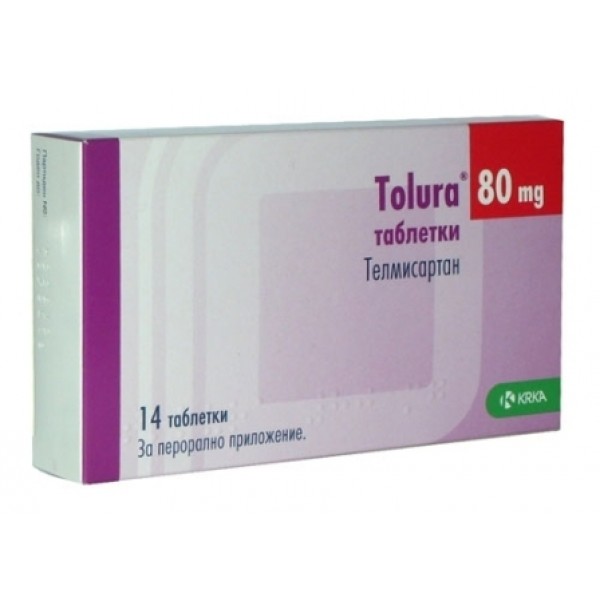
Tolura 80 mg. 14 tablets
Product viewed: 2118


What Tolura is and what it is used for
Tolura belongs to the group of medicines known as angiotensin II receptor antagonists. Angiotensin II is a substance formed in your body that causes blood vessels to contract, thus increasing your blood pressure. Tolura blocks the effect of angiotensin II so blood vessels are relaxed and blood pressure decreases.
Tolura is used to treat essential hypertension (high blood pressure) in adults. "Essential" means that high blood pressure is not caused by another disease.
If not treated, high blood pressure can damage blood vessels in a number of organs, which can sometimes lead to heart attack, heart or kidney failure, stroke or blindness. Usually, there is no symptom of high blood pressure before damage occurs. Therefore, it is important to regularly measure blood pressure to check that it is within normal range.
Tolura is also used to reduce cardiovascular events (eg heart attack or stroke) in adults at risk due to reduced or discontinued blood supply to the heart or legs, or stroke or high-risk diabetes. Your doctor may inform you if you have an increased risk of such an accident.
2. What you need to know before you take Tolura
Do not take Tolura
if you are allergic to telmisartan or any of the other ingredients of this medicine (listed in section 6).
if you are pregnant after the third month (better to avoid taking Tolura and early pregnancy - see section Pregnancy).
liver disease
heart problem
elevated aldosterone levels (retention of water and salts in the body accompanied by imbalance of various minerals in the blood)
low blood pressure (hypotension) that may occur if you are dehydrated (excessive body water loss) or if you have salt deficiency due to diuretic therapy (low-salt medication), a low salt diet, diarrhea or vomiting
increased levels of potassium in the blood
diabetes
Talk to your doctor before taking Tolura:
if you are taking digoxin
if you are taking any of the following medicines used to treat high blood pressure:
ACE inhibitor (eg enalapril, lisinopril, ramipril), especially if you have kidney problems associated with diabetes.
aliskiren.
You should tell your doctor if you think you are pregnant (or may become pregnant). Tolura is not recommended in early pregnancy and should not be taken after the third month of pregnancy, as it can cause serious harm to your baby if used during this period (see section Pregnancy).
In case of surgery or anesthesia, you should tell your doctor that you are taking Tolura.
Tolura may be less effective in lowering blood pressure in black patients.
Your doctor may periodically check your kidney function, blood pressure and the amount of electrolytes (eg potassium) in your blood.
See also the information titled "Do not take Tolura".
Children and adolescents
The use of Tolura in children and adolescents up to 18 years of age is not recommended.
Other medicines and Tolura
Tell your doctor or pharmacist if you are taking, have recently taken or might take any other medicines. Your doctor may need to change the dose of these medicines or take other precautions. In some cases, you may need to stop using one of the medicines. This is especially true for the medicines listed below when used with Tolura:
medicines containing lithium used to treat some types of depression.
medicines to raise blood potassium levels such as potassium-containing salt substitutes, potassium-sparing diuretics (ACE inhibitors), ACE inhibitors, angiotensin II receptor antagonists, NSAIDs (nonsteroidal anti-inflammatory drugs such as aspirin or ibuprofen) heparin, immunosuppressants (eg ciclosporin or tacrolimus) and the antibiotic trimethoprim.
diuretics (detoxifying medicines), especially if taken in high doses together with Tolura, can cause excessive water loss and low blood pressure (hypotension).
if you are taking an ACE inhibitor or aliskiren (see also the information titled "Do not take Tolura" and "Warnings and precautions").
digoxin.
The effect of Tolura may be reduced when given with NSAIDs (non-steroidal anti-inflammatory drugs such as aspirin or ibuprofen) or corticosteroids.
Tolura may increase the blood pressure lowering effect of other medicines that are used to treat high blood pressure or medicines that have the potential to lower blood pressure (baclofen, amyphosine).
In addition, the blood pressure lowering effect may be enhanced by the use of alcohol, barbiturates, narcotics or antidepressants. You can feel
Possible side effects
Like all medicines, this medicine can cause side effects, although not everyone gets them.
Some side effects may be serious and require immediate treatment.
You should visit your doctor immediately if you experience any of the following symptoms:
Sepsis * (often referred to as "blood poisoning" - a severe infection with an inflammatory process throughout the body), rapid swelling of the skin and mucous membrane (angioedema); these side effects are rare (may affect up to 1 in 1,000 people) but very serious. Patients should stop taking the medicine and consult a doctor immediately. If not treated, these reactions may be fatal.
Possible side effects of Tolura
Common side effects (may affect up to 1 in 10 people):
Low blood pressure (hypotension) in patients treated to reduce cardiovascular events.
Uncommon side effects (may affect up to 1 in 100 people):
Urinary tract infection, upper respiratory tract infection (eg sore throat, sore sinus, cold), decreased red blood cell count (anemia), increased blood potassium levels, difficulty falling asleep, feeling sad (depression), seizure syncope), feeling dizzy (vertigo), slow heartbeat (bradycardia), low blood pressure (hypotension) in patients treated for high blood pressure, dizziness, orthostatic hypotension, dyspnea, cough, abdominal pain, diarrhea , stomach discomfort, gas, rash, itching, increased sweating, drug rash, back pain, muscle spasms, muscle pain (myalgia), renal impairment including acute renal failure, chest pain, feeling weak and increased blood creatinine.
Rare side effects (may affect up to 1 in 1,000 people):
Sepsis * (often referred to as "blood poisoning" is a severe infection with an inflammatory process throughout the body that can lead to death), increased white blood cell count (eosinophilia), decreased platelet count (thrombocytopenia), severe allergic reaction (anaphylactic reaction), allergic reactions (eg rash, pruritus, difficulty breathing, wheezing, face swelling and low blood pressure), decreased blood sugar (in diabetic patients), anxiety, drowsiness, visual disturbances, (tachycardia), dryness in the mouth, upset stomach, taste disturbance (dysgeusia), hepatic dysfunction (more likely to occur in patients of Japanese origin), swelling of the skin and mucous membrane (angioedema), eczema (skin disorder) , redness of the skin, hives (urticaria), severe rash, joint pain (arthralgia), limb pain, tendon pain, flu-like illness, decreased hemoglobin (blood protein), increased uric acid, elevated liver enzymes creatine phosphokinase c blood.
Very rare side effects (may affect up to 1 in 10,000 people)
Progressive adhesion of pulmonary tissue (interstitial lung disease) **.
* The event may happen accidentally or it could be related to a mechanism that is currently unknown.
** Cases of progressive pulmonary adhesion have been reported during telmisartan administration. However, it is not known whether the cause is telmisartan.
How to store Tolura
Keep out of the reach and sight of children.
Do not use this medicine after the expiry date which is stated on the carton and blister after EXP. The expiry date refers to the last day of that month.
Do not store above 30 ° C.
Store in the original package in order to protect from light.
Do not dispose of medicines in the sewage system or in the household waste container.
Ask your pharmacist how to dispose of medicines you no longer use. These measures will help to protect the environment.
6. Package Contents and Additional Information
What Tolura contains
The active substance is telmisartan. Each tablet contains 80 mg telmisartan.
The other ingredients are povidone, meglumine, sodium hydroxide, lactose monohydrate, sorbitol (E420) and magnesium stearate.
What Tolura looks like and contents of the pack
Tolura 80 mg are white to off-white, biconvex capsule-shaped tablets.
Tolura is available in blister packs containing 14, 28, 30, 56, 84, 90, 98 or 100 tablets.
Not all pack sizes may be marketed.
Write a review
Your Name:Your Review: Note: HTML is not translated!
Rating: Bad Good
Enter the code in the box below:
Related Products