Your shopping cart is empty!
Welcome visitor you can login or create an account.
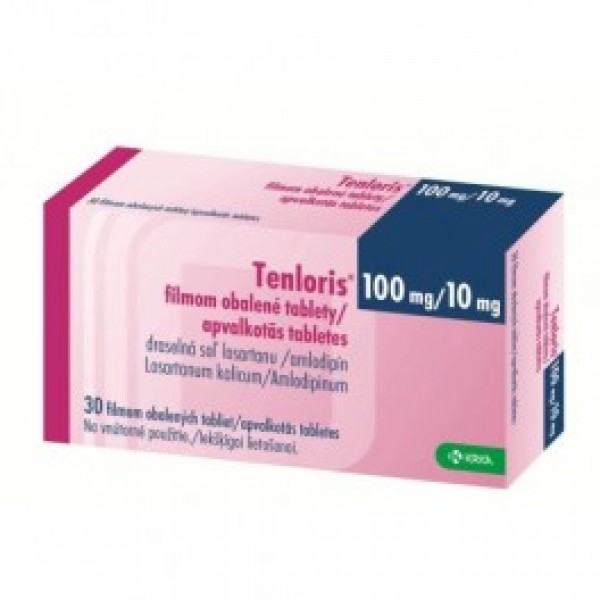
TENLORIS 100 mg. 30 tablets
Product Code: TENLORIS 100 mg. 30 tablets
Availability: In Stock
Product viewed: 1460


TENLORIS 100 mg. 30 tablets
What is Tenloris and what it is used
Tenloris contains two active substances called losartan and amlodipine. Both substances help to control high blood pressure.
Losartan belongs to a group of medicines called "angiotensin-II receptor antagonists", which lowers blood pressure by relaxing blood vessels;
Amlodipine belongs to a group of substances called "calcium channel blockers". Amlodipine stops the passage of calcium in the blood vessel wall, thereby preventing the contraction of blood vessels. Also lowers blood pressure.
The actions of these substances contribute to stopping the contraction of blood vessels. As a result, blood vessels relax and blood pressure is lowered.
Tenloris is used to treat high blood pressure (hypertension) in patients who are already receiving losartan and amlodipine in the same doses, rather than accept these two drugs separately.
2. What you need to know before taking Tenloris
Do not take Tenloris:
If you are allergic to losartan, amlodipine or any of the other ingredients of this medicine (listed in Section 6) or another calcium antagonist. This may occur as itching, redness of the skin and difficulty breathing;
If you have very low blood pressure (hypotension);
If you have a narrowing of the aortic heart valve (aortic stenosis) or cardiogenic shock (a condition in which the heart is unable to supply enough blood to the body);
If you suffer from heart failure after a heart attack;
If you are pregnant after 3 months. (Also it is better to avoid Tenloris in early pregnancy - see Pregnancy);
If your liver function is severely impaired.
Warnings and Precautions
Talk to your doctor or pharmacist before taking Tenloris.
You should tell your doctor if you think you are (or might become) pregnant. Tenloris not recommended in early pregnancy and must not be taken if you are pregnant after 3 months, as it may cause serious harm to your baby if used at that stage (see "Pregnancy").
It is important to tell your doctor before taking Tenloris:
If you have had a history of angioedema (swelling of face, lips, throat and / or tongue) (see also section 4);
If you suffer from excessive vomiting or diarrhea leading to an extreme loss of fluid and / or salt in your body;
If you are taking diuretics (medicines that increase the amount of water secreted by the kidneys) or are under dietary restriction of salt, leading to an extreme loss of fluid and salt in your body;
If you are known to have narrowing or blockage of blood vessels leading to your kidneys or if you have recently had a kidney transplant;
If your liver function is impaired (see sections 2 "Do not take Tenloris");
If you suffer from heart failure, with or without renal impairment or concomitant severe life threatening cardiac arrhythmias. Special attention is necessary when treated with beta - blocker;
If you have problems with your heart valves or heart muscle;
If you suffer from coronary heart disease (caused by reduced blood flow in the blood vessels of the heart) or from cerebrovascular disease (caused by a reduced blood circulation in the brain);
If you suffer from primary hyperaldosteronism (a syndrome associated with increased secretion of the hormone aldosterone by the adrenal gland, caused by an abnormality within the gland);
If you have recently had a heart attack;
If you have or have had a strong increase in blood pressure (hypertensive crisis);
If you are elderly and the dose should be increased.
Children and adolescents
Using Tenloris in children and adolescents under 18 years of age is not recommended.
Other medicines and Tenloris
Tell your doctor or pharmacist if you are taking, have recently taken or might take any other medicines.
Take special care if you are taking the following medicines while being treated with Tenloris:
Other medicines to lower blood pressure, as they may additionally reduce your blood pressure. Blood pressure can be reduced with the following drugs / class of drugs: tricyclic antidepressants, antipsychotics, baclofen, amifostine;
Medicines which retain potassium or may increase potassium levels (eg. Potassium supplements, potassium-containing salt substitutes or potassium-sparing medicines such as certain diuretics [amiloride, triamterene, spironolactone] or heparin);
Nonsteroidal anti-inflammatory drugs such as indometacin, including COX-2 inhibitors (drugs that reduce inflammation, and can be used to relieve pain), as they may reduce the effect of lowering the blood pressure of losartan.
If your kidney function is impaired, the concomitant administration of these drugs can lead to worsening of renal function.
Tenloris can affect or be affected by other medicines, such as:
Ketoconazole, itraconazole (antifungal medicines);
Ritonavir, indinavir, nelfinavir (so called protease inhibitors used for the treatment of HIV);
Rifampicin, erythromycin, clarithromycin (antibiotics);
St. John's wort (hypericum perforatum);
Verapamil, diltiazem (heart medicine);
Dantrolene (infusion in highly elevated body temperature);
Simvastatin (cholesterol lowering drug).
Lithium containing medicines should not be taken in combination with Tenloris without close supervision by your doctor. It may be appropriate to use special precautions (eg. Blood tests).
Tenloris with food and drink
Grapefruit juice and grapefruit should not be consumed by people taking Tenloris. This is because Grapefruit and grapefruit juice may lead to increased levels of the active ingredient amlodipine, which can lead to unpredictable effect of increasing the blood pressure lowering of Tenloris.
Pregnancy and lactation
If you are pregnant or breast-feeding, think you may be pregnant or planning to become pregnant, ask your doctor or pharmacist for advice before taking this medicine.
pregnancy
You should tell your doctor if you think you are (or might become) pregnant.
Your doctor will normally advise you to stop taking Tenloris before you become pregnant or as soon as you know you are pregnant and will advise you to take another medicine instead Tenloris. Tenloris not recommended in early pregnancy and must not be taken if you are pregnant after 3 months, as it may cause serious harm to your baby if used after the third month of pregnancy.
breastfeeding
Tell your doctor if you are breastfeeding or plan to breastfeed. Tenloris not recommended for mothers who are breastfeeding, and your doctor may choose another treatment for you if you want to breastfeed. Especially if your baby is newborn, or was born prematurely.
Driving and using machines
Tenloris can affect your ability to drive or operate machinery. If the tablets make you feel sick, dizzy or tired, or your cause headache, do not drive or use machinery and immediately contact your doctor.
Tenloris contains lactose
If you have been told by your doctor that you have an intolerance to some sugars, contact your doctor before taking this medicine.
3. How to take Tenloris
Always take this medicine exactly as you have been told your doctor or pharmacist. Consult your doctor or pharmacist if you are not sure.
Tenloris recommended dose is one tablet daily.
The tablets should be swallowed with a glass of water, with or without food. You should try to take your daily dose at the same time each day. Tenloris not take with grapefruit juice.
It is important to continue taking Tenloris, unless your doctor tells you otherwise.
Use in children and adolescents
Not recommended to use Tenloris in children and adolescents.
If you take more dose Tenloris
If you accidentally take too many tablets, contact your doctor. Taking too many tablets can cause low blood pressure or even lower to dangerously low levels. You may experience dizziness, dizziness, pallor or weakness. If you fall in blood pressure is strong, may fall into severe shock. Your skin may become cool and clammy and faint.
If you forget to take Tenloris
If you accidentally miss a daily dose, just take your next dose as usual.
Do not take a double dose to make up the missed dose.
If you stop taking Tenloris
Your doctor will advise you on how long to take your medicine. Your condition may worsen if you stop using your medicine before he tells you.
If you have any further questions on the use of this medicine, ask your doctor or pharmacist.
4. Possible side effects
Like all medicines, this medicine can cause side effects, although not everybody gets them.
Immediately visit your doctor if you experience any of the following serious side effects after taking this medicine.
Sudden wheezing, chest pain, shortness of breath or difficulty breathing;
Swelling of eyelids, face or lips;
Swelling of the tongue and throat which causes great difficulty in breathing;
Severe skin reactions including intense skin rash, hives, redness of the skin all over the body, skin itching, blistering, peeling and swelling of the skin, mucosal inflammation (syndrome of Stevens-Johnson) or other allergic reactions;
Heart attack, irregular heart beat;
Inflammation of the pancreas, which can lead to severe abdominal pain and back pain, accompanied by the feeling that you are very bad.
amlodipine
The following common side effects were reported. If any of these effects cause you any problems or if they last for more than one week, you should contact your doctor.
Common (may affect up to 1 in 10 people):
Headache, dizziness, sleepiness (especially at the beginning of treatment);
Palpitations (awareness of heart beat), flushing;
Abdominal pain, feeling sick (nausea);
Swelling of the ankles (edema), fatigue.
Other side effects that have been reported are listed below. If one of them gets serious, or if you notice any side effects not listed in this leaflet, please tell your doctor or pharmacist.
Uncommon (may affect up to 1 in 100 people):
Mood changes, anxiety, depression, insomnia;
Trembling, taste abnormalities, seizures, weakness;
Numbness or tingling in the limbs; loss of sensation of pain;
Visual disturbances, double vision, ringing in the ears;
Low blood pressure;
Sneezing / runny nose caused by inflammation of the lining of the nose (rhinitis);
Altered bowel habits, diarrhea, constipation, indigestion, dry mouth, vomiting (being sick);
Hair loss, increased sweating, itchy skin, red spots on the skin, skin discoloration;
Disorder in urination, frequent micturition at night, a larger number of times of urination;
Inability to get an erection, discomfort or enlargement of breasts in men;
Weakness, pain, malaise;
Joint or muscle pain, muscle cramps, back pain;
Increase or decrease in weight.
Rare (may affect up to 1 in 1000 people):
Confusion.
Very rare (may affect up to 1 in 10,000 people):
Reduced number of white blood cells, decrease in platelets in the blood, which can lead to abnormal bruising or bleeding easily (damage to red blood cells);
Raise blood sugar (hyperglycaemia);
Disease of nerves that can cause weakness, tingling or numbness;
cough;
Swelling of the gums;
Bloating (gastritis);
Impaired liver function, inflammation of the liver (hepatitis), yellowing of the skin (jaundice), elevation of liver enzymes, which may affect some medical tests;
Increased muscle tension;
Inflammation of blood vessels, often with a rash on the skin;
Sensitivity to light;
Disorders, including rigidity, tremor, and / or movement disorders.
losartan
Common (may affect up to 1 in 10 people):
dizziness;
Decrease in blood pressure (especially after excessive water separation from the body, and in particular a reduction in the blood, for example in patients with severe heart failure or in the treatment with high doses of diuretics);
Dose-related orthostatic effects such as lowering of blood pressure when rising from a lying or sitting position;
weakness;
fatigue;
Too little blood sugar (hypoglycemia);
Too much potassium in the blood (hyperkalemia);
Changes in renal function, including renal failure;
Reduced number of red blood cells (anemia);
Increases in blood urea, serum creatinine and serum potassium in patients with heart failure.
Uncommon (may affect up to 1 in 100 people):
drowsiness;
headache;
Sleep disorders;
Sensation of rapid heart beat (palpitations);
Severe chest pain (angina);
Shortness of breath (dyspnea);
Abdominal pain;
constipation;
diarrhea;
nausea;
vomiting;
Hives (urticaria);
Itching (pruritus);
rash;
Localized swelling (edema);
Cough.
Rare (may affect up to 1 in 1000 people):
hypersensitivity;
angioedema;
Inflammation of blood vessels (vasculitis, including purpura Henoch-Schonlein);
Numbness or tingling (paraesthesia);
Loss of consciousness (syncope);
Very fast and irregular heartbeat (atrial fibrillation);
Stroke (stroke);
Inflammation of the liver (hepatitis);
Alanine aminotransferase (ALT) levels, usually resolved upon discontinuation of treatment.
Not known (can not be estimated from available data):
Decreased platelet counts;
migraine;
Abnormal liver function;
Muscle and joint pain;
Flu-like symptoms;
Back pain and urinary tract infection;
Increased sensitivity to the sun (photosensitivity);
Unexplained muscle pain with dark (tea-colored) urine (rhabdomyolysis);
impotence;
Inflammation of the pancreas (pancreatitis);
Low sodium levels in the blood (hyponatraemia);
depression;
Malaise (discomfort);
Ringing, buzzing, roaring or clicking in the ears (tinnitus);
Abnormal taste (dysgeusia).
Write a review
Your Name:Your Review: Note: HTML is not translated!
Rating: Bad Good
Enter the code in the box below:
Related Products