Your shopping cart is empty!
Welcome visitor you can login or create an account.
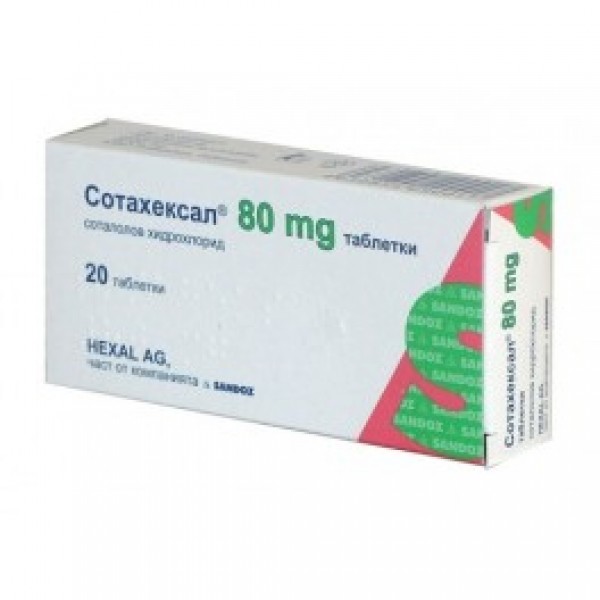
SOTAHEXAL 80 mg. 20 tablets
Product Code: SOTAHEXAL 80 mg. 20 tablets
Availability: In Stock
Product viewed: 1986


SOTAHEXAL 80 mg. 20 tablets
What is the active substance?
1 tablet contains 80 mg sotalol hydrochlo
What else Sotahexal contains 80?
Hydroxypropyl cellulose, lactose monohydrate, magnesium stearate, corn starch, sodium carboxymethyl starch (type A), highly dispersed silicon dioxide.
Information for diabetics:
1 tablet contains less than 0.01 carbohydrate units.
Pharmaceutical form and content:
Tablets
Original packs of 20, 50 and 100 tablets.
What is Sotahexal 80?
Sotaheksal 80 is a medicine for the treatment of cardiac arrhythmias (Class III antiarrhythmic agent with pronounced blockade of beta-adrenergic receptors).
What is Sotahexal 80?
For the symptomatic treatment of severe ventricular tachyarrhythmias. Symptomatic treatment of supraventricular tachyarrhythmias was held for:
• prevention of chronic atrial fibrillation (chronic complicated irregular heartbeat) after DC cardioversion (changed position of the heart)
• prevention of paroxysmal atrial fibrillation (irregular heartbeat pristapopodobna due to disease increased excitation of the atrium)
When you should not take Sotahexal 80?
Sotaheksal 80 shall not apply to:
- Known hypersensitivity to sotalol, sulfonamides, or any of the other ingredients of the product.
- Pronounced weakness of the heart muscle
- Acute myocardial infarction
- Cardiogenic shock
- Violations conduction between the atria and chambers of the heart (atrioventricular block II-nd and III-rd degree)
- Heart block conduction disorders of the sinus node to the atrium of the heart
- Arrhythmias due to abnormal function of the sinus node, which can manifest as reduced heart rate by pulse rate below 60 beats per minute, slow or fast heartbeat, heart block conduction disorders of the sinus node to the atrium of the heart or insufficient stimulating effect on sinus node
- Before beginning therapy pulse rate at rest - less than 50 beats / min
- Pre-existing prolongation of QT (electrocardiogram)
- Decreased concentration of potassium in the blood
- Abnormally low blood pressure
- Late stages of poor circulation to the periphery
- Severe respiratory disease caused by changes in the airways
- Metabolic hyperacidity of the blood
- Metabolic hyperacidity of the blood
In patients with psoriasis or psoriasis in the family history, medications properties of beta-receptor blockers (eg. Sotaheksal 80) should be applied only after careful evaluation of the risk / benefit ratio. Due to its properties of the beta-receptor blocker, Sotaheksal 80 may increase the susceptibility of patients with asthma to allergens and severity of acute allergic reactions common. In patients with a history of severe hypersensitivity reactions in patients treated for weight loss or treatment against allergies, the need for treatment with Sotaheksal 80 must be assessed with caution, as there is an increased risk of severe hypersensitivity reactions. Therefore, these patients require especially strict compliance with the indications for treatment.
In patients treated with 80 Sotaheksal intravenous calcium antagonists like verapamil and diltiazem is contraindicated (except in patients with an intense treatment).
In the case of combination therapy with anti-arrhythmic class I products it is necessary to avoid such substances which may extend the QRS complex. In a significant QT prolongation may be threatened by the easy occurrence of ventricular arrhythmias. Co-administration of other Class III antiarrhythmic agents should be avoided due to the possibility of pronounced extension of QT.
In which case you can use Sotahexal 80 only after consulting a doctor?
Patients in state after myocardial infarction or impaired. ventricular function are at high risk of enhanced arrhythmias (pro-arrhythmic) and in determining the dose of 80 Sotaheksal require especially careful monitoring of the condition. In patients with impaired renal function receiving multiple doses the risk of accumulation. The dosage should then be determined according to renal clearance, heart rate (not less than 50 beats / min) and clinical effectiveness.
In cases of severe renal impairment is recommended to administer 80 Sotaheksal only be performed at frequent monitoring of electrocardiograms and determination of serum concentrations.
In patients with coronary heart disease or after prolonged use, therapy should be discontinued gradually, as abrupt discontinuation can lead to worsening of the clinical picture. Use in patients with hormone-producing tumor meduloadrenalen requires simultaneous blockade of alpha receptors.
During treatment with Sotaheksal 80 may occur a decrease in the blood sugar level. Upon treatment with the product symptoms of low blood sugar (especially tachycardia) may be masked. This should be considered especially in cases of strict diet and in diabetic patients with very unstable blood sugar. With concomitant administration of potassium-sparing diuretics (eg. Hydrochlorothiazide, Furosemide) potassium levels should be monitored carefully.
What other products influence the effect of Sotahexal 80 or can be influenced by preparation?
Concomitant oral administration of 80 Sotaheksal and calcium antagonists like verapamil and diltiazem can lead to a sharp drop in blood pressure; slow irregular heartbeat and violations of atrio-ventricular conduction from a higher level because of depressed effect on sinus and atrio-ventricular node.
In patients treated with the product is contraindicated intravenous administration of calcium channel blockers such as verapamil and diltiazem (excluding patients of intensive therapy).
Concomitant use of calcium channel blockers such as nifedipine can lead to severe low blood pressure, possibly resulting in suppression of the sinus node.
Combination therapy with Class I antiarrhythmic agents or other antiarrhythmics class III, can lead to a strong extension of the QT, associated with an increased risk of ventricular arrhythmias.
Co-administration of sotalol and prolonging QT-time such as tricyclic and tetracyclic antidepressants (imipramine, maprotiline), antihistamines (astemizole, terfenadine), antibiotics (erythromycin), probucol, haloperidol, halofantrine and terolidin increases the risk of arrhythmia.
Coadministration of Sotaheksal 80 and tricyclic antidepressants should be avoided due to possible lower threshold for occurrence of ventricular arrhythmias (described individual cases).
Concomitant administration of tricyclic antidepressants, barbiturates, phenothiazines and drugs as well as products used for high blood pressure, drainage and vasodilator drugs can cause a rapid drop in blood pressure. Coadministration of Sotaheksal 80 and norepinephrine or MAO inhibitors, and after abrupt discontinuation of clonidine concomitantly administered, can quickly raise blood pressure.
Contractile-reducing effect of Sotaheksal 80 and antiarrhythmic drugs or products may be aggregated.
The effect of lowering heart rate and conduction Sotaheksal 80 may be increased with concomitant administration of reserpine, clonidine and methyldopa, guanfacine and cardiac glycosides.
Neuromuscular blockade of Tubocurarine can be enhanced by beta-blockade.
Coadministration of Sotaheksal 80 Insulin or oral antidiabetic products - especially during periods of physical stress - can lead to the lowering of blood sugar, the symptoms of which may not be clearly exhibited.
When co-administered potassium-emitting diuretics (eg. Furosemide, hydrochlorothiazide) there is heightened risk of arrhythmias induced hypokalaemia. Keep in mind that these data apply to recently adopted drugs.
What foods and herbs should avoid?
During treatment with Sotaheksal 80 should be avoided alcohol intake because of a possible lower threshold for occurrence of ventricular arrhythmias (described individual cases) (see also 'When and how you can take Sotaheksal 80? ").
What must comply children and elderly patients when administering Sotahexal 80?
There are insufficient data regarding the use of Sotaheksal 80 in children.
When treating elderly patients they may be with impaired renal function (see "Dosage").
What special precautions should be taken during pregnancy and lactation?
During pregnancy, especially during the first three months Sotaheksal 80 can be used only if there is an explicit indication of its application and only after strict assessment of the risk / benefit ratio. Because of the potential for adverse drug reactions (slow heart rate, low blood pressure) in the newborn, therapy should be interrupted "48-72 hours before the date of childbirth. If this is not possible, the infant should be carefully monitored for a period of after childbirth.
Sotalol hydrochloride passes into breast milk. Breastfeeding during therapy, the infant should be monitored for possible effects of the drug.
What to be aware when driving or operating machinery, or in a precarious situation (eg. Climbing stairs)?
Whether treatment is conducted as prescribed, it can change the ability to react quickly in certain situations. It is possible to impair the ability to drive a motor vehicle, operate heavy machinery or work in fragile situations (eg. Climbing stairs). This applies to a greater extent to the beginning of treatment, increasing the dose or upon a change of the medicaments, as well as co-administration of alcohol.
What else should you consider when using Sotahexal 80?
If you wear contact lenses, you should consider the possibility of reducing tear during treatment with the product.
Dosage, route and duration of administration:
Unless otherwise prescribed by Sotaheksal 80 from your doctor, it is recommended that dosage. Please adhere to the instructions for use, as otherwise the product will not work properly! In ventricular arrhythmias determine the dosage of antiarrhythmic products requires careful tracking of Cardiology and can be conducted only in the presence of an appropriate cardiology equipment. During treatment should be conducted examinations at regular intervals (eg. At intervals of one month with standard ECG or three months with continuous ECG and possibly ECG exercise). It is desirable that at least a three-day track at the beginning of therapy (ECG) because of the possibility the product to cause arrhythmias.
Therapy should be re-evaluated, if the patient worsened parameters, eg. prolongation of the QRS or QT-time is more than 25% or QT-prolongation of more than 50% or QT-prolongation more than 500 ms or increase the number or viability of arrhythmias.
How much and how often you can take Sotahexal 80?
Severe symptomatic tachycardiac ventricular arrhythmias (increasing heart rate) initial dosage is 1 tablet Sotaheksal 80 2 times a day (corresponding to 2 x 80 mg). If the effect is not satisfactory, the daily dose may be increased to 3 x 1 tablet Sotaheksal 80 (corresponding to 3 x 80 mg) or 2 x 2 tablets Sotaheksal 80 (corresponding to 2 x 160 mg).
In cases of life-threatening arrhythmias, if the effect is not sufficient, the dose may be increased if you need to assess the expected benefit exceeds the risk of possible severe adverse reactions (especially pro-arrhythmic effect).
Atrial fibrillation
The initial dose is 1 tablet Sotaheksal 80 2 times daily (corresponding to 2 x 80 mg). If the effect is not satisfactory and the tablets is well tolerated, the dose may be increased to 3 x 1 tablet Sotaheksal 80 (corresponding to 3 x 80 mg). This dosage should not be exceeded in the cases of paroxysmal atrial fibrillation.
Patients being treated with the product for atrial fibrillation (fibrillation) should be monitored in the hospital at least 12 hours.
In patients with chronic atrial fibrillation, if the effect is insufficient, and the tablets were well tolerated, the dose may be increased to a maximum of 2 tablets Sotaheksal 80 twice daily (corresponding to 2 x 160 mg).
The dose may be increased only after at least at intervals of 2-3 days.
Dosage in patients with impaired renal function in patients with impaired renal function, the risk of accumulation in repeated use and therefore dosage should be determined according to renal clearance, heart rate (not less than 50 beats / min) and clinical effectiveness.
In cases of severe renal impairment is recommended Sotaheksal 80 apply only in frequent ECG monitoring, as well as in determining the serum concentration. If creatinine clearance is between 10-30 ml / min (serum creatinine between 2-5 mg / dl), the recommended dose should be reduced by half. If creatinine clearance was less than 10 ml / min (serum creatinine> 5 mg / dl), the recommended dose should be reduced to 1/4. In patients after myocardial infarction or highly abnormal heartbeat, the dosage of antiarrhythmic product requires especially careful consideration.
When and how you can take Sotahexal 80?
The tablets should be swallowed whole and not chewed, with some liquid. Sotaheksal 80 should not be. taken during meals because the absorption of the active ingredient sotalol hydrochloride can be reduced in concomitant food intake (especially dairy products).
Directions for use:
To split the tablet put it on a sound basis up with the name for separation. It is divided under slight pressure with the thumb.
How long can you take Sotahexal 80?
The duration of use is determined by your doctor.
After prolonged use of Sotaheksal 80 oral treatment should not be discontinued abruptly but gradually.
What should I do if Sotahexal 80 was adopted in very large amounts (intentional or inadvertent overdose)?
In expected overdose Sotaheksal 80 tell your doctor immediately. Depending on the symptoms he will assess the need for appropriate measures. In case of intoxication and / or severe symptoms require immediate medical attention.
Depending on the degree of intoxication clinical picture shows symptoms of cardiovascular and central nervous system: fatigue, unconsciousness, dilated pupils and rarely convulsions, low blood pressure, slow pulse to cardiac (ECG often shows out of rhythm ), but also atypical chamber tahikariya and symptoms of cardiovascular shock.
What should you do if you take less than the prescribed dose Sotahexal 80 or you missed taking the drug?
After one or more forgotten accepts You should not take a double or a larger dose of tablets and should continue in accordance with the prescribed doses. If an arrhythmia, please contact your doctor immediately.
What you need to know if you have discontinued or have it terminated prematurely?
You must not change the dosage without talking to your doctor with your doctor!
In patients with coronary heart disease and / or after prolonged use of the product, treatment should be discontinued gradually, as abrupt discontinuation of treatment may lead to worsening of the clinical picture.
What side effects can cause the application of Sotahexal 80?
Rarely, treatment with Sotaheksal 80 symptoms such as fatigue, dizziness, drowsiness, headache, smutenost, hallucinations, increased activity of dreaming, feeling cold and stabbing / as needles / arms and legs. Rarely side effects such as gastrointestinal complaints (eg. Nausea, vomiting, diarrhea), shortness of breath in patients with obstructive lung diseases, skin reactions (redness, itching, exanthema), hair loss and sleep disorders. Can be observed strengthening of violations of peripheral perfusion, depressive moods, muscle cramps or muscle weakness and temporary impotence. Rarely been observed drop in blood pressure, heart muscle weakness, a significant decrease in heart rate and conduction defects between the atria and chambers of the heart. In separate cases were reported pristapopodobno briefly unconscious, and strengthening these attacks.
Write a review
Your Name:Your Review: Note: HTML is not translated!
Rating: Bad Good
Enter the code in the box below:
Related Products
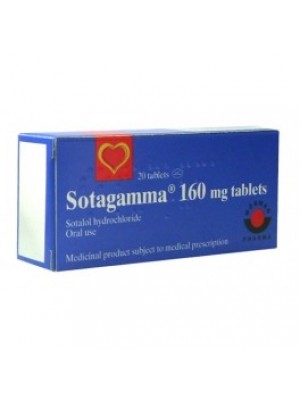
SOTAGAMA table. 160 mg. 50 tablets Areas of application Symp..
17.00€