Your shopping cart is empty!
Welcome visitor you can login or create an account.
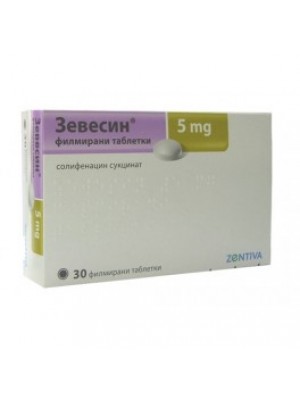
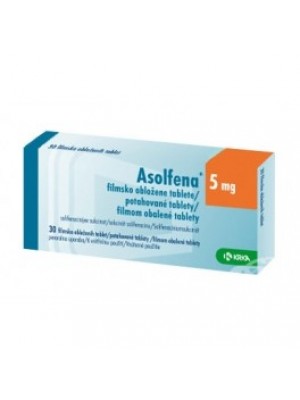
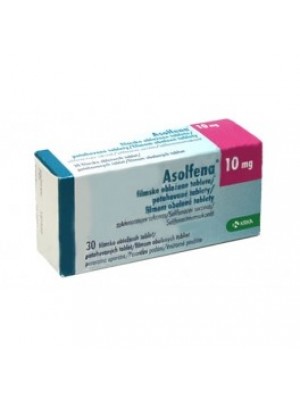
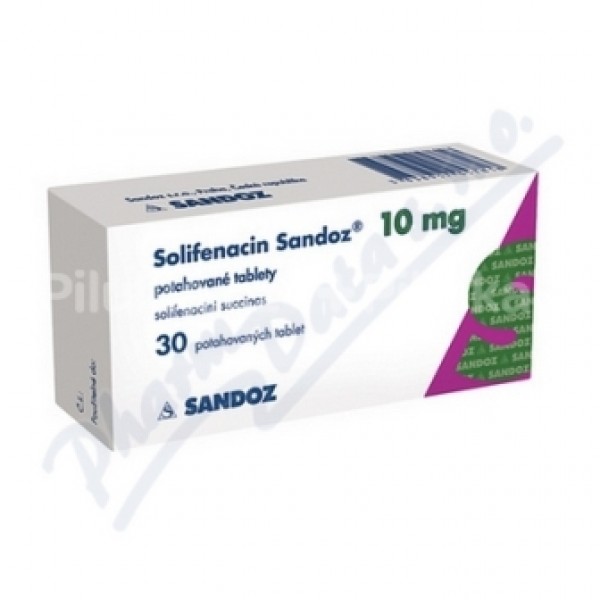
Solifenacin 10 mg. 30 tablets
Product viewed: 2383


What Solifenacin Medica is and what it is used for
The active substance of Solifenacin Medica belongs to the group of anticholinergic drugs. These drugs are used to reduce the activity of overactive bladder. This allows you to wait longer before going to the toilet and increasing the amount of urine the urinary bladder can hold.
Solifenacin Medica is used to treat symptoms of overactive bladder. Symptoms include: a strong, irresistible urge to urinate without preliminary signals, frequent urination and wetting if you can not go to the toilet in time.
2. What you need to know before taking Solifenacin Medica
Do not use Solifenacin Medica:
if you can not urinate or completely empty the bladder (urinary retention);
if you have severe gastrointestinal complaints, including a toxic megacolon (acute colon enlargement associated with ulcerative colitis);
if you suffer from a muscular disease called myasthenia gravis, which can cause muscle weakness in certain muscles;
if you suffer from increased intraocular pressure with gradual loss of vision (glaucoma);
if you are allergic to solifenacin or any of the other ingredients of this medicine (listed in section 6);
if you are undergoing hemodialysis;
if you suffer from severe liver disease;
if you suffer from severe kidney disease or moderate liver disease, and you are currently taking medicines that delay the removal of Solifenacin Medica from the body (eg ketoconazole). In this case, your doctor or pharmacist will warn you.
Before starting treatment with Solifenacin Medicina, tell your doctor if you have or have had any of the conditions listed above.
Warnings and precautions
Talk to your doctor or pharmacist before taking Solifenacin:
if you have obstruction of the bladder (bladder obstruction) or difficulty urinating (eg, a small urine stream) because there is a higher risk of urinary bladder build-up (urinary retention);
if you complain of obstruction of the gastrointestinal tract (constipation);
if you are at risk of decreased gastrointestinal activity (movements of the stomach and intestines). Your doctor will tell you if there is such a risk;
if you suffer from severe kidney disease;
if you suffer from moderate liver disease;
if you have burning behind the sternum (hiatal hernia) or heartburn;
if you suffer from a nervous system disorder (vegetative neuropathy).
Children and adolescents
Solifenacin Medica should not be used in children and adolescents under 18 years of age.
Before starting treatment with Solifenacin Medicina, tell your doctor if you have or have had any of the conditions listed above.
Before taking Solifenacin Medica, your doctor will consider whether there are other reasons for increased urinary frequency (eg heart failure where the heart can not pump enough blood or kidney disease). If you have urinary tract infection, your doctor will prescribe antibiotic treatment (treatment against a specific bacterial agent).
Other Drugs and Solifenacin Medica
Tell your doctor or pharmacist if you are taking, have recently taken or might take any other medicines.
It is especially important to tell your doctor if you are taking:
other anticholinergic drugs. The effects and side effects of both products may be increased;
cholepergic drugs may weaken the effect of Solifenacin Medica;
drugs such as metoclopramide or cisapride, which enhance gut motility. Solifenacin Medica may weaken their effect;
medicines such as ketoconazole, ritonavir, nelfinavir, intraconazole, verapamil and diltiazem, which may delay the removal of Solifenacin Medica from the body;
medicines such as rifampicin, phenytoin and carbamazepine, which can accelerate the removal of Solifenacin Medica from the body;
medicines such as bisphosphonates that can cause or exacerbate oesophageal inflammation (oesophagitis).
Solifenacin Medicine with food, beverages and alcohol
You can take Solifenacin Medica with or without food, depending on your preference.
Pregnancy, breastfeeding and fertility
You should not use Solifenacin Medica during pregnancy except in cases of extreme necessity.
Do not use Solifenacin Medica while breast-feeding because solifenacin may pass into breast milk.
Ask your doctor or pharmacist for advice before taking this medicine.
Driving and using machines
Solifenacin Medica may cause blurred vision and less frequent drowsiness or fatigue. Therefore, if you suffer from these side effects, do not drive or operate machinery.
Solifenacin contains lactose. Do not use this medicine if your doctor has told you that you are suffering from rare birth defects such as galactose intolerance, lactase
If you forget to take Solifenacin Medica
If you forget to take your tablet at the usual time, take it as soon as you remember unless it is time for the next dose. Never take more than one dose per day. If you have any doubts, talk to your doctor or pharmacist.
If you stop taking Solifenacin Medica
If you stop taking Solifenacin Medica, the symptoms of overactive bladder may recur or become worse. Always talk to your doctor if you want to stop treatment.
If you have any further questions on the use of this medicine, ask your doctor or pharmacist.
4. Possible side effects
Like all medicines, this medicine can cause side effects, although not everyone gets them.
You should immediately inform your doctor or pharmacist if you experience an allergic attack (eg blistering or scaling).
Some patients with salifenacin sulccinate (Solifenacin Medica) have been reported with angioedema (a skin allergic reaction that causes swelling in the tissues below the skin surface) with airways obstruction (difficulty in breathing). If angioedema occurs, solifenacin succinate (Solifenacin Medica) should be stopped immediately and appropriate treatment (s) taken.
Solifenacin Medica may cause the following other side effects:
Very common (may affect more than 1 out of 10 people):
dry mouth.
Common (may affect up to 1 in 10 people):
blurred vision;
constipation, nausea, indigestion with symptoms of swelling, stomach pain, belching, heartburn (dyspepsia), stomach discomfort.
Uncommon (may affect up to 1 in 100 people):
urinary tract infections, bladder infections;
drowsiness;
disturbed taste perception (dysgia);
dry (irritated) eyes;
dry nose;
reflux disease (gastro-oesophageal reflux);
dry throat;
dry skin;
difficulty urinating;
fatigue;
swelling of the lower limbs.
Rare (may affect up to 1 in 1,000 people):
accumulation of solidified faeces in the colon;
increased urine output in the bladder due to inability to empty it (urinary retention);
dizziness, headache;
vomiting;
itching, rash.
Very rare (may affect up to 1 in 10,000 people):
hallucinations, confusion;
allergic rash.
Not known (can not be estimated from the available data):
decreased appetite, high levels of potassium in the blood, which may cause abnormal heart rhythm;
changes in electrical activity of the heart (ECG), abnormal heart rhythm;
palpitations, slow heart rate;
Voice violations;
liver disorders;
muscle weakness;
renal impairment.
How to store Solifenacin Medica
Keep out of the reach and sight of children.
Do not use Solifenacin Medica after the expiry date stated on the carton. The expiry date refers to the last day of that month.
This medicinal product does not require any special storage conditions.
6. Package Contents and Additional Information
What Solifenacin Medica contains
Solifenacin Medica 5 mg: Each film-coated tablet contains 5 mg of solifenacin succinate corresponding to 3.8 mg of solifenacin.
Solifenacin Medica 10 mg: Each film-coated tablet contains 10 mg of solifenacin succinate corresponding to 7.5 mg of solifenacin.
Excipients: lactose monohydrate, corn starch, partially pregelatinized maize starch, magnesium stearate.
Film coverage
For Solifenacin Medica 5 mg: Opadry, yellow 02F 220022 contains: hypromellose 5p, titanium dioxide (E171) macrogol 8000, talc, yellow iron oxide (E172);
For Solifenacin Medica 10 mg: Opadry pink 02F 240016 containing: hypromellose 5pc, titanium dioxide (E171) macrogol 8000, talc, red iron oxide (E172), yellow iron oxide (E172).
What Solifenacin Medica looks like and contents of the pack
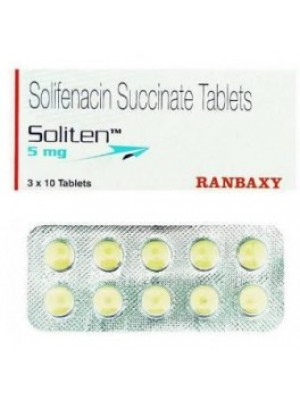
Each 5 mg tablet is a light yellow, round, biconvex film-coated tablet.
Each 10 mg tablet is a light pink, round, biconvex, film-coated tablet with a dividing line on one side and smooth on the other.
Each pack contains 10 tablets in a blister of PVC / PE / PVDC / aluminum or aluminum / aluminum, 3 blisters in a cardboard box.
Write a review
Your Name:Your Review: Note: HTML is not translated!
Rating: Bad Good
Enter the code in the box below:
Related Products