Your shopping cart is empty!
Welcome visitor you can login or create an account.
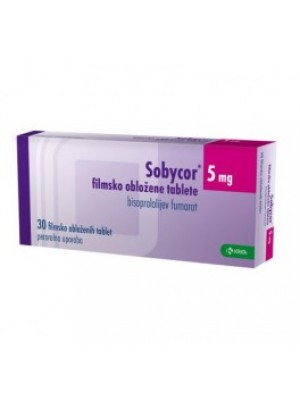
Sobycor 2.5 mg. 30 tablets

Product viewed: 2562


What is Sobycor and what it is used for
The medicine in Sobycor is bisoprolol. Bisoprolol belongs to a group of medicines called beta-blockers. These medicine affect the body's response to some nervous impulses, especially in the heart. As a result, bisoprolol slows the heart rate and thus increases the efficiency of the heart when pumping blood. At the same time, the need for oxygen and blood supply to the myocardium is decreasing.
Heart failure occurs when the heart muscle is weak and unable to pump enough blood to meet the body's needs.
Sobycor is used for:
increased blood pressure (hypertension)
treatment of angina pectoris
treatment of stable, chronic heart failure.
It is used in combination with other medicines that are appropriate for this condition (such as ACE inhibitors, diuretics and cardiac glycosides).
2. What you need to know before taking Sobicor
Do not use Sobycor
Do not use Sobycor if any of the following conditions apply to you:
allergy to the active substance or any of the other ingredients of this medicine (described in section 6), severe asthma,
serious problems related to the circulation of your limbs (such as Raynaud's syndrome) that may cause them to become numb, pale or bruised,
an untreated phaeochromocytoma, which is a rare tumor of the adrenal gland, metabolic acidosis, which is a state of increased acidity of the blood.
Do not take Sikicor if you have any of the following heart ailments:
acute heart failure
aggravated heart failure requiring intravenous therapy with agents that increase the strength of cardiac contractions; lowering of blood pressure
some heart conditions leading to slow or uneven heartbeat cardiogenic shock, which is an acute cardiac condition that leads to low blood pressure and circulatory insufficiency.
Warnings in precautions
Tell your doctor or pharmacist before taking Sikicor. If any of the conditions listed below apply to you, tell your doctor, special precautions may be required (eg, appointment of additional treatment or more frequent research):
diabetes,
starvation,
some heart disease such as heart rhythm disturbances or severe chest pain at rest (Prinzmetal's angina), kidney or liver problems,
circulatory problems of middle-weight extremities, moderate-to-moderate bronchial asthma or chronic pulmonary disease, history of scaly skin rash (psoriasis), adrenocortical tumor (pheochromocytoma), thyroid disease,
first degree cardiac block (a condition where nerve signals to the heart are disturbed, possibly leading to trabecular leakage from time to time or beating irregularly).
In addition, tell your doctor if you are going to:
desensitization therapy (for example, to prevent hay fever), as Sobicor may cause an allergic reaction or increase its severity; anesthesia (eg due to surgery), as Sikicor can affect your body's response to this procedure.
Other medications and Sobicor
Tell your doctor or pharmacist if you are taking, have recently taken or might take any other medicines.
Do not take the following medicines with Sobycor tablets without special advice from your doctor:
Some medicines used to treat irregular or abnormal rhythm of the heart (Class I anti-arrhythmic drugs such as quinidine, disopyramide, lidocaine, phenytoin, flecainide, propafenone).
Some medicines used to treat high blood pressure, angina pectoris or heart disease (calcium antagonists such as verapamil
Some medicines used to treat high blood pressure such as cloniline, methyldopa, moxonodine, rilmenidine. However, do not stop taking these medicines without consulting your doctor.
Check with your doctor before taking the following medicines with Sicicor tablets: Your doctor may need to check your condition more often:
Some medicines used to treat high blood pressure or angina pectoris or heart rhythm disorders (dihydropyridine type calcium antagonists such as nifedipine, felodipine and amlodipine).
some medicines used to treat irregular or irregular heartbeat (Class III Antiarrhythmic Medicines such as Amiodarone) Some medicines used to treat irregular or abnormal heart rhythm (Class III antiarrhythmic medicines such as amiodarone).
Topical beta-blockers (eg eye drops to treat glaucoma)
Some medicines used to treat Alzheimer's disease or to treat glaucoma (parasympathomimetics such as tacrine or carbachol) or used in critical situations to treat acute heart problems (sympathomimetics such as isoprenaline and dobutamine)
Antidiabetic medicines, including
Any medicine that can lower blood pressure as a desirable or undesirable effect such as antihypertensive drugs, certain medicines for depression (tricyclic antidepressants such as imipramine or amitriptyline), some medicines that are used to treat epilepsy or during anesthesia (barbiturates such as phenobarbital ) or some medicines to treat mental illnesses that are characterized by a lack of awareness of reality (phenothiazines such as levompromazine).
Mefloquine used to prevent or treat malaria.
Drugs for the treatment of depression called monoamine oxidase inhibitors (except MAO-B inhibitors) such as moclobemide.
Moxysilite, used to treat circulatory problems such as Raynaud's syndrome.
Pregnancy and breastfeeding
There is a risk that using Sobicor during pregnancy can harm the baby. If you are pregnant or breast-feeding, think you may be pregnant or plan to become pregnant, ask your doctor or pharmacist for advice before taking this medicine. He or she will decide whether you can take Sobicor during pregnancy. It is not known whether bisoprolol passes into breast milk. Therefore, nursing is not recommended during treatment with Sobicor.
Children and adolescents
The use of Sobycor in children and adolescents is not recommended. Driving and using machines
The ability to drive or use machines may be affected depending on your tolerability.
Please pay special attention at the start of treatment, when increasing the dose or switching to another medicine as well as with concomitant use of alcohol.
3. How to take Sobycor?
Always take this medicine exactly as your doctor or pharmacist has told you. Consult your doctor or pharmacist if you are not sure. Take the tablet with water, in the morning, with or without food. Do not break or chew the tablet.
Sobicor therapy requires regular monitoring by your doctor. This is especially necessary at the start of treatment, during dose escalation, and when you stop treatment.
Sobicor treatment is usually long-term.
Hypertension and angina
Adults, including the elderly
The dose should be adjusted individually. The usual daily dose is 10 mg of bisoprolol. Depending on how well you respond to your medicine, your doctor may decide to reduce the dose to 5 mg or may decide to increase it to 20 mg. The dose should not exceed 20 mg in one day.
Stable chronic heart failure
Adults including the elderly
Bisoprolol should be started at a low dose and gradually increased.
Your doctor will decide how to increase the dose and this is usually done as follows: 1.25 mg bisoprolol once daily for one week 2.5 mg bisoprolol once daily for one week 3.75 mg bisoprolol once daily for one week 5 mg bisoprolol once daily for four weeks 7.5 mg bisoprolol once daily for four weeks 10 mg bisoprolol once daily for maintenance (current) therapy.
The maximum recommended daily dose is 10 mg bisoprolol.
Depending on how well you take the medicine, your doctor may decide to extend the time between dose increases. If your condition gets worse or the medicine is not tolerated, it may be necessary to reduce the dose again or discontinue treatment. In some patients, a maintenance dose of less than 10 mg of bisoprolol may be sufficient. Your doctor will tell you what to do. If you have to stop treatment altogether, your doctor will usually advise you to reduce your dose gradually, otherwise your condition may get worse.
Use in patients with hepatic and / or renal impairment
In patients with mild to moderate impairment of renal or hepatic function, no dose adjustment is usually required.
In patients with severe renal impairment (creatinine clearance <20 ml / min) and in patients with severe hepatic impairment, it is recommended that a daily dose of 10 mg of bisoprolol is not exceeded.
Use in children and adolescents
Sobicor is not recommended for use in children.
If you take more Sobicor than you should
If you take more Sobicar than you should, tell your doctor immediately. Your doctor will decide what measures are needed.
Symptoms of overdose may include slowing of heart rate, difficulty in breathing, dizziness or trembling (due to decreased blood sugar).
If you forget to take Sobycor
Do not take a double dose to make up for the missed dose. Take the usual dose the next morning.
If you stop taking Sobycor
Never stop taking Sobycor except as a doctor. Otherwise, your condition may get worse. Especially in patients with ischemic heart disease, treatment should not be abruptly discontinued. If stopping treatment is considered, your doctor will advise you to reduce the dose gradually
Other side effects are listed below depending on how often they may occur:
Common (observed in less than 1 in 10 people)
fatigue, weakness, dizziness, headache
feeling cold or tingling the arms or lower limbs low blood pressure
stomach or intestinal complaints such as nausea, vomiting, diarrhea or constipation
Uncommon (occurring in less than 1 in 100 people)
sleep depression disorders
dizziness when standing up
breathing difficulties in patients with asthma or chronic airway disease
muscle weakness, muscle spasms
Rare (occurring in less than 1 in 1,000 people)
hearing disorders allergic rhinitis
decreased tear (dry eyes)
inflammation of the liver, which may cause yellowing of the skin or whites of the eyes
determined blood test results that show liver function or fat levels other than normal
allergic skin reactions such as itching, redness, rash
impaired erection
nightmares, hallucinations
seizures
Very rare (occurring in less than 1 in 10,000 people)
inflammation and redness of the eye (conjunctivitis)
hair loss
5. How do you store Sobycor?
Keep out of the reach and sight of children.
Do not use this medicine after the expiry date which is stated on the carton after EXP. The expiry date refers to the last day of the month.
Store in the original package in order to protect from light and moisture. This medicine does not require any special storage conditions.
Medicines should not be disposed of via wastewater or household waste. Ask your pharmacist how to dispose of your unnecessary medicines. These measures will help to protect the environment.
6. Package contents and other information
What Sobycor contains:
The active substance is bisoprolol fumarate (bisoprolol).
Each film-coated tablet contains 2.5 mg of bisoprolol fumarate.
Each film-coated tablet contains 5 mg of bisoprolol fumarate.
Each film-coated tablet contains 10 mg of bisoprolol fumarate.
The other ingredients are microcrystalline cellulose, starch sodium glycolate type A, povidone K30, colloidal anhydrous silica and magnesium stearate (E470b) in the tablet core and hypromellose 2910, macrogol 400, titanium dioxide (E171), talc, yellow iron oxide E172) - for only 5 mg and 10 mg film-coated tablets and red iron oxide (E172) - only for 5 mg and 10 mg film-coated tablets.
What does Sobicore look like and what does it contain?
2.5 mg: White to off-white, oval, slightly biconvex film-coated tablets (tablets), scored on one side (length: 8.3-8.7 mm, width: 5.5 mm, 2-3.7 mm). The tablet can be divided into two equal doses.
5 mg: Light brownish, oval, slightly biconvex film-coated tablets (tablets), scored on one side (length: 8,3-8,7 mm, width: 5,5 mm, thickness: 3,2-3 , 7 mm). The tablet can be divided into two equal doses. 10 mg: Light brownish yellow, round, slightly biconvex film-coated tablets (tablets) with bevelled edges, scored on one side
Blisters (Alu / Aluminum foil): 10, 20, 28, 30, 50, 56, 60, 84, 90 and 100 tablets in a box Not all pack sizes may be marketed.
Write a review
Your Name:Your Review: Note: HTML is not translated!
Rating: Bad Good
Enter the code in the box below:
Related Products
What is Sobycombi and what is it used for?
Sobycombi cont..
12.00€
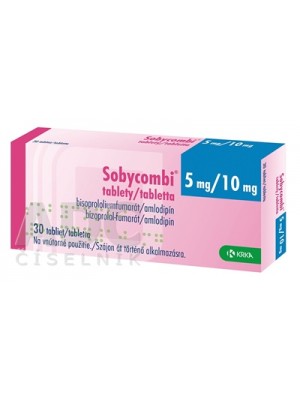
What is Sobycombi and what it is used for
Sobycombi contain..
14.00€