
Your shopping cart is empty!
Welcome visitor you can login or create an account.
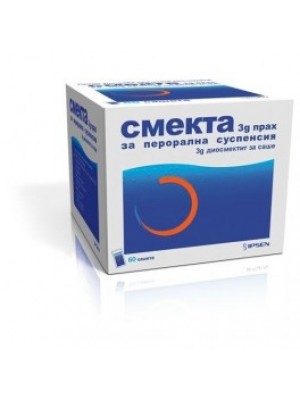
SMECTA 30 sachets

Product viewed: 3112


WHAT SMECTA AND WHAT IT IS USED
SMECTA 3 g powder for oral suspension in sachets. This product is recommended for the treatment of diarrhea and pain associated with the esophagus, stomach and intestines.
2. BEFORE YOU TAKE SMECTA
Do not take SMECTA
if you are hypersensitive to Diosmectite or any of the other ingredients of SMEK;
SMECTA should not be taken by patients with rare hereditary problems of fructose intolerance, poor absorption of glucose and galactose or failure of complex enzyme sucrose, isomaltulose.
Take special care with SMECTA
If the pain is accompanied by fever or vomiting, consult your doctor immediately.
Taking other medicines
Please tell your doctor or pharmacist if you are taking other medicines, including medicines obtained without a prescription.
Taking SMECTA with food and drink
It can be taken with food and soft drinks.
Pregnancy and lactation
SMECTA can be taken during pregnancy and lactation as chemical remains unchanged and is not absorbed.
Driving and using machines
No influence on the ability to drive and use machines.
Important information about some of the ingredients of SMEK
SMEK should not be taken by patients with rare hereditary problems of fructose intolerance, poor absorption of glucose and galactose or failure of complex enzyme sucrose, isomaltulose.
3. HOW TO TAKE SMECTA
Always take SMECTA just as you have been told your doctor. If you're not sure, ask your doctor or pharmacist. The usual dose is:
Treatment of acute diarrhea
In infants and children:
Less than 1 year: 2 sachets a day for 3 days and then 1 sachet per day.
Over 1 year: 4 sachets a day for 3 days and then 2 sachets a day.
In adults:
The recommended daily dose is 6 sachets daily.
Treatment in other indications:
In children:
under 1 year: 1 bag per day;
between 1 and 2 years: 1 to 2 sachets per day;
over 2 years: 2 to 3 bags a day.
In adults:
An average of three sachets a day.
Method of administration
In infants and children:
The contents of the sachet can be dissolved in a pacifier or a bottle of 50 ml of water and be given during the day or to mix well with viscous food: porridge, stewed fruit, vegetable puree and baby food.
In adults:
An average of 3 sachets daily. The contents of the sachet suspended in half a cup of lukewarm water.
The contents of the sachet should be suspended immediately before use.
Recommended adoption of Diosmectite going after meals in patients with esophagitis and between eating in other indications.
children:
The contents of the sachet can be dissolved in a bottle with 50 ml water and be given during the day or to mix well with viscous food: porridge, stewed fruit, vegetable puree and baby food.
In adults:
The contents of the sachet are dissolved in 50 to 100 ml lukewarm water.
It is advisable to apply:
after eating at esophagitis;
between meals in other indications.
If you have any further questions on the use of this product, ask your doctor or pharmacist.
4. POSSIBLE SIDE EFFECTS
Like all medicines, SMECTA can cause side effects, although not everybody gets them.
Side effects have always been minor and short-lived, affecting only the intestinal tract. Very rare cases of developing or worsening constipation. Treatment can be continued after dose reduction.
If any of the side effects gets serious, or you notice other effects not listed in this leaflet, please tell your doctor or pharmacist.
5. HOW TO STORE SMECTA
Keep out of reach of children.
Do not use SMECTA after the expiry date stated on the carton and sachet.
Do not use SMECTA if you notice any signs of break in the sachet.
Before disposing SMEK stir in water content of the sachets and pour into drains!
6. FURTHER INFORMATION
What SMECTA
The active substance is Diosmectite.
Other ingredients are: Glucose monohydrate, sodium saccharin, sucrose, vanilla flavor, orange flavor, traces of alcohol of less than 0,1 g per 1 dose.
SMECTA looks like and contents of the pack
Sachets (paper, aluminum foil and polyethylene) containing 3,760 g powder for oral suspension.
Cartons of 30 and 60 sachets.
Write a review
Your Name:Your Review: Note: HTML is not translated!
Rating: Bad Good
Enter the code in the box below:
Related Products
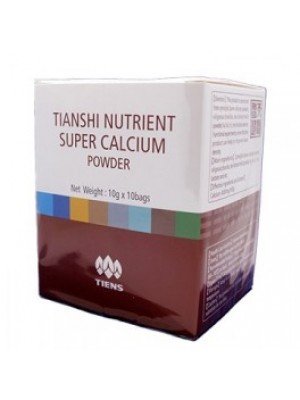
SUPER CALCIUM powder 10 sachetsPacking: 10 pieces, 10 g sach..
49.00€