
Your shopping cart is empty!
Welcome visitor you can login or create an account.
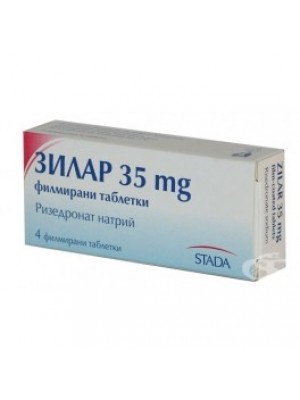
RIZIDA 35 mg. 4 tablets
Product Code: RIZIDA 35 mg. 4 tablets
Availability: In Stock

Product viewed: 1068


RIZIDA 35 mg. 4 tablets
WHAT RIZIDA 35 mg. FILM-COATED TABLETS AND WHAT IT IS USED
What is RIZIDA 35 mg. tablets
RIZIDA 35 mg. film-coated tablets containing risedronate sodium, which belongs to the group of non-medicines called bisphosphonates which are used to treat bone diseases. It works directly on your bones so as to make them more resilient and therefore less prone to fractures.
Bone is a living tissue. Old bone is constantly removed from your skeleton and replaced by new bone.
Postmenopausal osteoporosis is a condition that occurs in postmenopausal women, when the bones become weaker, more fragile and more likely to break or sledpadane voltage.
Osteoporosis can also occur in men due to a number of reasons, including the elderly and / or low levels of the male hormone testosterone.
The most likely places for fracture are the spine, hip or wrist, although this can happen to any bone in your body. Fractures associated with osteoporosis can cause back pain, loss of height and deformity of the spine (curved back). Many patients with osteoporosis have no symptoms and you may not even know they have osteoporosis.
What is RIZIDA 35 mg. tablets
Treatment of osteoporosis
In postmenopausal women, even if osteoporosis is severe. He namalyavariska of vertebral or hip.
In men.
2. BEFORE YOU TAKE RIZIDA 35 mg. FILM-COATED TABLETS
Do not take RIZIDA 35 mg. tablets
If you are allergic (hypersensitive) to risedronate sodium or other ingredients of nyakoyaot RIZIDA 35 mg. film-coated tablets (see section 6, "What RIZIDA 35 mg)
If your doctor has told you that you have a condition called hypocalcaemia (low calcium levels in the blood)
Maybe you are pregnant or planning to become pregnant
If you are breastfeeding
If you have severe kidney problems.
Take special care and talk to your doctor before taking RIZIDA 35 mg. tablets
If you can not stay upright (standing or sitting) at least 30 minutes.
If you have abnormal bone and mineral metabolism (such as lack of vitamin D, parathyroid hormone abnormalities, both leading to low calcium levels in the blood).
If you have previously had problems with your esophagus (the tube that connects your mouth to your stomach). As an example, you may have had pain or difficulty in swallowing food.
If your doctor has told you have an intolerance to some sugars (such as lactose) or sansetzhalto aluminum lake (E110).
If you have or have had pain, swelling or numbness of the jaw, or feeling heavy jaw or tooth loss.
If you visit a dentist or dental surgery, tell your dentist that you are being treated with risedronate sodium.
Your doctor will advise you kakda do when taking risedronate sodium if you have any of the above.
Taking other medicines
Medicines containing one of the following lessen the effect of risedronate sodium if taken at the same time:
calcium
magnesium
Aluminum (for example some indigestion mixtures)
iron
Take these medicines at least 30 minutes after the tablet RIZIDA 35 mg.
Please tell your doctor or pharmacist if you are taking or have recently taken any other medicines, including medicines obtained without a prescription.
Taking RIZIDA 35 mg. film-coated tablets with food and drink
It is essential you do NOT take RIZIDA 35 mg. film-coated tablets with food or beverages (other than pure water), in order to act on RIZIDA. In particular, do not take this medicine at the same time as dairy products (such as milk) as they contain calcium (see section 2 "Taking other medicines).
Take food and drinks (other than plain water) at least 30 minutes after RIZIDA 35 mg. tablets.
Pregnancy and lactation
DO NOT take RIZIDA 35 mg. tablets if you may be pregnant, are pregnant or planning to become pregnant (see section 2 "DO NOT take risedronate sodium"). The potential risk associated with the use of risedronate sodium in pregnant women is unknown.
DO NOT take RIZIDA 35 mg. tablets if you are breastfeeding (see section 2, "Do not take Risedronate sodium").
RIZIDA 35 mg. tablets should be taken only for the treatment of postmenopausal osteoporosis in men and women.
Ask your doctor or pharmacist before taking any medicine.
Driving and using machines
RIZIDA 35 mg. tablets is not known to affect your ability to drive and use machines.
Important information about some of the ingredients of RIZIDA 35 mg. tablets
RIZIDA 35 mg. tablet contains a small amount of lactose. Furthermore it contains sunset yellow aluminum lake (E110) and may cause allergic reactions (see section 2, "Take special care and talk to your doctor before taking RIZIDA 35 mg film-coated tablets").
3. HOW TO TAKE RIZIDA 35 mg FILM-COATED TABLETS
dosage
Always take RIZIDA 35 mg. tablets exactly as your doctor has told you. If you're not sure, ask your doctor or pharmacist.
The usual dose is:
Take one tablet (35 mg. Risedronate sodium) once a week.
Choose one day of the week that you are most comfortable. Each week, take 35 mg tablet RIZIDA. in the chosen day.
WHEN to take RIZIDA 35 mg. tablets
Take one tablet at least 30 minutes before the first food, drink (other than plain water) or medicine of the day.
HOW taking RIZIDA 35 mg. tablets
Take the tablet while you face (you may sit or stand) to avoid heartburn.
Swallow it with at least one glass (120 ml) of clean water.
Swallow it whole. Do not suck or chew the tablet.
Do not lie down for at least 30 minutes after taking your tablet.
Your doctor will decide whether you need calcium and vitamin supplements, if you are not taking enough from your diet.
If you take more than the amount RIZIDA 35 mg. tablets
If you or somebody else has accidentally taken more tablets than prescribed, drink a full glass of milk and seek medical attention.
If you forget to take RIZIDA 35 mg. tablets
If you forget to take your tablet on your chosen day, take it on the day you remember. Continue to take the next tablet once a week, on the day which normally take them. Do not take two tablets to make up for a forgotten tablet.
If you stop taking RIZIDA 35 mg. tablets
If you stop treatment you may begin to lose bone mass. Please talk to your doctor before you consider stopping treatment.
4. POSSIBLE SIDE EFFECTS
Like all medicines, Actonel can cause side effects, although not everybody gets them.
Stop taking Actonel and immediately contact your doctor if you experience any of the following:
• Symptoms of severe tissue swelling (angioedema) - - Swelling of the face, tongue or throat
- Difficulties in swallowing
- Hives and difficulty breathing
• Severe skin reactions including subcutaneous bubbles.
Immediately tell your doctor if you experience any of these side effects
Inflammation of the eye, usually with pain, redness and sensitivity to light.
Osteonecrosis of the jaw (osteonecrosis) associated with delayed healing and infection, often following tooth extraction (see section 2, "Take special care and talk to your doctor before taking RIZIDA 35 mg").
Symptoms from esophagus such as pain when swallowing, difficulty swallowing, chest pain or new or worsened heartburn.
However, the observed during clinical trials other side effects were mild to moderate in severity and did not require discontinuation of therapy.
Common side effects (less than 1 in 10, but more than 1 in 100 patients)
Indigestion, nausea, stomach pain, stomach cramps or discomfort, constipation, feelings of fullness, bloating, diarrhea
Pain in the bones, muscles or joints
Headache.
Uncommon side effects (less than 1 per 100, more usually from 1 to 1,000 patients)
Inflammation or ulceration of the esophagus (the tube that connects your mouth to your stomach) causing difficulty and pain in swallowing (see also section 2 "Take special care and talk to your doctor before taking RIZIDA 35 mg. Tablets"), inflammation of stomach
and duodenum (bowel draining the stomach).
Inflammation of the colored part of the eye (iris) (red painful eyes with a possible change in vision).
Rare side effects (less than 1 in 1000 patients)
Inflammation of the tongue (red, swollen, possibly painful), narrowing of the esophagus (the tube that connects your mouth to your stomach)
Were reported abnormal tests of liver function. This can only be found by a blood test.
Rarely, at the beginning of the treatment it is possible decrease the levels of calcium and phosphate in blood of the patient. These changes are usually small and cause no symptoms.
If any of the side effects gets serious, or you notice other effects not listed in this leaflet, please tell your doctor or pharmacist.
5. HOW TO STORE RIZIDA 35 mg FILM-COATED TABLETS
Keep out of reach of children.
Do not use this medicine after the expiry date stated on the carton and blister after "EXP". The expiry date refers to the last day of that month.
This medicinal product does not require any special storage conditions.
Medicines should not be disposed of in wastewater or household waste. Ask your pharmacist how to dispose of medicines no longer required. These measures will help to protect the environment.
6. FURTHER INFORMATION
What RIZIDA 35 AAP tablets
The active substance is risedronate sodium (pzes / gopa1e MPA / shh). Each tablet contains 35 mg. risedronate sodium, equivalent to 32.5 mg. risedronic acid.
The other ingredients are lactose monohydrate, maize starch, pregelatinized starch (maize) Silica, colloidal anhydrous, sodium stearyl fumarate, magnesium stearate, hypromellose (E464), titanium dioxide (E 171), macrogol 400, iron oxide yellow (E172) polysorbate 80 (E433), sunset yellow aluminum lake (E110), iron oxide red (E 172).
Looks RIZIDA 35 mg. tablets and contents of the pack
RIZIDA 35 mg. film-coated tablets are orange, round tablets debossed with "R35" on one side and plain on the other.
The tablets are available in blister packs of 1,2,4,8,10,12,12 (3x4), 14,16,16 (4 x 4) or 30 tablets.
Hospital packs 4x1,10x1,50x1.
Not all pack sizes may be marketed.
Write a review
Your Name:Your Review: Note: HTML is not translated!
Rating: Bad Good
Enter the code in the box below:
Related Products
FOSAVANCE table. 70 mg. / 2800 UI 4.table FOSAVANCE WHAT IS ..
36.00€
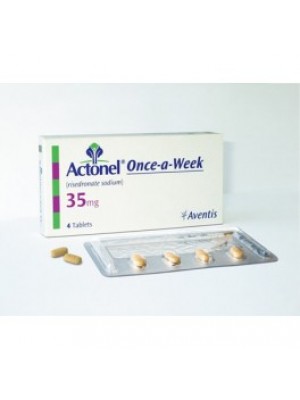
FOSAVANCE 70 mg. / 5600 UI. 4 tabletsWHAT FOSAVANCE IS AND W..
39.00€