Your shopping cart is empty!
Welcome visitor you can login or create an account.
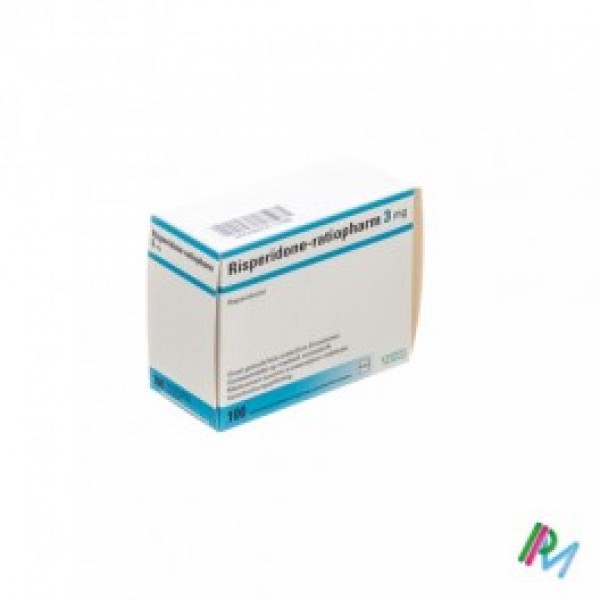
Risperidone 3 mg. 20 tablets
Product Code: Risperidone 3 mg. 20 tablets
Availability: In Stock
Product viewed: 939


Risperidone 3 mg. 20 tablets
WHAT risperidone TEVA AND WHAT IT IS USED
Risperidone belongs to a group of medicines called "antipsychotics". Risperidone Teva is used to treat the following:
Schizophrenia, where you may see, hear or feel things that are not, to believe in something that is not true or feel unusually suspicious, or confused;
Mania, where you may feel very excited, elated, excited, enthusiastic or hyperactive. Mania often occurs in a condition called "bipolar disorder";
Short-term treatment (up to 6 weeks) of persistent aggression in people with Alzheimer's dementia, which could hurt themselves or others. It should be borne in mind an alternative mode of treatment (non-drug);
Short-term treatment (up to 6 weeks) of persistent aggression in children with intellectual disabilities (and over 5 years) and adolescents with conduct disorder.
2. BEFORE YOU TAKE risperidone TEVA
Do NOT take Risperidone Teva:
If you are allergic (hypersensitive) to risperidone or any of the other ingredients of this medicine (see "Further information).
If you are unsure whether this is the case, talk to your doctor or pharmacist before taking Risperidone Teva.
Take special care with Risperidone Teva
Consult your doctor or pharmacist before taking Risperidone Teva if:
You have heart problems such as irregular heart rhythm or if you are prone to low blood pressure or are taking medication for your blood pressure. Risperidone Teva can lower blood pressure. It may need a dose adjustment;
If you know the factors that could favor the onset of a stroke such as high blood pressure, cardiovascular disease or problems with brain vessels;
If you have Parkinson's disease or dementia;
If you are diabetic;
If you have epilepsy;
If you are a man and you have ever had a prolonged and painful erection. If you get this while taking Risperidone Teva, immediately call your doctor;
If you have trouble with the control of body temperature or overheating;
If you have kidney problems;
If you have liver problems;
If you have very high levels of the hormone prolactin in the body or have a tumor that is likely to be dependent on prolactin.
Tell your doctor if you:
Involuntary rhythmic movements of the tongue, mouth or face. It may need discontinuation of risperidone;
Fever, severe muscle cramps, sweating or impairment of consciousness (a disorder called "neuroleptic malignant syndrome"). May require immediate medical attention.
If you are not sure if any of the above statements apply to you before taking Risperidone Teva, consult your doctor or pharmacist.
Risperidone Teva can cause weight gain.
Elderly patients with dementia
In elderly patients with dementia, there is an increased risk of stroke. You should not take risperidone if you have dementia caused by stroke.
During treatment with risperidone should regularly consult with your doctor.
If you or the person who takes care of you notice a sudden change in your mental state or sudden weakness or numbness of the face, arms or legs, especially on one or difficulty with speech, even briefly, should immediately seek medical attention. These may be symptoms of a stroke.
Children and adolescents
Before starting treatment for behavioral disorder must be rejected other causes of aggressive behavior.
If during treatment with risperidone tiredness occurs, the change in time of the administration may improve the problems with attention.
Taking other medicines
Please tell your doctor or pharmacist if you are taking or have recently taken any other medicines, including medicines obtained without a prescription and those of plant origin.
It is important to consult your doctor or pharmacist before taking any of the following medications:
Drugs that act on the brain helping it to calm down (benzodiazepines) or some medicines for pain (opiates), medicines for allergy (some antihistamines), as risperidone may increase the soothing effect of them all;
Medicines that may change the electrical activity of the heart, such as medicines for malaria, heart rhythm problems (such as quinidine), allergies (antihistamines), some antidepressants or other medicines for mental problems;
Drugs that slow heart rate;
Drugs that lower blood potassium (eg. Some diuretics)
Medicines for high blood pressure. Risperidone Teva can lower blood pressure;
Drugs for Parkinson's disease (such as levodopa);
Tablets for separating water (diuretics) used for heart problems or swelling of parts of the body due to accumulation of too much fluid (such as furosemide or chlorothiazide). Risperidone alone or furosemide may increase the risk of stroke or death in elderly patients with dementia.
The following medicines may reduce the effect of risperidone
Rifampicin (a medicine for the treatment of some infections);
Carbamazepine, phenytoin (medicines for epilepsy);
Phenobarbital;
If you start or stop taking such medicines you may need a different dose of risperidone.
The following medicines may increase the effect of risperidone
Quinidine (used for certain heart diseases);
Antidepressants such as paroxetine, fluoxetine, tricyclic antidepressants;
Drugs known as beta-blockers (used to treat high blood pressure);
Phenothiazines (e. Used to treat psychoses or relief);
Cimetidine, ranitidine (blockers of the acidity of stomach).
If you start or stop taking such medicines you may need a different dose of risperidone.
If you are not sure if any of the above statements apply to you before taking Risperidone Teva, consult your doctor or pharmacist.
Taking Risperidone Teva with food and drink
You can take this medicine with or without food. You should not drink alcohol while taking Risperidone Teva.
Pregnancy and lactation
Consult your doctor before you start taking Risperidone Teva if you are pregnant, trying to become pregnant or breast-feeding. Your doctor will decide whether you can take it.
When Risperidone Teva is taken during the first trimester of pregnancy, the newborn may be observed seizures, muscle stiffness and problems feeding, all of which are reversible.
Ask your doctor or pharmacist before taking any medicine.
Driving and using machines
During treatment with risperidone Teva may experience dizziness, fatigue and visual problems. Do not drive or use any tools or machines before talking to your doctor.
Important information about some of the ingredients of Risperidone Teva
This medicinal product contains lactose monohydrate. If your doctor has told you that you have an intolerance to some sugars, consult him before taking this medicine.
3. HOW TO TAKE risperidone TEVA
How much to take
For the treatment of schizophrenia
Mature
The usual starting dose is 2 mg per day, it may be increased to 4 mg per day on the second day;
Then your dose may be adjusted by your doctor depending on how you respond to treatment;
Most people feel better with daily doses of 4 to 6 mg;
The total daily dose may be divided in one or two doses per day. Your doctor will advise you on what is best for you.
Elderly
Your initial dose will normally be 0,5 mg twice daily;
Then dose will be gradually increased by your doctor to 1 mg or 2 mg twice daily;
Your doctor will tell you which is best for you.
Children and adolescents
Children and adolescents under 18 years old should not be treated with Risperidone Teva on schizophrenia.
For the treatment of mania
Mature
Your initial dose is usually 2 mg once daily;
Then your dose may be adjusted by your doctor depending on how you respond to treatment;
Most people feel better with doses of 1 to 6 mg once daily.
Elderly
Your initial dose will normally be 0,5 mg twice daily;
Then dose will be gradually increased by your doctor to 1 mg or 2 mg twice daily, depending on how you respond to treatment.
Children and adolescents
Children and adolescents under 18 years old should not be treated with Risperidone Teva bipolar mania.
For the treatment of continuing aggression in people with dementia associated with Alzheimer's disease
Adults (including the elderly)
Your initial dose is typically 0,25 mg twice daily;
Then your dose may be adjusted by your doctor depending on how you respond to treatment;
Most people feel better with 0,5 mg twice daily;
The duration of treatment in patients with Alzheimer's dementia should not be more than 6 weeks.
For the treatment of conduct disorder in children and adolescents
The dose depends on the body weight of the child:
For children weighing less than 50 kg
The normal starting dose is 0,25 mg once daily;
The dose may be increased in increments of 0,25 mg per day;
The usual maintenance dose is 0,25 mg to 0,75 mg once daily.
For children weighing 50 kg or more
The normal starting dose is 0,5 mg once daily;
The dose may be increased with increases of 0,5 mg per day;
The usual maintenance dose is 0,5 mg to 1,5 mg once daily.
The duration of treatment in patients with conduct disorder should not be more than 6 weeks.
Children under 5 years old should not be treated with Risperidone for conduct disorder Teva.
People with kidney or liver problems
Regardless of the disease, all doses (initial and subsequent) must be halved. Increasing the dose in these patients should be slower. In this group of people Risperidone Teva should be used with caution.
How to take Risperidone Teva
Always take Risperidone Teva exactly as your doctor tells you. If you're not sure, ask your doctor or pharmacist;
Your doctor will tell you how much medicine to take and for how long. This will depend on your condition and is different for different people. The dose of the medicine you should take is described in "How to take";
Swallow the tablet whole with a drink of water.
If you take more dose of Risperidone Teva
Contact your physician immediately. Take the medicine pack with you.
In case of overdose you may feel sleepy or tired, or have abnormal body movements, problems with gait and bringing to dizzy due to low blood pressure, or have irregular heartbeat or seizures.
If you forget to take Risperidone Teva
If you miss a dose, take it as soon as you remember. However, if it is almost time for your next dose, skip the missed dose and continue as usual. If you miss two or more doses, call your doctor;
Do not take a double dose (two doses at the same time) to make up the missed dose.
If you stop taking Risperidone Teva
You should not stop taking this medicine unless your doctor has told you to do it. Your symptoms may reappear. If your doctor decides to stop this medicine, the dose will be reduced gradually over a few days.
If you have any further questions on the use of this product, ask your doctor or pharmacist.
4. POSSIBLE SIDE EFFECTS
Like all medicines, Risperidone Teva can cause side effects, although not everybody gets them.
Very common: affects more than 1 in 10 patients;
Common: affects 1 to 10 of 100 patients;
Uncommon: affects 1 to 10 patients in 1000;
Rare: affects 1 to 10 patients in 10,000;
Very rare: affects less than 1 in 10,000 patients;
Not known: from the available data can not be estimated.
May experience the following side effects:
Very common (affecting more than 1 in 10 patients):
Parkinsonism. This is a medical term that includes many symptoms. Each individual symptom may occur in less than 1 in 10 people Parkinsonism include: increased salivation, stiff muscles, drooling, numbness of the limbs while bending, delayed, damaged or reduced body movements, lack of expressiveness of the face, muscle tightness, stiff neck, gait characterized by small, quick steps with dragging feet and lack of arm movements when walking, constantly flashing at tapping of the forehead (an abnormal reflex);
Headache, difficulty falling asleep and disrupted sleep.
Common (affects 1 to 10 patients in 100):
Drowsiness, fatigue, restlessness, inability to stay in one place, irritability, anxiety, drowsiness, dizziness, impairment of attention, a feeling of exhaustion, sleep disorders;
Vomiting, diarrhea, constipation, nausea, increased appetite, abdominal pain or discomfort, sore throat, dry mouth;
Weight gain, increase in body temperature, decreased appetite;
Difficulty breathing, lung infection (pneumonia), flu, respiratory tract infection, blurred vision, nasal congestion, nosebleeds, cough;
Urinary tract infection, wetting the bed;
Muscle spasm, involuntary movements of the face or hands and feet, joint pain, back pain, swelling of arms and legs, pain in arms and legs;
Rash and redness of the skin;
Rapid heart beat, chest pain;
Increased levels of the hormone prolactin in the blood.
Uncommon (affects 1 to 10 patients in 1000):
Drinking large quantities of water, stool incontinence, thirsty, very hard stools, or hoarse voice disorders;
Pulmonary infection caused by the entry of food into the airways, bladder infection, "pink eye", sinus infection, viral infection, ear infection, tonsils infection of subcutaneous tissue, eye infection, infection of the stomach, watery eyes, nail fungal infection;
Impaired conduction of electrical impulses in the heart, drop in blood pressure when standing, low blood pressure, dizziness when changing body position, changes in ECG, irregular heartbeat, palpitations, rapid or slow heartbeat;
Urinary incontinence, pain during urination, frequent urination;
Confusion, disturbance in attention, mental changes, increased drowsiness, nervousness, elated mood (mania), lack of energy and lack of interest;
High blood sugar and liver enzymes, decrease the number of white blood cells, low hemoglobin or red blood cells (anemia), increased eosinophils (special white blood cells), increased creatinine phosphokinase, reduced number of platelets (blood cells involved in clotting Blood);
Muscle weakness, muscle pain, ear pain, neck pain, joint swelling, improper posture, stiff joints, pain in the muscles of the chest, chest discomfort;
Skin lesions, skin disorders, dry skin, intense itching of the skin, acne, hair loss, skin inflammation caused by parasites, discoloration of the skin, thickening of the skin, redness, decreased skin sensitivity to pain or touch, inflammation of oily skin ;
Cessation of menstruation, sexual dysfunction, erectile dysfunction, ejaculation disorders, leakage of secretions from the breast, breast enlargement in men, decreased libido, irregular menstruation, vaginal discharge;
Nausea, abnormal gait, sloth, decreased appetite leading to malnutrition and low body weight, a sense of "remoteness" of balance, allergy, edema, speech disorders, chills, incoordination;
Painful sensitivity to light, increased blood flow to the eyes, swelling of the eyes, dry eyes, increased tear production;
Respiratory disorders, stagnation in the lungs, wheezing, stagnation in the airways, difficulty speaking, difficulty swallowing, cough, rough / hissing sound when breathing, flu-like illness, sinus standstill;
Lack of response to external pressure, loss of consciousness, sudden swelling of lips and eyes along with difficulty breathing, sudden weakness or numbness of the face, arms or legs mainly unilaterally, or a case of difficult and unclear speech that lasts at least 24 hours (ie elite strike force teams. stroke or mini-stroke), involuntary movements of the face, arms or legs, ringing in the ears, face edema.
Rare (affects 1 to 10 patients in 10,000):
Inability to reach orgasm, menstrual irregularities;
Parhot;
Drug allergy, cold hands or feet, swelling or inflammation of the lips;
Glaucoma, reduced visual clarity, the occurrence of crusting eyelid, eye movement;
Lack of emotional reactions;
Write a review
Your Name:Your Review: Note: HTML is not translated!
Rating: Bad Good
Enter the code in the box below:
Related Products