Your shopping cart is empty!
Welcome visitor you can login or create an account.
Resista Forte 30 tablets
Product Code: Resista Forte 30 tablets
Availability: In Stock

Product viewed: 1907


WHAT IS THE IMMUNE SYSTEM?
The primary goal of the immune system is to protect the organism from disease-causing bacteria and viruses, as well as destroy all of its own cells that are altered or damaged. When a viral particle or bacterium enters the body, the cells of the immune system recognize it, activate it, and then attack and destroy it.
The immunity of man is innate and acquired. Even before birth, a person builds a protective system against pathogenic microorganisms, which is called innate immunity. It consists of protective barriers such as skin and mucous membranes, certain immune cells and a number of substances (enzymes, proteins, cytokines, etc.) that prevent, neutralize or destroy pathogenic microorganisms.
Acquired immunity occurs during an individual's life and is formed by contact of the immune system with pathogenic viruses and bacteria. With this contact, the immune system learns to recognize them and neutralize them by producing antibodies that are specific to each species of micro-organism. Therefore, acquired immunity is also called specific.
Acquired immunity is more effective in dealing with a specific disease agent, but innate immunity is indispensable for survival because the immune system needs about 7 days to provide an effective response.
Immune system cells are located throughout the body (bone marrow, thymus, spleen, tonsils, lymph nodes), but the largest immune organ is located in the digestive tract (so called intestinal lymphoid tissue) and accounts for 70% of the whole immune system. Intestinal lymphoid tissue is closely intertwined with "good" intestinal bacteria - lactobacilli and bifidobacteria that continually stimulate it and maintain readiness for rapid and adequate immune response when pathogenic viruses and bacteria invade the body. When the number of "good" bacteria in the gut decreases, the immune system weakens.
The immune system deals daily with millions of viruses and bacteria that constantly penetrate our body, yet we remain healthy. Sometimes, disease-causing agents temporarily prevail and then our health suffers.
When the immune system is permanently attenuated due to chronic disease, advanced age, pregnancy, etc., or to be subjected to excessive stress, which it will be difficult to bear during a flu epidemic, it needs additional reinforcement.
II. WHAT IS RESISTA FORTE?
RESISTA FORTE is a combination of 9 clinically proven ingredients of natural origin that help and strengthen the natural protective function of the immune system.
Each RESISTA FORTE tablet contains:
250 mg EpiCor;
50 mg standardized Shiitake extract;
Immunoglobulins;
250 mg Colostrum;
5 μg Vitamin D3 (200 IU);
5 mg Zinc;
Probiotics; Lactobacillus acidophilus (2.5 billion live cells *); Bifidobacterium lactis (2.5 billion live cells *);
50 mg of fructooligosaccharides;
Oral probiotic: Streptococcus salivarius (1 billion live cells *).
* Number of live cells at the time of production.
RESISTA FORTE is a nutritional supplement.
EpiCor is a complex complex of biologically active substances produced by fermentation of Saccharomyces cerevisiae yeast by patented technology. Contains mainly beta-glucans as well as proteins, peptides, antioxidants, polyphenols, organic acids, nucleotides and mannan. There are many clinical trials that demonstrate the positive effect of EpiCor on the immune system.
Shiitake (Lentinula edodes) is a medical sponge that contains a complex of alpha and beta-glucans. Alpha-glucans have a lower molecular weight than beta-glucans and add new properties to beta-glucans, which further enhances the effect of RESISTA FORTE on the immune system.
Colostrum has been the subject of many years of research and has a clinically proven effect on the immune system because many of its components possess immunological properties:
Immunoglobulins (IgG1, IgG2, IgA, IgM) - Immunoglobulins are broad-spectrum antibodies and are an important part of the specific immunity of humans.
Cytokines - these are substances through which cells of the immune system communicate with each other. It is believed that the addition of cytokines promotes natural coordination between the cells of the immune system and positively affects the power of the immune response.
Lactoperoxidase - lactoperoxidase is an enzyme that is a component of innate immunity and plays an important role in the oxidative processes by which the immune system performs its natural function.
Lactoferrin - this is a transport protein, which is also an important element of the system of innate immunity. It traps the iron ions and changes the nutrient medium so that it is beneficial to the beneficial bacteria in the body - lactobacilli and bifidobacteria. There is evidence that it also has a direct impact on the cells of the immune system by supporting their functions.
Lysozyme - Lysozyme is an enzyme found in saliva, tears, human milk and mucous secretion. Lysozyme breaks down the bacterial cell wall and forms an important part of congenital immunity. It is secreted by some cells of the immune system (macrophages and leukocytes) and serves as a tool by which the immune system performs its natural protective functions.
Vitamin D is critical for immune protection. When in adequate amounts, vitamin D supports the natural protective function of the immune system, especially in the respiratory tract and the lungs.
Zinc is particularly important in helping the function of both inborn and acquired immunity. With age, the absorption of zinc from food decreases, and its additional intake is recommended
The probiotics Lactobacillus acidophilus and Bifidobacterium lactis are "good" intestinal bacteria that interact with the immune system cells located in the gastrointestinal tract and unlock a cascade of reactions that results in the immune system balancing and developing an adequate immune response.
Fructooligosaccharides (FOS) are a type of sugars that serve as a nutrient medium for probiotics - lactobacilli and bifidobacteria. The use of FOS leads to an increase in probiotics in the intestine and an increase in their effect on the immune system.
The oral probiotic Streptococcus salivarius is part of the normal human flora in the mucosa of the oral cavity, the tonsils and the pharynx and promotes the local protective function of the immune system.
III. WHO AND HOW IS RESISTA FORTE RECEIVED?
RESISTA FORTE is a sucking tablet. After taking the tablet, it is recommended not to consume food and drink for at least half an hour.
RESISTA FORTE is considered to be a general immune system support before the winter season or when the immune system needs additional support.
For adults and children older than 12 years, RESISTA FORTE is taken as 2 tablets daily for 30 days.
For children over the age of 5, RESISTA FORTE is taken as 1 tablet per day for 30 days.
If you are taking RESISTA FORTE for general immune system support before the winter season, it is best to start early September.
RESISTA FORTE can be swallowed whole. In this case, only the local effect on the lining of the oral cavity, tonsils and pharynx will be weaker, but the overall effect of the preparation on the immune system remains unchanged.
IV. WHO SHOULD NOT ACCEPT RESISTA FORTE?
RESISTA FORTE should not be taken by transplant patients, patients on immunosuppressive therapy, or if you have ever had an allergic reaction to some of the tablet's ingredients.
V. WHAT ARE THE SIDE EFFECTS OF RESISTA FORTE?
So far there are no known side effects of the preparation and contraindications for its intake.
RESISTA FORTE can be taken either alone or in combination with other medicines, after consulting your doctor.
VI. STORAGE
Store RESISTA FORTE in the original package at temperatures up to 25 ° C, out of reach of children.
Do not use the preparation after its expiration or if the integrity of the packaging is impaired.
Packing: 30 tablets.
Write a review
Your Name:Your Review: Note: HTML is not translated!
Rating: Bad Good
Enter the code in the box below:
Related Products
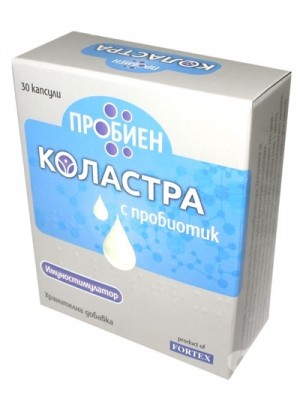
Colostrum is the first natural food that female mammals prod..
27.00€