Your shopping cart is empty!
Welcome visitor you can login or create an account.
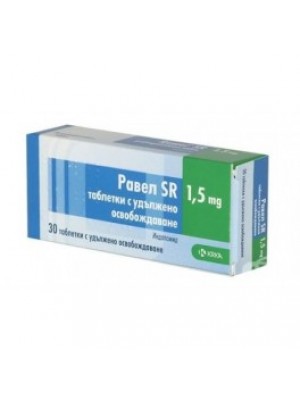
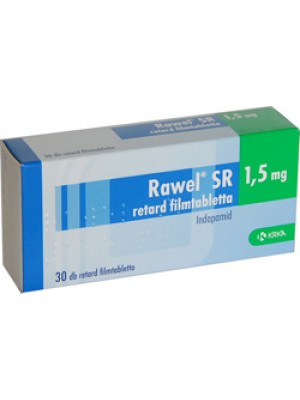
Rawel SR 1.5 mg. 90 tablets

Product viewed: 2511


WHAT IS RAVEL SR AND WHAT IT IS USED FOR?
Ravel SR is used to lower high blood pressure (hypertension). This is a prolonged-release tablet containing indapamide as an active ingredient.
Indapamide is a diuretic. Most diuretics increase the amount of urine produced by the kidneys. However, indapamide is different from other diuretics, as it only causes a slight increase in urine output.
2. BEFORE YOU TAKE RAVEL SR
Do not take Ravel SR:
If you are allergic (hypersensitive) to indapamide or any of the other ingredients of Ravel SR or to other medicines of the same type (called sulphonamides).
If you have severe kidney disease.
If you have severe liver disease or if you suffer from a condition called hepatic encephalopathy (degenerative brain disease). If you have low potassium levels in the blood
Take special care with Ravel SR Please tell your doctor:
- if you have liver problems;
- if you have diabetes;
- if you suffer from gout;
- if you have impaired kidney function
- if you have any problems with your heart rate;
- if you need a test to check how your thyroid works.
Tell your doctor if you have had photosensitivity reactions (to light).
If you think any of these things may apply to you or if you have any questions or doubts about taking this medicine, talk to your doctor or pharmacist.
Your doctor may order you laboratory tests to check for low sodium or potassium levels or for high calcium levels.
Important information for athletes
Athletes should keep in mind that this drug contains an active substance that can give a positive reaction during a doping test.
Taking other medicines
Concomitant use of Ravel SR and some other medicines may increase the effect of one or another medicine and cause side effects. Please tell your doctor if you are taking or have recently taken any other medicines, including medicines obtained without a prescription.
You should not take Ravel SR at the same time as lithium (used to treat depression) because of the risk of elevated blood lithium levels.
Tell your doctor if you are taking any of the following medicines, as special care may be required:
Drugs used in heart rhythm problems (eg quinidine, hydroquinidine, disopyramide, amiodarone, sotalol, ibutilide, dofetilide, digitalis),
Medicines used to treat mental illnesses such as depression, anxiety, schizophrenia ... (eg tricyclic antidepressants, antipsychotic medicines, neuroleptics),
Bepridil (used to treat angina), a condition that causes chest pain
Cisapride, difenamyl (used to treat gastrointestinal problems), sparfloxacin, moxifloxacin (antibiotics used to treat infections),
Halofantrine (a parasitic drug for the treatment of certain types of malaria),
Pentamidine (used to treat some types of pneumonia), Mizolastine (used to treat allergic reactions such as hay fever),
Non-steroidal pain relievers (eg ibuprofen) or high doses of acetylsalicylic acid, Angiotensin Converting Enzyme (ACE) inhibitors (used to treat high blood pressure and heart failure), Oral corticosteroids used to treat various diseases, including severe asthma and rheumatoid arthritis, Stimulating laxatives,
Baclofen (for the treatment of muscular stiffness occurring in a disease such as multiple sclerosis),
Potassium-sparing diuretics (amiloride, spironolactone, triamterene), metformin (for the treatment of diabetes),
Iodine-containing contrast agents (used for X-ray studies), Tablet Calcium or other calcium supplements,
Ciclosporin, tacrolimus or other medicines that suppress the immune system after organ transplantation, to treat autoimmune diseases or severe rheumatic and dermatological diseases, Tetracosactide (for the treatment of Crohn's disease).
Taking Ravel SR with food and drink
Food and beverages do not affect the effect of Ravel SR.
Pregnancy and breastfeeding
Ask your doctor or pharmacist before taking any medicine. This medicine is not recommended during pregnancy. When pregnancy is planned or confirmed, alternative treatment should be switched as quickly as possible.
Please tell your doctor if you are pregnant or want to become pregnant. The active substance is excreted in the milk. If you take this medicine, breast-feeding is not recommended.
Driving and using machines
This medicine may cause side effects as a result of lowering of blood pressure, such as dizziness or fatigue (see section 4). These side effects occur most often at the beginning of treatment or after an increase in the dose. If this happens
HOW TO TAKE RABEL SR?
Always take Ravel SR exactly as your doctor has told you. You should check with your doctor or pharmacist if you are not sure. Raven's dose is one tablet per day. Take the medicine every day at the same time, preferably in the morning; swallow the tablets whole with a little liquid. Tablets can be taken regardless of diet. Do not break or chew them. The treatment of high blood pressure usually lasts throughout life.
If you take more Ravel SR than you should
If you have taken too many tablets, contact your doctor or pharmacist immediately. Very high doses of Ravel SR can cause nausea, vomiting, low blood pressure, cramps, dizziness, drowsiness, confusion and a change in the amount of urine produced by the kidneys.
If you forget to take Ravel SR
If you have forgotten to take a dose of your medicine, take the next dose at the usual time.
Do not take a double dose to make up for the missed tablet. If you stop taking Ravel SR
Since high blood pressure usually lasts throughout your life, talk to your doctor before stopping taking this medicine. If you have any further questions on the use of this medicine, ask your doctor or pharmacist.
4. POSSIBLE SIDE EFFECTS
Like all medicines, Ravel SR can cause side effects, although not everyone gets them.
The frequency of side effects listed below is determined according to the following categories:
Very common: occurs in more than 1 in 10 patients
Common: occurs in between 1 and 10 patients in 100
Uncommon: occurs in between 1 and 10 in 1,000 patients
Rarely: occurs in between 1 and 10 in 10,000 patients
Very rare: occurs in less than 1 in 10,000 patients
Not known: frequency can not be estimated from the available data.
These may include:
Common: low potassium levels in the blood, which may cause muscle weakness.
Uncommon: vomiting, allergic reactions, mostly skin such as skin rash, purpura (red spots on the skin) in people with a predisposition to allergic reactions and asthma attacks.
Rare: Feeling fatigued, dizziness, headache, tingling (paresthesia); Gastrointestinal disorders (such as nausea, constipation), dry mouth; Increased risk of dehydration in elderly patients and in patients with heart failure.
Very rare: Cardiac rhythm disturbances, low blood pressure; Kidney disease; including kidney failure to function properly; Pancreatitis (inflammation of the pancreas that causes upper abdominal pain), abnormal liver function. In cases of hepatic failure, hepatic encephalopathy (degenerative brain disease) may occur; Changes in blood cells such as thrombocytopenia (decreased platelet counts, which can easily cause bruising with minor trauma and also nose bleeds), leucopenia (a decrease in white blood cells that can cause fever of unknown origin, sore throat or other flu-like symptoms - if this occurs, contact your doctor) and anemia (reduction of red blood cells); Angioedema and / or urticaria, severe skin manifestations. Angioedema is characterized by swelling of the skin of the limbs or face, swelling of the lips or tongue, swelling of the lining of the throat or the airways, resulting in shortness of breath or difficulty in swallowing. If this happens, contact your doctor immediately.
If you suffer from systemic lupus erythematosus (a kind of connective tissue disease), it may get worse. Cases of hypersensitivity to light (change in skin type) after exposure to sunlight or artificial UVA rays have also been reported.
Some changes may occur in your lab and your doctor may direct you to do blood tests to check your condition. The following changes in laboratory performance may occur: Low potassium levels in the blood, which may lead to muscle weakness,
Low sodium levels in the blood, which can lead to dehydration and low blood pressure,
Uric acid elevation - a condition that can cause or worsen gout (painful joints especially on the feet); Increased blood glucose levels in diabetics; Increase in calcium in the blood.
If any of the side effects gets serious, or if you notice any side effects not listed in this leaflet, please tell your doctor or pharmacist.
5. HOW TO STORE RABEL SR?
Keep out of the reach and sight of children.
Do not use Ravel SR after the expiry date which is stated on the pack. The expiry date refers to the last day of that month.
Store below 25 ° C. Store in the original package
6. ADDITIONAL INFORMATION
What does Ravel SR contain?
The active substance is indapamide. Each prolonged-release tablet contains 1.5 mg indapamide.
The other ingredients are: hypromellose, powdered cellulose, lactose monohydrate, povidone, silica, colloidal anhydrous, magnesium stearate in the tablet core and hypromellose, macrogol 400, titanium dioxide (E171) in the film coating.
How did Ravel SR look and what does the package contain?
The prolonged-release tablets are white, round, slightly biconvex. The tablets are supplied in cartons of 20, 30 and 90 tablets in blisters. Not all packs can be marketed.
Write a review
Your Name:Your Review: Note: HTML is not translated!
Rating: Bad Good
Enter the code in the box below:
Related Products