Your shopping cart is empty!
Welcome visitor you can login or create an account.
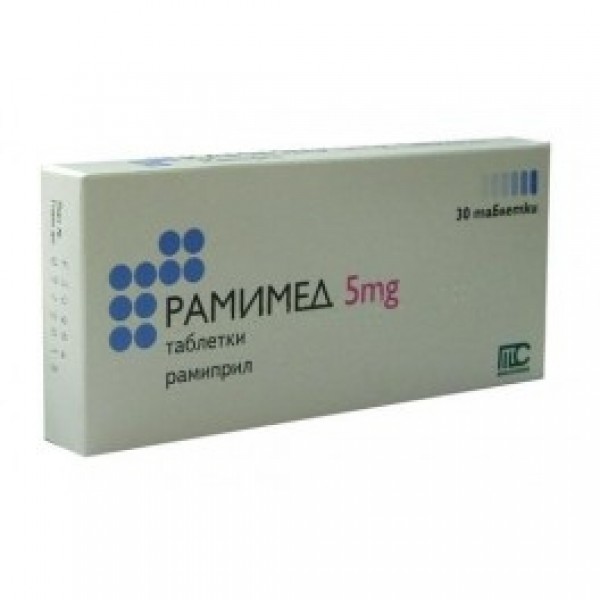
RAMIMED 5 mg. 30 tablets
Product Code: RAMIMED 5 mg. 30 tablets
Availability: In Stock
Product viewed: 1480


RAMIMED 5 mg. 30 tablets
WHAT ARE RAMIMED TABLETS AND WHAT IT IS USED?
Ramimed contains ramipril and is used to treat high blood pressure and kidney disease. Ramimed also apply for the prevention of the complications of narrowing of the arteries and diabetes.
Ramimed belongs to the group of medicines known as ACE inhibitors. Ramimed assist the suppression of the formation of substances that raise blood pressure. This leads to dilation of blood vessels and thus a decrease in blood pressure. It has been shown that Ramimed reduces mortality from heart failure after a heart attack. Ramimed reduces the risk of heart attack, stroke, and death from cardiovascular disease in patients with a narrowing of the arteries in patients with diabetes, with one or more other risk factors.
BEFORE YOU TAKE RAMIMED
Do not take Ramimed:
- If you are hypersensitive to ramipril, other ACE inhibitors or any of the excipients of the tablet Ramimed
- If you have previously had swelling in the legs, arms, face, mucous membranes
- If you are pregnant or breastfeeding
Do not use Ramimed during the last six months of pregnancy.
Take special care with Ramimed:
- Renal impairment, dialysis, blood disorders, diabetes, liver problems, other cardiac disease
- Any allergies or an allergic reaction in the past with swelling of face, lips, tongue and / or throat. This can be caused by food bite by a bee or wasp, or other drugs.
- If you stand treatment for hypersensitivity to bee bites or wasp or called. LDL apheresis as Ramimed can cause severe allergic reactions
- If you have severe vomiting or diarrhea, use of diuretics, potassium supplements, potassium-sparing medicines, potassium containing salt substitutes or diet, limiting salt.
ADMISSION OF RAMIMED with food and drink
If you consume alcohol while taking Ramimed can experience dizziness, tiredness or weakness, as alcohol may enhance the action of the drug and lead to very low blood pressure. Rich salt diet can reduce the effect of Ramimed.
Pregnancy and lactation
Usually the doctor will advise you to take another medicine instead Ramimed as Ramimed not recommended in early pregnancy and may cause serious harm to your child if necessary after 3 months of pregnancy.
Before the onset of pregnancy usually Ramimed be replaced by appropriate antihypertensive drugs.
Medicinal product should not be used during the 2nd and 3rd trimester of pregnancy.
Your doctor will normally advise you to stop taking Ramimed, as soon as you know you are pregnant.
If you become pregnant during treatment with Ramimed, please inform your doctor immediately and seek advice.
You should not take Ramimed if you are breastfeeding, as it is not known whether ramipril is excreted in human milk.
DRIVE AND USE MACHINES
If you experience dizziness or fatigue, do not drive or operate machinery during treatment with Ramimed.
Important information about some of the ingredients of RAMIMED
Ramimed contain lactose.
HOW TO TAKE RAMIMED?
The tablets should be swallowed whole with at least half glass of water. Tablets should not be chewed or crushed. The tablets can be divided into two equal halves.
Normally dosing:
- For adults with hypertension, the usual dose is 2.5-5 mg once daily. Do not take more than 10 mg per day
- For the treatment of cardiac and vascular diseases, the usual dose is 2.5 mg once a day.
- For adults with kidney disease, the usual starting dose is 1.25 mg daily. The doctor may increase this dose by doubling every 2-3 weeks. Do not take more than 10 mg daily.
Ramimed not recommended for use in children and adolescents under 18 years.
POSSIBLE SIDE EFFECTS
Common - dizziness, headache, hypotension, cough, diarrhea, vomiting, impaired renal function,
Uncommon - mood swings, dizziness, tingling, taste disturbance, sleep disorders, heart attacks or stroke, palpitations, increased heart rate, bluish fingers and toes, runny nose, shortness of breath, nausea, abdominal pain or dyspepsia, loss of appetite, rash, itching, impotence, fatigue, weakness.
Rare - confusion, dry mouth, hypersensitivity reactions with swelling of the face, arms and legs, lips, tongue and / or throat, shortness of breath or difficulty swallowing, hives, hair loss, psoriasis, increases in nitrogen-containing bodies in the blood acute renal failure, enlarged mammary glands.
Very rare - aremiya, blood dyscrasias, disorders of the lymph glands, autoimmune disease, low blood sugar, cramps of the airway tube, sinusitis, inflammation of the lungs, jaundice, sweating, skin reactions such as redness, blistering and infection of the skin with large , peeling flakes, decreased urine.
Stop taking RAMIMED and immediately contact your doctor:
- If you experience dizziness / fainting, tiredness or weakness, you should consult your doctor as soon as possible.
- If you develop swelling of the face, hands and feet, tongue and / or throat, shortness of breath or difficulty swallowing, you should stop taking Ramimed and immediately contact a doctor.
- If you have an infection with symptoms such as fever and serious deterioration of your general condition, or fever with sore throat / mouth or urinary problems.
We need to do blood tests to check for possible reduction of white blood cells.
MORE INFORMATION
What Ramimed:
- The active substance is ramipril
- The other ingredients are sodium bicarbonate, lactose monohydrate, croscarmellose sodium, pregelatinized corn starch and sodium stearyl fumarate.
In addition, tablets containing 5mg of yellow iron oxide and red iron oxide
Write a review
Your Name:Your Review: Note: HTML is not translated!
Rating: Bad Good
Enter the code in the box below:
Related Products
RAMIMED NTC table. 5 mg. / 25 mg RAMIMED HCT WHAT ARE AND WH..
25.00€
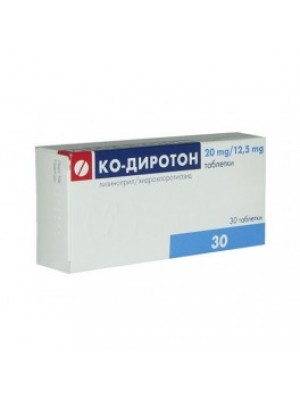
Co-DIROTON . 20 mg. / 12.5 mg. 30 tablets WHAT CO-DIROTON AN..
15.00€