
Your shopping cart is empty!
Welcome visitor you can login or create an account.
Prestilol 5 mg. / 10 mg. 30 tablets
Product Code: Prestilol 5 mg. / 10 mg. 30 tablets
Availability: In Stock

Product viewed: 2415


What is Prestilol and what it is used for
Prestilol contains the two active ingredients - bisoprolol fumarate and perindopril arginine in one tablet:
• Bisoprolol fumarate belongs to a group of medicines called beta-blockers. Beta-blockers slow down heartbeat and make it more efficient to pump blood from the heart to the body.
• Perindopril arginine is an angiotensin converting enzyme (ACE) inhibitor. It works by expanding the blood vessels, making it easier for your heart to pump blood through them.
Prestilol is used to treat high blood pressure (hypertension) and / or to reduce the risk of heart attacks, such as myocardial infarction, in patients with stable coronary artery disease (a condition where the blood supply to the heart is reduced or blocked) have had a myocardial infarction and / or an operation to improve the blood supply to the heart by expanding blood vessels that supply it.
Instead of taking bisoprolol fumarate and perindopril arginine as separate tablets, you will take one Prestilol tablet containing both ingredients in the same amount.
2. What you need to know before you take Prestilol
Do not take Prestilol:
• if you are allergic to bisoprolol or any other beta-blocker, to perindopril or any other ACE inhibitor or any of the other ingredients of this medicine (referred to in section 6);
• if you have heart failure that has suddenly become worse and / or may be a hospital;
• if you have a cardiogenic shock (a severe heart condition caused by pressure),
• if you have a heart disease characterized by slow or irregular heart rhythm (a second or third degree cardiac block, a sinus block, a sinus node syndrome),
• if you have delayed heartbeat,
• if you have too low blood pressure,
• if you have severe asthma or severe chronic lung disease,
• if you have severe blood circulation problems in your extremities (such as Raynaud's syndrome) that may cause your fingers or toes to get faded or pale or bluish,
• if you have an untreated pheochromocytoma that is a rare tumor of the adrenal gland (medulla)
• if you have metabolic acidosis, a condition where you have too much acid in your blood,
• if you have had symptoms such as whistling, swelling of the face, tongue or throat, severe itching or severe skin rashes in previous ACE inhibitor treatment, or if you or a member of your family have had such symptoms under other circumstances (a condition called angioneurotic edema) ,
• if you are pregnant after the third month (it is also preferable to avoid Prestilol in the early stages of pregnancy - see section on pregnancy),
• if you have diabetes or have impaired kidney function and are being treated with a blood pressure lowering medication containing aliskiren,
• if you are on dialysis or some other type of blood filtration. Depending on the device you are using, Prestilol may be inappropriate for you,
• if you have kidney problems where the supply of your kidneys with blood is reduced (renal artery stenosis),
• if you are being treated with saquitril / valsartan, a medicine used to treat heart failure (see "Warnings and precautions" and "Other medicines and Prestilol").
Warnings and precautions
Talk to your doctor or pharmacist before taking Prestilol if: you have diabetes;
have kidney problems (including kidney transplantation) or if you are on dialysis treatment;
you have a liver problem;
have aortic and mitral stenosis (narrowing of the main blood vessel coming out of the heart) or hyperglyphic cardiomyopathy (heart muscle disease) or renal artery stenosis (narrowing of the artery that supplies the kidney with blood);
have abnormally elevated blood levels of the hormone called aldosterone (primary aldosteronism),
if you suffer from heart failure or other heart problems such as mild heart rhythm abnormal or severe chest pain at rest (Prickmetal's angina);
suffer from collagen vascular disease (connective tissue disease) such as systemic lupus erythematosus or scleroderma,
adhere to a diet with limited intake of salt or use potassium salt substitutes that contain potassium (increased amounts of potassium in the blood may cause changes in heart rate);
if you have recently had diarrhea or vomiting or if you are dehydrated (Prestilol may cause a fall in blood pressure);
you should be subjected to LDL apheresis (which is removal of cholesterol from your blood by machine);
You are currently undergoing anti-allergic treatment or you are going to be subjected to a desensitization treatment to reduce the allergic effects of bee or shoulder sting or strictly starving or severe dieting; is about to
other medicines for the treatment of high blood pressure, including angiotensin II receptor blockers (ARB), aliskiren (see also "Do not take Prestilol", "Warnings and precautions for use") or diuretics (medicines that increase the amount of urine, produced by the kidneys);
• potassium-sparing medicines (eg triamterene, amiloride), potassium supplements or potassium-containing salt substitutes, other medicines that can increase potassium in the body (such as heparin and co-trimoxazole, also known as trimethoprim / sulfamethoxazole) ;
• potassium-sparing medicines used to treat heart failure: eplerenone and spironolactone at doses from 12.5 mg to 50 mg per day;
• sympathomimetic agents for the treatment of clinical shock (adrenaline, noradrenaline, dobutamine, isoprenaline, ephedrine),
• estramustine - used in the treatment of cancer,
• medicines most commonly used to treat diarrhea (racemacotril) or to avoid rejection of transplanted organs (sirolimus, everolimus, temsirolimus and other medicines belonging to a class of medicines called mTOR inhibitors). See "Warnings and precautions for use",
• Sacubitril / valsartan (used for long-term treatment of heart failure). See "Do not take Prestilol" and "Warnings and precautions for use".
• lithium - used to treat mania and depression,
• some medicines used to treat depression, such as imipramine, amitriptyline, monoamine oxidase inhibitors (MAO) (except MAO-B inhibitors);
• some medicines used to treat schizophrenia (antipsychotics);
• some medicines used to treat epilepsy (phenytoin, barbiturates such as phenobarbital);
• Anesthesiological medicinal products used in surgical procedures;
• vasodilators, including nitrates (preparations that increase the blood vessels);
• trimethoprim used to treat infections;
• immunosuppressants (medicines that reduce the body's defense mechanism) such as ciclosporin, tacrolimus, used to treat autoimmune disorders or after transplant surgery;
• allopurinol used to treat gout;
• parasympathomimetic drugs used to treat conditions such as Alzheimer's disease or glaucoma;
• topical beta-blockers for the treatment of glaucoma (elevated intraocular pressure);
• mefloquine used to treat malaria;
• baclofen used to treat muscle stiffness in some diseases, such as multiple sclerosis;
• gold salts, especially when given intravenously (used to treat symptoms of rheumatoid arthritis);
• medicines to treat diabetes such as insulin, metformin, linagliptin, saxagliptin, sitagliptin, vildagliptin;
• non-steroidal anti-inflammatory drugs (NSAIDs), e.g. ibuprofen or diclofenac, or high doses of aspirin that are used to treat arthritis, headache, pain or inflammation.
Appreciated with food, drinks and alcohol
Prestolol should preferably be taken before a meal.
Pregnancy and breastfeeding
If you are pregnant or breast-feeding, think you may be pregnant or are planning to become pregnant, ask your doctor or pharmacist for advice before taking this medicine.
Pregnancy
You must tell your doctor if you think you are pregnant (or you may become pregnant). Your doctor will usually advise you to stop taking Prestilol before getting pregnant or as soon as you know you are pregnant and will advise you instead of taking Prestilol to take other medicines. Prestilol is not recommended in the early stages of pregnancy and should not be used if you are pregnant after the third month as it may cause serious harm to your baby if used after the third trimester of pregnancy.
Breastfeeding
Tell your doctor if you are breast-feeding or intend to breast-feed. Prestilol is not recommended for mothers who are breast-feeding and your doctor may choose another treatment for you if you want to breast-feed, especially if your baby is newborn or premature.
Driving and using machines
Prestilol has no direct effect on attention concentration but some patients may experience dizziness or weakness associated with low blood pressure, especially at the beginning of treatment, when switching to treatment, and when used in conjunction with alcohol. If you are affected this way, your ability to drive or operate machinery may be impaired.
3. How to take Prestilol
Always take this medicine exactly as your doctor has told you. If you are not sure, ask your doctor or pharmacist. The recommended starting dose is one tablet once a day. Swab the tablet with a glass of water in the morning before eating. In some cases, your doctor may prescribe half a tablet of Prestilol once a day, in the morning before a meal.
Patients with kidney
Very common (may affect more than 1 in 10 people):
• Delayed heartbeat.
Common (may affect up to 1 in 10 people):
• headache,
• dizziness,
• vertigo,
• disturbed taste,
• tingling (needles)
• numbness and depression of the hands and feet,
• visual disturbances,
• tinnitus (feeling of tinnitus),
• feeling cold in the arms and legs,
Coughing
• Lack of air,
• gastrointestinal disorders such as nausea, vomiting, abdominal pain, difficulty in digestion or dyspepsia, diarrhea, constipation,
• allergic reactions such as skin rashes, pruritus,
• muscle cramps,
• feeling tired,
• fatigue.
Uncommon (may affect up to 1 in 100 people):
• variable mood,
• disturbed sleep,
• depression,
• dry mouth,
• intense pruritus or severe skin rashes,
• blistering on the surface of the skin,
• increased skin sensitivity to the sun (photosensitivity reactions)
• sweating,
• kidney problems,
• impotence,
• increased number of eosinophils (a type of white blood cell)
• drowsiness,
• fainting,
• palpitations,
• tachycardia,
• irregular heartbeat (abnormal AV conduction, inflammation of blood vessels (vasculitis),
• Dizziness when standing,
• muscle weakness,
• arthralgia (joint pain)
• myalgia (muscle pain),
• chest pain,
• physical malaise,
• localized swelling (peripheral edema),
• fever,
• fall,
• changes in laboratory performance: increased blood potassium levels, reversible upon discontinuation of administration; decreased levels of sodium, very low blood sugar (hypoglycaemia) in patients with diabetes, increased blood urea, increased creatinine in the blood.
Rare (may affect up to 1 in 1,000 people):
• nightmares, hallucinations,
• reduced tear (dry eye),
• hearing problems,
• erectile problems,
• inflammation of the liver, which may cause yellowing of the skin or white eyes,
• allergic rhinitis, sneezing,
• allergic-like reactions such as itching, redness, rash,
• worsening of psoriasis,
• changes in laboratory performance: elevated liver enzymes, high levels of bilirubin in serum, abnormal fat levels.
Very rare (may affect up to 1 in 10,000 people):
• disorientation (confusion),
• irritation and redness of the eye (conjunctivitis)
• eosinophilic pneumonia (a rare type of pneumonia)
• inflammation of the pancreas (which causes severe abdominal and back pain)
• hair loss,
• appearance or worsening of flaky rash (psoriasis), psoriasis-like rash,
• acute renal failure,
• changes in blood counts, such as a lower number of white and red blood cells, decreased hemoglobin, and a lower number of platelets.
Concentrated urine (dark color), feeling unwell, muscle cramps, confusion and fainting, which may be due to irregular antidiuretic hormone secretion (ADH). If you experience any of these symptoms, contact your doctor as soon as possible. quickly
How to Store Prestilol
Keep out of the reach and sight of children.
Do not use this medicine after the expiry date which is stated on the carton. The expiry date refers to the last day of that month.
This medicine does not require any special storage conditions.
Upon opening, Prestilol should be used for up to 20 days for tablet packs of 10 film-coated tablets; 60 days for tablet packs of 28 or 30 film-coated tablets and 100 days for tablet packs of 100 film-coated tablets.
Do not dispose of medicines in the sewer or in the household waste container. Ask your pharmacist how to dispose of medicines you no longer use. These measures will help to protect the environment.
6. Contents of the pack and further information What Prestilol contains
- The active substances are bisoprolol fumarate and perindopril arthrin. One film-coated tablet Prestilol contains 5 mg of bisoprolol fumarate equivalent to 4,24 mg of bisoprolol and 10 mg of perindopril arginine equivalent to 6,790 mg of perindopril.
- The other ingredients are cellulose, microcrystalline PH 102 (E460), calcium carbonate (E170), corn starch, pregelatinised sodium starch glycolate type A (E468), colloidal silicon dioxide, anhydrous E551, magnesium stearate (Liga B572), croscarmellose Sodium (E468), glycerol (E422), hypromellose (E464), macrogol 6000, titanium dioxide (E171), yellow iron oxide (E172), red iron oxide (B172) and purified water.
What Prestilol looks like and what the package contains
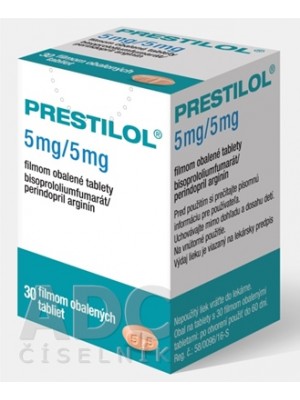
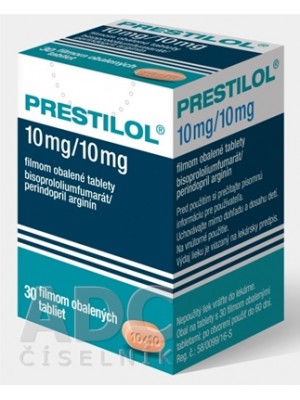
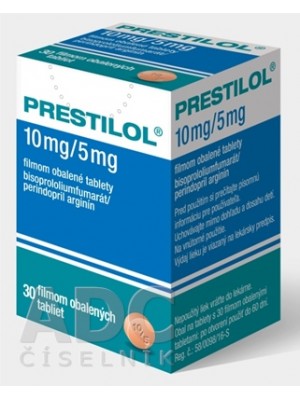
He was a pink-beige, elongated, two-layered, scored tablet-coated tablet, engraved on both sides. The tablet can be divided into two equal doses.
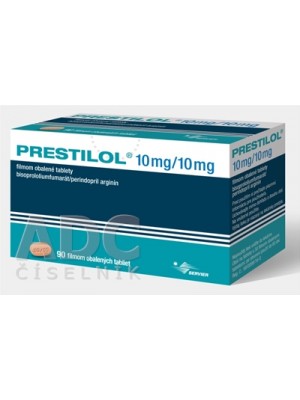
The tablets are supplied in cartons of 10, 28, 30, 84 (3 packs of 28 tablets), 90 (3 packs of 30 tablets), 100 and 120 (4 packs of 30 film-coated tablets). Not all pack sizes may be marketed.
Write a review
Your Name:Your Review: Note: HTML is not translated!
Rating: Bad Good
Enter the code in the box below:
Related Products
What is Prestilol and what it is used for
Prestilol conta..
19.00€
What is Prestilol and what it is used for
Prestilol conta..
28.00€
What is Prestilol and what it is used for
Prestilol conta..
24.00€
What Presgillol is and what it is used for
Prestilol cont..
26.00€