
Your shopping cart is empty!
Welcome visitor you can login or create an account.
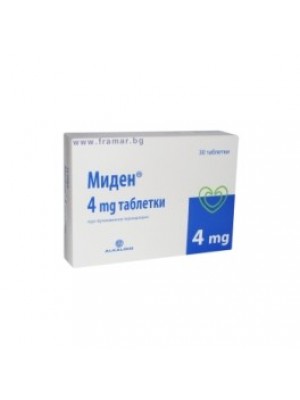
Prenessa 4mg. 30 tablets

Product viewed: 3862


What is Prenessa and what is it used for?
The active substance in Transferase tablets belongs to a group of medicines known as angiotensin converting enzyme (ACE) inhibitors. It works by expanding the blood vessels, making it easier to pump the blood from the heart through them to all parts of the body.
Prenessa Tablets are used for:
Treatment of high blood pressure (hypertension).
Treatment of symptomatic heart failure (a condition where the heart is unable to pump enough blood in your body).
To reduce the risk of heart attacks, such as heart attack, patients with stable coronary heart disease (a condition where cardiac blood supply is reduced or blocked), and those who have already had a heart attack and / or surgery to improve of the blood supply of the heart by expanding the vessels that supply it with blood.
2. What do you need to know before you take Transfer?
Do not take Prenessa
if you are allergic (hypersensitive) to perindopril, to any other ACE inhibitor or to any of the other ingredients of this medicine (listed in section 6) =
if you have had a hypersensitivity reaction in the past with sudden swelling of the lips and face, neck, possibly the hands and feet, or suffocation or hoarseness (angioedema) after using an ACE inhibitor;
if you have had a case of angioedema in your family or have had angioedema in other circumstances;
if you are more than 3 months pregnant (it is also good to avoid Premenopause at the beginning of pregnancy - see Pregnancy);
if you have diabetes or have impaired kidney function and are being treated with a medicine to lower blood pressure containing aliskiren.
Transferred tablets are not recommended for use in children and adolescents.
Warnings and precautions
Talk to your doctor before taking Prenessa
It is possible that Precessa is not suitable for you. Therefore, before you start taking Transferase tablets tell your doctor about the following:
if you are told that you have reduced or blocked blood supply to the heart (unstable angina pectoris)
if you are told that your heart muscle is enlarged or you have a problem with your heart valves;
if you are told that you have a narrowing of the artery that supplies the kidneys with blood (renal artery stenosis) if you suffer from diabetes,
if you suffer from other kidney, liver or heart disease if you are undergoing dialysis or if you have had a recent kidney transplant if you are on a salt-restricted diet or if you have had severe vomiting or diarrhea or have used medicines that increase the amount of urine output (diuretics),
if you are taking lithium, a medicine used to treat mania or depression,
if you are taking potassium supplements or salt substitutes containing potassium or other medicines that are associated with increases in serum potassium such as heparin,
if you undergo a procedure to remove cholesterol from your blood with an apparatus (LDL apheresis)
if you are or will be subjected to treatment to reduce the effects of allergy after bee or ostrium sting,
if you have collagenosis (connective tissue disease) such as systemic lupus erythematosus or scleroderma,
if you are receiving immunosuppressive treatment,
if your blood pressure does not fall sufficiently due to ethnicity (especially in black patients) if you are going to have an operation or general anesthetic if you are suffering from cerebrovascular disease,
if you are taking any of the following medicines used to treat high blood pressure: angiotensin N receptor blocker (ARB) (also known as sartans - for example valsartan, telmisartan, irbesartan), especially if you have kidney problems associated with diabetes, aliskiren.
Your doctor may periodically check your kidney function, blood pressure and the amount of electrolytes (eg potassium) in your blood. Also see the information titled "Do not take Transferase" if you are taking any of the following medicines, the risk of angioedema is increased:
(used to treat diarrhea), sirolimus, everolimus, temsirolimus and other medicines belonging to a class of medicines called mTOR inhibitors (used to avoid rejection of transplanted organs).
You should tell your doctor if you think you are (or may be) pregnant. Transmission is not recommended in early pregnancy and should not be taken if you are more than 3 months pregnant, as it may cause serious harm to your baby if taken during this period (see Pregnancy).
Other Drugs and Transmission
Tell your doctor or pharmacist if you are taking, have recently taken or might take any other medicines.
Do not take over-the-counter medicines without consulting your doctor.
This mainly applies to:
medicines used in colds that contain pseudoephedrine or phenylephrine as active substances, painful
Your doctor may need to change your dose and / or take other precautions: if you are taking an angiotensin II receptor blocker (ARB) or aliskiren (see also the information titled "Do not take Prestasis" and "Warnings and precautions") .
Transfer with food and drink
It is recommended that Transferase be taken before a meal to reduce the influence of food on the way the medicine works.
Pregnancy and breastfeeding
If you are pregnant or are breast-feeding, think you may be pregnant or plan to become pregnant, ask your doctor or pharmacist for advice before taking this medicine.
Pregnancy
You should tell your doctor if you think you are (or may be) pregnant. Your doctor will usually advise you to stop taking Prenessa before you become pregnant or as soon as you know that you are pregnant and will advise you to take another medicine instead of Prenesa. Transmission is not recommended in early pregnancy and should not be taken if you are more than 3 months pregnant, as it can cause serious harm to your baby if used after the third month of pregnancy.
Breastfeeding
Tell your doctor if you are breast-feeding or intend to breast-feed. Transfer is not recommended for mothers who are breast-feeding and your doctor may choose another treatment for you if you want to breast-feed, especially if your baby is newborn or was born prematurely.
Driving and using machines
You should not drive or operate machines until you know how Transmission works. Transmission usually does not affect alertness, but dizziness or weakness due to low blood pressure may occur in some patients, especially at the beginning of treatment or in combination with other antihypertensive drugs.
As a result, the ability to drive or use machines may be impaired. Transferring tablets contain lactose (such as lactose monohydrate)
If you have been told by your doctor that you have an intolerance to some sugars, contact your doctor before taking this medicinal product.
3. How to take Prenessa?
Always take this medicine exactly as described in this leaflet or as your doctor or pharmacist has told you. If you are not sure, ask your doctor or pharmacist.
The recommended dose for the treatment of high blood pressure is 4 mg perindopril (1 tablet Transfer 4 mg) once a day. When necessary, the dose may be increased to 8 mg perindopril (2 tablets Transfer 4 mg) once a day.
The recommended dose for the treatment of symptomatic heart failure is 2 mg perindopril (1 tablet Transfer 2 mg) once a day, which can be increased to 4 mg perindopril (1 tablet Transfer 4 mg tablets or 2 tablets Transfer 2 mg tablets once a day when necessary.
A recommended starting dose for the treatment of stable coronary artery disease is 4 mg perindopril (1 tablet Perindopril 4 mg) once daily; if well tolerated, the dose may be increased to 8 mg peridopril (2 tablets Transfer 4 mg) once daily.
Take the tablet with a glass of water, preferably at the same time each day, in the morning, before a meal.
During treatment, your doctor will adjust the dose according to the effect of your treatment as well as your needs.
Dose may be lower than usual and will be determined by a physician: in elderly patients, in patients with renal impairment, in patients with high blood pressure caused by narrowing of the arteries supplying blood to the kidneys (Renovascular hypertension ), patients being treated concomitantly with medicines that increase urinary output (diuretics), hypertensive patients whose diuretics can not be discontinued, patients with severe heart failure, patients treated with mild which extend the blood vessels - (vasodilators).
Your doctor will determine the duration of treatment based on your condition.
Use in children
Safety in use in children has not been established. Therefore, use in children is not recommended.
If you have the impression that the effect of the medicine is too strong or too weak, talk to your doctor or pharmacist.
If you take more Prenessa than you should
If you take too many tablets, talk to your doctor or pharmacist immediately.
The most likely sign of overdose is a sudden drop in blood pressure (hypotension). Other symptoms may include slowing or slowing of the heart rate, unpleasant sensations of irregular and / or rapid heartbeat, rapid breathing, dizziness, anxiety and / or cough.
If blood pressure drops significantly, you should lie down with raised lower limbs and use only a low pillow.
If you forget to take Prenessa
It is important to take your medicine every day. However, if you miss a dose, simply continue with the next as usual. Do not take a double dose,
4. Possible side effects
Like all medicines, Transferase can cause side effects, although not everybody gets them.
Adverse reactions may occur:
Common (may affect up to 1 in 10 people):
headache, dizziness, dizziness (dizziness), tingling sensation or tingling in the hands or feet (paraesthesia), visual disturbances,
ringing, noise, roar, ringing in the ears, etc. (dyspnoea), indigestion, nausea (feeling sick), abdominal pain, changes in taste (dysgeusia), indigestion (dyspepsia), low blood pressure (hypotension) , diarrhea, constipation, rash, itching (pruritus), muscle cramps, weakness (asthenia).
Uncommon (may affect up to 1 in 100 people): low blood sugar (hypoglycaemia), high potassium levels in the blood, reversible upon cessation of treatment, low sodium levels, mood changes, sleep disturbances, drowsiness, loss of consciousness , palpitations, tachycardia, vasculitis (inflammation of the blood vessels), difficulty breathing (bronchospasm), dry mouth, hypersensitivity reaction with sudden swelling of the face, neck, lips, mucous membranes, tongue or throat is also swelling of the hands and feet (ang urticaria), photosensitivity reaction (increased skin sensitivity to the sun), arthralgia (joint pain), myalgia (muscle aches), weakening of renal function, inability to maintain or maintain erection (impotence) , chest pain, malaise, peripheral edema, fever, increased blood urea, increased creatinine in the blood, falling.
Rare (may affect up to 1 in 1,000 people):
laboratory abnormalities: Elevated liver enzymes, high serum bilirubin, worsening of psoriasis.
Very rare (may affect up to 1 in 10,000 people):
abnormal heart rhythm (arrhythmia), chest pain (angina pectoris), heart attack and stroke, possibly due to excessive blood pressure lowering in patients at high risk, inflammation of the lung associated with accumulation of certain blood cells eosinophils) in lung tissue (eosinophilic pneumonia), inflammation of the lining of the nose (rhinitis, pancreatitis), inflammation of the liver (hepatitis), allergic rash that is flat pinkish red spots (erythema multiforme) Stra renal failure.
5. How to store the Prenessa?
Keep out of the reach and sight of children.
Do not use Prenessa after the expiry date which is stated on the carton and blister after EXP. The expiry date refers to the last day of that month.
Store in the original package in order to protect from light and moisture. Store below 30 ° C.
Do not dispose of medicines in the sewage system or in the household waste container. Ask your pharmacist how to dispose of medicines you no longer use. These measures will help to protect the environment.
6. Package Contents and Additional Information
What does Prenessa contain:
The active substance is tert-butylamine perindopril (perindopril tert-butylamine). Each tablet contains 4 mg of tert-butylamine perindopril mg, equivalent to 3.338 mg of perindopril.
The other ingredients are: calcium chloride hexahydrate, lactose monohydrate, crospovidone type A, microcrystalline cellulose, silica, colloidal anhydrous and magnesium stearate.
What does Prenessa and what does the packaging look like?
The tablets are white to off-white, oval (8,5 mm long, 2,8-3,9 mm thick, slightly biconvex, single-sided tablet with bevelled edges).
The tablets can be divided into equal halves.
Prenessa 4 mg tablets are available in cartons of 10, 14, 28, 30, 50, 56, 60, 90 and 100 tablets in blisters.
Not all pack sizes may be marketed.
Write a review
Your Name:Your Review: Note: HTML is not translated!
Rating: Bad Good
Enter the code in the box below:
Related Products
What Co-Amlesa is and what it is used for
Co-Amlesa is pres..
18.00€
What Co-Prenessa is and what it is used for
What is Co-Pr..
12.00€
