Your shopping cart is empty!
Welcome visitor you can login or create an account.
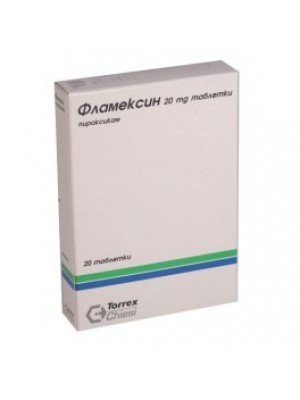
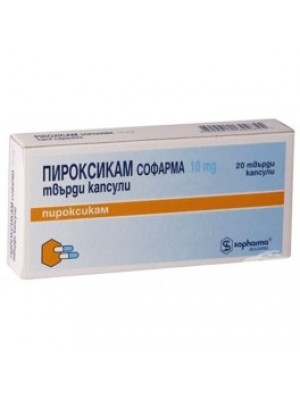
Piroxicam 20 mg.
Product Code: Piroxicam 20 mg.
Availability: In Stock

Product viewed: 1648


Piroxicam 20 mg.
Indications
Short-term symptomatic treatment of:
o Acute and chronic pain in inflammatory and degenerative diseases of the musculoskeletal system: rheumatoid arthritis; juvenile rheumatoid arthritis; ankylosing spondylitis; attack of gout and gouty arthritis; osteoarthritis.
o periarticular diseases: tendinitis, bursitis, tendobursiti, tendovaginitis, injuries in athletes.
o disc disease, plexitis, radikulonevriti.
o Postoperative pain in dental orthopedic and other minor surgery.
o Dysmenorrhea.
* Dosage
Oral.
Adults and children over 14 years:
1 capsule (20 mg) per day or as two doses of 10 mg.
In acute conditions, the initial daily dose is 40 mg in the first 2 days, then 20 mg daily for a period of 1-2 weeks.
In flare usual daily dose is 40 mg for a period of 5-7 days.
Dysmenorrhoea administered 40 mg on the first day of 20 mg in the coming days to abate the pain.
* Contraindications
o Hypersensitivity to piroxicam or any of the excipients of the product; hypersensitivity to salicylates or other NSAIDs.
o Active peptic ulcer or stomach ulcer, ulcerative colitis, and / or enterocolitis.
o Severe hepatic and renal insufficiency.
o Pregnancy and lactation.
o Children under 14 years of age.
* Special warnings
o Piroxicam apply after careful consideration in patients with a history of gastric ulcer and duodenal ulcer and bleeding from the gastrointestinal tract.
o Apply with caution in patients with known hypersensitivity.
o Piroxicam be used with caution in patients with renal impairment.
o Increased risk of side effects from the gastrointestinal tract exists in patients alcohol abusers, smokers, patients over 65 years of age who are concurrently taking oral corticosteroids and anticoagulants.
o Piroxicam can cause fluid retention, which requires careful its use in patients with cardiovascular disease, hypertension, kidney disease.
o There should be appointed with caution in patients with a history of bleeding disorders.
o Treatment with piroxicam may cause changes in liver function during long-term treatment, which requires monitoring of liver enzymes.
o In adopting piroxicam risk of hyperkalemia, especially in patients over 65 years, patients with renal failure, patients who are treated with ß-blockers, ACE-inhibitors and potassium sparing diuretics. In such patients require monitoring of serum potassium.
o Piroxicam reversibly suppresses fertility in women of childbearing age, which should be considered when trying to conceive.
* Interactions
o The use of piroxicam with alcohol, other NSAIDs and corticosteroids increases the risk of gastrointestinal side effects.
o Piroxicam prolongs and potentiates the action of lithium salts .;
o concomitant use of piroxicam and immunosuppressants leads to strengthening of their toxicity.
o Piroxicam lowered therapeutic efficacy of diuretics when administered concomitantly
o Piroxicam may reduce the antihypertensive effect of ACE inhibitors and ß-blockers when used concomitantly.
o When combined administration of anticoagulants, antiplatelet agents and NSAIDs increases the risk of ulcers and bleeding. It is controlling the bleeding time and prothrombin time during concomitant use.
o Co-administration of quinolones and piroxicam may increase the risk of seizures in patients with or without a history of epilepsy or seizures.
* Pregnancy and lactation
Piroxicam not be used during pregnancy.
* Adverse drug reactions
Gastrointestinal - anorexia, nausea, vomiting, epigastric pain, abdominal discomfort, constipation, bleeding and ulcers, diarrhea.
CNS - dizziness, vertigo, headache; rarely somnolence, fatigue, impaired concentration, fatigue;
Sensory organs - diplopia, blurred vision, impaired hearing, tinnitus, taste disturbance.
Cardiovascular system - rarely palpitations, angina, arrhythmias;
Skin and appendages - usually itching with or without rash; rarely - urticaria;
Urinary system - rarely edema; very rarely - acute renal failure, nephrotic syndrome, proteinuria, hematuria, interstitial nephritis, papillary necrosis.
Haematological disorders - leukopenia, thrombocytopenia, agranulocytosis, hemolytic anemia, aplastic anemia.
Hepatic impairment - increased serum aminotransferase transient increase in bilirubin; rarely toxic hepatitis with or without jaundice; very rarely - fulminant hepatitis.
Body as a whole - rarely - bronchospasm, asthma attacks, anaphylactic reactions in allergic patients.
Write a review
Your Name:Your Review: Note: HTML is not translated!
Rating: Bad Good
Enter the code in the box below:
Related Products