
Your shopping cart is empty!
Welcome visitor you can login or create an account.
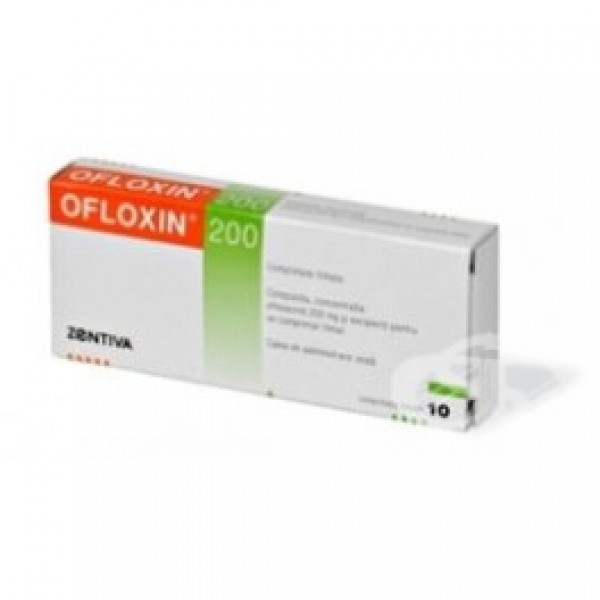
OFLOXIN 200 mg. 10 tablets
Product Code: OFLOXIN 200 mg. 10 tablets
Availability: In Stock
Product viewed: 1211


OFLOXIN 200 mg. 10 tablets
Active substance: Ofloxacin 200 mg in each tablet.
Excipients: lactose, corn starch, povidone, crospovidone, poloxamer, magnesium stearate, talc, hydroxypropylmethylcellulose, macrogol, titanium dioxide.
Formulation and packaging
Tablets
Content of one package:
10, 14 or 20 film-coated tablets
Pharmacotherapeutic group
Chemotherapeutic
Action
Ofloxacin, the active substance in Ofloksin 200, refers to the group of fluoroquinolones - intended for the treatment of moderate and severe inflammatory diseases caused by susceptible microorganisms.
Evidence
Ofloxin 200 is administered for treatment of infections of the lower respiratory tract, urinary tract infection, prostate, bone, skin and soft tissues, including early infections, intra-abdominal infections, including infections of the bile duct and urinary bladder and inflammation of the pelvis, and also and for treatment of severe infectious diarrhea (salmonellosis, shigellosis) and certain infections transmitted sexually.
Contraindications
Ofloxin 200 should not be used in patients with: - known hypersensitivity to ofloxacin or other quinolone therapies, or to any of the excipients of the medicinal product;
- Children and adolescents below 18 years as on the basis of animal studies can not completely exclude the possibility of damage to the cartilage of the growing organism;
- During pregnancy and lactation;
- Epilepsy or other disease of the central nervous system, eg. after craniocerebral injury, inflammation in the area of the brain or spinal cord injury, or stroke;
- Manifested inflammation of the tendon (tendonitis).
Special warnings and precautions for use
In patients with serious adverse reactions to other quinolone drugs in the past (ie. Inflammation of the tendon, serious reactions of the nervous system) are at greater risk of similar reactions to ofloksatsin.Ako establish inflammation of a tendon, treatment should be interrupt is nezabavno.Neobhodimo account when administered to patients with a defect in glucose 6-phosphatase (due to risk of decomposition of blood cells) and myasthenia (ofloxacin and similar substances may affect the neuromuscular conduction) .Po during treatment with Ofloksin 200 should avoid exposure to the sun or other sources of ultraviolet rays due to the risk of skin reactions.
Any use of alcohol during treatment with Ofloksin 200.
The use of antibiotics, in particular the prolonged use, can lead to propagation of resistant microorganisms. Therefore, the patient should be monitored regularly. If an infection should take appropriate measures.
Effects on laboratory tests:
During treatment with ofloxacin it is possible to obtain false positive results for the presence of opioids (strong analgesics) or porphyrin (substances seen in porphyria) in urine. It is also false to test positive for tuberculosis.
Interactions
The effect of Ofloksin 200 and that of other concomitant medicinal products may mutually influence.
Medicinal products that reduce the acidity of gastric juice, and those containing magnesium, aluminum, iron or zinc, reducing the efficacy of ofloxacin.
Other medicines may also contain these substances as excipients, e. products containing didanozin.Ednovremennoto application of ofloxacin and non-steroidal anti-rheumatic drugs (drugs against pain, fever, inflammation) or other medicines that lower the seizure threshold (theophylline, tramadol, antidepressants) may increase the risk of garchove.Ofloksatsin enhances the action of coumarin anticoagulants (drugs that prevent blood clotting, eg. warfarin). When co-administered with warfarin or its derivatives patients should be monitored vnimatelno.Poradi possible increase or decrease in blood sugar levels should posledovotelno to control the parameters of their compensation in patients treated with antidiabetic produkti.Pri concomitant administration of high doses of quinolones and medicinal products that are separated by tubular secretion (eg. probenecid, cimetidine, furosemide or methotrexate), serum levels may be increased and the elimination of quinolones to namali.Eto why your doctor should be informed of all medicinal products currently taking, whether prescribed or not.
Do not use other freely marketable product simultaneously Ofloksin 200 without consulting your doctor.
When the doctor prescribes medicines, uvedemete him that already use Ofloksin 200.
Pregnancy and lactation
In experimental animals were observed developmental disorders of cartilage tissue in the seed; This mechanism has not been confirmed so far in humans.
Due to lack of experience, the use of ofloxacin in pregnant and nursing mothers is contraindicated.
Effects on ability to drive and use machines
When using Ofloksin 200 is possible to slow down reactions and affect alertness in people who engage in activities requiring mental alertness, motor coordination and quick decision-making (such as driving, operating machinery, working in high places etc.). Therefore, you can perform these activities only with the express consent of your doctor.
Dosage and method of administration
The dosage of Ofloksin 200 is always determined by the physician, depending on the type and severity of the infection.
Adult patients with normal renal function using 1-2 tablets Ofloksin 200 every 12 hours.
In patients with renal impairment doctor determines the dosage of Ofloksin 200 depending on the degree of impairment of renal function.
In patients with severe liver impairment the dose should not exceed 2 tablets Ofloksin 200 daily.
In normal renal function in elderly patients (over 60 years) it is not necessary to reduce the dose.
The product should be taken half to one hour before meals with a little liquid. Drugs which reduce the acidity of gastric juice, and those containing magnesium, aluminum, iron and zinc, to be used 2 hours before or 2 hours after administration of 200 Ofloksin.
Strictly follow the dosage determined by your doctor, use the entire amount of medicine prescribed by the doctor. In case you miss a dose, take it as soon as you heard it. If it is time for your next dose, then take two doses at once.
Overdose
In case of overdose or accidental ingestion by children, seek medical advice. If the patient is fully conscious, can cause vomiting and used charcoal.
Adverse reactions
During treatment with Ofloksin 200 may occur following adverse reactions:
Digestive system
Common: vomiting, diarrhea (may be a symptom of an infectious inflammation of the colon *), abdominal pain, upset stomach;
Uncommon: nausea, constipation, decreased appetite, taste disturbances;
Rare: infectious inflammation of the colon *, lack of appetite.
Liver and biliary tract
Rare: jaundice, infectious hepatitis.
Nervous system
Common: headache, dizziness, sleep disturbances, restlessness;
Uncommon: somnolence, tremor (caused by impaired muscle coordination), collapse;
Rare: change in sensation of the musculoskeletal system and connective tissue, worsening of myasthenia (muscle disease).
Psyche
Rare: hallucinations, confusion, depression, euphoria.
Hearing
Rare: hearing disorders, hearing loss (rarely).
Vision
Rare: visual disturbances (eg. Blurred vision, color blindness - impaired color perception).
Cardiovascular system
Rare: fast heartbeat, non-infectious inflammation of the vessels.
Blood and lymphatic system
Uncommon: increase in white blood cells and platelets;
Rare: decrease the number of red blood cells and white blood cells (including complete loss of any type of white blood cells), decreased platelet count, reduction in red and white blood cells and platelets.
Kidney and urinary tract
Uncommon: renal function; Rare: acute non-infectious inflammation of the kidneys.
Skin and subcutaneous tissue
Common: rash, itching;
Uncommon: rash, due to increased sensitivity to light, erythema multiforme, Stevens-Johnson syndrome Lael, non-infectious inflammation of the vessels of the skin, other reactions; hypersensitivity (allergic reaction).
Immune system
Uncommon: hypersensitivity reactions (mostly as allergic skin reactions), anaphylaxis (a sudden hypersensitivity reaction).
Respiratory system, thorax and chest cavity
Uncommon: impairment of smell; Rare: inflammation of the lungs, loss of sense of smell.
Musculoskeletal and connective tissue
Rare: pain in muscles and joints, tearing the ligament, tendon pain, inflammation of the tendons.
Laboratory researches
Rare: elevated liver samples prolongation of the clotting time, decrease / increase of the blood sugar, increase the level of cholesterol in the blood, increased levels of blood fats, increased level of creatinine in the blood.
* It has been reported for infectious inflammation of the colon by treatment with an antibiotic (in most cases, caused by the bacterium Clostridium difficile).
Adoption of oflaksatsin should be discontinued immediately in the event of doubt about the presence of Clostridium difficile. In these cases, to avoid medicines that suppress the motility (peristalsis) of the bowel.
The occurrence of adverse events or other unusual reactions, consult your doctor about the further use of this medicine, but do not interrupt treatment without a doctor's consent.
Storage
Do not store above 25 ° C.
Protect from moisture.
Expiry date
3 years
Caution
Keep out of reach of children.
Do not use after the expiration date printed on the package.
Write a review
Your Name:Your Review: Note: HTML is not translated!
Rating: Bad Good
Enter the code in the box below:
Related Products
NORFLOHEXAL 400 mg. 20 tabletsWhat is NorfloHEXAL tablets?No..
19.00€
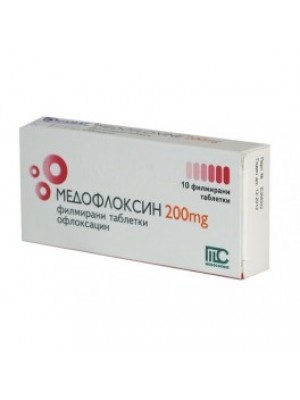
MEDOFLOXINE 200 mg. 10 tabletsWHAT MEDOFLOXINE AND WHAT IT I..
15.00€