Your shopping cart is empty!
Welcome visitor you can login or create an account.
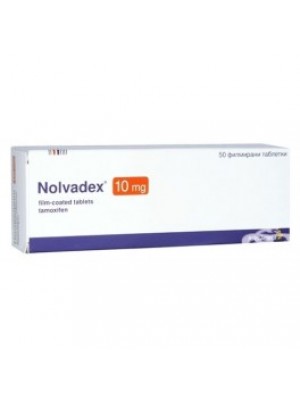
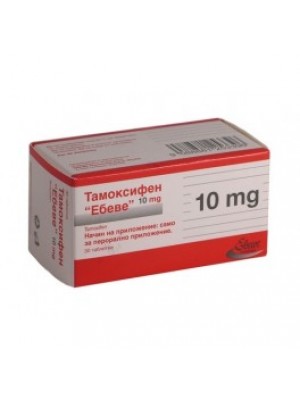
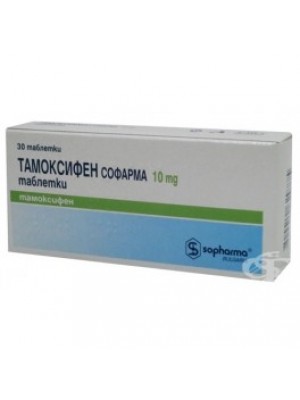
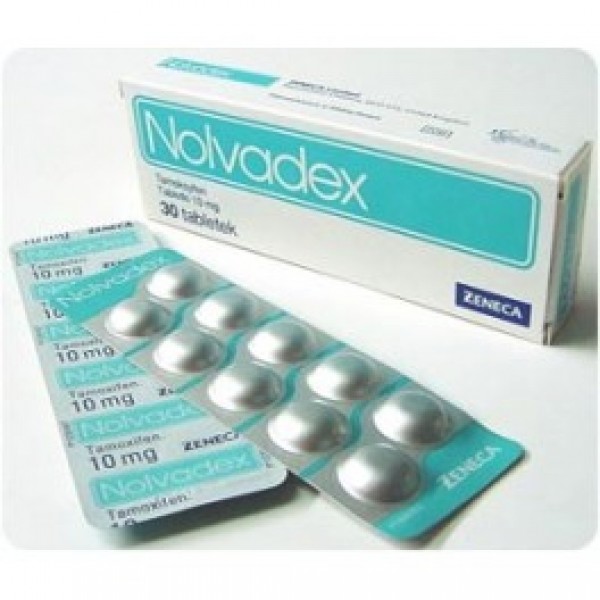
Nolvadex 10mg. 10 tablets
Product Code: Nolvadex 10mg. 10 tablets
Availability: In Stock
Product viewed: 1178


Nolvadex 10mg. 10 tablets
WHAT Nolvadex AND WHAT IT IS USED
Tamoxifen is used to treat breast cancer.
2. BEFORE YOU TAKE Nolvadex
Do not take Nolvadex:
If you are allergic (hypersensitive) to tamoxifen or any of the other ingredients of Nolvadex;
If you are pregnant or trying to become pregnant.
Nolvadex should not be given to children.
Take special care when taking Nolvadex
If you take contraceptive measures must be aware that some contraceptives are affected by tamoxifen. Please contact your doctor;
If you have unusual vaginal bleeding or other gynecological symptoms (such as pelvic pain or pressure) while taking Nolvadex or some time thereafter. This is because the number of changes occurring in the endometrium, some of which can be serious, even cancer;
If you go into hospital, let the medical staff know you are taking tamoxifen;
If you are a premenopausal woman and sexually active should use barrier or other non-hormonal contraceptive methods;
In a later operation for breast reconstruction (weeks to years after primary breast surgery when in reconstructive surgery moves your tissue to form the new breast). Nolvadex may increase the risk of blood clot formation in small vessels of the tissue graft, which can lead to complications;
Must Coadministration with the following medications because it can not be ruled out reduction of the effect of tamoxifen: paroxetine, fluoxetine (eg. Antidepressants), bupropion (an antidepressant or aid in smoking cessation), quinidine (for example used to treat heart arrhythmia) and tsinakalet / cinacalcet (for treatment of disorders of the parathyroid gland).
Pregnancy, lactation and fertility
Nolvadex should not be taken by patients who are pregnant or breastfeeding. You should not become pregnant during treatment with tamoxifen, and two months after cessation of treatment.
Driving and using machines
Nolvadex tablets is unlikely to affect your ability to drive or operate machinery.
Taking other medicines
Please tell your doctor or pharmacist if you are taking or have recently taken any other medicines, even those you bought without a prescription. In particular, you should tell your doctor if you take:
anticoagulants such as warfarin (to prevent blood clots);
drug called rifampicin (for tuberculosis);
paroxetine, fluoxetine (antidepressants improve mood or symptoms of the hot flush);
bupropion (an antidepressant or help in cessation of smoking);
quinidine (for example used to treat cardiac arrhythmia);
cinacalcet (for treatment of disorders of the parathyroid gland).
Nolvadex should not be taken with medicines called aromatase inhibitors such as anastrozole, letrozole or exemestane.
3. HOW TO TAKE Nolvadex
Always take Nolvadex exactly as your doctor tells you. If you're not sure, ask your doctor or pharmacist.
The usual dosage for breast cancer is 20 mg to 40 mg daily.
In general, tamoxifen is administered once or twice daily.
Try to take your medicine at the same time each day.
Do not stop taking your tablets even if you feel better, unless your doctor advises you to do so.
If you take more dose Nolvadex
If you take more than your normal dose, contact your doctor immediately or the nearest hospital.
If you forget to take Nolvadex
If you miss a dose, take it as soon as you remember but do not take two doses at once.
4. POSSIBLE SIDE EFFECTS
Like all medicines, tamoxifen can cause side effects, although not everybody gets them.
Very common side effects (affects 1 in 10 people):
Hot flashes.
Common side effects (affects 1 to 10 in every 100 people):
Sudden weakness or paralysis of the arms or legs, sudden difficulty of speech, gait difficulty holding objects or difficulty thinking, any of which could occur because blood flow to the cerebral vessels is reduced. These symptoms could be signs of a stroke;
Increased risk of thrombotic event (including clots in small blood vessels). When tamoxifen is used in combination with cytotoxic agents, there is an increased risk of thromboembolic events;
Vaginal bleeding;
Vaginal discharge;
Vaginal itching;
Changes in the endometrium, which may lead to vaginal bleeding;
Stomach problems (including nausea, vomiting, diarrhea and constipation);
Hair loss;
Skin rashes;
Headache;
Dizziness;
Sensory changes (including taste disturbances and numbness or tingling on the skin);
At the beginning of therapy may experience worsening of symptoms of breast cancer as an increase in pain and / or increasing the size of the affected tissue. In the event that you experience excessive nausea, vomiting or thirst, you should immediately contact your doctor. This is likely to mean that there have been changes in the amount of calcium in your blood and your doctor need to do some blood tests;
Fluid retention (probably swollen ankles);
Perception (cramps) of the lower limbs;
Pain in the muscles.
Uncommon side effects (affects 1 to 10 in every 1000 people):
Difficulties in vision due to a cataract or retinal disease;
Visual disturbances;
Fibrosis (caused by enlargement of the uterus), which can manifest as discomfort in the pelvic or vaginal bleeding;
Endometrial cancer;
Hypersensitivity, including severe allergic reaction which causes swelling of the face or throat (angioedema).
Some side effects are only detectable by blood test, for example. reduction in the number of certain types of blood cells. This can lead to a bruise to the occurrence of serious infections or to feelings of extreme fatigue or breathlessness.
Low platelet count (thrombocytopenia);
Reduced white blood cell count (leucopenia), or isolated lowering of certain white blood cells (neutropenia);
Reduction of red blood cells (anemia);
Changes in liver enzymes;
Hypertriglyceridemia (elevated blood fats).
Rare side effects (affects 1 to 10 in every 10,000 people):
Changes in the cornea;
Cases of diseases of the optic nerve in patients taking Nolvadex, as a small number of cases, blindness has occurred;
Uterine cancer (mostly malignant mixed Mullerian tumors);
Endometriosis;
Ovarian cysts;
Nekantserozni formed in the inner layer of the uterus (called vaginal polyps);
Pancreatitis (pain or tenderness in the upper abdomen);
Changes in blood tests of liver function. Sometimes occurred more severe liver disease, of which some patients died. These hepatic disorders include liver inflammation, liver cirrhosis, liver cell damage, the formation of fat cells in the liver, reduced production of bile and liver failure. Symptoms can include feeling generally unwell, with or without jaundice (yellow skin and eyes);
Stagnation of bile (cholestasis);
High level of calcium in the blood (hypercalcemia).
Very rare side effects (affects less than 1 in every 10,000 people):
Inflammation of the lungs, which can manifest as pneumonia, dyspnoea or coughing;
Severe skin reactions accompanied by blistering of the skin, mouth, eyes and genitals, including Stevens-Johnson, erythema multiforme and bullous pemphigus;
Inflammation of the skin characterized by rash or erythema, often in areas of the skin exposed to light (a condition called cutaneous lupus erythematosus);
A skin condition characterized by blistering of the skin in the portions exposed to light, this is due to the increase of production of a special cell pigments (called porphyrins) from the liver.
Not known:
Inflammation of small blood vessels in the skin, causing skin eruption (cutaneous vasculitis);
Strong reduction of the number of white blood cells, which increases the likelihood of infection (agranulocytosis).
Do not worry this list of possible side effects. You may not have any of them.
IMMEDIATELY stop taking tamoxifen in the following cases and immediately tell your doctor:
If you experience difficulty in breathing with / or swelling of the face, lips, tongue and / or throat;
If swollen face, lips, tongue and / or throat, you might have trouble swallowing;
If swollen hands, feet or ankles you;
In case of urticaria (hives).
If any of the side effects gets serious, or you notice other effects not listed in this leaflet, please tell your doctor or pharmacist.
5. HOW TO STORE Nolvadex
Keep your tablets in a place where children can not see or reach them. Your tablets could harm them.
Keep your tablets at a temperature below 30 ° C.
Keep tablets in the original package.
Do not use the tablets after the expiry date stated on the blister and carton.
6. CONTENTS OF THE PACK AND OTHER INFORMATION
What Nolvadex
The active ingredient is tamoxifen. Each tablet contains 10 mg of tamoxifen.
Other ingredients are: croscarmellose sodium USNF, gelatin Ph. Eur., Lactose Ph. Eur., BP macrogol 300, magnesium stearate Ph. Eur., Corn starch Ph. Eur ,, methylhydroxypropyl cellulose Ph. Eur., Titanium dioxide Ph. Eur. (E171).
Looks like Nolvadex and contents of the pack
Aluminium blister packs of 10 tablets and packaging containing 30 or 50 tablets.
Not all pack sizes may be marketed.
Write a review
Your Name:Your Review: Note: HTML is not translated!
Rating: Bad Good
Enter the code in the box below:
Related Products