Your shopping cart is empty!
Welcome visitor you can login or create an account.
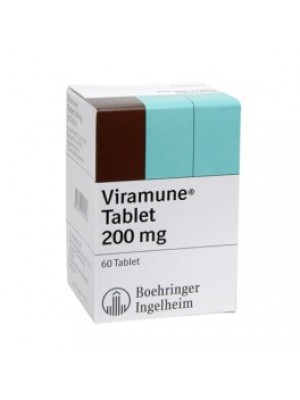
Nevirapine 200mg. 60 tablets
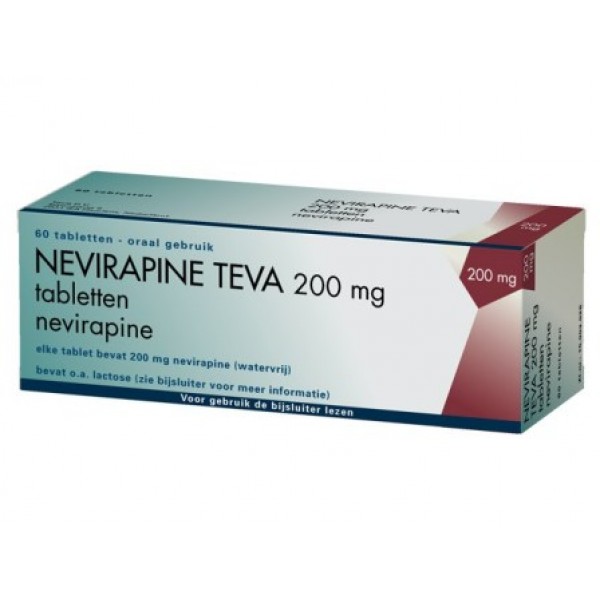
Product viewed: 2390


WHAT NEVIRAPINE TEVA IS AND WHAT IT IS USED FOR?
Nevirapine Teva belongs to a group of medicines called antiretroviral agents that are used to treat human immunodeficiency virus (HIV-1) infection. HIV spreads through contact with infected blood or sexual contact with an infected person.
Nevirapine Teva belongs to the class of non-nucleoside reverse transcriptase inhibitors (NNRTIs). Nevirapine Teva fights HIV-1 infection by reducing the amount of virus in the blood.
Nevirapine Teva is prescribed in combination with other antiretroviral medicines for HIV. Your doctor will determine which medicine is best for you.
2. BEFORE YOU TAKE NEVIRAPINE TEVA
Do not take Nevirapine Teva
- if you are allergic (hypersensitive) to nevirapine or any of the other ingredients of Nevirapine Teva.
- if you have had a previous liver inflammation (hepatitis), severe skin rash, or liver damage while on nevirapine treatment.
- if you have chronic liver disease or changes in liver function.
- if you are taking products containing St John's wort (Hypericum perforatum) as it may interfere with the normal mechanism of action of Nevirapine Teva.
Take special care with Nevirapine Teva
During the first 18 weeks of treatment with Nevirapine Teva, you should monitor for signs of liver or skin reaction, as these may be severe and even life-threatening.
If you get a severe rash or hypersensitivity (allergic reactions) that may look like a rash accompanied by other side effects such as:
- fever,
- Blister formation,
- inflammation of the mouth,
- inflammation of the eyes,
- swelling of the face,
- generalized edema,
- difficulty in breathing,
- muscle or joint pain,
- general weakness,
- or abdominal pain
You MUST stop taking NEVIRAPINE TEVA and IMMEDIATELY WAIT TO YOUR DOCTOR, as such reactions may be potentially life-threatening or lead to death. If you have ever had a slight rash without any other reactions, please tell your doctor immediately; he or she will advise whether you should stop taking Nevirapine Teva.
If you experience symptoms suggestive of liver damage such as:
- loss of appetite,
- nausea,
- vomiting,
- yellowing of the skin (jaundice),
- stomach ache
you should stop taking Nevirapine Teva and call your doctor immediately. If you develop severe liver, skin or allergic reactions while taking Nevirapine Teva, NEVER TAKE Nevirapine Teva again without first consulting your doctor. You should take the dose of Nevirapine Teva exactly as prescribed by your doctor. This is particularly important during the first 14 days of treatment (for more information, see How to take Nevirapine Teva).
The following groups of patients are at increased risk for liver problems:
- women
- infected with hepatitis B or C
- with abnormal liver function tests
- untreated patients with higher CD4 counts at the start of therapy with Nevirapine Teva (women with more than 250 cells / mm, men with more than 400 cells / mm).
- patients who have already been treated and who have detectable HIV-1 viral load in plasma as well as higher levels of CD4 cells at the start of treatment with nevirapine (women with more than 250 cells / mm3, males with more than 400 cells / mm3).
In some patients with advanced HIV infection (AIDS) and a history of opportunistic infections (AIDS-related illness), signs and symptoms of inflammation of pre-existing infections may occur soon after initiation of treatment for HIV. It is believed that these symptoms are due to an improvement in the body's immune response, which allows the body to fight infections that may be without manifest symptoms. If you notice any symptoms of an infection, please tell your doctor immediately.
Patients receiving combination antiretroviral therapy may experience redistribution of body fat. If you notice changes in body fat, call your doctor.
Bone problems: Some patients taking combination antiretroviral therapy may experience osteonecrosis (dying of bone tissue). The duration of antiretroviral therapy, the use of corticosteroids, alcohol consumption, severe weakness of the immune system, higher body mass index may be some of the many risk factors for developing this disease. Signs of osteonecrosis are joint stiffness, joint pain (especially in the hip, knee and shoulder) and difficulty in movement. If you notice any of these symptoms, please tell your doctor.
Nevirapine Teva does not cure HIV infection and you may continue to get infections or other HIV-related illnesses. Therefore, it is important that you stay with Nevirapine Teva
It is especially important to tell your doctor if you are taking or have recently taken:
- St John's wort (Hypericum perforatum, a medicine used to treat depression)
- rifampicin (a medicine used to treat tuberculosis)
- rifabutin (a medicine used to treat tuberculosis)
- macrolides, e.g. clarithromycin (medicines for bacterial infections)
- fluconazole (a remedy for fungal infections)
- ketoconazole (a remedy for fungal infections)
- itraconazole (a remedy for fungal infections)
- methadone (to treat opiate addiction)
- warfarin (a medicine that reduces blood clotting)
- hormonal contraceptives, "pill"
- atazanavir (another medicine against HIV infection)
- lopinavir / ritonavir (another medicine against HIV infection)
- fosamprenavir (another medicine against HIV infection)
- efavirenz (another medicine against HIV infection)
Your doctor will carefully monitor the effect of Nevirapine Teva and any of these medicines if you are taking Nevirapine Teva together with any of these medicines.
If you are on hemodialysis, your doctor will consider adjusting the dose of Nevirapine Teva as Nevirapine Teva may be partially cleared of your blood during dialysis.
Take Nevirapine Teva with food and drink
There are no restrictions on the intake of Nevirapine Teva with food and drink. Pregnancy and breastfeeding
Ask your doctor or pharmacist for advice before taking any medicine.
If you are taking Nevirapine Teva, you should stop breast-feeding. It is generally recommended that you do not breast-feed if you have an HIV infection to reduce the risk of passing on your baby's infection.
Driving and using machines
You may experience fatigue while taking Nevirapine Teva. Be cautious when doing activities such as driving, using tools or machines. If you feel fatigue, you should avoid potentially dangerous activities such as driving or using tools or machines.
Important information about some of the ingredients of Nevirapine Teva
Each Nevirapine Teva 200 mg tablet contains 168 mg of lactose monohydrate. If you have been told by your doctor that you have an intolerance to some sugars, talk to your doctor before taking this medicinal product.
3. HOW TO TAKE NEVIRAPINE TEVA?
Always take Nevirapine Teva exactly as your doctor has told you. If you are not sure, ask your doctor or pharmacist.
Nevirapine Teva is tablet-shaped. Do not chew or crush the tablet. The usual dose is one 200 mg tablet for the first 14 days of treatment (this "induction" period has been shown to reduce the incidence of skin rash) followed by one tablet of Nevirapine Teva 200 mg twice daily. Nevirapine Teva will always be given in combination with other HIV antiretroviral medicines for which you should follow the instructions given in the enclosed leaflet.
It is very important to strictly observe the once daily dose during the 14-day 'dosing' period before increasing the dose to twice daily. If you get a rash during this period, talk to your doctor before increasing the dose.
You must continue to take Nevirapine Teva for as long as your doctor has told you.
As explained above in "Take special care with Nevirapine Teva," your doctor will monitor your liver function and monitor the occurrence of side effects such as rash. Depending on the outcome, he or she may decide to discontinue your treatment with Nevirapine Teva. Subsequently, they may decide to resume treatment with a lower dose.
Take Nevirapine Teva tablets orally. Do not chew your tablets. You can take Nevirapine Teva with or without food.
If you take more Nevirapine Teva than you should
Do not take a higher dose than prescribed by your doctor and as described in this leaflet. For now, the information on the effects of Nevirapine Teva in overdose is small. If you take a higher dose, talk to your doctor.
If you forget to take Nevirapine Teva
Try not to miss a dose. When you notice this within 8 hours, take the next dose as soon as possible. If you notice later, take the next regular dose at the scheduled time.
If you stop taking Nevirapine Teva
Taking all doses at the right time greatly increases the efficacy of your combination of medicinal products and decreases the development of viral resistance. Therefore, if your doctor has not recommended that you stop treatment, it is important that you continue to take Nevirapine Teva correctly as described above.
If you stop taking Nevirapine Teva for more than 7 days, your doctor will instruct you to start the 14-day entry period (as described above) again before returning to twice daily dosing.
If you have any further questions on the use of this product, ask your doctor or pharmacist.
POSSIBLE SIDE EFFECTS
Like all medicines, Nevirapine Teva can cause side effects, although not everyone gets them.
As mentioned in "Take special care with Nevirapine Teva" above, the most important side effects of Nevirapine Teva are severe and life-threatening skin reactions and severe hepatic impairment. These reactions occurred primarily during the first 18 weeks of treatment with Nevirapine Teva. For this reason, this is an important period that requires continuous monitoring by your doctor.
If you ever see symptoms of rash, please tell your doctor immediately.
If a rash occurs, it is usually mild to moderate. However, in some patients, the blistering rash may be severe to life-threatening (Stevens-Johnson syndrome and toxic epidermal necrolysis) and reported cases of death. Most cases of severe rash, as well as mild and moderate rash, occur within the first six weeks of treatment.
If the rash occurs with nausea, you should stop the treatment and tell your doctor immediately.
Hypersensitivity reactions (allergic reactions) may occur. Such reactions may occur in the form of anaphylaxis (characterized by rash, facial swelling, bronchospasm or shock) or rash accompanied by other side effects such as fever, blisters, mouth ulcers, eye inflammation, facial swelling, general swelling, shortness of breath, muscle or joint pain, low white blood cell count (granulocytopenia), general fatigue or severe liver or kidney problems.
If you get a rash and any other hypersensitivity (allergic) reaction, please contact your doctor immediately as such reactions may be potentially life-threatening.
Disorders of liver function, including some cases of liver inflammation (hepatitis), which may be sudden and intense (fulminant hepatitis) and liver failure and lead to death, have been reported with the use of Nevirapine Teva.
If you get clinical symptoms suggestive of liver damage such as loss of appetite, nausea, vomiting, yellowing of the skin (jaundice), abdominal pain, you should tell your doctor.
The side effects listed below have been obtained from patients receiving nevirapine:
The frequency of possible side effects described below is defined using the following convention: - very common (affects at least 1 in 10 patients treated)
- common (affects at least 1 in 100 patients and less than 1 in 10 patients treated)
- uncommon (affects at least 1 in 1,000 patients and less than 1 in 100 patients treated)
- rare (affects at least 1 in 10,000 patients and less than 1 in 1,000 treated patients)
Very common
- rash
Common:
- decrease in white blood cell count (granulocytopenia)
- allergic reactions (hypersensitivity)
- headache
- nausea
- vomiting
- stomach ache
- diarrhea
- inflammation of the liver (hepatitis)
- fatigue
- fever
- abnormal liver function tests Uncommon:
- an allergic reaction characterized by rash, swelling of the face, difficulty in breathing (bronchospasm) or anaphylactic shock
- decrease in red blood cell count (anemia)
- yellowing of the skin (jaundice)
- Stevens Johnson syndrome / toxic epidermal necrolysis
- hives (urticaria)
- fluid retention under the skin (angioneurotic edema)
- Joint pain (arthralgia)
- muscle pain (myalgia)
- a low level of phosphorus in the blood
- increased blood pressure
Rare:
- Sudden severe inflammation of the liver (fulminant hepatitis)
- rash with systemic symptoms (drug rash with eosinophilia and systemic symptoms)
Combination antiretroviral therapy may cause changes in body shape due to changes in fat distribution. This may include loss of fat from the legs, hands and face, increased fat accumulation in the abdomen and other internal organs, enlargement of the mammary gland and fatty hump of the neck ("buffalo hump"). The causes and long-term health effects of these conditions are unknown at this time. Combination antiretroviral therapy may also lead to increased levels of lactic acid and sugar in the blood, hyperlipidemia (increased blood lipid levels), and insulin resistance.
When nevirapine was used in combination with other antiretroviral agents, the following events were also reported:
- Reducing the number of red blood cells or platelets
- Inflammation of the pancreas
- decreased or changed skin sensitivity.
These events are often associated with other antiretroviral agents and can occur when Nevirapine Teva is used in combination with other medicines; the likelihood that these events are due
MORE INFORMATION
What does Nevirapine Teva contain?
- The active substance is nevirapine. Each tablet contains 200 mg of nevirapine (anhydrous)
- The other ingredients are microcrystalline cellulose, lactose monohydrate, povidone K25, sodium starch glycollate (type A), silica, colloidal anhydrous, and magnesium stearate.
Write a review
Your Name:Your Review: Note: HTML is not translated!
Rating: Bad Good
Enter the code in the box below:
Related Products