
Your shopping cart is empty!
Welcome visitor you can login or create an account.
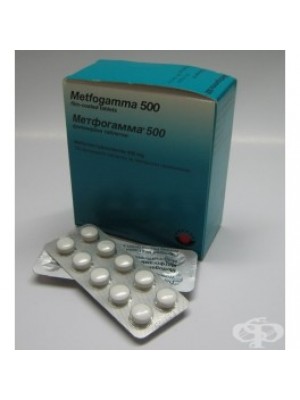
Metfogamma 500 mg. 30 tablets
Product Code: Metfogamma 500 mg. 30 tablets
Availability: In Stock

Product viewed: 3072


Active substance: metformin hydrochloride.
One Metfogamma 500 film-coated tablet contains 500 mg of metformin hydrochloride.
Excipients: Sodium starch glycolate, corn starch (Ph Eur 2002), povidone K30 (Ph Eur 2002), colloidal silicon dioxide anhydrous (Ph Eur 2002), magnesium stearate (Ph.Eur.), Hypromellose Ph. Eur., 2002), titanium dioxide (Ph. Eur., 2002), propylene glycol (Ph. Eur 2002), macrogol 6000, talc (Ph. Eur.
The carbohydrate content corresponds to less than 0.01 BE.
Metfogamma 500 is available in packs of 30 film-coated tablets and 120 film-coated tablets.
WHAT IS METFOGAMMA 500 AND WHAT IS IT USED FOR?
1.1. Metfogamma 500 belongs to the group of medicines used to treat non-insulin dependent diabetes mellitus (NIDD, type 2) in adults.
1.3. Therapeutic indications
Metfogamma 500 is a medicine that lowers high blood sugar levels in patients with diabetes (type 2 diabetes mellitus, type 2, in adults), especially in overweight patients, when diet and exercise alone do not result in the necessary adjustment Of blood sugar levels.
Metfogamma 500 may be used alone (as monotherapy) or in combination with other blood glucose lowering or insulin medicines. In the treatment of patients with overweight and type 2 diabetes mellitus, after a diet failure, a decrease in the frequency Of the complications of diabetes with metformin as the first agent of choice.
2. WHAT YOU SHOULD MEAN BEFORE TREATMENT WITH METFOGAMMA® 500?
2.1. Metfogamma 500 should not be taken with:
- hypersensitivity to metformin hydrochloride or any of the other ingredients of Metfogamma 500;
- increased blood acidity in diabetes (diabetic ketoacidosis), preceding the coma stage (transcom)
- kidney failure or impaired renal function (renal failure with elevated creatinine levels in the blood)
- acute conditions potentially endangering renal function, such as:
• fluid loss due to prolonged vomiting or severe diarrhea;
• severe infections;
• Circulatory disorders (shock);
• Examinations with intravascular administration of iodinated contrast media - before the review, during the review and 48 hours afterwards;
- acute or chronic diseases that can cause oxygen deficiency in body tissues (tissue hypoxia) such as:
• heart failure or abnormal lung function (heart or respiratory failure);
• heart attack (recent myocardial infarction);
• Circulatory disorders (shock);
- hepatic failure, acute alcohol intoxication, alcoholism;
- breastfeeding period.
2.2. Take special care with Metfogamma 500
The risk of unacceptable accumulation and, hence, the risk of increased acidity of the blood with lactic acid (lactic acidosis) is mainly determined by renal function, therefore testing of normal renal function is a prerequisite for the appointment of Metfogamma 500 therapy. Investigation of renal function By determining serum creatinine levels, should be repeated at least once a year and, in some cases, more often. If serum creatinine is at an upper limit, make sure to do this at least two to four times a year. It should be noted that, especially in elderly patients, serum creatinine levels alone are not always indicative, another indicator may need to be studied to determine renal function -creatinine clearance prior to onset Particular attention should be paid to cases where renal function impairment can be expected (eg at the beginning of treatment with certain drugs for high blood pressure or rheumatism).
Particular attention should also be paid to impaired hepatic function. In studies with intravascular administration of iodinated contrast media, there is a risk of acute renal failure. Therefore, therapy with Metfogamma 500 should be discontinued prior to the study, and its extension may be prescribed two days after the study, only after follow-up examination revealed normal renal function.
Treatment with Metfogamma 500 should be discontinued two days prior to a planned operation with general anesthesia and may be continued for two days after normal surgery if normal kidney function is detected.For a bacterial or viral infection (eg, flu, respiratory tract inflammation, inflammation Of the urinary tract), tell your doctor.
Continue with your diet during Metfogamma 500 therapy, paying special attention to daily intake of carbohydrates. If you are overweight, you should continue your diet for weight reduction under medical supervision.
Taking large amounts of alcohol hides the risk of hypoglycaemia and lactic acidosis; During treatment with metformin you should avoid using it
Special warnings
In case of undesirable accumulation, metformin may trigger or facilitate the increase in acidity of the blood (lactic acidosis), a disorder that, if not treated in a timely manner, can be life-threatening (for example, coma). In addition to overdose, the reasons for increasing the acidity of the blood with lactic acid may be related to neglecting the presence or appearance of contraindications. Therefore, contraindications should be strictly observed (see section 2.1: "Metfogamma 500 should not be taken in ..."). Symptoms of a starting lactic acidosis may mimic the side effects of metformin on the gastrointestinal tract: nausea, vomiting, diarrhea and stomach pain. The complete clinical picture, with muscle aches and cramps, hyperventilation and blurring of consciousness, can occur within hours and requires immediate hospitalization.
E) Ability to drive and use machines
The therapy with Metfogamma 500 does not in itself cause a reduction in blood sugar (hypoglycaemia), therefore it does not affect the ability to drive or use machines. When combined with sulphonylureas, insulin or other medicines that reduce blood sugar, the ability to drive and use machines may be impaired due to a possible lowering of blood glucose (hypoglycaemia).
F) Important information about some of the ingredients of Metfogamma 500 Metfogamma 500 contains propylene glycol.
2.3. Interaction with other medicinal products
Please tell your doctor or pharmacist if you are taking / using other medicines or have taken / used other medicines recently, including medicines obtained without a prescription. During long-term therapy with Metfogamma® 500, both initiation and discontinuation of additional drug therapy may affect the regulation of blood glucose.
Tell your doctor or pharmacist if you are taking or have recently taken the following medicines: corticosteroids, some high blood pressure medicines (ACE inhibitors), medicines that increase urine output (diuretics), some medicines to treat Bronchial asthma (beta-sympathomimetics), as well as iodine-containing contrast media and alcohol-containing products.
2.4. Accepting Metfogamma 500 with food and drink
You should avoid alcoholic beverages and foods while using Metfogamma® 500.
3. HOW METFOGAM 500 is used?
Always take Metfogamma 500 while strictly following your doctor's instructions. Please, if you are not sure, talk to your doctor or pharmacist.
The Metfogamma 500 dose is determined by a physician specific to each patient based on blood glucose values and monitored at regular medical check-ups.
3.1. Film-coated tablets containing 850 mg and 1000 mg of metformin are also available to individually adjust the required maintenance dose.
3.2. Unless otherwise prescribed by the physician, the usual dose is: The usual starting dose is 2 to 3 film-coated tablets Metfogamma 500 daily (equivalent to 1000 to 1500 mg metformin) during or after a meal. The dose may be increased to a maximum daily dose of 6 film-coated tablets Metfogamma 500 (equivalent to 3000 mg metformin). If you need to take a dose of several tablets, it is advisable to choose tablets with a higher concentration.
Take the film-coated tablets whole without chewing, during or after a meal, with enough fluid. When your daily dose is two or more film-coated tablets, they should be distributed over the day, for example, one film-coated tablet after each main meal. Please inform your doctor if you feel that the Metfogamma 500 is too strong or too strong Weak.
3.3. If you take more than the prescribed dose of Metfogamma 500:
If you take more than your prescribed Metfogamma 500, you should tell your doctor immediately. Once overdosage with Metfogamma 500 does not result in blood glucose lowering (hypoglycaemia), but there is a risk of increased acidity of the blood with lactic acid (lactic acidosis). The symptom of a beginning increase in acidity of the blood with lactic acid may resemble the direct adverse effects of metformin on the gastrointestinal tract: nausea, vomiting, diarrhea, and stomach pain. A complete picture of muscle pains and cramps, excessive breathing, and blurring of consciousness and coma can develop within hours and require immediate hospitalization.
If you forget to take Metfogamma 500:
If you have forgotten a Metfogamma 500 intake, take the prescribed Metfogamma 500 in the time specified for the next intake and try to follow the instructions given in the future. Under no circumstances should you try to catch up with your missed dose by taking more tablets at one time.3.5. What happens when treatment with Metfogamma 500 is discontinued: If you discontinue Metfogamma 500 without a prescription, you can expect your blood sugar level to rise uncontrollably and for a long time the late effects of Sugar disease such as, for example, Eye, kidney and blood vessel damage.
4. POSSIBLE SIDE EFFECTS
As with all medicines, and with Metfogamma 500, side effects may occur.
4.1 Gastrointestinal disorders
- Very common:
Nausea, vomiting, diarrhea, stomach pain, loss of appetite. They usually appear at the beginning of treatment and in most cases spontaneously resolve. To avoid these complaints, Metfogamma 500 should be taken during or after a meal in 2 or 3 doses. If complaints persist for a long time, stop taking the medicine and tell your doctor.
- Common: Metallic taste.
Metabolism and nutrition disorders
- Very rare:
Severe metabolic disorder with increased acidity of the blood with lactic acid (lactic acidosis). Symptoms may include vomiting and stomach pains, possibly accompanied by muscle aches and cramps or severe general fatigue (see "Special warnings").
Skin and subcutaneous tissue disorders
- Very rare:
Flushing (mild erythema) in patients intolerant to certain medicinal products.
Hepatobiliary disorders
- Very rare:
Pathological changes in liver function tests or liver inflammation (hepatitis) with or without jaundice that disappear after discontinuation of Metfogamma 500.
4.2. Emergency measures
If you have any doubts about increasing the acidity of your blood with lactic acid (lactic acidosis), contact your doctor immediately and do not take Metfogamma 500.4.3 If you notice any side effects not mentioned in this leaflet, tell your doctor or pharmacist.
5. HOW TO STORE MATFOGAMMA 500?
Keep medicines out of the reach of children!
The shelf life of the product is printed on the packaging.
Do not use this medicine after the expiry date.
Write a review
Your Name:Your Review: Note: HTML is not translated!
Rating: Bad Good
Enter the code in the box below:
Related Products
As monotherapy or in combination with sulphonylureas for the..
19.00€