Your shopping cart is empty!
Welcome visitor you can login or create an account.
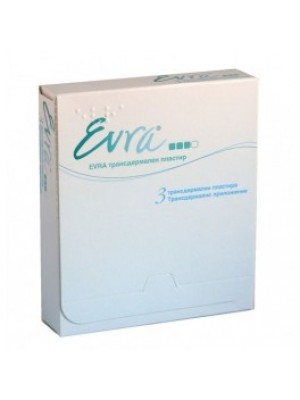
Lisvy 3 transdermal patches

Product viewed: 2091


What is Lisvy and what it is used for
Lisvy is a patch that is used to prevent pregnancy.
Each patch contains two different female hormones, namely gestodene and ethinylestradiol, which are released continuously in small amounts over a period of 7 days.
Because Lisvy contains a combination of two hormones, he belongs to the group of "combined hormonal contraceptives".
2. What you need to know before using Lisvy
General remarks
Before you start using Lizvi, you should read the blood clot information in section 2. It is especially important to read the symptoms of a blood clot - point 2 "Blood clots".
Before you can start using Licey, your doctor will ask you a few questions about your past illnesses and those of your close relatives. The doctor will also measure your blood pressure and, depending on your personal condition, may also perform some other studies.
This leaflet describes several situations where you should stop using Liwis or where Lizvi's reliability can be reduced. In such situations you either do not have sex or you should use additional non-hormonal contraceptives such as, for example, to use a condom or other barrier method. Do not use calendar or temperature methods. These methods may prove to be unreliable, as Lizvi leads to a change in monthly changes in body temperature and cervical secretion.
Lise, like other hormonal contraceptives, does not protect against HIV infection or other sexually transmitted diseases.
Do not use Lisvy
You should not use Lice if you have any of the conditions listed below. If you have any of these, you should tell your doctor. He will discuss with you what other form of contraception would be more appropriate.
• if you have (or have ever had) a blood clot in a leg blood vessel (deep vein thrombosis (DVT)), lungs (pulmonary embolism (PI)) or other organs;
• if you know you have a blood coagulation disorder - such as protein C deficiency, protein S deficiency, antithrombin III deficiency, Leiden Factor V or antiphospholipid antibodies;
• if you need surgery or if you are immobilized for a long time (see section "Blood clots");
• if you have ever had a heart attack or stroke;
• if you have (or have ever had) angina (a disease that causes severe chest pain and may be the first sign of a heart attack) or a transient ischemic attack (PIA - Transient Symptoms of Stroke);
• if you have any of the following conditions that may increase the risk of clot formation in the arteries:
severe diabetes with damage to blood vessels;
very high blood pressure;
very high levels of blood fats (cholesterol or triglycerides);
a disease known as hyperhomocysteinemia;
• if you have (or have ever had) a type of migraine called "migraine with aura";
• if you have (or have ever had) a liver disease (symptoms that may be yellowing of the skin or itching all over your body) and your liver still does not work normally;
• if you have (or have ever had) cancer that can grow under the influence of sex hormones (eg breast or genital organs);
• if you have (or have ever had) a benign or malignant liver tumor;
• if you have any unexplained bleeding from the vagina;
• if you are allergic to ethinylestradiol, gestodene or any of the other ingredients of this medicine (listed in section 6). This can cause, for example, pruritus, rash or swelling.
If any of these conditions occur for the first time during the use of Lizvi, remove the patch immediately, stop using it and consult your doctor. During this time, use non-hormonal contraceptives. See also point 2 "General Notes" above.
Warnings and precautions
When should you contact your doctor?
Seek urgent medical attention
- if you notice possible signs of a blood clot in the leg (ie deep vein thrombosis), a blood clot in the lung (ie, pulmonary embolism), a heart attack or stroke (see section "Blood clot (thrombosis ) "Below).
For a description of the symptoms of these serious side effects, please see "How to recognize a blood clot."
Talk to your doctor, pharmacist or nurse before using Lizvi.
In some situations you should take special care with Lizvi or any other combined hormonal contraceptive and your doctor may need to see you regularly.
Tell your doctor if you suffer from any of the following conditions.
You should also inform your doctor if the illness develops or worsens while using Lise.
- if you smoke;
- if you have diabetes;
- if you are overweight;
- if you have high blood pressure;
- if you have a problem with
if you have (or have ever had) golden-brown pigment spots (so-called "spots of pregnancy"), especially on the face (chloasma). If this is the case, avoid direct exposure to sunlight or ultraviolet rays;
- if you have hereditary angioedema. Consult your doctor immediately if you experience symptoms of angioedema such as swelling of the face, tongue or throat and / or difficulty in swallowing or urticaria together with difficulty in breathing. Products containing estrogens may induce or aggravate the symptoms of angioedema.
BLOOD SHOOTERS
If a combined hormonal contraceptive, such as Lizvi, is used, the risk of blood clots is higher than if no such contraceptive is used. In rare cases, a blood clot may block blood vessels and cause serious problems.
Blood clots may form
in veins (called venous thrombosis, venous thromboembolism or VTE);
in the arteries (called "arterial thrombosis", "arterial thromboembolism" or ATE).
Recovery from blood clots is not always complete. Rarely, there may be serious, long-lasting effects or, very rarely, they may be fatal.
It is important to remember that the overall risk of a damaging blood clot due to Lise is small.
HOW TO RECOGNIZE A BLOOD TREATMENT
Seek urgent medical attention if you notice any of the following signs or symptoms.
Do you have any of these signs What are you likely to suffer from?
- Edema of one leg or along a vein in the leg or foot, especially when accompanied by:
pain or soreness in the leg, which can only be felt when getting up or walking;
warming the affected foot;
change in the color of the skin of the foot, e.g. becomes pale, red or blue.
Deep vein thrombosis
• sudden unexplained shortness of breath or rapid breathing;
• a sudden cough without any apparent cause of blood coughing;
• severe chest pain, which can be exacerbated by deep breathing;
• severe fainting or dizziness;
• rapid or irregular heartbeat;
• Stomach pain.
If you are not sure, talk to a doctor as some of these symptoms, such as coughs or shortness of breath, may go wrong with a mild illness such as a respiratory tract infection (eg colds). Pulmonary embolism
Symptoms that most commonly occur in one eye:
• sudden loss of vision;
• non-painful blurred vision, which may progress to loss of vision. Retinal venous thrombosis (blood clot in the eye)
• pain, discomfort, tension, weight in the chest;
• feeling tight or heavy in the chest, arm or under the sternum;
• Feeling of satiety, indigestion or choking;
• upper body discomfort spreading to the back, jaw, throat, hand and stomach;
• sweating, nausea, vomiting or dizziness;
• excessive weakness, restlessness or shortness of breath;
• Accelerated or irregular heartbeat. Heart attack
• Sudden weakness or numbness of the face, arm or leg, especially on one side of the body;
• sudden confusion, difficulty in speech or difficulty in understanding;
• sudden difficulty with one or both eyes;
• sudden difficulty in walking, dizziness, loss of balance or coordination;
• Sudden, severe or prolonged headaches for no reason;
• loss of consciousness or fainting with or without a convulsion.
Sometimes the symptoms of a stroke can be short-lived with almost immediate and complete recovery, but you still need to seek urgent medical attention as you may be at risk of another stroke.
Stroke
• swelling and slight bruising of the limb;
• Stomach pain ("sharp abdomen").
Blood clots blocking other blood vessels
BLOOD SHOOTERS IN VENE
What can happen if a blood clot forms in a vein?
• The use of combined hormonal contraceptives is associated with an increase in the risk of blood clots in the veins (venous thrombosis). However, these side effects are rare. Most often they occur during the first year of use of a combined hormonal contraceptive.
If a blood clot forms in a vein in the leg or foot, it can cause deep vein thrombosis (DVT).
• If a blood clot passes through the leg and falls into the lung, it can cause pulmonary embolism.
• Very rarely, a clot may form in a vein in another organ, for example in the eye (retinal venous thrombosis).
When is the risk of blood clotting in the vein the highest?
The risk of blood clot formation in the vein is highest in the first year of taking a combined hormonal contraceptive for the first time. The risk may also be higher if you resume receiving a combined hormonal contraceptive (same or different product) after an interruption of 4 weeks or more.
After the first year, the risk decreases, but is always slightly higher than if you did not use a combined hormonal contraceptive.
When you stop taking Lizvi, the risk of blood clot formation returns to normal within a few weeks.
What is the risk of blood clotting?
The risk depends on your natural risk of VTE and the type of combined hormonal contraceptive you are using.
The overall risk of a blood clot in the leg or lung (DVT or BE) when using Lizvi is small.
- Of the 10,000 women who do not use any combined hormonal contraceptive and are not pregnant, about 2 will develop a blood clot within one year.
Of the 10,000 women who use a combined hormonal contraceptive containing levonorgestrel, norethisterone or norgestimate, about 5-7 will develop a blood clot within one year.
- Of the 10,000 women who use a combined hormonal contraceptive containing a gestodene such as Lizvi, between 9 and 12 women will develop a blood clot within one year.
- It is not yet known how the risk of blood clot formation with Lizvi is compared with the risk of a combined hormonal contraceptive that contains levonorgestrel and a combined oral contraceptive containing gestodene.
- The risk of blood clotting varies according to your personal history of illness (see "Factors that increase your blood clot risk" below).
Risk of blood clot formation within one year
Women who do not use a combined hormonal contraceptive in the form of a pill / patch / ring and are not pregnant - About 2 in 10,000 women.
Women who use a combined hormonal contraceptive in the form of a pill containing levonorgestrel, norethisterone or norgestimate - About 5 to 7 per 10,000 women.
Women using a combined oral contraceptive (pill) containing gestodene - About 9 to 12 per 10,000 women.
Factors that increase the risk of blood clot formation in your vein
The risk of Liver's blood clot formation is small, but some conditions increase it. The risk to you is higher:
• if you are overweight (body mass index (BMI) above 30 kg / m);
• if one of your closest relatives had a blood clot in the leg, lung or other body when he was young (eg under 50 years of age). In this case, you may have an inherited blood clotting disorder;
• if you need to have surgery or if you are immobilized for a long period of time due to trauma or illness or if your foot is in a gypsum bandage. Lice may need to be discontinued a few weeks before surgery or while you are less mobile. If you have to stop taking Lise, ask your doctor about when you can start using it again;
• With age (especially over 35 years);
• if you were born less than a few weeks ago.
The more diseases you have, the more you increase the risk of blood clotting.
Air travel (> 4 hours) may temporarily increase the risk of blood clot formation, especially if you have any of the other listed factors.
It is important to tell your doctor if any of these conditions apply to you, even if you are not sure. Your doctor may decide that Licey should be discontinued.
Tell your doctor if any of these conditions change while you are using Lice, for example, your close relative has received a thrombosis for an unknown reason; or if your weight is greatly increased.
BLOOD SHOULDERS IN ARTERIA
What can happen if a blood clot is formed in an artery?
Like a blood clot in a vein, a clot in an artery can cause serious problems. For example, it can cause a heart attack or stroke.
Factors that increase the risk of blood clot formation in your artery
It is important to note that the risk of heart attack or stroke due to Liske's use is very low but can be increased:
• With age (after about 35 years);
• if you smoke. When using a combined hormonal contraceptive such as Lizvi, it is advisable to stop smoking. If you can not stop smoking and you are over 35 years old, your doctor may advise you to use a different
What to do if there is no bleeding
If you have used Lisvy properly and you have not taken any other medicines, it is very unlikely that you are pregnant. Continue using Lizvi in the usual way.
If you have not used Lice properly, or if you have used Lise correctly but the expected bleeding does not occur twice in a row, you may be pregnant. Contact your doctor immediately. Do not continue with the next patch until you are sure you are not pregnant. During this time, use non-hormonal contraceptives. See also the "General Notes" section above.
Children and adolescents
The safety and efficacy of Lice have not been established in adolescents under 18 years of age
Other Drugs and Lisvy
Please tell your doctor or pharmacist if you have recently used or are likely to use other medicines or herbal products, including medicines obtained without a prescription. Also tell any other doctor or dentist who is prescribing another medicine (or the pharmacist from whom you are receiving the medicine) that you are using Lizvi. They can tell you if you need to take additional contraceptive precautions (such as condoms) and if so, for how long or whether the use of another medicine you need should be changed.
Some medicines can affect Lice's blood levels and can make it less effective in preventing pregnancy or causing unexpected bleeding. They include:
o medicines used to treat:
- epilepsy (eg primidone, phenytoin, barbiturates, carbamazepine, oxcarbazepine, eslicarbazepine, topiramate, felbamate);
- tuberculosis (eg rifampicin, rifabutin);
sleep disturbance narcolepsy (modafinil);
- high blood pressure in the blood vessels in the lungs (bosentan);
- Viral infections HIV and hepatitis C (so-called protease inhibitors and non-nucleoside reverse transcriptase inhibitors), other infections (griseofulvin).
o herbal medicine St. John's wort.
It is possible that combined hormonal contraceptives may affect the effect of other drugs such as the anti-epileptic lamotrigine.
Laboratory tests
If you need a blood test or any other laboratory tests, tell your doctor or laboratory staff that you are using Lisvy because hormonal contraceptives can affect the results of some tests.
Lizvi with food, drinks and alcohol
No food, drink or alcohol is expected to affect the way Lizvi works.
Pregnancy and breastfeeding
Do not use Lice if you are pregnant or think you may be pregnant.
If you become pregnant while using Lise, immediately remove the patch and contact your doctor.
If you want to become pregnant, you should stop using Lizvi at any time (see also section 3 "If you stop using Lisvy ").
In general, Lise is not recommended for use during breast-feeding. If you want to use Lizvi while you are breastfeeding, contact your doctor.
Driving and using machines
You can drive or use machines while using Lise.
3. How to use Lisvy
Always use this medicine exactly as your doctor or pharmacist has told you. If you are not sure, ask your doctor or pharmacist.
Lizvi protects you from getting pregnant by delivering hormones in your body through the skin. The patch should be firmly attached to your skin so it can function properly.
Lizvi's efficacy depends on how well you follow the instructions for using the patch. The more strictly you follow these guidelines, the less chance you get pregnant.
Therefore, always use Lise exactly as described in this brochure. Failure to follow these instructions may increase the risk of becoming pregnant.
When to start using Lizvi for the first time
Note on which day of the week you put the first patch. This day of the week becomes your weekly "Pattern Replacement Day" (see the "Change Pattern Day" section below in this section 3).
Follow the rules to start or move to Lice by selecting the contraceptive method used in the previous month in the left column of the table below:
Rules to start or move to Lize
Contraceptive method used in the previous month Rules for starting or going to Lice
Without a hormonal contraceptive Begin using Lizvi on the first day of your cycle (Day 1 of menstruation). Lizvi will act immediately and there is no need to use an additional method of contraception. You can also start wearing a patch on Days 2 through 5 of your cycle, but then you should use an additional contraceptive method (eg a condom) during the 7 days of wearing the first patch.
Combined Hormone Contraceptive Pill We recommend you start using LIZVI the day after you have taken the last hormone-containing tablet from pack
Combination contraceptive vaginal ring Start using Lise on the day of removal of the last ring from a pack for one cycle, but at the latest when it should be the next application.
Combination contraceptive patch Begin using Lizvi on the day of removal of the last patch from a package for one cycle, but at the latest when the next application should be.
Pills containing only progestogen ("Mini Pill *", "Minipill") You can go to Lizvi every day without rest, and you should use additional precautions (eg a condom) during the 7 days of wearing the first patch.
Plane-only implant Start using Lise on the day you removed it. During the 7 days of wearing the first patch, you should use additional precautions (eg a condom).
Progesterone-releasing intrauterine system Start using Lise on the day of removal. During the 7 days of wearing the first patch, you should use additional precautions (eg a condom).
Injection with progestogen only Start using Lise on the day the next injection should be placed. During the 7 days of wearing the first patch, you should use additional precautions (eg a condom).
After a miscarriage
Follow the advice of your doctor.
After giving birth to a baby
If you have just given birth, your doctor may tell you to wait for your first menstrual period before you start using Lice. Sometimes it is possible to start earlier. Your doctor will advise you.
If after birth you have had sex before you started using Lizvi, be sure you are not pregnant or wait until the next menstruation before putting on a patch.
If you want to start Lisa after giving birth and you are breast-feeding, discuss this first with your doctor.
Ask your doctor for advice on what to do if you are not sure when to start using Lice.
Where to put the patch
Use Lizvi only in the following places: the abdomen, thighs or the upper upper arm, in a place where it will not rub in tight clothing. For example, DO NOT place the patch in the belt area on your clothes.
Make sure your skin at the application site is undamaged, healthy, clean, dry and preferably free of hairs. DO NOT place the patch on your chest, on cut, red, or irritated skin, or at the same place as the last patch.
DO NOT use lotions, creams, oils, powders, makeup or other products on the skin area where the patch is or will be placed. They can prevent proper patching of the patch or cause it to loosen.
Change the placement of the patch using different areas at the same application site. For example, you can alternate the left and right parts of the abdomen, the seat, or the left and right upper arms.
You can also use a different place to place each week (e.g., one week - the top of the arm, the next week - the abdomen).
Check your patch daily to make sure it's firmly attached to your skin.
Please note
• Wear only one patch at a time.
• If your patch is properly placed, you can bathe in a bathtub or shower as usual.
• There are no restrictions, such as swimming, sauna and exercise while the patch is properly applied.
• The transparent patch has protection against UV / sunlight, so it can be exposed to sunlight and should not be clothed with clothing.
What they gave you at the pharmacy
At the pharmacy, you received a Lizvi box containing this brochure plus 3 or 9 or 18 sealed sachets, each containing one Lizvi patch.
The number of envelopes depends on your doctor's prescription.
Each sealed bag contains one patch for application to your skin. The patch is round and transparent:
• On the adhesive side, the patch is covered with a glossy transparent double-sided, square-shaped protective pad.
• On the reverse side, the patch is covered with a milk-white cover foil that keeps the patch from sticking inside the bag.
How to prepare the patch for placement
1. Tie the bag over its top edge. Slots help guide the tear.
Do not use scissors. Do not use scissors or other cutting tools, do not damage or change the patch in any way, as this may reduce the contraceptive effect.
2. The round contraceptive patch is located between a two-part square transparent protective pad and a milky white square covering foil. It is important to remove the patch from the bag together with the protective pad and the milk-white cover foil. Do not throw away the bag. The bag should be kept for disposal of the patch after use (see "Disposing of patches" in section 5).
Day for patch replacement
Put each new patch on the same day of the week. This is your "Pattern Change Day". For example, if the first patch was put on Sunday, all subsequent patches should be applied on Sunday. Wear only one patch at a time.
1st patch - Week 1 (Day 1 of the cycle): application of the 1st patch;
2nd patch - Week 2 (Day 8 of the cycle): removal of the 1st patch and immediate placement of the 2nd patch;
3rd patch - Week 3 (Day 15 of the cycle): removal of the 2nd patch and immediate insertion of the 3rd patch;
Without patch - Week 4 (Day of Cycle 22): Removing the 3rd patch without a patch on the days of Cycle 22-28!
You can change your patch at any time on the "Pattern Change Day".
Start your next cycle on the same "Pattern Replacement Day" at the end of the 7-day interval without a patch (days 22-28).
Days without a patch
Do not wear a patch during week 4 (days of cycle 22-28).
You should never leave a patch for more than 7 consecutive days.
If you are without a patch for more than 7 days, it is NOT possible to protect yourself from intrusion.
If you have had sexual contact during such a longer interval without a patch, you may already be pregnant. Use a protective contraceptive, such as condoms (see also "What to do in the case of peeled, omitted or unsteady patches" below in this section 3).
Card and stickers for reminder
The Reminder Card and Reminder Stickers attached at the end of this brochure may help you to remember the "Pattern Change Day".
On the Reminder Card you can mark your "Pattern Replacement Day" for a full 4-week cycle. You can also use the stickers to remind you to mark the days in your personal calendar or diary.
RECORD MAP
Mark your "Day to Replace Pattern" on your calendar Check your patch every day to see if your patch is properly adhered to your skin.
After the end of week 4, you must start a new cycle from your "patch replacement day".
The reminder sticker with the checkmark should be placed on the day you put your 1st patch on Week 1 - this is your "Pattern Replacement Day".
The two reversible stickers with an arrow symbol should be placed on the "Pattern Replacement Day" dates in Weeks 2 and 3.
The cross symbol sticker should be placed on your "Pattern Replacement Day" at week 4. During week 4, DO NOT wear a patch.
After completing the 4-week cycle, repeat the above steps.
If you use more Lizvium than you should
Lizvi is unlikely to lead to an overdose because the patch releases a fixed amount of hormones. Do not use more than one patch at a time. No serious adverse drug reactions have been reported with the inadvertent administration of large doses of hormonal contraceptives.
Overdose by putting multiple patches at the same time can cause nausea or vomiting.
Young girls may experience bleeding from the vagina. In case of overdosage, contact your doctor or pharmacist.
If you forget to use Lise
What to do in case of peeled, omitted or unmodified patches:
If a patch is partially or completely peeled off
• in less than one day (up to 24 hours) - You should try to re-place it or replace it with a new patch immediately. There is no need for a contraceptive agent. Your "Pattern Replacement Day" remains the same.
• for more than one day (24 hours or more), or if you are not sure how long the patch has peeled off - You may not be protected from intrusion. Stop the current contraceptive cycle and start a new cycle immediately by applying a new patch. Now you have a new "Day 1" and a new "Pattern Replacement Day". During the first week of the new cycle, you should use a contraceptive like condoms such as condoms, spermicides or diaphragms.
Do not apply a patch again if it does not stick, if it sticks to itself or to another surface, if something else sticks to it, or if it has previously loosened or has fallen. If a patch can not be repositioned, place a new patch immediately. Do not use any other patches or bandages to keep Lizvi in place.
If you forget to change your patch
• at the beginning of a patch cycle (Week One / Day 1): You may not be protected from intrusion. Put the first patch of your new cycle as soon as you remember. Now you have a new "patch change day" and a new "Day 1". During the first week of the new cycle, you should use a contraceptive like condoms such as condoms, spermicides or diaphragms.
• In the middle of a patch cycle (Week 2 / Day 8 or Week 3 / Day 15):
- If you are one or two days late (up to 48 hours), immediately insert a new patch. Post
How to Keep LISVY
Keep out of the reach and sight of children.
Store in the original bag in order to protect from light and moisture.
Do not use Lise after the expiry date which is stated on the folding box and the label of the bag after "EXP:" 1 / "EXP". The expiry date refers to the last day of that month.
Pattern disposal and use
The patch should be applied immediately after removal from the protective bag.
Any creams, creams, lotions, powders or other topical products should not be applied in the area where Lise is placed or will be placed.
The active substances gestodene and ethinylestradiol present a risk to the environment, especially for fish. In addition, gestodene and ethinylestradiol are resistant to the environment. The patches used should not be disposed of in the toilet or placed in liquid waste disposal systems.
The patch used should be discarded carefully in accordance with the following instructions:
• Keep the original pouch after use to expel the patch.
• Bend the used patch in two with the adhesive / adhesive side in.
• Put it in the original bag.
• Close by folding the open edge.
• There is a two-page label on the bag.
• Lift the first page of the label and use it to seal the folded edge of the bag.
• Under the first page, there are disposal instructions on the second page.
Throw away safely in a place that is out of reach of children and pets. Any used or unused patches should be disposed of in accordance with local requirements. In case of doubt, you should consult your pharmacist. These measures will help to protect the environment.
6. Package Contents and Additional Information
What Liszovi contains
The active substances are: gestodene and ethinylestradiol. Each transdermal patch of 11 cm2 contains 2.10 mg gestodene and 550 micrograms ethinylestradiol.
Each transdermal patch releases 60 micrograms of gestodene for 24 hours and 13 micrograms of ethinylestradiol for 24 hours (equivalent to oral doses of 20 micrograms) for 24 hours.
The other ingredients in the patch are:
Primary layer: outer layer of low density polyethylene (PE);
Adhesive layer: Adhesive containing: hydrogenated rosin ester, polybutene, polyisobutylene, pentaerythritol tetragrase (3- (3,5-di-tert-butyl-4-hydroxyphenyl) propionate), bemogizinol;
Separation foil: polyethylene terephthalate (PET) film;
Adhesive matrix: Adhesive containing: hydrogenated rosin ester, polybutene polyisobutylene, pentaerythritol tetragrase (3- (3,5-di-tert-butyl-4-hydroxyphenyl) propionate;
Release layer: siliconized polyethylene terephthalate (PET) film.
What LISVY looks like and what the package contains
A foldable LISVY box contains: this brochure (including card and stickers for reminder) plus 3, 9 or 18 sealed sachets; each sachet contains one transdermal patch.
Not all pack sizes may be marketed.
The thin transdermal patch is round, clear, and has a size of 11 cm2:
• On the adhesive side, the patch is covered with a shiny, transparent, two-piece square shaped mat.
• On the reverse side, the patch is covered with a milk-white cover foil that keeps the patch from sticking inside the bag.
Write a review
Your Name:Your Review: Note: HTML is not translated!
Rating: Bad Good
Enter the code in the box below:
Related Products
NIKORET patch 25 mg. / 16 hours One patch contains 39.37 mg ..
35.00€
NIKORET patch 10 mg. / 16 hours One patch contains 15.75 mg ..
30.00€
NuvaRing 0.12 mg. / 0.015 mg. - 1 NuvaRing WHAT IS AND WHA..
17.00€