Your shopping cart is empty!
Welcome visitor you can login or create an account.
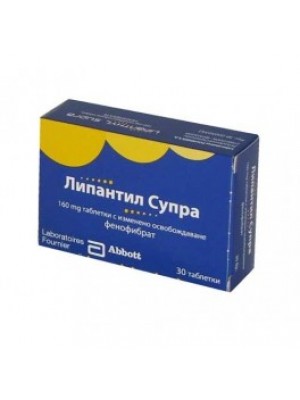
Lipanthyl Supra 160 mg. 30 capsules

Product viewed: 4501


What's in the tablets?
Each white film modified-release tablet Lipanthyl Supra 160 contains 160 mg of micronised fenofibrate. This is the active substance. Fenofibrate is a group known as lipid lowering medicines (see below).
Each tablet contains the following excipients: lactose monohydrate, sodium lauryl sulfate, povidone, crospovidone, anhydrous colloidal silicon, sodium stearyl fumarate
The tablet coat is made of: Opadry, polyvinyl alcohol, titanium dioxide (E171), talc, soya lecithin, xanthan gum.
Lipid-lowering drugs
Lipanthyl Supra 160 film modified release tablets belong to the group of lipid lowering medicines (commonly known as fibrates). It is used to lower blood cholesterol and triglycerides in patients without a fat-free diet and other non-medical measures such as weight loss or physical exercise, especially when there is evidence of risk factors. Lipandril Supra 160 can often increase the amount of so-called "good" cholesterol (HDL or high density lipoprotein cholesterol).
What packages are available for Lipanthyl Supra 160?
Lipanthyl Supra 160 mg film-coated modified-release tablets are packed in blister packs of 15. Two blister strips in a cardboard box - a total of 30 tablets in a pack.
Why does your doctor want to take Lipanthyl Supra 160?
Linditis and dyslipidemia (impaired fat metabolism) By blood tests, your doctor has found that you have too high cholesterol or triglycerides in the blood. They are fatty substances (lipids). You may not have noticed any symptoms. This condition is called hyperlipidemia (elevated lymphoid levels) or more generally dyslipidemia (impaired fat metabolism). Your doctor may also prescribe Lipantil Supra 160 if your dyslipidemia is associated with other illnesses such as diabetes and thyroid disease.
Risks of too high cholesterol or triglycerides
Too high cholesterol may put you at risk of developing cardiovascular disease. A "bad" type of cholesterol, called low density lipoprotein cholesterol (LDL), may form plaques on the walls of your major blood vessels. This can lead to blockage of important blood vessels in your heart, brain or limbs. High levels of triglycerides in the blood can also increase the risk of cardiovascular disease.
Before taking Lipanthyl Supra 160
Before taking the tablets, tell your doctor if any of the following applies to you:
• You suffer from liver, kidney disease or gallbladder disease.
• You suffer from pancreatitis (inflammation of the pancreas leading to severe abdominal pain).
• You are allergic or have reacted badly to fenofibrate, Lipantil Supra 160 or to any of the other medicines, or to any of the other ingredients in this medicine.
• You have proven photoallergy (an allergic reaction caused by sunlight or exposure to UV light) or phototoxic reactions (skin damage caused by exposure to sunlight or UV light) during treatment with fibrates (lowering drug levels) or with ketoprofen (an anti-inflammatory drug).
• You are pregnant, breast-feeding or planning to become pregnant.
• Take anticoagulants. to prevent clotting of your blood (eg warfarin).
• Take other lipid lowering medicines (for example, medicines known as statins or fibrates).
• You suffer from hypothyroidism (decreased thyroid function).
• Drink lots of alcohol.
• Take fenofibrate and ciclosporin (immunosuppressant - an immune suppressive medicine).
• Do not take sugar.
• You are allergic to soy.
How to take Lipanthyl Supra 160?
It is important to take the tablets as your doctor has prescribed. Also, please read the label on the packaging. The usual adult dose is 1 film modified-release tablet daily. It is important to take the tablets with food because they will not work fast. Swallow the tablets whole with water.
If you are currently taking one Lipanthyl Micro 200 capsule, you may switch to one modified-release tablet of Lipantil Supra 160. Children should not take Lipantil Supra 160. You should stop taking Lipantil Supra 160 if your doctor tells you, that you have problems with kidney function.
Do not worry if you forget to take the dose of Lipanthyl Supra 160. Take the next dose with the next meal and then continue taking the tablets as usual. If you forget to take the medicine, do not take 2 doses at a time. If you are concerned about this, talk to your doctor or pharmacist.
other information
Dyslipidaemia needs treatment for a long time. Do not stop taking the medicine unless your doctor tells you or does not feel good about film-coated tablets. Also, you should continue with your fat-low diet. If you consult a doctor or go to a hospital, tell them you are taking Lipantil Supra 160 because some medicines should not be taken with him. Tell your doctor if you need to take other medicines.
What to do if you take too many film tablets?
If you accidentally take too many tablets or think that a child has swallowed tablets, contact your nearest hospital or your doctor immediately.
Possible side effects
Like all medicines, Lipantil Supra 160 can cause side effects, although not everybody gets them. Some patients experience the following side effects when taking fenofibrate.
Common side effects (occurring in <1/10 and> 1/100 patients)
- abdominal pain, nausea, vomiting, diarrhea and gas in the stomach and intestines);
- Elevated blood levels of various liver enzymes.
Uncommon side effects (occurring in <1/100 and> 1/1000 patients)
- pancreatitis (inflammation of the pancreas leading to abdominal pain);
- thromboembolism: pulmonary embolism (a clot in the lungs causing chest pain and shortness of breath), deep vein thrombosis (a clot in the legs causing pain, redness or swelling);
rash, pruritus, urticaria (hives);
- slight increase in creatinine (a substance secreted by the kidneys);
- muscle pain, muscle inflammation, muscle cramps and weakness;
- headache;
- reduced libido.
Rare side effects: (received in <1/1000 and> 1/10000 patients)
- hepatitis (inflammation of the liver), the symptoms of which are mild jaundice (yellowing of the skin and white parts of the eyes), stomach ache and itching;
- decomposition of the cells of the musculature;
- hair fall;
- decrease in hemoglobin (oxygen-carrying pigment in the blood)
- increased sensitivity to sunlight, lamps and solariums
- slight increase in urea (a substance released by the kidneys)
Very rare side effects
- chronic interstitial pneumonia (chronic disease of intracellular lung tissue) If you experience any other side effects not mentioned in this leaflet, please tell your doctor or pharmacist immediately.
How to Store Your Film Tablets
Store below 30 ° C.
Store the medicine in its original packaging.
Keep out of the reach of children!
Shelf life:
2 years.
Do not take the tablets after the expiry date printed on the package.
These tablets are for you. Only a doctor may prescribe Lipanthyl Supra 160 mg film-coated modified-release tablets. Never give them to another.
Write a review
Your Name:Your Review: Note: HTML is not translated!
Rating: Bad Good
Enter the code in the box below:
Related Products
Lipantil Micro caps. 160 mg. 30 capsules Lipid-lowering drug..
21.00€
SAW PALMETTO 160 mg. 60 capsulesIngredients in 1 capsule:Ext..
29.00€