Your shopping cart is empty!
Welcome visitor you can login or create an account.
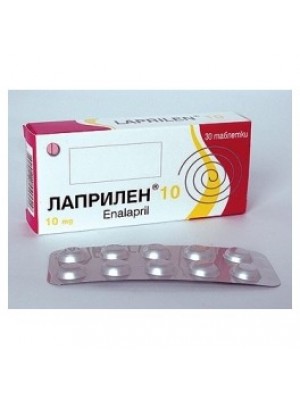
LAPRILEN 10 mg. 30 tablets

Product viewed: 2780


What is Laprilen and what it is used
Laprilen belongs to a group of medicines called "ACE inhibitors" (Angiotensin Converting Enzyme). These drugs act as the blood vessels expand and thus facilitate the pumping of blood from the heart to all parts of the body. This reduces the high blood pressure. In many patients with heart failure Laprilen will help improve heart function.
Laprilen be used for:
treatment of high blood pressure (hypertension);
the treatment of symptomatic heart failure;
prevention of symptomatic heart failure in patients with asymptomatic left ventricular dysfunction (LVEF <35%).
2. What you need to know before taking Laprilen
Do not take Laprilen:
if you are allergic (hypersensitive) to the active substance enalaprilov maleate, another ACE inhibitor or any of the other ingredients of this medicine (listed in section 6;
if occurred tissue edema - swelling of the face, lips, tongue and / or throat with difficulty in breathing or swallowing (angioedema) during prior therapy with ACE inhibitors;
if you have been diagnosed congenital or idiopathic angioedema;
during the second and third trimester of pregnancy (see. point Pregnancy and lactation);
if you have diabetes or impaired kidney function and you are treated with medication to lower blood pressure containing aliskiren.
Warnings and Precautions
If you suffer from any of these diseases or any of these apply to you, please tell your doctor before taking this medicine. Your doctor will take appropriate measures.
Talk to your doctor, pharmacist or nurse before taking Laprilen:
if there is a risk of severely low blood pressure due to impaired water-salt balance, such as medications that increase urine output in a low-salt diet or due to vomiting or diarrhea;
if the heart valve into the left ventricle are narrowed or if there is a narrowing of the output of the left ventricle;
if you suffer from heart disease, impaired blood flow (ischemia);
If you suffer from poor circulation in the brain (cerebrovascular disease);
if you have impaired renal function (creatinine clearance <80 ml / min);
if the renal arteries are narrowed (on both sides or one side a solitary kidney);
If you have recently undergone kidney transplant;
if increased hepatic enzymes or jaundice;
if decreased number of white blood cells (leucopenia) and / or a strong decrease of certain white blood cells prone to infections and severe generalized symptoms (agranulocytosis);
if you suffer from certain diseases of connective tissue (collagen) affecting the blood vessels;
if you are treated with drugs that suppress the immune system;
if simultaneously taking allopurinol (medicine to treat gout), procainamide (medicine for irregular heart rhythm) or lithium (a medicine against some forms of depression);
if during treatment with Laprilen occur hypersensitivity reactions or tissue swelling (angioedema);
if you have diabetes;
at manifestation of persistent dry cough;
at risk to increase potassium levels in the blood;
with inadequately controlled blood pressure because of racial reasons (especially in black patients);
if you are taking any of these medicines used to treat high blood pressure:
angiotensin II receptor blocker (ARB) (also known as sartans - such as valsartan, telmisartan, irbesartan), especially if you have kidney problems related to diabetes;
aliskiren.
Your doctor may periodically check your kidney function, blood pressure and the amount of electrolytes (eg. Potassium) in your blood.
See also the information titled "Do not take Laprilen."
If you have desensitisation therapy against insect poisons (eg. Bees or wasps) Laprilen should be temporarily replaced by a suitable medicine containing the active substance from another class. Otherwise may occur life-threatening hypersensitivity reactions (eg. Blood pressure decrease, breathlessness, vomiting, allergic skin reactions). These reactions may occur following insect stings (eg. Bees or wasps).
Co-administration of Laprilen during dialysis with certain dialysis membranes (high-flux membranes) or in the treatment of high levels of blood lipids (LDL apheresis with dextran sulphate absorption) can lead to severe reactions and hypersensitivity, and life-threatening shock .
In case of emergency dialysis, or hemofiltration, or in need of LDL apheresis treatment before it must be replaced with another drug suitable for this purpose (not ACE inhibitor) or to use other dialysis membrane.
Tell your doctor that you are taking Laprilen or need dialysis to mind when treating.
If a planned surgery or anesthesia (including the dentist), tell your doctor that you are taking Laprilen as anesthesia can occur a sharp drop in blood pressure.
Tell your doctor immediately if you experience any of the following symptoms:
swelling of the face, extremities, lips, mucous membranes, tongue and / or larynx, shortness of breath;
yellowing of the skin and mucous membranes;
fever, swollen lymph nodes and / or sore throat.
In these cases you do not have to keep taking Laprilen and your doctor will take appropriate measures.
The application of this medicine requires regular monitoring by your doctor. Therefore you should follow the laboratory studies and surveys that your doctor is appointed.
children
The data for the application of enalaprilov maleate in children with high blood pressure are limited. No data for use in other indications. There is only evidence of the efficacy and safety of enalaprilov maleate for the treatment of high blood pressure in children over 6 years of age. Laprilen recommended only for the treatment of this disease in children.
Infants and children with kidney disease should not be treated with Laprilen.
Other medicines and Laprilen
Tell your doctor or pharmacist if you are taking, you have recently taken or might take any other medicines, including medicines obtained without a prescription.
You may need your doctor may change your dose and / or take other precautions:
If you are taking an angiotensin II receptor blocker (ARB) or aliskiren (see also information entitled "Do not take Laprilen" and "Warnings and Precautions").
Laprilen is effected in the following manner:
Enhancing the effect and possible increase in adverse effects:
Drugs that increase urine output (thiazide or loop diuretics)
Prior treatment with high doses of diuretics can lead to a shortage of liquid and the risk of a sharp drop in blood pressure at the beginning of treatment Laprilen. The blood pressure lowering effect may be reduced if the diuretic is stopped if the deficiency of liquids, if used salts or if treatment with enalaprilov maleate starting with low doses.
Other medicines that lower blood pressure (antihypertensives)
Coadministration of Laprilen with other medicines that lower blood pressure can increase the blood pressure lowering effect of Laprilen. Co-administration of nitroglycerin and other nitrates or other drugs to dilate blood vessels (vasodilators) may further reduce blood pressure.
Drugs against depression and against other mental illness, drugs, anesthetics (tricyclic antidepressants, neuroleptics, anesthetics, drugs)
Concomitant administration of ACE inhibitors may lead to a greater reduction in blood pressure.
Slimming effect:
Medicines for pain and inflammation (NSAIDs)
Chronic administration of drugs against pain and inflammation can reduce the blood pressure lowering effect of ACE inhibitors. Concomitant administration can lead to increased levels of potassium in the blood and worsening of renal function, which is usually reversible. Acute renal failure is also rare, especially in patients with impaired renal function, such as the elderly and patients with volume depletion.
Sympathomimetics (medicines, leading to effects similar to the mediators in the body noradrenaline and adrenaline, such as high blood pressure)
Sympathomimetics may reduce the blood pressure lowering effect of ACE inhibitors.
Other possible interactions:
Drugs that increase the amount of urine produced at a reduced excretion of potassium (potassium-sparing diuretics) and products containing potassium
ACE inhibitors reduce the excretion of potassium in the urine following administration of diuretics. Some diuretics (potassium-sparing diuretics, eg. Spironolactone, triamterene or amiloride), products containing potassium and potassium containing salt substitutes or heparin (a medicine that inhibits blood clotting) may lead to a strong increase in blood potassium. Concomitant administration should be approached with caution and frequent monitoring of potassium levels in the blood.
Lithium (a drug for the treatment of depression)
During concomitant administration of ACE inhibitors and lithium is reported reversible elevations of lithium in blood and harmful (toxic) effects. Co-administration with certain diuretics (thiazide) may increase the concentration of lithium in the blood and this can increase the risk of adverse effects of lithium in the treatment with ACE inhibitors. Therefore the application of Laprilen with lithium is not recommended. However, if you need the application of this combination, the levels of lithium in blood should be carefully monitored.
Lowering drugs, blood sugar and insulin (antidiabetic drugs)
Concomitant administration of ACE inhibitors may enhance blood glucose lowering effect; there is a risk of reduction in blood sugar levels below normal (hypoglycemia). These cases usually occur during the first weeks of combined treatment and in patients with impaired renal function.
Acetylsalicylic acid (a medicine administered in low doses for the prevention of cardiovascular disease), medications to break down blood clots (thrombolytic), beta-blockers (medicines to treat high blood pressure)
Can be administered simultaneously with Laprilen.
Laprilen with food, drinks and alcohol
Food intake does not affect absorption of Laprilen in the body. Alcohol increases blood pressure lowering effect of ACE inhibitors.
Pregnancy, lactation and fertility
If you are pregnant or breast-feeding, you think you may be pregnant or planning to become pregnant, ask your doctor or pharmacist before taking this medicine.
pregnancy
Laprilen should not be used during the first trimester of pregnancy.
If you are pregnant, you think you might be pregnant or planning to become pregnant, talk to your doctor to change treatment.
Laprilen should not be used during the second and third trimester of pregnancy because it may harm the child.
If you do Laprilen was taken in the second and third trimester of pregnancy, ultrasound is recommended to monitor renal function and the skull.
breastfeeding
The active substance of Laprilen passes into breast milk. Not recommended treatment Laprilen during breast-feeding newborn babies (first few weeks after birth), and especially premature babies.
In a larger baby, your doctor will advise you on the benefits and risks of Laprilen while breastfeeding compared to other treatments.
Driving and using machines
At the beginning of treatment Laprilen may experience temporary weakness and dizziness, which could affect driving or operating machinery.
Laprilen contains lactose
If your doctor has told you that you have an intolerance to some sugars, contact your doctor before taking this product.
3. How to take Laprilen
Always take this medicine exactly as you have been told by your doctor or pharmacist. If you're not sure, ask your doctor or pharmacist.
The doctor will determine the individual dose, which will be treated, depending on your condition and possible additional therapy.
Normally, the following dosages:
High blood pressure
The usual starting dose is 5 mg once daily enalaprilov maleate and rises to a maximum of 20 mg depending on the severity
Heart failure (symptomatic heart failure), left ventricular dysfunction (asymptomatic left ventricular dysfunction)
Enalaprilov maleate is used to treat heart failure in addition to the usual diuretics, digitalis or beta-blockers. The initial dose is 2,5 mg enalaprilov maleate once a day. The treatment starts under medical supervision to determine the initial effect on blood pressure. At the beginning of treatment Laprilen in patients with heart failure, blood pressure can be lowered. When this persists, the dose should be increased gradually over 2-4 weeks to a maintenance dose of 20 mg daily enalaprilov maleate. This dose should be taken once daily or divided into two doses depending on tolerability.
The maximum dose of 40 mg enalaprilov maleate in two divided doses should not be exceeded.
Dosage in impaired renal function
The intervals between doses of Laprilen must always be extended and / or dosage be reduced. The doctor will appoint an individual treatment for you. In moderately impaired renal function, a dose of 5-10 mg enalaprilov maleate once a day. In severe renal impairment, the recommended dose 2,5 mg enalaprilov maleate once a day. In dialysis patients in the days of dialysis recommended dose of 2,5 mg enalaprilov maleate once a day. The dosage is determined by the decrease in blood pressure during the days free from dialysis.
Dosage in elderly patients
The dosage is determined by the patient's renal function.
Use in children
If the child can swallow tablets, the dose is determined individually by the physician according to the child's condition and lowering blood pressure.
The recommended starting dose for children with high blood pressure and weight from 20 to 50 kg was 2,5 mg enalaprilov maleate once a day. Children weighing more than 50 kg received 5 mg enalaprilov maleate once a day. Thereafter, the dosage is specified by the physician according to the needs of the child. But should not exceed the maximum daily dose of 20 mg enalaprilov maleate for children weighing 20 to 50 kg, and 40 mg enalaprilov maleate for children weighing over 50 kg.
Infants and children with kidney disease should not be treated with Laprilen.
Take the tablets at the same time each day, unless your doctor tells you otherwise. If you have been prescribed two tablets a day, take one in the morning and the other - in the evening unless your doctor tells you otherwise.
If you are unsure or have any questions, consult your doctor or pharmacist.
If you take more than the amount Laprilen
If you take more than the amount Laprilen, seek immediate medical help! The most common signs of overdose sharp drop in blood pressure, circulatory shock, fast or slow heartbeat, palpitations, kidney failure, shortness of breath, dizziness, anxiety and cough.
If you forget to take Laprilen
If you miss a dose, continue with treatment as usual without taking a double dose to make up for a missed dose. Tell your doctor about what happened.
If you stop taking Laprilen
Do not interrupt or stop taking Laprilen without consulting your doctor! In patients with hypertension, it may again be increased, and in patients with heart failure - again symptoms appear.
If you have any further questions on the use of this medicine, ask your doctor, pharmacist or nurse.
4. Possible side effects
Like all medicines, this medicine can cause side effects, although not everybody gets them.
Adverse reactions are classified according to frequency of occurrence as follows:
Very common: Affects more than 1 in 10 treated patients;
Common: affects less than 1 in 10 but more than 1 in 100 patients treated;
Uncommon: Affects less than 1 in 100 but more than 1 in 1,000 patients;
Rare: affects less than 1 in 1,000 but more than 1 in 10,000 patients treated;
Very rare: Affects less than 1 in 10,000 patients treated;
Not known: From the available data can not be estimated.
Important side effects or signs that need to pay attention or take measures if symptoms
If you suspect the occurrence of severe skin reactions, you should immediately visit a doctor and, if necessary, to stop treatment immediately Laprilen.
Swelling of tissues (angioedema), which covers the larynx, vocal cords and / or tongue, it should be treated by a doctor!
If you develop jaundice or liver function tests significantly increase must stop treatment and doctor to monitor you.
Tell your doctor if a fever, swollen lymph nodes and / or sore throat to blood tests.
Tell your doctor if you notice any side effects described above. Your doctor will assess their weight and if necessary, take further measures.
Other possible side effects
Blood and lymphatic system:
Uncommon: anemia (including aplastic and haemolytic);
Rare: reduced number of certain blood cells (neutropenia, thrombocytopenia, pancytopenia) to a strong decrease in the number of certain white blood cells prone to infections to severe generalized symptoms (agranulocytosis), reduction in certain laboratory parameters (hemoglobin, hematocrit), suppression bone marrow, swollen lymph nodes, autoimmune diseases.
Endocrine system:
Not known: syndrome of inappropriate antidiuretic hormone (SIADH).
metabolism:
Uncommon: very low blood sugar (hypoglycemia).
Nervous system:
Common: headache, depression;
Uncommon: confusion, drowsiness, insomnia, nervousness, tingling, dizziness (vertigo);
Rare sleep disorder, abnormal dreams.
eyes:
Very common: blurred vision.
Cardiovascular system:
Very common: dizziness;
Common: severe drop in blood pressure, transient loss of consciousness (syncope), chest pain (angina pectoris), arrhythmia, increased heart rate (tachycardia);
Uncommon: orthostatic hypotension (a sudden drop in blood pressure), palpitations, heart attack or cerebrovascular accident, possibly secondary to excessive hypotension in high risk patients;
Rare: reduced blood flow in the limbs due to vasospasm (Raynaud's phenomenon).
Respiratory system:
Very common: cough;
Common: shortness of breath;
Uncommon: increased secretion of the nasal mucosa, sore throat and hoarseness, bronchospasm / asthma;
Rare: affects the lungs (pulmonary infiltrates), nasal inflammation, allergic inflammation of the lungs (allergic alveolitis / eosinophilic pneumonia).
Gastrointestinal tract:
Very common: nausea;
Common: diarrhea, abdominal pain, altered taste;
Uncommon: ileus, inflammation of the pancreas, vomiting, indigestion, constipation, loss of appetite, gastric irritation, dry mouth, peptic ulcer;
Rare: inflammation of the oral mucosa with ulcers (stomatitis / aphthous ulcerations), inflammation of the tongue (glossitis)
Very rare: swelling of the bowel (intestinal angioedema).
Liver and bile ducts:
Rare: liver failure, liver inflammation (hepatitis - hepatocellular or cholestatic, including liver necrosis), jaundice.
Skin and subcutaneous tissue disorders:
Common: rash, hypersensitivity / swelling of tissues (angioedema) of the face, extremities, lips, tongue, vocal cords and / or larynx;
Uncommon: increased sweating, itching, hives, hair loss; Rare: severe skin reactions (erythema multiforme, Stevens-Johnson, exfoliative dermatitis, toxic epidermal necrolysis, pemphigus, erythroderma).
Described is a complex of symptoms which may be accompanied by one or more of the following side effects: fever, inflammation of the serosa (serositis), inflammation of the blood vessels (vasculitis), pain or inflammation of muscle (myalgia / myositis) pain or inflammation in the joints (arthralgia / arthritis) and changes in some laboratory parameters (positive ANA titer, high speed erythrocyte sedimentation, eosinophilia and leukocytosis). May appear rash, sensitivity to light or other skin reactions.
Kidney and urinary system:
Uncommon: renal dysfunction, renal failure, increased excretion of protein in the urine (proteinuria);
Rare: decreased urine output (oliguria).
Reproductive organs and breasts:
Uncommon: impotence;
Rare: breast enlargement in men (gynecomastia).
General:
Very common: a feeling of weakness;
Common: fatigue;
Uncommon: muscle cramps, flushing, tinnitus, malaise, fever.
Laboratory values:
Common: increased blood potassium levels, increased serum creatinine;
Uncommon: blood urea increased, decreased sodium in the blood;
Rare: elevated liver values (liver enzymes, serum bilirubin).
5. How to store Laprilen
Keep out of reach of children!
Do not store above 30 ° C!
Keep your tablets in the original package. Do not put them in another container, because it can be mixed with other drugs.
Do not use this medicine after the expiry date stated on the blister and carton! The expiry date refers to the last day of that month.
Do not dispose of medications in wastewater or household waste. Ask your pharmacist how to dispose of medicines no longer use. These measures will help to protect the environment.
6. Contents of the pack and other information
What Laprilen 10 mg tablets
Laprilen 10 mg tablets contain:
The active substance is 10 mg enalaprilov maleate;
Other ingredients are: corn starch, lactose, maleic acid, hypromellose, zinc stearate.
Laprilen looks like and contents of the pack
Laprilen 10 mg tablets are light pink, round, flat, uncoated tablets scored on one side. The tablet can be divided into two equal halves.
The tablets are packaged in blister packs of 10 tablets together with a package leaflet in a carton containing 3 blister packs of 10 tablets.
Write a review
Your Name:Your Review: Note: HTML is not translated!
Rating: Bad Good
Enter the code in the box below:
Related Products
LAPRILEN table. 5 mg. 30 tablets What is in your medicine?Th..
25.00€